Today is a national commemoration day for the May 18th Democratization Movement, which happened 42 years ago during which countless civilians and citizens lost their lives to stand up for democracy, human rights and peace. The Movement played a pivotal role in the democratization process of the Republic of Korea, even though for many years it was discarded as a historical event. Human Rights City Gwangju, having such a painful history of state violence, continues to protect and promote the human rights of citizens. |
|
|
Ten days of May 18th Democratization Movement |
|
|
Photo courtesy of The May 18 Memorial Foundation
“The May 18 Democratic Uprising was a great turning point for Korea’s democracy. It has also greatly influenced a lot of East Asian countries to bring down the cold war system and achieve democracy”
- Dr. Roslyn Russell, Chair of the International Advisory Committee of the Memory of the World Programme, UNESCO
References
|
|
|
Gwangju 1980 and Myanmar 2021 |
|
|
Photo courtesy of The May 18 Memorial Foundation
Although the Republic of Korea achieved democracy through several civil protests, including the May 18th Democratization Movement in Gwangju, some parts of the world are still on a long journey toward democracy. In Syria, millions of people still suffer from war crimes and crimes against humanity, while the Taliban regime in Afghanistan has had a devastating impact on the rights of women and girls.
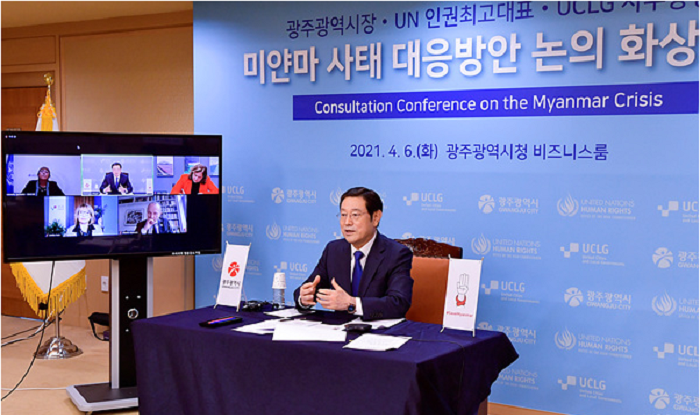
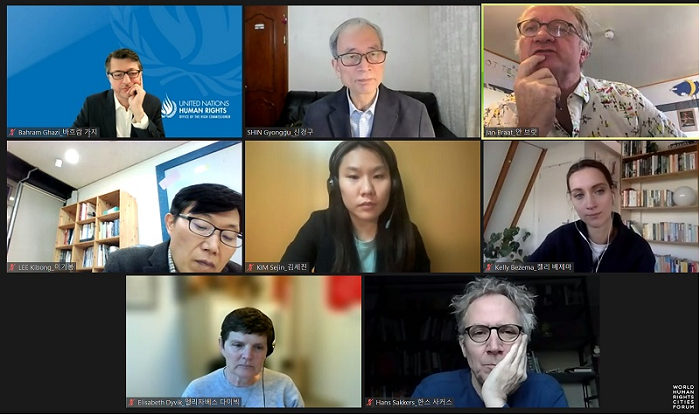
Myanmar coup d'état, which has been going on for more than a year now, resembles the May 18th Democratization Movement in several ways. Myanmar citizens are putting their lives on the line, fighting to restore democracy, while Myanmar’s military has suppressed them by force, causing serious casualties and human rights violations. Gwangju has been seeking ways to express solidarity with Myanmar at the local government level. Following the two Myanmar Conferences conducted last year, a follow-up conference is expected to take place on June 13th this year. |
|
|
The Aftermath of State Violence |
|
|
Even after the state violence incident is over, the process of overcoming the trauma and restoring the honor of those who experienced it are of utmost importance. During the 2020 World Human Rights Cities Forum, a special session entitled “State Violence and Trauma” was held. Speakers from various countries presented cases of state violence, and there was an in-depth discussion on ways of overcoming the trauma caused by state violence from the perspective of transitional justice. For more details about the topic, please refer to the speakers’ presentations.
[Full Papers]
|
|
|
Special Contribution for May 17th,
International Day against Homophobia, Transphobia and Biphobia |
|
|
In Gwangju, May 17th is the eve of commemorating the May 18th Democratization Movement, however, at the same time, it is the international day against hatred directed towards sexual minorities, which commemorates the day when the World Health Organization (WHO) removed homosexuality from the list of mental illnesses.
To commemorate the May 18th Democratization Movement and, together with it shed light on the International Day against Homophobia, Transphobia and Biphobia, “Seoyoo”, an LGBTIQ+ activist shared a special contribution.
“We have fought against state violence since the Gwangju May 18th Democratization Movement, against gender-based violence since the Gangnam murder case and violence against LGBTIQ+ with the IDAHO Day. It shows us that various kinds of violence in different forms continue to be inflicted upon disadvantaged groups over time across borders.”
READ MORE |
|
|
First Meeting of Human Rights Training for Local and Regional Governments |
|
|
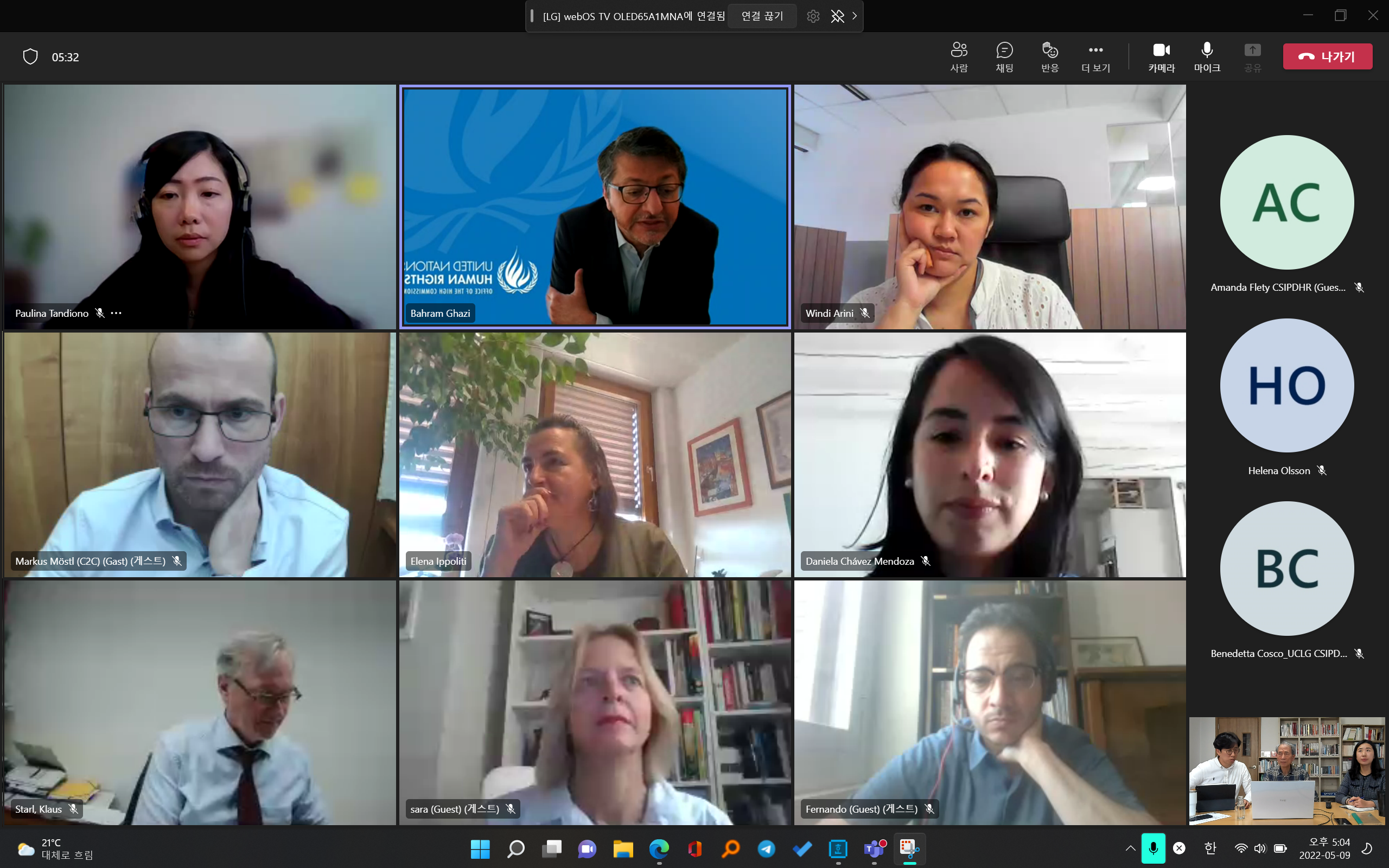
On Monday, 9 May, led by the Office of the United Nations High Commissioner for Human Rights (UN OHCHR), a meeting on human rights training for local and regional governments was held online. European Training and Research Centre for Human Rights and Democracy, Raoul Wallenberg Institute, United Cities and Local Governments, and Gwangju International Center were present to share the programs and projects each organization is conducting and to discuss better ways to collaborate on human rights training. |
|
|
세계인권도시포럼 사무국 WHRCF Secretariat
whrcf@gic.or.kr
1-2F, 5, Jungang-ro 196beon-gil, Dong-gu, Gwangju 61475, South Korea +82-70-4262-4335
수신거부 Unsubscribe |
|
|
|
|