Doosan’s SK Siltron Acquisition Stalls at Employment... KOSPI ▲4,723.10 │ KOSDAQ ▼942.18│ KRW/USD▲1,475.62 |
|
|
As of 3:30 p.m. on the previous trading day |
|
|
✴ Taekwang Group╎Taekwang Group has launched about $1.03 billion (₩1.5 trillion) in new business investment by establishing cosmetics-focused entity SIL to enter K-beauty. Through a two-track strategy including the acquisition of Aekyung Industrial, it is accelerating a structural shift from manufacturing to a B2C brand business.
✴ Daishin Private Equity╎In 2025, it acquired $27.4 million (₩40 billion) of the $64 million (₩93.3 billion) exchangeable bonds issued by Techwing, betting on a rise in the share price. The investment is viewed as a defensive allocation of capital to the mass production phase, focusing on recurring growth in test process demand driven by the expansion of HBM.
✴ Taeyang Metal Industry╎In September 2025, Chairman Han Woo-sam completed a second-generation succession by gifting a 34.5 percent stake to his son, CEO Han Howard Sung. The gift tax, reflecting a control premium, is estimated at around $10.3 million (₩15 billion). With dividends and salary alone insufficient to fund the payment, installment payments and share pledges are emerging as key points to watch in future governance disclosures.
✴ HB Investment╎Last month, it formed a venture fund of $68.6 million (₩100 billion) and is pursuing multi-closing of up to $102.9 million (₩150 billion) based on commitments from the National Pension Service, Korea Post Insurance, and KIF. Leveraging strong exit performance, it is preparing its largest-ever fund, and if successful, assets under management will exceed $480.1 million (₩700 billion).
✴ Praxis Capital╎It invested $27.4 million (₩40 billion) through RCPS and secondary shares in SDT, a quantum computing company with an operating loss of $6.2 million (₩9 billion). The investment targets a fast exit through an IPO within the year, citing early commercialization results and expansion potential in AI and data centers.
✴ SIMPAC╎By reallocating treasury shares to employee welfare funds and executive bonuses, it restored voting rights and began strengthening the control of second-generation executive vice president Choi Min-chan. As the structure allows friendly stakes to increase without cash burden, the remaining roughly 10 million treasury shares could serve as a key lever in future succession.
✴ Police Mutual Aid Association╎After suspending PE commitments for about 10 years, it decided to resume the program and commit a total of $82.3 million (₩120 billion) to blind funds in 2026. By allocating $27.4 million (₩40 billion) each to three GPs through a contest and steering investments toward AI and semiconductors, a rare funding channel has reopened for small and mid-sized PE and VC managers.
✴ Align Partners╎Sent a shareholder letter to Coway, demanding the release of a revised corporate value enhancement plan by January 30, 2026, and said it would pursue shareholder action at the March annual general meeting if the request is not met. It cited reduced shareholder returns and a deteriorating capital structure as key causes of undervaluation, and signaled active exercise of shareholder rights as an institutional investor holding more than a 4 percent stake.
✴ Stonebridge Ventures╎Recorded its largest-ever exit performance last year across its managed funds since inception, entering a full-fledged exit cycle centered on listed portfolio companies such as LIVESMED. With multiple companies awaiting IPOs or technology transfers and securing $137.2 million (₩200 billion) in LOC commitments for a new AI fund, both earnings and management fee bases are expected to expand over the mid to long term.
✴ MBK Partners╎After a court dismissed arrest warrants sought by prosecutors against executives over the Homeplus rehabilitation process, it ruled that the legal positions of MBK Partners and Homeplus were valid. MBK Partners said it would use the ruling to underscore the legitimacy of the rehabilitation procedure and continue focusing on legal action and the company’s normalization.
✴ Korea Federation of SMEs (Yellow Umbrella)╎In its VC fund investment program, it did not act as an anchor LP and instead adopted a structure allowing matching commitments up to, but not exceeding, the largest investor. This condition has created an unofficial competitive situation in which GPs’ allocation sizes depend on whether they secure an anchor LP.
|
|
|
The second shift at IMM Private Equity, a blueprint for becoming a century-long company |
|
|
⭑ 20-Year-Old IMM PE, Now an “Adult Company”
Founded in 2006, IMM Private Equity marks its 20th anniversary this year. Reaching the age of 20, it has come of age, akin to a person entering full adulthood.
Launched at a time when Korea’s private equity fund system was only beginning to take root, the firm has since grown into one of the country’s largest asset managers. Starting with its first blind fund in 2008, sized at about $214.3 million (₩312.5 billion), IMM PE expanded its scale to about $521.3 million (₩760 billion) in 2012 and further to about $857.3 million (₩1.25 trillion) in 2016. More recently, it has continued this growth trajectory by consecutively raising funds in the two-trillion-won range, or about $1.4 billion (₩2 trillion). Even at a glance, the numbers show how the firm has grown alongside Korea’s PEF market.
⭑ Holding Company Structure, the First Major Turning Point
A major structural shift came in 2020. IMM established IMM Holdings and put in place a dual-pillar system, with private equity and credit investment units operating as separate axes. Under this structure, the investment arms focus solely on investing, while the holding company plays a supporting role.
Put simply, the playing field was redesigned so that each organization could concentrate on its own role. This change is widely seen as the foundation of the firm’s current stability.
⭑ Promotions to the Presidential Team, the Meaning of the Second Change
This year brought another turning point. Kim Young-ho, Sohn Dong-han, and Park Chan-woo were promoted to president, while founder Song In-jun stepped back into the role of vice chairman. Rather than bringing in external hires, the company elevated internal talent who have worked together for more than a decade, a move that stands out. It also signals that management succession is being carried out within a pre-prepared system, rather than relying on any single individual. With such a structure, the transition to the next generation of leadership may unfold more naturally.
IMM’s core workforce today is already largely made up of professionals in their 30s and 40s. As such, these appointments are seen less as a conclusion and more as a starting line for the next decade. Alongside this, the firm has also spoken of plans to look beyond its existing businesses and identify new areas of growth. How this second transformation will shape IMM’s future is one reason the market will be watching closely.
|
|
|
Doosan’s SK Siltron Acquisition Stalls at Employment Succession |
|
|
⭑ Money already spent, growing burden
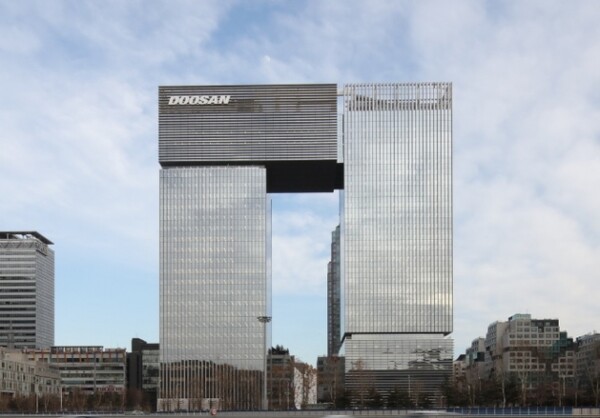
Doosan Group and SK Group are targeting deal closing in the first quarter of this year for a 70.6% stake in SK Siltron. SK has proposed an enterprise value of about $3.4 billion (₩5 trillion), and the acquisition price Doosan would actually bear is about $1.2 billion (₩1.8 trillion), even excluding the control premium.
The issue is that Doosan has already mobilized funding close to its limits. It pledged stakes in key subsidiaries as collateral and issued PRS backed by Doosan Robotics shares to secure liquidity. As a result, Doosan Corp.’s total borrowings rose by 81% over the past year to around $1.8 billion (₩2.6 trillion). Interest burdens are also increasing.
⭑ Heavier-than-expected losses at the U.S. sub-subsidiary
The acquisition also includes SK Siltron CSS, a loss-making U.S. sub-subsidiary. SK Siltron acquired DuPont’s SiC wafer business in 2020 to bet on next-generation power semiconductors, but demand fell sharply as the North American EV chasm prolonged.
This was compounded by overinvestment by wafer makers, which led to steep price declines. With market share in the single digits, SK Siltron CSS was hit harder than leading players. The industry view is that a rapid turnaround in profitability is unlikely. From Doosan’s perspective, it is taking on deficit risk by acquiring a company with limited direct synergy at a high price.
⭑ Employment succession emerges as the key variable
Against this backdrop, employment succession has emerged as the decisive factor for the deal. SK Siltron previously changed hands from DB Group to LG Group and then to SK, and full employment succession was implemented when it moved from LG to SK.
The Gumi complex, where key production facilities are concentrated, has an inverted pyramid workforce structure with many senior employees dating back to the Dongbu Group era, creating a significant labor cost burden. The gap between Doosan, which urgently needs cost reductions, and the labor union, which prioritizes job security after multiple ownership changes, is expected to be wide. Industry observers say that without resolving this issue, deal closing will not be easy.
|
|
|
📈Goal╎KOSPI big-ticket deals
Building on its track record in technology IPOs on KOSDAQ, Samsung Securities is stepping up efforts this year to complete large-scale deals on KOSPI. Leveraging judgment proven through technology-special listing and Tesla-track IPOs, it aims to deliver big transactions such as K Bank and LS E-Solution and move up a tier as a house. Rather than increasing the number of listings, the strategy is to extend the image of “technology IPOs mean Samsung” to KOSPI and position itself as a trusted top-tier house. |
|
|
💰Problems come down to money╎21% rights issue, shares slide
LaserOptik announced a shareholder-allotted rights offering equal to 21% of existing shares, drawing a cold market response. As the proceeds are set to be used mainly for working capital and debt repayment rather than growth investment, concerns have risen that this is funding to stay afloat. Adding to the pressure, the controlling shareholder said it would subscribe to only 10% of its allocation, raising trust issues, and the share price swung sharply after the disclosure. |
|
|
🍎Apple’s choice╎Adopting Samsung-like value chain seen as inevitable?
As Apple prepares a foldable iPhone, it has structured its OLED supply chain almost identically to Samsung Electronics’. Fine M-Tec will supply the internal hinge after investing in laser drilling, while black PDL will apply Duk San Neolux materials together with Samsung Display’s CoE technology. In the end, Apple appears to be opting for completion over experimentation, aligning with the Galaxy Z formula of minimizing creases and maximizing thinness. |
|
|
🌊What the sea revealed╎K-seaweed business takes shape
A joint venture, Orion Suhyup, funded with $20.6 million (₩30 billion) each by Orion and the National Federation of Fisheries Cooperatives, has completed executive registration and capital injection, marking the full launch of the business. Construction of a plant in Mokpo is set to begin in the first quarter to start with seasoned seaweed production. Suhyup will handle raw material supply and the business side, while Orion oversees finance, operations, and global distribution. The move aims to build a high value-added K-seaweed model targeting exports to Russia and the United States, moving beyond a market dominated by small processors. |
|
|
👨🏻💼IB leadership upgrade╎Targeting 10–15 IPOs
Daishin Securities has elevated its IB organization to a centralized structure and launched an IPO drive targeting 10 to 15 listings this year, mainly on KOSDAQ. Focusing on technology-special sectors such as aerospace, robotics, and biotech, it is advancing large pipelines including Duk San Nephcore and Galaxy Corporation. The approach prioritizes building trust in complex technology IPOs rather than competing on volume, reinforcing the image of Daishin as a house for tech listings. |
|
|
💳Consumption diverges╎HiteJinro weakens, KT&G rises
People are drinking less soju and smoking less, yet the two stocks are moving in opposite directions. HiteJinro has seen its market capitalization shrink as it directly absorbs the impact of weaker domestic consumption, while KT&G has hit record highs. The dividing line is exports. HiteJinro has a low overseas share, while KT&G generates nearly half of its tobacco revenue abroad, leading it to be re-rated as a growth stock. |
|
|
Meta’s Major Pivot: From the Metaverse to AI Wearables |
|
|
Burning $70 billion, then changing course
Meta burned more than $70 billion in losses at Reality Labs alone between 2020 and 2025. On average, about $14 billion a year went into VR headsets and metaverse platforms.
Mark Zuckerberg’s decision to rename Facebook as Meta in 2021 was not just a rebranding.
It reflected a strong belief that virtual worlds would become the next stage of the internet.
But reality was colder than expected.
As of the third quarter of 2025, Reality Labs generated only $470 million in revenue, while operating losses exceeded $4.4 billion. The Quest headset drew brief attention, but it remained too heavy for daily use, and content was still lacking.
In January 2026, Meta decided to cut about 10 percent of Reality Labs’ roughly 15,000 employees. VR and metaverse teams were hit the hardest.
AI glasses were different, because they were usable right now
Along with the layoffs, Meta made its position clear: it would now focus on AI glasses and wearables rather than the metaverse. The numbers explained why.
Ray-Ban Meta glasses saw sales more than triple year on year in the first half of 2025, with cumulative shipments surpassing two million units. Partner EssilorLuxottica said it would expand annual production capacity to 10 million units by the end of 2026.
Why did they work? The answer was simple.
They looked like normal glasses.
Functions such as photos, calls, music, and translation worked immediately in daily life. Unlike VR, they did not ask users to “enter another world.” They simply made reality more convenient. Meta went a step further by releasing a $799 display-equipped model, adding features such as captions, real-time translation, and visual search.
This felt less like a metaverse, and more like AI naturally blending into the real world.
Zuckerberg changes the battlefield, and competition begins
This was not a minor business adjustment. It was a decision about where the next computing platform would be defined.
Meta invested €3 billion to acquire a stake in EssilorLuxottica and is pushing AI glasses as a core platform.
Competition is intense. Google, Apple, and Samsung are all preparing smart glasses and XR devices. There is also an important backdrop: Meta plans to invest $72 billion in AI infrastructure in 2026 alone. With limited resources, it had to choose between a metaverse that generated large losses every year and AI glasses that were already showing results.
Zuckerberg’s choice was clear.
Meta did not abandon its dream. It shifted a dream that was too far ahead of its time into a strategy that works now. The metaverse remains a long-term vision, but Meta’s current focus is on products people can use every day. At the center of that focus are not VR headsets, but AI glasses. The battlefield has changed, and on this new field, Meta already appears to be one step ahead.
|
|
|
Meaning of CoE (Center of Excellence) |
|
|
✴ CoE (Center of Excellence)
You can think of it as a group of people inside the company who know a specific field better than anyone else. These are the people who can say, “We’ve done this the most, and we know it best.” Rather than a team that simply does the work on behalf of others, CoE is closer to a group that sets the standard for how things should be done in that domain.
When a company introduces a new technology or way of working, each team often tries things on its own and ends up repeating similar mistakes. CoE exists to reduce that kind of inefficiency by collecting methods that have already been tried and proven, and organizing them in one place. When someone starts a new project and wonders, “How should we do this?”, CoE provides direction and, if needed, works alongside the team to support them.
So CoE is not an organization that handles everything directly. It is better understood as an internal expert group that helps the entire company work better. The core of CoE is making sure that successful approaches do not stay within one team, but become standards across the whole organization.
Three key roles of a CoE
First, creating knowledge and standards. CoE takes a broad view of a specific technology or initiative and sets standards so that the company’s existing investments in resources and capabilities are not wasted. It organizes best practices that are stable and efficient, and provides practical guidelines, templates, and reference architectures that teams can use immediately.
Second, education and support. CoE works for the entire organization, not just a single team. It raises overall capabilities through training programs and supports project teams directly through consulting or technical assistance. It also runs internal communities so that experience and know-how are shared across the organization rather than remaining with individuals.
Finally, governance and management. CoE is responsible not only for using technology well, but also for using it safely and sustainably. It defines risk and security policies, reviews projects, and adjusts priorities. At the same time, it measures performance and continuously improves weak areas, gradually raising the overall level of the organization. |
|
|
Send us any suggestions you’d like to share while reading Bitter’s newsletter! |
|
|
Advertising, inquiries : viter@thevistapartners.com / Published by Newstop. Unsubscribe |
|
|
|
|