#real estate #irregular workers in Korea #vocabulary For dark mode users,
Hello, readers! Today, we are covering: Index Zoom In Man-made Disasters and Evasion of Responsibility Today's Vocabulary 소 잃고 외양간 고친다 (fixing your barn after losing a cow) This Week's Recommendations House of Hummingbird (벌새, 2018) Don't forget to leave your feedback below!
Man-made Disasters and Evasion of Responsibility Writer: Haram Lee, Daeho Park, Youngeun Jang Editor: Aleya Sharif Senior Editor: Regine Armann Editor-in-Chief: Fred McNulty Researcher: Yul Jun
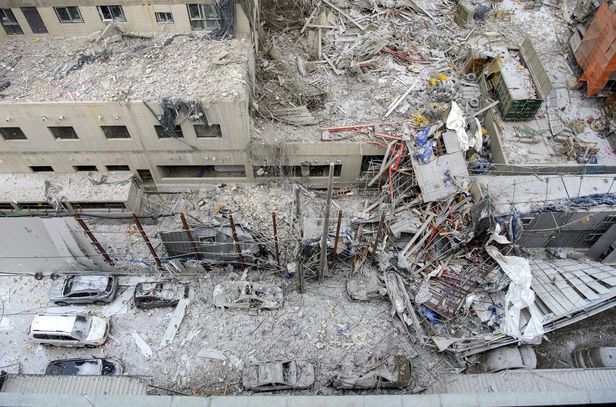
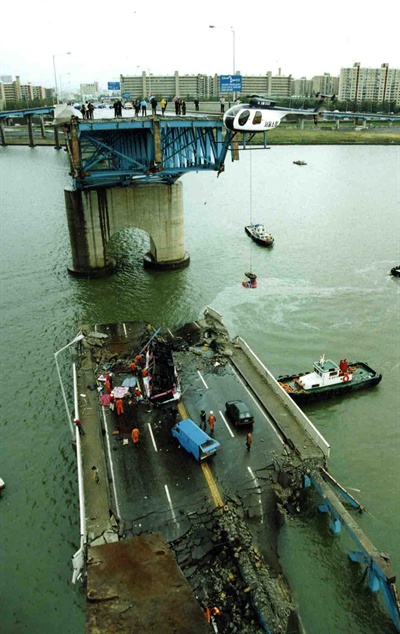
Source: https://www.chosun.com/national/incident/2022/01/11/PIP3NNXHWNFNTA76G5YDODPQDQ/ Intro On January 11, around 15:46, the Hwajeong Ipark (화정 아이파크) apartment building in Gwangju, which was under construction at the time, collapsed and buried six workers alive. The search for survivors and the cause is still ongoing, with one construction worker found dead so far. The others are presumed dead. The collapsed building was 38 stories high, and it was the 23rd to 38th floors that partially collapsed. The Hyundai Development Company (HDC, 현대산업개발) is one of the largest construction conglomerates in South Korea. Its most well-known apartment complex, called Hyundai Ipark, has made it a premium apartment brand. However, the company is now facing public condemnation as this is the second time that a building they are in charge of has collapsed. To make matters worse, while the now collapsed building was under construction, various safety issues such as falling debris and problems with safety protocols had been reported on the scene starting from 2020, but HDC had dismissed them. On June 9th last year, when HDC was demolishing an obsolete building in Gwangju, they did not follow the appropriate demolition procedure (Korean link) in an attempt to save time and money. The process is typically carried out by dismantling the building from top to bottom, one floor at a time. However, the demolition workers and contractors in charge instead opted for a less conventional method that targeted the first floor in order to speed up the process. This in return caused a portion of the building to collapse into the road and bury a bus, killing nine people and injuring eight. Jung Woo-seok of the Democratic Party criticized the Seogu District (West District, 서구) of Gwangju for also being responsible for this tragedy. He said (Korean link), “Citizens are living under a threat, caused by cracks, settlement, and leakages in the building.” He added, “I sympathize with the Seogu citizens’ claim—but I’m not sure if the Seogu District is siding with the citizens or the contractors (HDC).” Citizens had constantly made complaints because they had discovered numerous safety issues at the construction site since 2019, but the response they received by the Seogu District was dismissive. Out of 324 complaints in total, legal action was taken in a mere 27 cases, and penalties were issued in only 14. Therefore, Seogu District is also facing public condemnation for complacency. Clearly, this tragedy was preventable—if only appropriate measures had been taken before things got out of hand. Yet, a number of such easily-preventable tragedies have taken place in Korea in the past. Forecasted Tragedies 1994: The Seongsu Bridge Collapse On October 21, 1994, the upper truss of Seongsu Bridge (Korean link), located on the Han River in Seoul, collapsed. The accident killed 32 people and injured 17, resulting in a total of 49 casualties.
Photo by Yonhap At 9:30 p.m., only 10 hours before Seongsu Bridge collapsed, the Eastern Construction Office under the Seoul Metropolitan Road Authority found an abnormality in the plate joint 50 meters away from the one that later collapsed. However, because it was raining at the time, they did not take any action and just painted over the suspicious part. In fact, however, the disaster had long been predicted. Despite constant renovations of Seongsu Bridge, the Seoul Metropolitan Government had not conducted a single detailed safety evaluation for 15 years after the bridge was built in 1979. The root cause of the collapse was insufficient technology. At that time, the truss structure could not be fully constructed in South Korea, and the upper truss steel structure was therefore poorly installed with improper welding; the joint connection that distributed the load of the vehicles was also poor as a result. The truss construction method of Seongsu Bridge, which focused more on appearance than safety, can thus be seen as the main cause of the accident. Another factor that played a role in the accident was that the construction had to meet strict deadlines for completion, as if it was a military operation. Moreover, future transportation demand was not adequately estimated. The original design of the bridge was set to accommodate a load of 36.3 tonnes at any given time. However, during the collapse, the bridge was estimated to have been supporting over 43.7 tonnes. The collapse of Seongsu Bridge that killed 32 innocent people also reflects the shadow side of Korea’s growth (Korean link), symbolized by the hasty “빨리 빨리” or "Quickly Quickly" culture. In hindsight, the Seongsu Bridge accident can be seen as a warning of how the rapid growth of the 1970s and 1980s would eventually lead to more than one disaster. 1995: Sampoong Department Store (삼풍백화점)
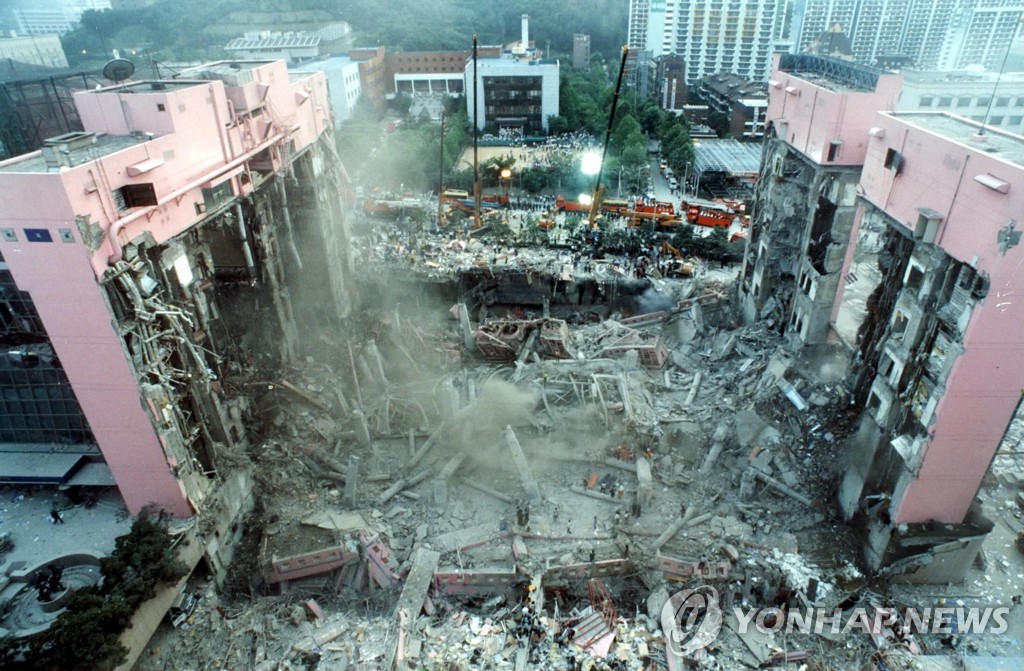
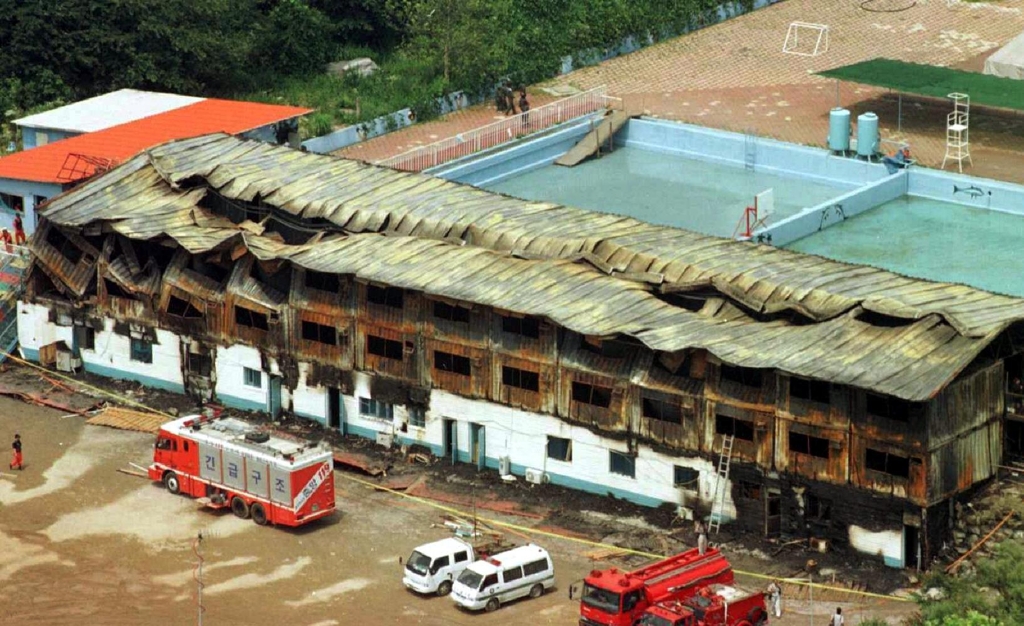
Photo by Yonhap Opened in 1989 in the affluent Seocho District of Seoul, the Sampoong Department Store was a symbol of wealth and modern standards. However, what was behind this luxurious facade was anything but sophisticated. The land that the Sampoong Department Store was built on was initially intended for residential use. Sampoong did not get authorization from the Seocho District for the construction of a department store. However, the Sampoong executives bribed some officials and were eventually granted permission, which marked the start of the tragedy. Another problem was the blueprint itself. The top executives of Sampoong had no expertise in architecture and haphazardly modified the structure by eliminating supporting columns, reducing the size of the columns, and spreading them farther apart to secure more space. This in return resulted in more load applied to each column. A fifth floor was also planned as an extension to the department store despite the inability of the structure to support this additional weight. Additionally, the roof of the structure was installed with AC units that also exceeded the permitted load limit. Trading safety for profits, Sampoong drove its own building into destruction. After its grand opening in 1989, it did not take long for the building to fall apart. On the fateful day of June 29, 1995, cracks became visible, and the building even noticeably tilted. Safety personnel brought these issues to the attention of the top executives, but they ignored the warnings and kept the store open and running. Then, at 5:57 p.m. on the same day, the building collapsed, killing 502 people and injuring 937. 1999: Sealand Youth Training Center Fire (씨랜드 청소년수련원) On June 30th, at 12:30 a.m. fire at the Sealand Youth Training Center (Korean link) killed 19 kindergarten students, one instructor, and three recreation instructors. On this night, 544 people in total, including other kindergarten and elementary students and teachers from different schools and kindergartens, were at the center.
Photo by Yonhap The government failed to respond to this tragedy in a professional manner. Instead, they were busy covering up the facts. Without thorough investigation and proof, the National Forensic Service hastily concluded that the fire was caused by a falling mosquito coil catching fire. However, experiments conducted by the Korean Fire Protection Association and MBC demonstrated that such an incident was unable to cause a fire big enough to burn the whole complex down. It turned out that it was most likely an electric leakage that caused the fire, because eyewitnesses testified that they had experienced power instabilities with lights turning off and on at the center in the past. If this had been officially concluded as the cause of the fire, it would have meant exposing the corruption or ineptitude of government officials. Enraged by the government’s fraudulent actions, the victims’ families requested a transparent investigation but were turned down several times. A month passed by with families and an evasive government playing tug of war. Then finally, a family member of one of the victims, Kim Sun-deok, a 1988 Seoul Olympics hockey silver medalist who was also the recipient of a presidential medal, proclaimed that she would turn in her presidential medal if the government kept refusing to take action. As a result, the Prime Minister at the time, Kim Jong-pil, agreed to meet her as a representative of the families. Right on the scene, he verbally promised a re-investigation as per the family’s request. However, the government broke its promise and the investigation was never conducted. Even the president back then, Kim Dae-jung, who would later win a Nobel Peace Prize, did not make any comments on this matter. This cover-up and refusal to take action were followed by identical tragedies not long after. Only 3 months after the Sealand tragedy, a fire in a bar in Inhyeon-Dong (Korean link), Incheon, killed 56 people and injured 78. Enraged by the irresponsibility of the government after two consecutive tragedies, Kim Sun-Deok eventually did turn in her presidential medal and permanently emigrated to New Zealand with her family where she still lives today. Government Measures The so-called Hakdong Disaster Prevention Act (학동 참사 예방 법안, Partial Amendment to the Building Management Act), proposed by local lawmakers to prevent disasters such as the collapse of the Gwangju Hakdong redevelopment building (광주 학동 재개발 빌딩) in June last year, passed a plenary session of the National Assembly's Land, Infrastructure and Transport Committee on the 4th of this month. Rep. Lee Byung-hoon’s bill included the installation and operation of mandatory closed-circuit television at the building dismantling site, the installation of traffic safety facilities at the building dismantling site, and a punitive damage compensation system for violations of supervision. Rep. Cho Oh-seop’s bill included strengthening on-site safety staff responsibilities and the authority of permit holders, recording photos and videos of major processes, enhancing management after dismantling work, and strengthening punishment regulations related to dismantling work. The National Land, Infrastructure, and Transport Committee strengthened the potential punishment included in alternative bills along with the revision proposed by lawmakers Lee and Cho. Those who did not receive permission to dismantle or change buildings, those who work on such sites or employ people without permission, and those who do not follow up on requests for correction by the dismantling supervisor or continue to work even after receiving a request to suspend the work will be fined up to ₩20 million or face imprisonment of fewer than two years. However, coincidentally, the latest apartment collapse accident in Gwangju occurred on the 11th of January, just when the "Hakdong Disaster Prevention Act" was passed.
Today's Vocabulary 소 잃고 외양간 고친다 (fixing your barn after losing a cow) Typically, we use the proverb “fix your barn after losing a cow” as a sarcastic phrase that means that it is useless to fix something after things have already gone wrong. In other words, it describes the foolishness of taking action too late. Example: A: 핸드폰 (아이폰) 새로 샀는데, 뭐 따로 보험 (애플케어) 같은 거 안 들어도 되겠지? B: 나중에 소 잃고 외양간 고치지 말고 지금 해놔. A. Would it be okay if I don’t buy AppleCare+ coverage for my new iPhone? B. Don’t fix your barn after you lose a cow, do it now. This Week's Recommendations
House of Hummingbird (벌새, 2018) Available on Netflix (138 mins) The story follows a teenager named Eun-hee as she struggles to figure out the ins and outs of her life. With ongoing pressure from her parents about her education and constant abuse from her elder brother Dae-hoon, her life reaches a tipping point after an unexpected health scare. As the story is set in the year 1994 during the Seongsu bridge collapse, the director of the movie, Kim Bora, intended to depict the rapid urbanization of Korea and the consequences that followed through this film.
💚 Support us! 💚
|