Do Yong-hwan Sells 11% Stake in Stick Investment KOSPI ▲4,909.93 │ KOSDAQ ▼951.29│ KRW/USD▼1,469.67 |
|
|
As of 3:30 p.m. on the previous trading day |
|
|
✴ STIC Investments, Inc.╎After Chairman Do Yong-hwan stepped down, STIC Investments, Inc. announced a value-up plan. The firm broadly accepted demands related to finance and compensation, including treasury share cancellation, expanded RSU grants, and KPI-based quantitative management. However, areas such as leverage utilization and board systemization remain at a conceptual level. Align Partners Capital Management Inc. agrees with the overall direction but says the plan still lacks concrete execution details, leaving open the possibility of further shareholder actions.
✴ Miri Capital Management LLC╎As founder Chairman Do Yong-hwan sold part of his stake, Miri Capital Management LLC secured a 25 percent stake in STIC Investments, Inc., becoming the largest shareholder. The market views this as a preemptive governance restructuring in preparation for retirement and succession. While the existing investment management framework will remain unchanged, the move is widely interpreted as an effort to expand the global LP base and strengthen governance stability.
✴ ESteem Co., Ltd.╎ESteem Co., Ltd., which had posted operating losses, has successfully turned profitable and is now pursuing a KOSDAQ IPO. The most significant change is that earnings have shown tangible improvement. As a result, W Ventures’ investment multiple is being discussed at up to around 1.6 times, suggesting that actual profitability has become the core valuation benchmark even for content companies.
✴ Busan Startup Investment Agency (BSIA)╎BSIA has launched the BugiTech Investment Roadshow on Teheran-ro to directly connect Busan-based startups with investors in the Seoul metropolitan area. Rather than waiting for capital networks concentrated in the capital region, BSIA is bringing Busan companies directly to Seoul for matching. The move is seen as aggressive, particularly given its goal of attracting Series B or later-stage investments.
✴ STIC Investments╎In response to demands from Align Partners Capital Management Inc., STIC Investments, Inc. reiterated a value-up plan targeting assets under management of $10.29 billion (₩15 trillion), a return on equity of 10 percent, and an FRE margin of 35 percent by 2028. The plan includes expanded performance-based compensation, treasury share cancellation, and governance improvements. More than the plan itself, the key question is whether execution will follow, which will be tested by market response and potential further actions by Align.
✴ Agencore╎Agencore, the only company in Korea holding full-stack licensing for tritium, is expanding its presence in the future energy market based on nuclear fusion fuel. Its business model is built on technology transferred from Korea Hydro and Nuclear Power, combined with achievements in localizing GTLS production. Given the high regulatory barriers in nuclear fusion and defense, where market entry itself is difficult, the company is being recognized for its distinctive growth trajectory.
✴ SYCG Investment╎At CES 2026, SYCG Investment operated the only standalone booth among investment firms, meeting approximately 700 visitors over four days. Using this as a starting point, the firm has begun to pursue a deal-sourcing strategy focused on directly identifying overseas startups. Moving beyond indirect overseas fund investments, SYCG Investment is strengthening its cross-border investment capabilities and positioning itself as a bridge-type investor.
✴ Australian Strategic Materials╎Energy Fuels invested $299 million (₩436 billion) to acquire Australian Strategic Materials in full, transferring control of the Dubbo rare earths project to U.S. capital. Hyundai Engineering spent about $13.7 million (₩20 billion) on design work but failed to secure an equity stake, leading to assessments that South Korea’s strategy to build a supply chain for rare earths and key nuclear materials has effectively collapsed.
|
|
|
Breaking China Dependence, LS Group Declares Rare Earth Independence via Vietnam |
|
|
Rare earths are increasingly becoming a focal point of global industrial discussions.
Industries where motors and magnets are essential, such as electric vehicles, AI data centers, and robotics, are all expanding at the same time. These magnets require rare earth elements as core materials. As China has begun tightening controls on rare earth exports, the issue has shifted from one of price to whether supplies can be secured at all.
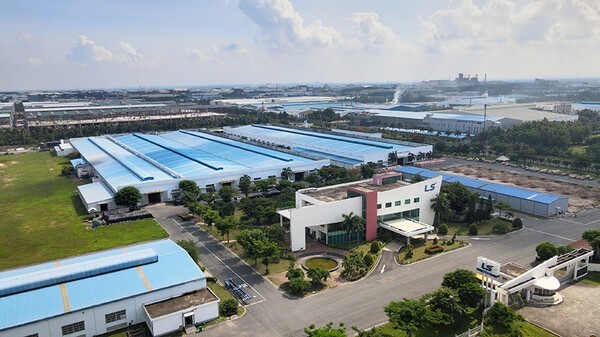
Against this backdrop, LS Group has decided to invest $19.4 million (₩28.5 billion) to build a rare earth metal production facility in Vietnam. Starting in October 2025, China plans to strengthen export controls on rare earth-related materials, creating an environment in which overseas shipments of products containing Chinese-origin rare earths or related technologies could require official approval. As a result, this investment is viewed less as a simple overseas expansion and more as a strategic move to avoid supply chain risks.
Vietnam is widely known to possess significant rare earth resources, and the government is pushing plans to expand ore processing and production capacity through 2030. That said, claims that Vietnam holds the world’s second-largest reserves are based on older estimates, and recent international statistics have revised those figures downward.
⭑ A Vietnam connection built over 30 years, partnering with state-owned enterprises
LS Group’s ability to enter Vietnam’s rare earth sector is rooted in more than three decades of accumulated local partnerships. In Vietnam’s communist system, state-owned enterprises play a central role in rare earth mining and refining, making trust with the government and key partners critical to project success.
LS Eco Energy has long collaborated with Vietnam’s national power utility through ultra-high-voltage power cable projects and more recently has partnered with affiliates of state-owned energy groups on subsea cable projects. These relationships are widely seen as enabling LS to move forward with its rare earth initiative in the country.
Under the plan, LS Eco Energy will install rare earth metal processing facilities at its Ho Chi Minh production subsidiary, refining rare earth oxides supplied by mining companies into metals.
⭑ Korean companies seek survival strategies amid China’s rare earth controls
China already treats rare earths and related technologies as strategic assets. The announcement that exports of products using Chinese-origin rare earths or technologies could also be subject to approval from October 2025 sent shockwaves through the market. Reports have indicated that prices for rare earth concentrates have risen sharply in recent quarters.
South Korea relies heavily on China for rare earth supplies, and the situation is not significantly different for the United States. As a result, securing non-China supply chains as quickly as possible is increasingly seen as a key determinant of future competitiveness.
Viewed in this context, LS Group’s decision to build its own value chain based on relationships with the Vietnamese government and state-owned enterprises appears less about short-term performance and more about long-term survival. This is why the case continues to be cited as a reference point among other Korean companies.
|
|
|
Do Yong-hwan Sells 11% Stake in Stick Investment, Retirement or Strategic Retreat? |
|
|
⭑ Using a “key man risk” management card to prevent LP withdrawals
Do Yong-hwan, long regarded as the face of Stick Investment, is stepping back from management after selling a 11.44% stake to Miry Capital. According to a regulatory filing on the 22nd, his stake fell to 2% following the sale, while Miry Capital secured a 25% holding to become the largest shareholder.
The industry views the move not as a simple stake sale but as a calculated strategy to preserve investor confidence. In the private equity and venture capital sectors, the sudden departure of a key manager can trigger LP withdrawals or refusals to re-invest.
An IB industry official said the decision to sell the stake to Miry Capital, which is close to the organization rather than a third party, was intended to minimize key man risk, adding that it was a defensive move to block both internal talent unrest and LP anxiety that could arise if control shifted externally.
⭑ Expectations rise for generational change, focus on Miry Capital-led value-up strategy
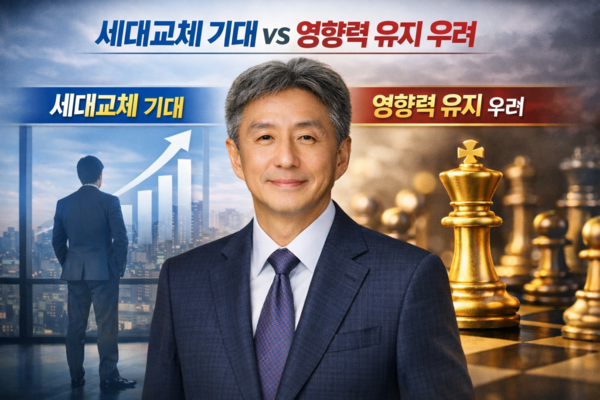
With Do’s stake sale, expectations are growing that generational change at Stick Investment will accelerate. As the founder’s retirement, long cited as a top organizational priority, becomes visible, attention is turning to management renewal and the search for new growth drivers.
Some also expect Miry Capital, as an asset manager, to pursue strategies to enhance the investment portfolio and corporate value. Under the new controlling shareholder structure, the move is seen as a chance for Stick to take the next step forward.
Do is said to have prepared for generational transition for some time in order to secure Stick’s long-term growth and organizational identity, reportedly judging the transfer of his stake to Miry Capital as the best option for stable growth.
⭑ Real influence unchanged? Concerns over change without change
However, some voices caution that the stake sale could amount to a symbolic retirement. Skepticism stems from the fact that Miry Capital has steadily accumulated Stick shares without demanding governance reform or management participation.
This has fueled speculation that Do could still exert indirect influence through Miry Capital. In form, he may be retiring, but a substantive transfer of control may not occur.
An industry official said the stake sale marks a critical turning point for Stick’s future, adding that it remains to be seen whether genuine innovation through generational change will follow, or whether it will end as “change without change,” preserving the existing influence structure.
|
|
|
💊GP130-Based Innovative Drug╎Pipeline Fully Activated
As Primotera was selected for a national new drug development program, it has begun full-scale operation of its GP130-targeted drug pipeline. By precisely controlling GP130 signaling, the company aims to secure both efficacy and safety in areas such as pulmonary fibrosis and autoimmune diseases, where treatment options are limited. Combined with AI-based structural and activity data analysis and molecular design platforms, the move is intended to accelerate development from the preclinical stage. Over the longer term, the strategy is viewed as laying the groundwork for global co-development or technology transfer. |
|
|
📈Ongoing AI Tailwind╎MLCC Demand Drives Return to Profit Milestone
Samsung Electro-Mechanics is raising expectations of returning to the “
$685 million operating profit level (₩1 trillion),” driven by growing demand for MLCCs used in AI data centers. As shipments of high-capacity, ultra-small MLCCs for AI servers increase, utilization at its components division has reached 99 percent, while earnings have become less sensitive to seasonality. The company’s high-performance MLCC technology, forming a duopoly with Murata, is widely seen as a direct beneficiary of expanding AI infrastructure investment.
|
|
|
🚚Distribution Shift╎Commerce Revenue Overtakes Portal Business
Naver’s commerce revenue this year is projected at around $3.16 billion (₩4.6 trillion), surpassing revenue from its portal search business. This marks the first time in the company’s 27-year history that a later-developed business has overtaken its original core operation. AI advancement, restructuring of membership and delivery systems, and spillover effects from shifts away from Coupang are collectively reinforcing Naver’s transition toward a distribution-focused business model. |
|
|
🤖Dawn of Robots╎Strategic Shift via Androbotics Acquisition
Hyupjin has entered the robotics sector in earnest by acquiring public automation robot company Androbotics and changing its corporate name. As Androbotics’ three-decade track record in public procurement became known, Hyupjin’s share price immediately hit the daily upper limit. Amid renewed market attention on robotics stocks driven by AI and humanoid expectations, Hyupjin appears to be positioning itself to expand from public service robots into industrial automation by combining precision machinery hardware with AI and software. |
|
|
🧐IPO Acceleration╎Entry into a New Growth Phase
Mezoo has submitted a securities registration statement to the Financial Services Commission and has begun the IPO process for a KOSDAQ listing. The company plans to offer 1.345 million new shares to raise approximately $154 million (₩224 billion), with Shinhan Investment Corp. serving as lead underwriter. The funds will be used to build global distribution networks in North America and Europe and to advance AI-based prediction and diagnostic technologies, with aRPM commercialization references positioned as a key growth driver. |
|
|
⛓️💥Governance Rift╎Succession Uncertainty Intensifies
Kolmar Korea has entered a management dispute as Vice Chairman Yoon Sang-hyun and Chairman Yoon Dong-han engage in a lawsuit over the return of shares. The legal battle over the validity of a conditional share gift made in 2019 has heightened uncertainty, with Kim & Chang and Bae, Kim & Lee representing opposing sides. With activist fund Dalton Investments potentially holding a casting vote, pressure is building for dividend increases and treasury share cancellation. As the National Pension Service reduces its stake and credit warnings emerge, prolonged litigation could deepen governance-related valuation discounts, making the court ruling and Dalton’s decision key variables going forward. |
|
|
Agencore and Tritium: Korea’s Early Lead in Future Energy Technology |
|
|
The Most Expensive Liquid on Earth
Tritium is a rare material priced at over $20,600 per gram (₩30 million). It is a radioactive isotope of hydrogen with one proton and two neutrons, and has a half-life of about 12.3 years. Globally, only about 400 grams are sold annually. It emits beta radiation and produces light on its own, can glow for over 10 years without external power, and can generate enormous energy in extremely small quantities, making it a core fuel for nuclear fusion.
While countries such as Switzerland previously dominated this strategic material, Korea can produce tritium through the Tritium Removal Facility at the Wolsong nuclear plant. Only Korea and Canada have commercialized this facility, and Korea Hydro and Nuclear Power began selling tritium domestically in 2022. This is the background that enabled companies like Agencore to emerge.
Korea’s Only Tritium Specialist
Founded in 2017, Agencore is Korea’s first and only tritium-specialized company. Located in the Busan-Dongnam Radiation Medical Science Cluster, it handles the entire process from tritium storage and transport to productization.
Its core technology is GTLS (Gaseous Tritium Light Source), a self-luminous material in which beta radiation stimulates phosphors to emit light for over 10 years without external power. It maintains constant brightness regardless of temperature or humidity and is used in military sights, night markers, runway indicators, emergency exit signs, and watches.
Before Agencore localized GTLS, Korea relied entirely on imports. Domestic defense companies faced pricing and supply issues, but these were resolved as Agencore secured world-class manufacturing capabilities. While the United States and France have not fully commercialized this technology, Korea is already deploying it in real-world applications.
Beyond Defense to Nuclear Fusion Energy
Agencore’s vision extends beyond defense components. Tritium is a key fuel for nuclear fusion power, which generates massive energy by fusing deuterium and tritium under extreme conditions, similar to the sun. Nuclear fusion produces minimal high-level radioactive waste, and deuterium can be extracted almost indefinitely from seawater, making it the ultimate clean energy.
Agencore has signed an agreement with the Korean ITER organization. ITER, the world’s largest nuclear fusion project involving seven countries including Korea, is under construction in France, scheduled for completion in 2025 and full operation in 2035. Leveraging more than a decade of accumulated tritium-handling expertise, Agencore is preparing for the era of commercial nuclear fusion.
Korea is one of the few countries with full capabilities across tritium production, storage, transport, and utilization. From defense components to future energy markets, Agencore illustrates Korea’s potential to secure leadership in the global energy landscape.
|
|
|
✴ What Is FRE Margin?
FRE (Fee Related Earnings) margin measures the profitability of an asset manager’s core business, excluding investment performance.
FRE refers to net earnings generated from management fees after deducting personnel and fixed operating costs, excluding performance fees.
The FRE margin is calculated as FRE divided by management fee revenue, showing how much profit is retained from recurring management fees.
Why It Matters
Performance fees are volatile and fluctuate year by year. FRE, by contrast, reflects the stability of an asset manager’s cost structure and recurring income base.
A higher FRE margin indicates efficient operations, tighter cost control, and stronger resilience during market downturns when performance fees decline or disappear.
Example
If an asset manager oversees $6.86 billion (₩10 trillion) in assets and charges a 2 percent management fee, annual management fee revenue amounts to $137.2 million (₩200 billion).
If personnel expenses are $68.6 million (₩100 billion) and other fixed costs total $20.6 million (₩30 billion), FRE comes to $48 million (₩70 billion).
This results in an FRE margin of 35 percent.
In other words, for every $100 earned in management fees, $35 remains as core operating profit.
If another manager with the same fee revenue spends $102.9 million (₩150 billion) on operating costs, FRE falls to $34.3 million (₩50 billion) and the FRE margin declines to 25 percent.
This gap illustrates which firm is better positioned to withstand periods when performance fees vanish.
Application to STIC Investments, Inc.
For STIC Investments, Inc., a 35 percent FRE margin target means retaining $35 of core earnings for every $100 in management fees.
This target implies internal restructuring, adjustments to compensation systems, and improvements in operational efficiency, which is why Align Partners supports the overall direction while continuing to emphasize execution risk.
|
|
|
Send us any suggestions you’d like to share while reading Bitter’s newsletter! |
|
|
Advertising, inquiries : viter@thevistapartners.com / Published by Newstop. Unsubscribe |
|
|
|
|