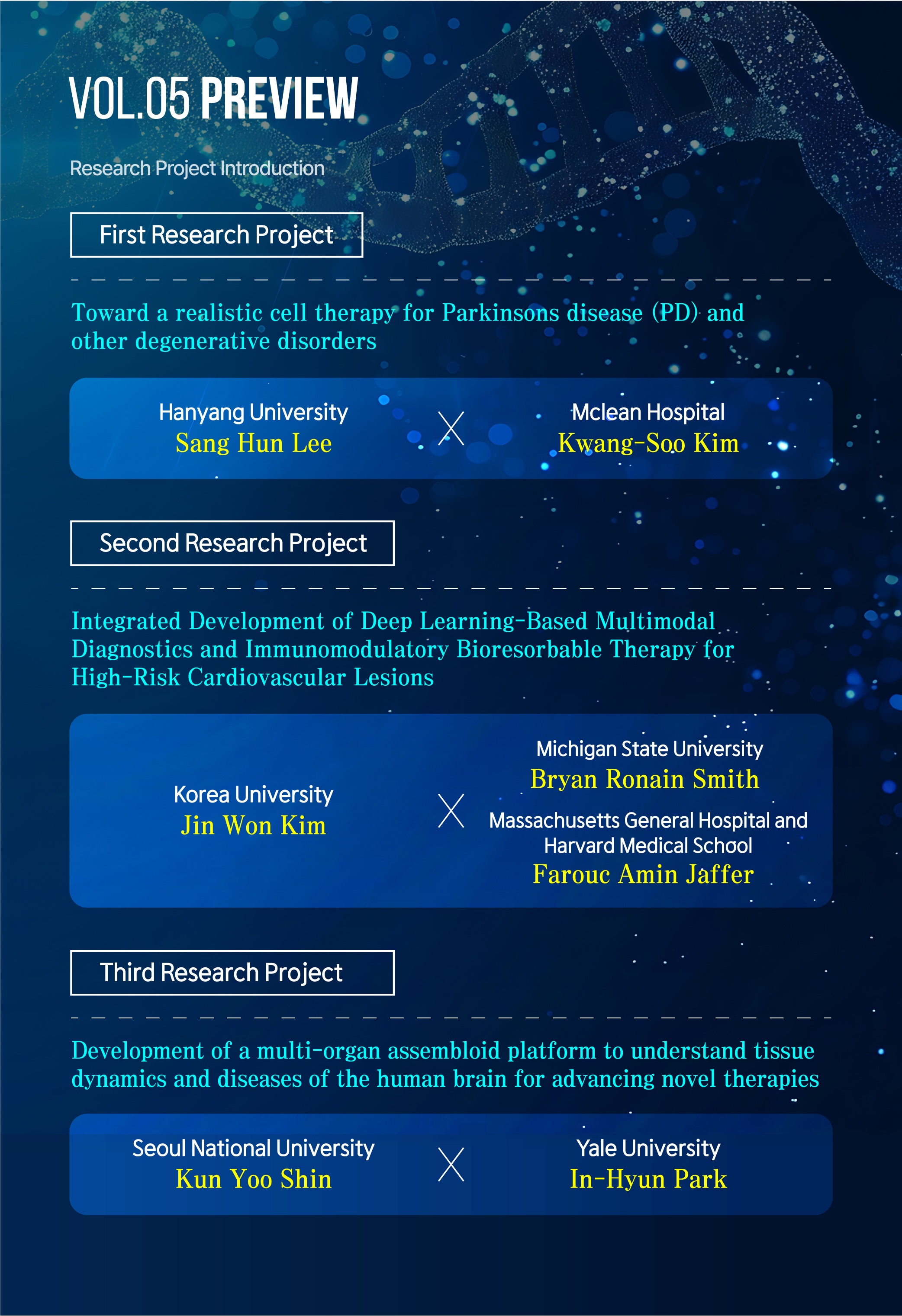
[ENG] KUCRF Newsletter Vol. 05 📌 Please introduce yourself and your research.
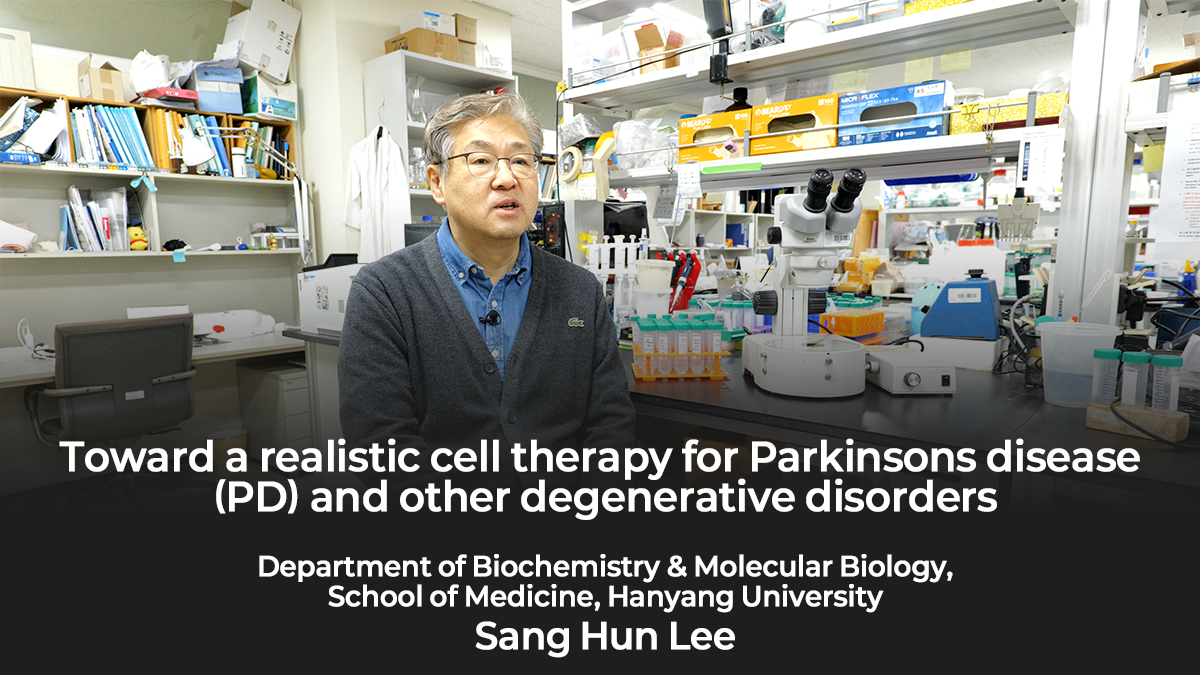
Hello, I am Sanghoon Lee from the College of Medicine at Hanyang University. I am conducting research on the treatment of Parkinson’s disease using stem cells. Through this project, we hope to address the various challenges associated with stem cell therapy and make stem cell-based treatment for Parkinson’s disease more widely applicable to a larger number of patients in practice.
📌 Could you explain your ongoing research project?
Parkinson’s disease is caused by the degeneration of dopaminergic neurons in the midbrain. Because the affected region is relatively clear and the type of cell that needs to be replaced is also well defined, stem cell transplantation has long been considered a potential treatment for this disease.
In fact, several clinical trials using stem cells for Parkinson’s disease have already been conducted. Professor Kwang-Soo Kim at Harvard University, who is currently collaborating with us on this project, was the first to report a clinical trial in which a patient’s own cells were used to generate stem cells, and those cells were then used for cell therapy in Parkinson’s disease. He also published the corresponding paper. However, although some patients initially showed good symptom recovery, there were cases where their condition returned to the original state five years later. More recently, three additional clinical trials using the same stem cell approach have also been reported. Taken together, these results suggest that while safety and rationale have been demonstrated, none of the patients showed truly groundbreaking symptom improvement.
Therefore, based on the issues revealed in previous clinical trials and the problems we have identified ourselves, we are conducting this research in the hope of resolving them and establishing stem cell therapy as the first and most widely used treatment for Parkinson’s disease.
📌 What led you to choose this research topic?
I have been studying stem cells for more than 30 years, and Parkinson’s disease, in particular, has been a major focus of my work because the damaged cells and affected brain regions are relatively well defined, making it one of the most promising targets for stem cell therapy.
As I mentioned earlier, Professor Kwang-Soo Kim at Harvard University reported the world’s first clinical results using stem cell therapy for Parkinson’s disease. However, there were many problems, and we have continued discussing with Professor Kim why patients who initially received the treatment later returned to their original condition. Through this process, we came to identify the issues that needed to be solved in order to develop a more effective therapy, and this is what led us to select this project together with Professor Kim.
📌 What is the goal you aim to achieve through this research?
Our ultimate goal is to develop a treatment that does not require continuous drug administration. At present, patients still take medications such as L-Dopa to control symptoms, but what we truly want to create is a fundamental therapy in which stem cell treatment alone can provide long-term benefits without the need for ongoing medication.
To achieve this, it is not enough to simply transplant dopaminergic neurons. We must also create an environment in which the transplanted cells can survive well, and we believe that immune responses, inflammation, and pathological factors such as alpha-synuclein must also be addressed together. By solving these problems one by one, our goal is to develop a stem cell therapy that can truly be used in Parkinson’s disease.
📌 What are the expected effects and social impact of this research?
At Hanyang University, our most important research focus is to solve the problem that the brain environment tends to become hostile to the transplanted cells once they are introduced. In other words, the key challenge is that the newly implanted cells have difficulty surviving in that environment.
This is not due to a single factor, but rather to several overlapping problems. First, there is needle trauma caused by the transplantation procedure itself. Second, there may be immune rejection in the brain against cells that are not native to the body. This is also one of the major reasons why transplanted cells fail to survive for long.
Another major issue is alpha-synuclein, which is a very important pathological factor in Parkinson’s disease. This protein aggregates abnormally and causes various problems. Importantly, it is not only problematic in the patient’s brain itself, but it can also move into the transplanted cells and damage them. In the end, we believe that the reason transplanted cells fail to survive is not only due to the cells themselves, but also because the brain environment into which they are transplanted is extremely hostile.
To address this, we are studying a method in which not only neurons but also astrocytes are generated from stem cells and transplanted together. Since astrocytes play a role in protecting neurons and regulating the brain environment, we expect that co-transplantation may improve the brain environment and also help clear alpha-synuclein aggregates. We believe this could be a highly important point of improvement.
Meanwhile, Professor Kwang-Soo Kim’s group at Harvard is addressing a similar problem from a different angle, using regulatory T cells to modulate the immune response. While we use astrocytes and they use regulatory T cells, our shared goal is to improve the brain environment so that transplanted cells can survive better. After Professor Kim first reported the clinical results, he also published a paper explaining why the effect faded over time. One of the key causes identified was also needle trauma and inflammatory factors. In particular, inflammatory molecules such as TNF-alpha and interferon-gamma were suggested as direct causes of this damage, and research using antibodies to reduce such inflammatory responses is also being conducted. Through these various approaches, we are working to change the hostile brain environment and help transplanted cells survive better.
📌 What are the achievements of this research?
The most important issue we are currently focusing on is that when cells are transplanted into the brain, the surrounding environment becomes highly unfavorable. In simple terms, it becomes an environment in which the newly introduced cells have a hard time surviving. We believe this is caused by multiple overlapping factors rather than a single one.
First, there is needle trauma caused by the injection procedure. Second, within the brain, there may be an immune rejection response against cells that are not native to the body. This is one of the major reasons why transplanted cells cannot survive for long.
Another issue is alpha-synuclein, which is a very important pathological factor in Parkinson’s disease. This protein forms abnormal aggregates and causes multiple problems. Importantly, it is not only a problem in the patient’s brain itself, but it can also move into the transplanted cells and damage them. In the end, we believe that the reason transplanted cells fail to survive is not just a problem with the cells themselves, but also the fact that the brain environment receiving the transplant is extremely hostile.
To solve this problem, we are studying ways to transplant not only neurons but also astrocytes from stem cells. Since astrocytes protect neurons and regulate the brain environment, we expect that co-transplanting them will help improve the environment and clear alpha-synuclein aggregates as well. We believe this is a very important point of improvement.
On the other hand, Professor Kwang-Soo Kim’s group at Harvard is approaching the same problem from a similar perspective, using regulatory T cells to regulate immune responses. Although the approaches differ in that we use astrocytes while they use regulatory T cells, the overall goal is the same: to change the brain environment so that transplanted cells can survive better. After publishing the first clinical results, Professor Kim also published a paper explaining why the effect wears off over time. One of the main causes was again identified as needle trauma and inflammatory molecules. In particular, inflammatory factors such as TNF-alpha and interferon-gamma were suggested as direct causes of this damage, and research combining antibodies to reduce these inflammatory responses is also underway. Through these different strategies, we are working to improve the brain environment and help transplanted cells survive more successfully. |
|
|
📌 Please introduce yourself.
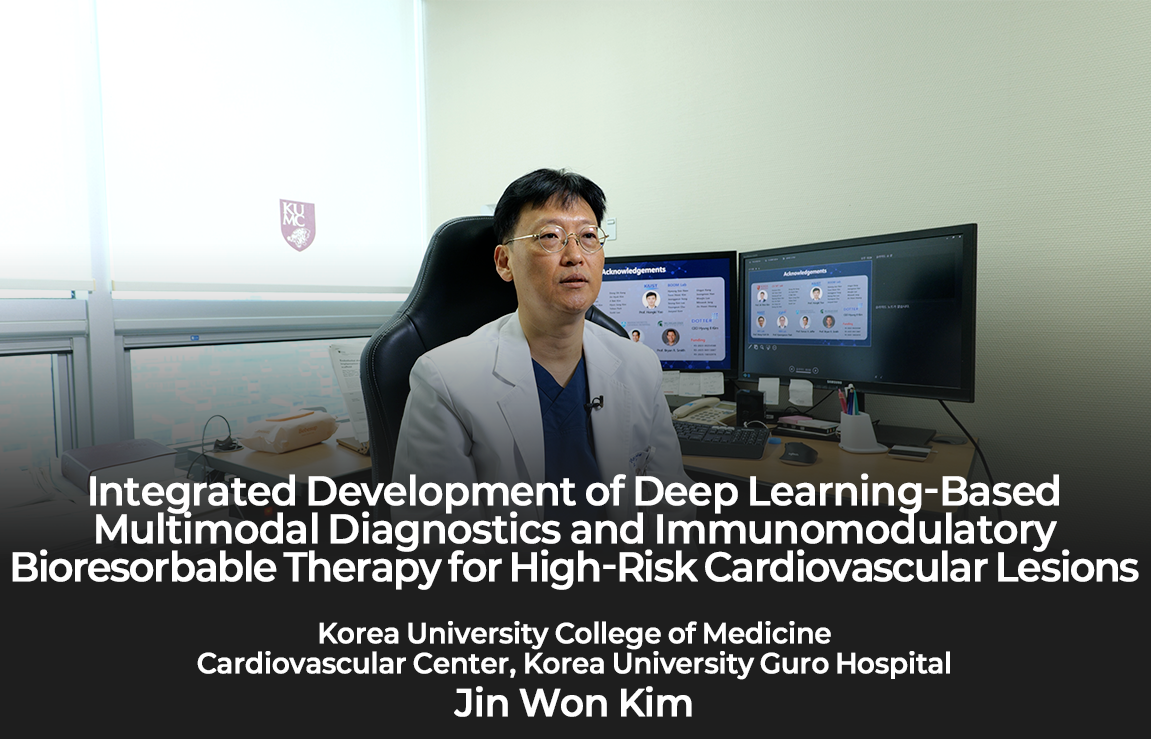
Hello, I am Professor Jinwon Kim from the Cardiovascular Center at Korea University Guro Hospital, College of Medicine. My work focuses on studying the molecular mechanisms of cardiovascular disease, developing new imaging methods that allow us to visualize those mechanisms, and applying and developing innovative therapeutic approaches.
Our research group has been established for quite a long time. It was first formed about 17 years ago, and one of our core members is Professor Hong-Gi Yeo from the Department of Mechanical Engineering at KAIST. We also work with Mr. Hyeong-Il Kim, the CEO of a company pursuing commercialization. Mr. Kim is a physician who graduated from Seoul National University College of Medicine and received his Ph.D. from the University of Tokyo, specializing in novel material development. In addition, Professor Farouc Amin Jaffer from Harvard University and Professor Bryan Ronain Smith, an expert in nanotube material development at Ohio State University, are also part of our group. Beyond these members, our network is quite extensive, with many universities and professors involved as affiliated collaborators.
📌 Could you explain your ongoing research project?
There are three major directions in our research. First, we study why myocardial infarction occurs and what molecular changes in the coronary arteries lead to this problem. Second, we develop imaging technologies that allow us to see those molecular mechanisms accurately. Third, we investigate what the most appropriate treatment strategy would be and develop new therapeutic approaches.
Over the past 17 years, we have produced a large number of research achievements, patents, and papers. In this Boston-Korea Collaborative Research Project, among all the R&D projects we have carried out, we selected those that are closest to commercialization and structured the project around advancing them into the global market.
More specifically, the first direction is to develop a new AI-based imaging technology that can precisely diagnose and visualize morphological changes, molecular mechanism changes, and hemodynamic changes in the cardiovascular system. The second direction is to develop a new targeted delivery therapy optimized for this imaging technology.
By combining these two research directions, our goal is to create the most optimized integrated diagnostic and therapeutic technology, commercialize it, apply it to human patients, and eventually enter the global market.
📌 What led you to choose this research topic?
We are currently carrying out many projects, and some of them have already reached the stage of human application, while others have already succeeded in the world’s first clinical trials. At that point, we felt that it was time to move toward the global market. Then the Boston-Korea Collaborative Research Project was announced, and after extensive discussions, we decided to take on this project.
The Boston-Korea Collaborative Research Project aims to develop and advance technologies that can lead the global market through international collaboration, and that goal matched exactly with our own research direction. That is why we chose this project.
📌 What are the expected effects and social impact of this research?
Through our previous research, we have already published many papers and secured foundational patents. Through this project, we will continue achieving academic outcomes such as publications in internationally renowned journals and additional patents.
In addition, one of the most important aspects for us is commercialization and human application. Our goal is to move beyond the laboratory and apply the technologies we have developed through innovative research directly to patients in hospitals. In other words, our new goal is to achieve a full-cycle research pipeline that connects research, clinical application, and technology commercialization.
If this research succeeds, it will give hope to many patients suffering from cardiovascular disease. Lowering the mortality rate of cardiovascular disease and extending life is the dream of all physicians and researchers, and we also hope to contribute, even in a small way, to that dream.
We also believe that Korean medical technology should move beyond simply adapting and applying technologies developed in the West. Now is the time for us to develop new medical technologies ourselves, bring them to the global market, and lead innovation. This project is meaningful in that it presents cardiovascular imaging and therapeutic technologies that have never before been attempted in Korea to the world market.
If many hospitals around the world adopt these technologies as standard practice, it will not only greatly benefit patient care but may also contribute to the national economy by creating new wealth. Furthermore, we hope this research will serve as a good model and inspire physicians, engineers, and basic scientists to come together, collaborate, and find new directions forward.
📌 What are the outcomes of this research?
Since this is a newly selected project, it has only been underway for about six months. However, the foundational technology behind it has already been secured. Last year, in 2025, we succeeded in the world’s first clinical trial and published the results in a paper. We consider our group to be a world-leading group in this field, and many leading research groups around the world are paying close attention to our progress and watching how we continue to develop.
In this project, we aim to build on the technologies we have already secured and present the next stage of innovative technology. By applying that technology in actual clinical settings, our goal is to establish an important bridge toward entering the global market, rather than leaving the work confined to the laboratory.
📌 What are the goals you hope to achieve through this research?
We have two major goals.
First, we want to bring hope to many patients suffering from cardiovascular disease. Lowering the mortality rate of cardiovascular disease and extending life are dreams shared by all physicians and researchers, and we also want to realize that great dream.
Second, we want this research to go beyond the laboratory, lead to commercialization, and contribute to the creation of national economic value. Our larger goal is to bring new technologies to the global market and have hospitals around the world use them as standardized diagnostic and therapeutic methods.
Our group has successfully grown over 17 years by operating as one lab, bringing together researchers from different fields. We now believe we have become a world-leading group in this area. We hope to present such a model and open a new path for other researchers as well.
I always believe that “we study to give back to others, and we serve the country through research.” I approach this work with the mindset of repaying the support we have received from our nation and society through research, and I hope to carry that spirit forward through the Boston-Korea Collaborative Research Project as well.
|
|
|
📌 Please introduce yourself and your research.
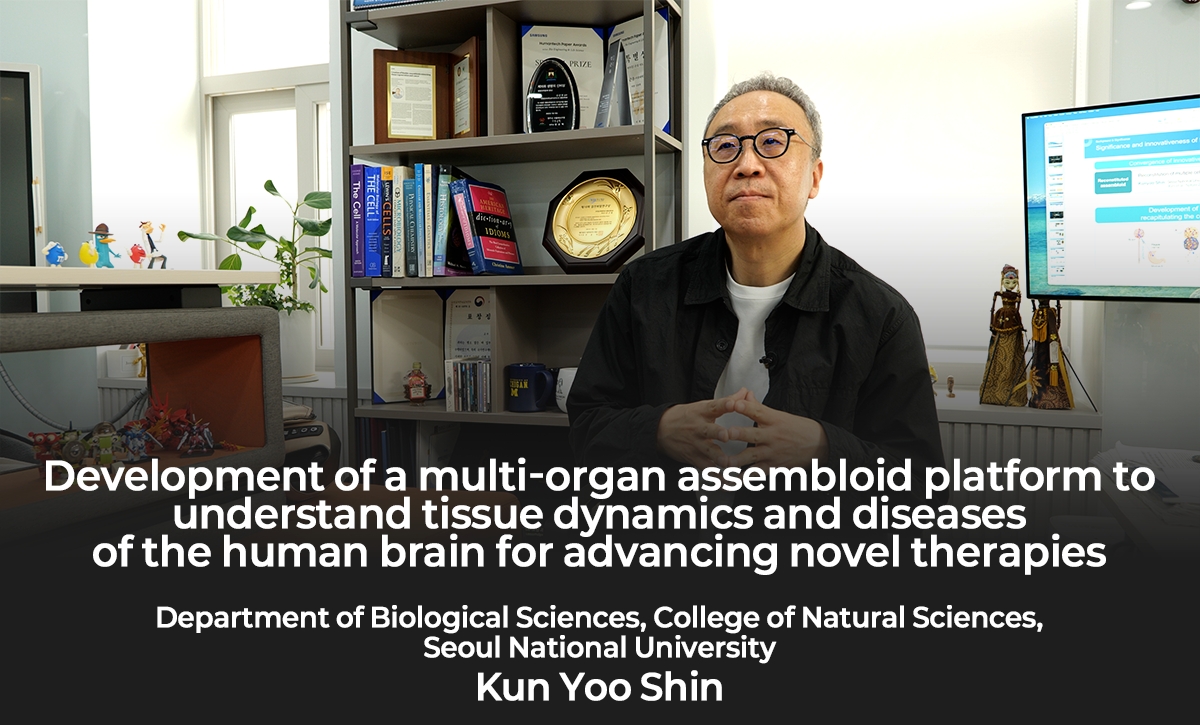
Hello, I am Geunyu Shin from the Department of Biological Sciences at Seoul National University. I am a researcher who studies cancer and neurological diseases by developing and applying organoid technology. Through this project, we are building a more advanced system called a human multi-organ assembloid, which goes beyond organoids, in order to investigate the mechanisms underlying various human diseases and, ultimately, develop therapeutic strategies.
📌 Could you explain your ongoing research project?
When we study human diseases, we usually rely on model systems. In the past, researchers often used models such as fruit flies or mice, but when modeling human diseases in mice, there are limitations caused by the differences between mice and humans. To address these problems, organoid technology began to develop about 10 to 15 years ago.
Organoids are technologies that mimic human organs. By advancing this technology, we aim to model various human diseases more accurately and investigate their underlying mechanisms. The core of our research is not simply to imitate a single organ, but to build a system that can reflect the diverse interactions that occur within the human body.
📌 What led you to choose this research topic?
Our research has expanded significantly, especially in relation to brain tissue. Because the human brain is extremely complex and has diverse functions, we needed a model that could represent it well. That is why we have been working with brain organoids. However, conventional brain organoids were limited in that they were composed mainly of neurons, or brain cells. In the actual brain, many other cell types, such as astrocytes and microglia, interact together to perform its functions. We focused on this point and began assembloid research, in which these diverse cell types are assembled together.
This research had already been actively pursued in Korea by our group and a few others, and internationally, leading groups at institutions such as Stanford and Yale were also conducting similar work. There had been informal exchanges of research findings and discussions among us, and through this project, we were able to formalize that collaboration and carry out research together with domestic and international teams. In particular, this is also connected to our collaboration with Professor In-Hyun Park’s group at Yale University.
📌 What are the achievements of this research?
So far, one of our achievements is that, whereas conventional brain organoids were centered on neurons, we created brain assembloids that include not only neurons but also astrocytes and microglia, allowing us to accurately model the interactions among these three cell types. These findings were also recently published in a paper.
Research does not always produce immediate results, but we believe we have succeeded in creating a model that is much closer to humans than previous ones, and that this provides a foundation for improving the accuracy of research on many diseases. Since the closeness of a model to the actual human body is extremely important in disease research, our system has significant value in that regard.
📌 What are the expected effects and social impact of this research?
From an academic perspective, the greatest contribution of this research is that it improves modeling accuracy. Previous studies using mice often could not be directly translated to humans because of the many differences between mice and people. What we are doing is reducing those limitations and creating a model that is more similar to humans. Once such a model is established, other researchers can also use it in their own studies, and the data and interpretations it generates can be much more relevant to actual human biology. In the end, academically, it will serve as an important platform for research on various human diseases.
It also has great social significance. If we better understand the mechanisms by which human diseases arise, this can eventually lead to the development of therapies. For example, in this project, we are also studying obesity by creating a system that connects the brain and the gastrointestinal tract to investigate how obesity develops. Drugs such as Wegovy are currently receiving much attention, but if we can better understand the root causes of obesity, we can develop a variety of more targeted treatments and ultimately provide direct help to patients suffering from obesity.
📌 What is the ultimate goal of this research?
As a researcher, I have continued to pursue research for a long time, and my ultimate goal is to uncover disease mechanisms and understand how living systems function in ways that we did not previously know, based on basic research. I believe that understanding these fundamental biological phenomena is the most important purpose of research.
Of course, if the results are applied in practice, they can help patients socially and serve as an important foundation for other researchers academically. Ultimately, our research aims to broaden the understanding of basic science while also leading, in the long term, to disease treatment and social benefits. |
|
|
You can check out more details about each research project
in the introduction videos uploaded
on the "KUCRF" YouTube channel!
(Subscribe and turn on notifications to watch them first! 😁)
|
|
|
May 2026
KUCRF NEWSLETTER Vol.04
|
|
|
March 2026
KUCRF NEWSLETTER Vol.03
|
|
|
January 2026
KUCRF NEWSLETTER Vol.02
|
|
|
October 2025
KUCRF NEWSLETTER Vol.01
|
|
|
If you subscribe,
you will be the first to receive a variety of updates
from KUCRF Office every quarter.
|
|
|
Korea US Collaborative Research Fund(KUCRF)101, Daehak-ro, Jongno-gu, Seoul 03080, Republic of Korea(Yeongeon-dong 28, Seoul)Unsubscribe |
|
|
|
|