Climatus College SGIs Clean Up Silmido Beach with @My_TrashMan Seok-Hoon Kim
|
|
|
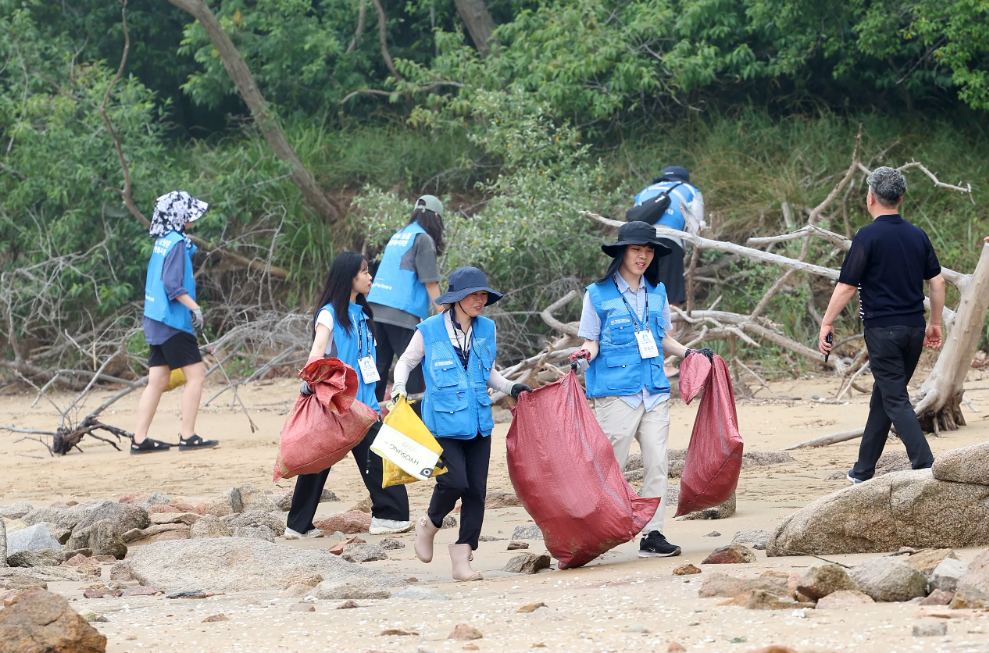
On June 28, Climatus College carried out a coastal cleanup at Silmido Beach in Incheon, in collaboration with SGI Dream Partners and environmental content creator Seok-hoon Kim. According to the Ministry of Oceans and Fisheries, South Korea sees an estimated 145,000 tons of marine litter entering its waters annually—over 65% of which originates from land-based sources. This issue poses a significant threat not only to marine ecosystems but also to fisheries, climate systems, and human health.
During the activity, a total of 263.4 kg of marine waste—including discarded fishing nets, Styrofoam, and plastic fragments—was collected. The presence of everyday household waste on-site underscored how casual neglect can become a direct source of pollution.
Beyond the cleanup itself, the initiative fostered meaningful dialogue among participants about the structural causes of marine litter and the urgent need for sustained, community-driven solutions. Climatus College remains committed to building effective marine waste response strategies and expanding civic engagement through continued partnerships and on-the-ground action.
|
|
|
Policy Field RE:VIEW The 9th Climate-Energy Summit Seoul (CESS 2025) |
|
|
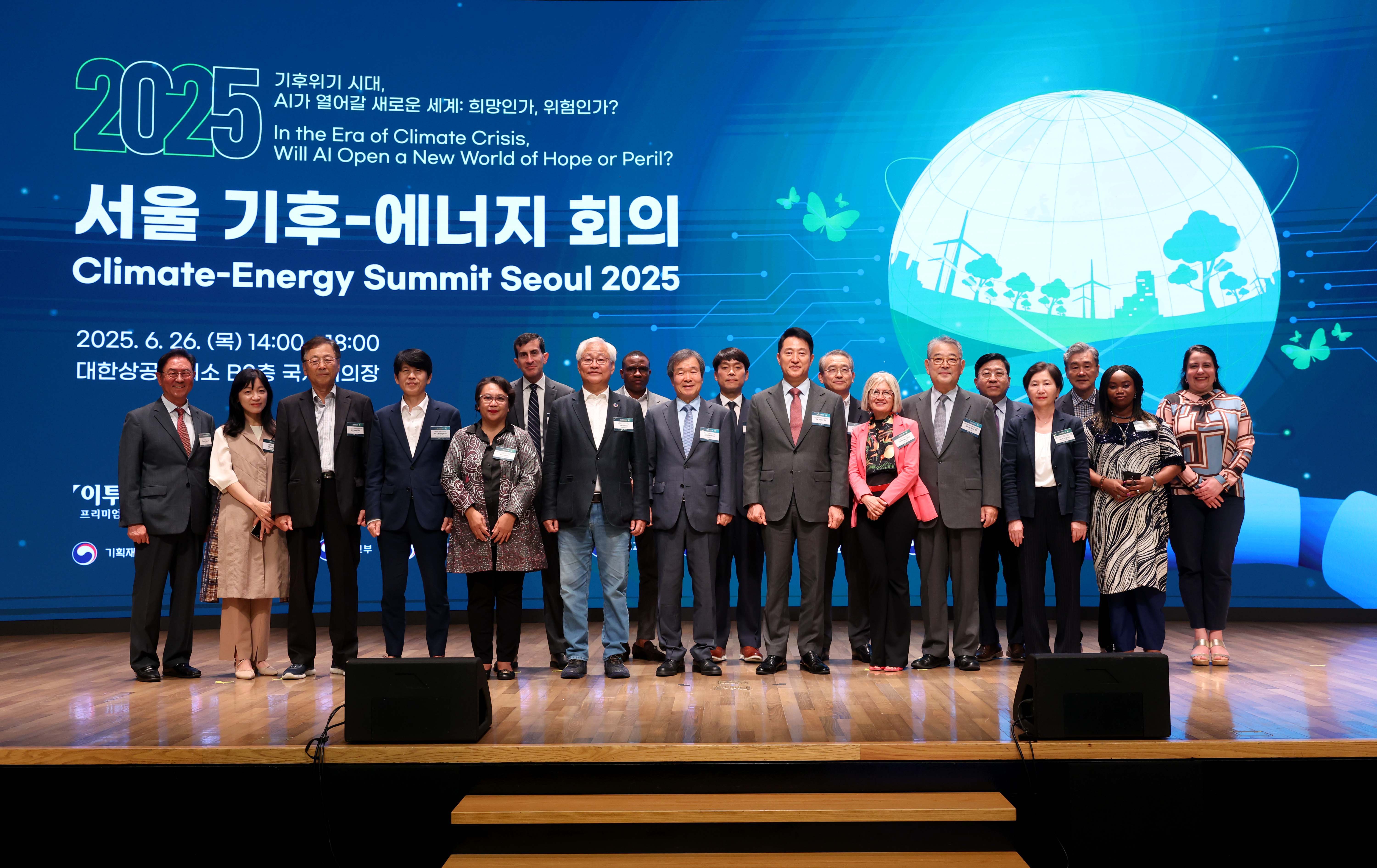
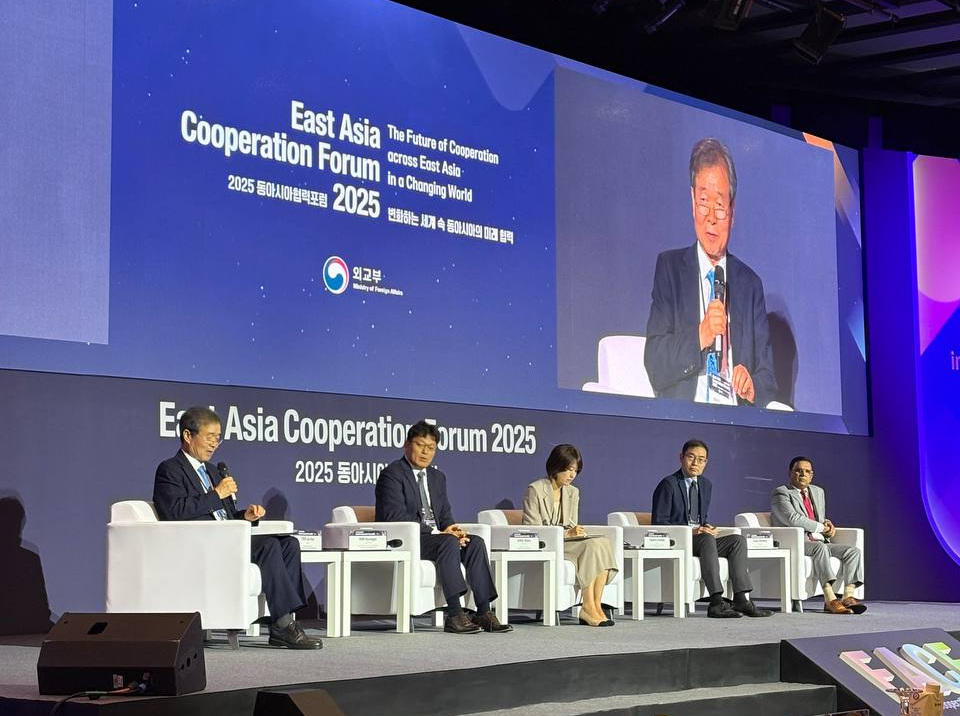
On June 26, the Climate Change Center and EToday co-hosted the 9th Seoul Climate–Energy Summit (CESS 2025) under the theme, “In the Era of Climate Crisis, Will AI Open a New World of Hope or Peril?” The forum convened international experts and thought leaders to examine how emerging technologies—particularly artificial intelligence(AI)—intersect with climate policy and societal transformation.
Discussions addressed both the opportunities and challenges posed by AI in the context of climate action. While AI offers significant potential in areas such as climate modeling, energy optimization, and emissions tracking, it also raises critical concerns related to misinformation, energy consumption, and algorithmic fairness. Participants underscored the growing importance of responsible technology governance, inclusive dialogue, and cross-sectoral collaboration.
Speakers collectively emphasized that technology, while powerful, is not inherently neutral. Its role in advancing climate solutions depends on how it is designed, for what purpose, and in alignment with whose values. Moving forward, the Climate Change Center remains committed to fostering governance frameworks that ensure technology and society are aligned in pursuit of equitable and sustainable climate futures.
|
|
|
Carbon Market Brief Regulatory shifts on credit frameworks across jurisdictions |
|
|
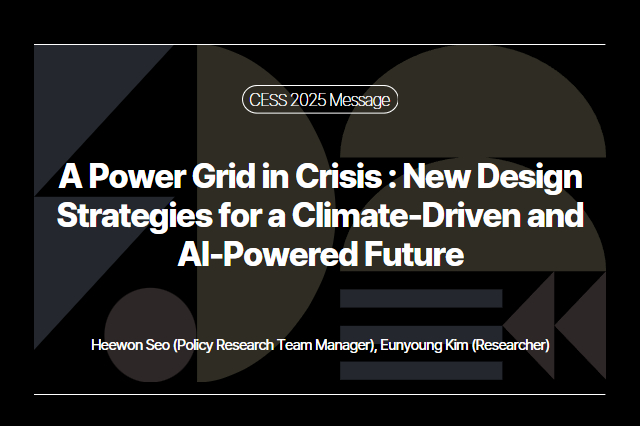
In the summer of 2025, South Korea is experiencing unprecedented strain on its power grid, driven by record-breaking heatwaves, accelerating digitalization, and expanding electrification. Rising cooling demand, climate-related disasters, and the spatial concentration of electricity use in urban areas have exposed systemic vulnerabilities in the nation’s energy infrastructure.
These challenges are further intensified by the rapid growth of AI-driven industries, transmission capacity constraints, and growing public resistance to new energy infrastructure projects. Inadequate demand forecasting, limited transparency, and insufficient community engagement continue to undermine grid resilience and public confidence.
Addressing these interlinked pressures requires more than additional energy supply. Korea must pursue a comprehensive redesign of its power system—centered on climate-resilient infrastructure, regionally distributed energy systems, improved predictive accuracy, and mechanisms that build public trust and social acceptance. The national grid must be redefined as a strategic platform for climate adaptation, regional equity, and industrial sustainability—not merely a conduit for electricity delivery.
|
|
|
New Highlight Climate Change Center Holds 2025 Secretariat Workshop to Align Strategy and Strengthen Collaboration |
|
|
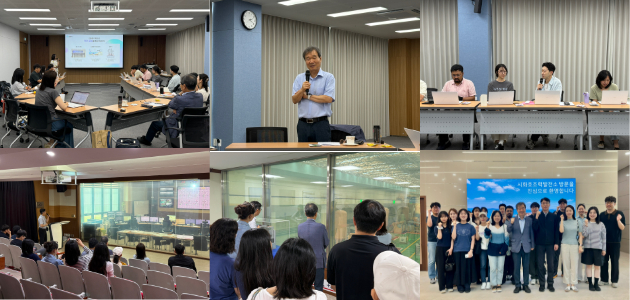
From July 3 to 4, the Climate Change Center held its 2025 Secretariat Workshop at the Songsan Global Education Center to review first-half achievements and refine strategic priorities for the remainder of the year.
The Center has focused its efforts around four key pillars : science-based policy recommendations, field-driven international cooperation, civil society engagement, and youth climate leadership. Teams shared progress updates and identified core initiatives for the second half, including:
- bridging the climate information gap,
- scaling high-integrity carbon reduction projects in developing countries,
- strengthening digital communications, and
- deepening local government collaboration on carbon neutrality.
Participants also visited the Sihwa Lake Tidal Power Plant, gaining insight into real-world renewable energy practices. Looking ahead, the Center will continue to serve as a platform for effective climate governance, advancing collaboration, network building, and practical solutions to accelerate the transition to a carbon-neutral society.
|
|
|
In the summer of 2025, Korea is facing unprecedented pressure on its power grid due to record heatwaves and rapid digitalization. Rising cooling demands, climate-induced disasters, and concentrated electricity use in urban centers are revealing structural weaknesses in the existing energy system.
These challenges are compounded by surging AI-driven industrial demand, transmission bottlenecks, and public opposition to new infrastructure. Current issues such as poor demand forecasting and limited local acceptance are further undermining grid resilience.
What Korea needs now is not just more supply—but a fundamental redesign of its power grid. This means building climate-adaptive infrastructure with physical resilience, decentralized systems based on regional autonomy, public trust, and smarter demand prediction. The grid must be reimagined as a cornerstone of national climate strategy, not merely an energy delivery tool.
|
|
|
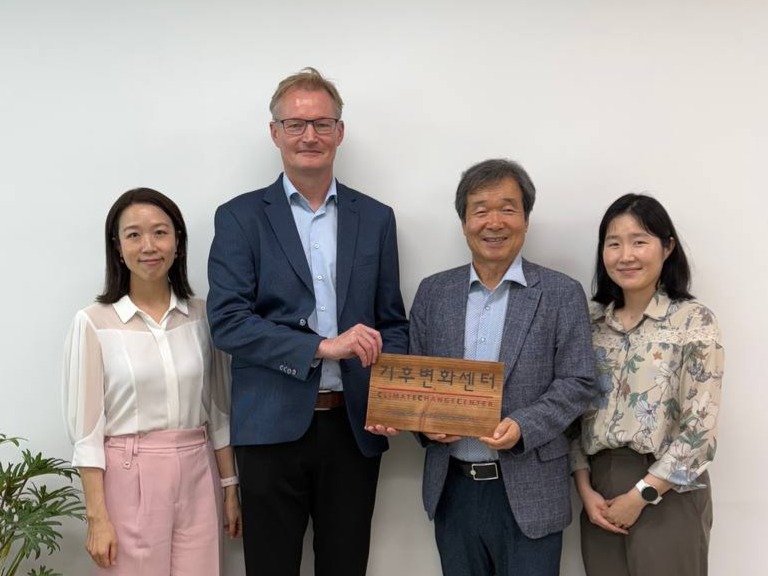
Chairman Choi Jai-chul met with representatives from the Danish Embassy on June 27 to explore bilateral cooperation on offshore wind and industrial energy efficiency. He emphasized that community acceptance and policy incentives are essential for effective energy transition. Learn more
|
|
|
He also signed an MOU with the Korean Society of Climate Change Research, aiming to enhance collaboration on science-based policy development and to strengthen the Center’s role as a hub for climate knowledge. Learn more
|
|
|
🍀Be part of our journey!
Even a small gesture can help create a healthier planet.
Donation Account : Woori Bank 1005-901-949649
Account Holder : Climate Change Center
|
|
|
Climate Change Center
T. 02-766-4351 | E. info@climatechangecenter.kr
Address : No. 306, Bldg 1, 22, Teheran-ro 7-gil, Gangnam-gu, Seoul, Korea, 06130
|
|
|
|
|