#chaebol #samsung #men in skirt #gender stereotype #slang
Hello, reader. This week, we are covering: 🍀The light and shade of the "chaebol" -5 minute read 🍀A man in a skirt -4 minute read 🍀Slang: "my favorite" 🍀What's trending now? The Soso-Ticket 🍀Headlines Enjoy! +) Don't forget to leave feedback at the end of the newsletter! 💌A Letter from SUSU Hello, dear readers. This is SUSU.🌾 From next week, we are going to publish our newsletter twice a week, on Tuesday and Friday. On Tuesday, we will bring you the headlines of the week with some slang expressions and trends. On Friday, we will offer you insights into Korea, as we are doing now. We are changing a lot, but one thing will never change: We will only cover what matters. Stay safe and see you next Tuesday!😉 Kind Regards, SUSU Quick Survey. When do you want to receive a letter? (In Korean time) Chaebols: the Pioneers? or Dictators of the
Korean Economy?
🍀5 Minute Read
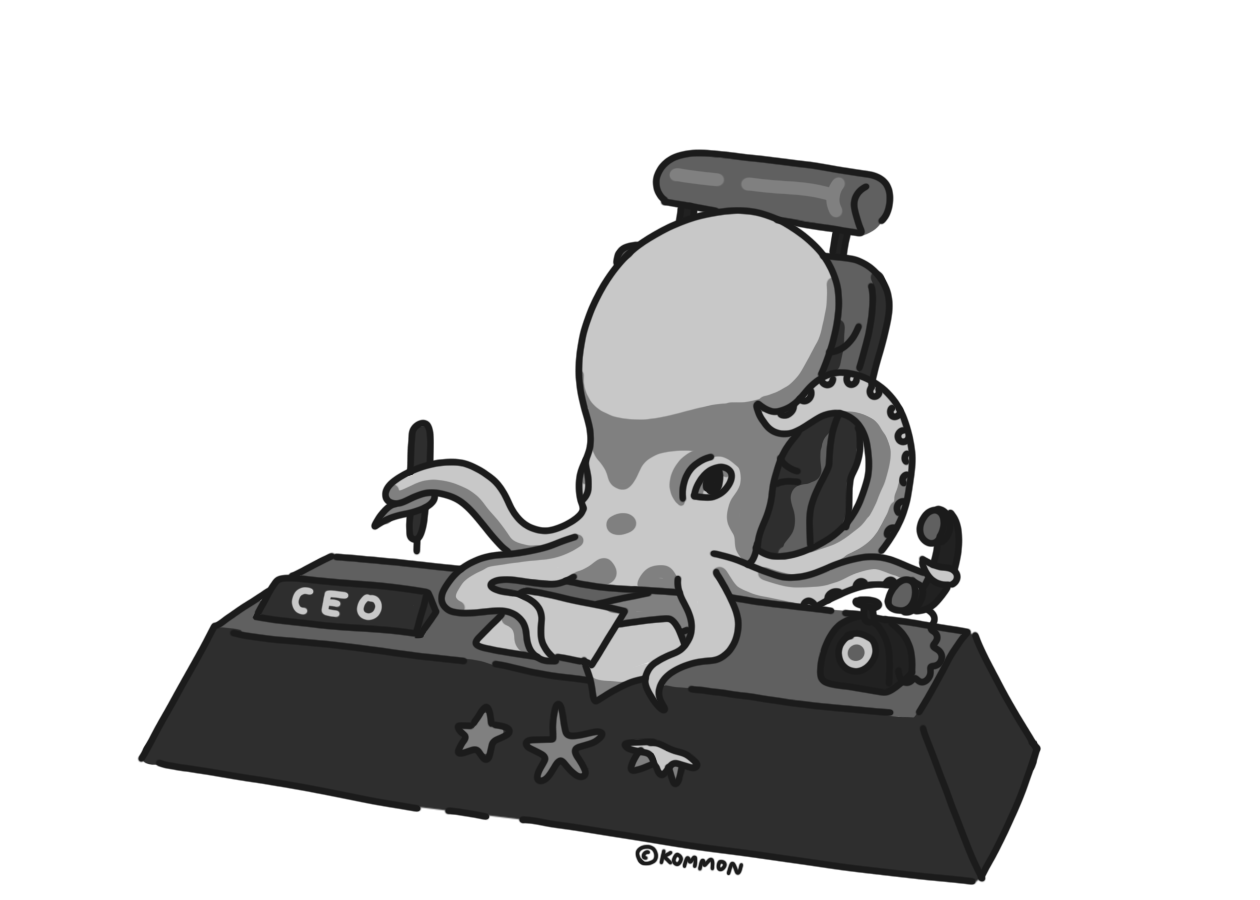
[Illustration by O.T.O] 👸🤴If you watch Korean dramas, you often see typical, clichéd characters. One example is a rich family with a father who is the representative of a big company and a son who inherits it. These are called "chaebol" families. A lot of chaebol characters have appeared in famous Korean dramas such as "Secret Garden" and "Itaewon Class". In 2019, chaebol characters appeared in 11 out of 14 Korean dramas(Korean). The popularity of chaebols is not confined to dramas. Recently, when Samsung's chairman Lee Kun Hee passed away, Koreans paid a lot of attention to the inheritance tax that his son, vice-chairman Lee Jae Yong, will have to pay. Some people even filed a national petition asking the government to lower his inheritance tax. The ones who filed the petition see Samsung's achievements in a positive light or want to criticize the Korean tax system. This shows that quite many Koreans are highly interested in their chaebol families. 🤔But what exactly are "chaebols"? A "chaebol" is a large industrial conglomerate that is run and controlled by an owner or family in South Korea. It seems there is no word that explains Korea's unique family-owned corporations appropriately, other than "chaebol" - even the Oxford English Dictionary and the Cambridge Dictionary list the word. Also, The New York Times uses “chaebol” frequently in their articles without a translation to English. The most prominent chaebols in Korea are Samsung, LG, Hyundai, and SK. 🙆Would you like to hear about James's daily life studying in Korea? 11:00 Yesterday's exam was my last (hurray)! I slept all day, a little gift to myself. 11:30 I watched TV (Samsung)📺 while eating some CJ Bibigo dumplings🥟I bought a while ago. 13:00 I suddenly remembered the bag I wanted to buy after the exam. I turned on my Samsung laptop💻, visited the Shinsegae Mall👜website, and ordered the bag. 13:40 Oh, I got a message from my friends on my Samsung Galaxy📱. They said to hang out with them. 14:00 On the way to see my friends, I stopped at an E-Mart🍭and bought some snacks.
15:00 We went to the COEX Aquarium🐠again after a long time. 00:30 After all the fun, it was too late and public transit was closed for the night. We decided to stay at the nearby Shilla Hotel🧖. 01:00 I made plans to go to Everland🤹next time with my friend. I bought a ticket before going to bed. Surprisingly, all those companies are from Samsung.
As you can see from this example, the chaebols account for a very high proportion of the Korean economy. According to a survey, the top five chaebols and the top 20 chaebols account for nearly 40 percent and 60 percent of Korea's 500 companies' sales, respectively.
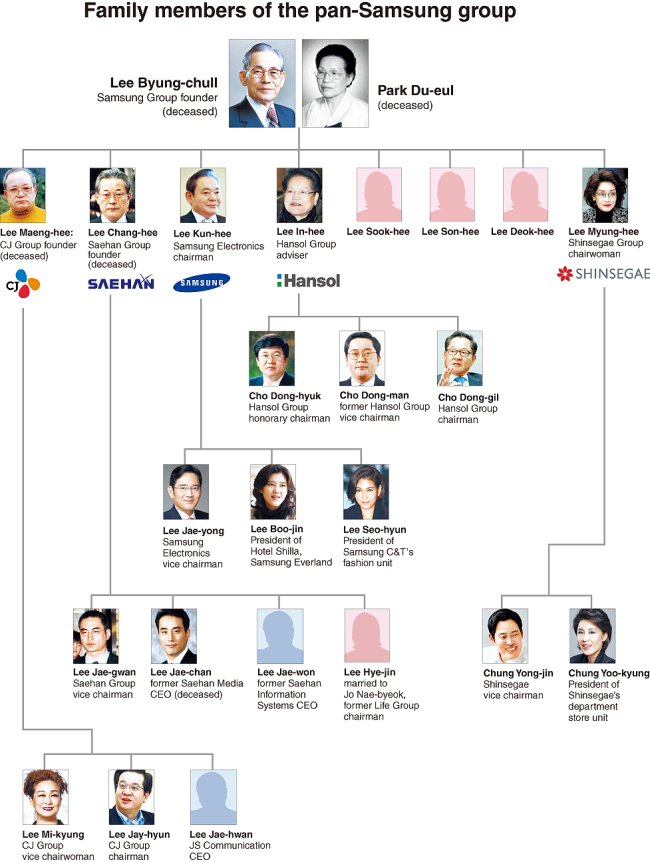
[Image source: http://www.koreaherald.com/view.php?ud=20160720001018] 🌝Light and shade🌚 The management approach of Korean chaebol companies is based on nepotism and "emperor" management. Nepotism management is a way for a CEO to arbitrarily engage his or her family or relatives in the management of the company or conglomerate. Emperor management consists of controlling the entire group but not taking responsibility. Even with a small stake in the company (the heads of the nation's top 10 conglomerates hold only a 0.9% stake on average), they can control all their affiliates but sometimes avoid responsibility by not registering them as directors. 🙋How can a chaebol take control of the group with only a small stake in the company? If the financial power of the owner's family does not keep up with the pace of the company's expansion, instead of buying shares directly, they expand the company by adding new affiliates. This is possible when more than three affiliates take a cross-shareholding approach, where shares are mutually owned. Currently, the control of chaebol families through cross-shareholding is decreasing(Korean). 👍"The chaebol companies have fed us!" The chaebols increase productive efficiency through internal transactions between affiliates. For example, when Samsung Electronics makes a TV, components are procured from other Samsung affiliates. In this way, a chaebol can facilitate finding the appropriate price and respond immediately to price changes caused by market changes. 💸Chaebol companies have developed Korea's economy following this strategy. In the 1970s, Korea's per capita income was only 6% of the average of the OECD member countries. By 2017, Korea's per capita income reached 89% of the average of the OECD members. Exports, which started at $19 million in 1948, exceeded $600 billion in 2018; in 2019, Korea was ranked fifth exporter in the world. Sales from 64 major chaebols’ affiliates accounted for 84%(Korean) of Korea's nominal GDP last year.
The OECD and the World Bank also determined that the export-led growth policy led by the chaebol conglomerates "miraculously" improved the Korean economy. They stated that Korea's quick overcoming of the global financial crisis in 2008 was thanks to the chaebols' rapid decision making and long-term investments. 👎Negative sides of chaebols: "EAT ALL ALONE" As the chaebols contribute significantly to the Korean economy, their negative impacts are also enormous.
🐙"Octopus-based" management (문어발식 경영) The chaebols dominate the entire economy of Korea with their "octopus-based" management. Octopus-based management refers to a chaebol group's indiscriminate expansion to dominate various industrial areas. However, in one case, such excessive octopus-based management adversely affected the whole group as well as the entire Korean economy. The Daewoo Group bankruptcy nicely illustrates the side effects of this management approach. 👑Monopolies and unconscionable bargains As chaebols dominate the industry, small and medium enterprises (SME) that supply components are in fact subordinated to these groups. There is no place to trade without the chaebol, so the group can force unconscionable bargains on SMEs. There are two types of typical unconscionable bargains: 1. lowering supplying prices and 2. technology extortion. 👉Lowering supplying prices: Lowering supplying prices means that a chaebol demands excessively low prices from their suppliers. Many SMEs complain about the damage caused by excessively low prices(Korean). For example, a meat processing company that signed a contract with the Lotte Group suffered many years from the low prices that Lotte insisted on. 👉Technology extortion: Sometimes, chaebols extort technology from SMEs without paying for it. There was a case(Korean) where an SME that even submitted a patent for its own technology was extorted by Samsung. Samsung threatened to cancel the deal with the SME if the SME did not allow Samsung to use the company's parts and technology without any compensation.
👨🔧Poor labor rights As chaebols cut unit prices exorbitantly and hinder the growth of small and medium-sized enterprises, labor conditions for small businesses have also deteriorated. The wages paid by smaller enterprises in Korea are too low(Korean), even when compared to Japan, where the economy is also centered on "zaibatsu" conglomerates, the Japanese version of chaebol.
Korean chaebols did not allow their employees to organize in unions. Until recently, Samsung even had a "no-union" management principle. In an environment where labor rights are not guaranteed, workers at large conglomerates are also not protected from heavy workload or in cases of industrial disasters. 👨💼Political and business ties In some cases, chaebol groups benefit unfairly from cooperating with political circles and government officials. Samsung bribed the government of Park Geun Hye, which in turn helped Lee Jae Yong to secure shares in the Samsung Group. In the process, ordinary shareholders suffered a lot of damage.
What will happen to the Korean chaebols in the future?💬 Maybe the chaebol structure will not change much. It is unlikely that Korean conglomerates will be forced to disband like the Rockefeller Group in the past. The influence of the chaebol families in Korea is too vast, and Korean public opinion agrees that negative structures such as poor labor rights and unconscionable bargains need to be improved but disagrees with dismantling the conglomerates. 😮However, there are signs of changes in the succession of managerial control. Lee Jae Yong of Samsung(Korean) said he would not pass on his management rights to his children. But it is not sure yet what will happen in real life.
How a Man Wearing a Skirt is Treated in Korea 🍀4 Minute Read
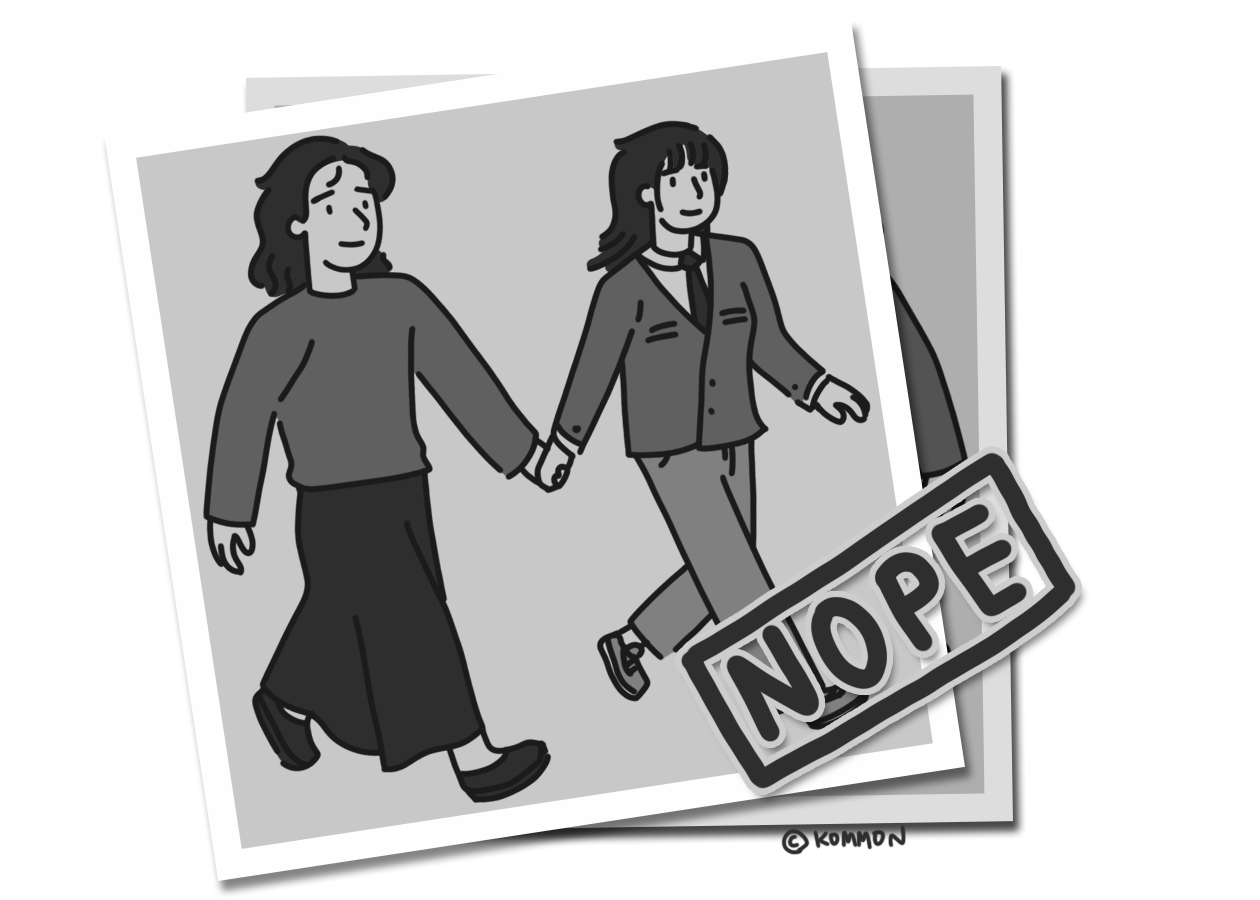
[Illustration by O.T.O] 👂 Did you hear the news? Recently, actor Bong Tae Gyu appeared in public wearing a skirt, which caused some controversy.
Because skirts are considered women's clothes, there were a series of articles saying, "He crossed
the line."(Korean) Bong said, "I hope there will be a world where men can wear skirts and my son can choose
to wear a skirt as his school uniform." As Bong pointed out, it is still hard to imagine a man wearing a skirt in Korea(Korean). Of course, the same goes for many other countries, but gender stereotypes are still relatively strict in Korea. When it comes to appearance, personality, family roles, and jobs, the expression "if you're a man~/if you're a woman~" is still heard frequently, and sayings such as "When a man comes into the kitchen, his genitals fall off😱," and "Women should be modest" can also be heard quite often, especially from the older generation. 😐 A few examples that show sex and gender stereotypes in Korean society 1. "Show us your Aegyo?" 😘
Have you ever heard of "애교 [aegyo]"? This word has no proper translation in English; it means "cute display of affection". It refers to baby talk, cute facial expressions, and sweet gestures addressed to one's lover. In Korean society, both men and women do "애교", but it's women who are usually required to appear more endearing than men in relationships and social interactions. It is also common to make female celebrities use "애교" on TV shows. 2. Women shouldn't give their hearts easily? 💁 Have you ever
heard the song "CHEER UP" from TWICE? Lyrics such as "Women shouldn't give their heart easily"
and "I'm afraid you'll get hurt, but please understand me because I'm a woman" define a woman's
role as passive. 3. Men are active and aggressive?😕 Men are usually portrayed as active and aggressive. The official
curriculum for sex education for elementary school students issued 3 years ago describes men as
psychologically active, women as dependent, and sexual coercion as a male trait. In one drama,
wanting to be comforted was described as a "female act" and expressions that distinguish male
and female roles were repeatedly used, such as, "It is difficult for men to only listen to women's
concerns." 💬 How did this happen? Of course, such gender stereotyping occurs all over the world, but there is a special reason why the
phenomenon is particularly strong in Korea. 1. Confucianism Gender stereotyping is heavily influenced by the Joseon dynasty that ruled the Korean Peninsula from the 1300s to 1910. During that time, even living areas were thoroughly divided
according to gender, based on the Confucian view that men and women should play different roles
in family and society. And this view still remains strong in our society. 2. Korean media Like the media in other countries, Korean media plays a part in reproducing gender stereotypes.
Especially K-dramas do. Although there have been many attempts recently to break gender stereotypes,
many Korean dramas still reflect the stereotypes of men-active/women-passive gender roles.
According to a 2017 analysis(Korean), the number of male
professionals in dramas is twice that of women. Another survey(Korean) in 2019 found that when chaebol families are depicted in dramas, men are usually the CEOs while women tend to be the ones inheriting family status, such as heirs and spouses. Recently, kids' contents that instill gender stereotypes in infants have also become an issue(Korean). You might easily come across girls' target contents presented in pink and boys' target contents in blue. Furthermore, these contents introduce and reinforce the most conservative gender stereotypes from early
childhood, such as encouraging little girls to buy cosmetics and convincing little boys that they
cannot be scared after seeing zombie makeup. 3. Military Some hold the view that Korean men are more socially distinguished from women in that they
share the common experience of going through military service. There are sayings such as "You
have to go to the army to become a person", that the army is more than just an obligation to the
nation, "an experience where people change". It has been argued that after a not-so-short time in
the military culture, where being "hyper-masculine" is encouraged, one becomes more obsessed
with gender stereotypes. 💁 How is this being discussed?
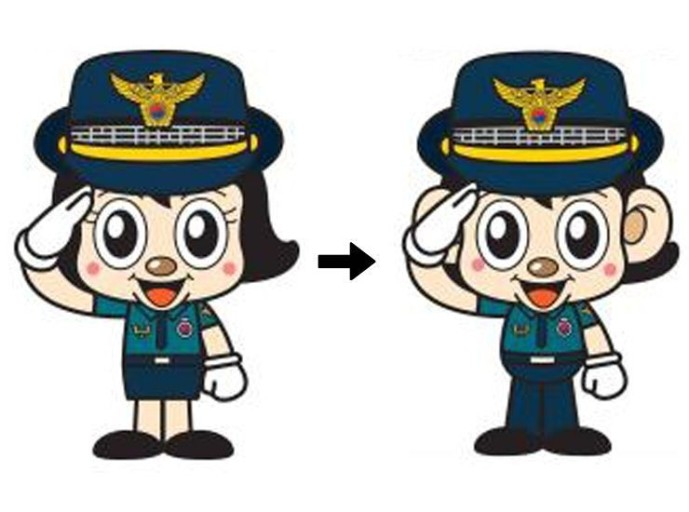
On July 7 this year, the (female) police mascot "Posuni" underwent a makeover. She now wears
pants instead of skirts, and her eyelashes are gone. This was seen as an attempt to break away from
gender stereotypes. Let us take a look at how gender stereotypes are currently being discussed in
Korean society. 1. Changes in Confucian views on gender roles Confucian gender perspectives, which define different roles and norms for men and women, have
changed a lot recently. The "호주(Hoju)" system, which centers the family business around men and allows
only men to be registered as the head of a household, was abolished in 2005. In addition, the number of men taking paternity leave is increasing, defying the stereotype that
parenting is the work of women. The proportion of male civil servants who applied for paternity
leave has more than doubled over the past 5 years. 2. Changes in the media The media is also trying to reflect this change. There are dramas that break with typical male macho
characters and more dramas are featuring ambitious and competent women as professionals. Similar
trends are reflected in advertisements and have received positive feedback. Performances of female
idols wearing suits and male dancers wearing high heels and short pants have also been well
received. How do you feel about this? Do you think society is changing? Send us your comments! 👭Korean Slang
"최애" [choe-ae] Idol culture in Korea is huge, as we
covered in our last newsletter. There's a word used throughout the idol fandom
at first but now widely used in people's daily lives. Meaning: My favorite Usage: This
word is listed in the Korean dictionary but has not been actively used by the
public and so turned into virtually dead language. At some point, however, it was picked up by idol fandoms and has now become
famous. Example: "최애" + noun. -Your favorite snack: 최애 과자
-Your favorite character: 최애캐(릭터)
Or you can just use it without a noun.
-That is my favorite: 그게 내
최애야. Plus: There's another word that has evolved
from the word above: "차애" [Cha-ae] (my second favorite).
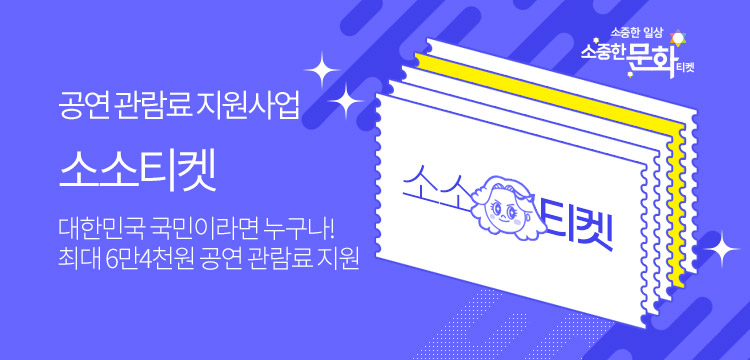
👭Life Hacks Because of COVID-19, cultural life has
suffered a lot. Especially on the performing arts such as musicals and plays,
there have been a lot of restrictions. The Ministry of Culture, Sports and
Tourism (MCST) started a project to support the performing arts. They subsidize
part of the ticket price for some performances that are expensive compared to
prices across other parts of cultural life in Korea. This is called the "소소티켓" (Soso-Ticket).
👉The project includes musicals, plays, classical music, opera, dance, and Korean traditional music. You can apply two times. (1) October 26 to November 25. (2) November 29 to December 25. Each time, you are given a maximum discount coupon of 32,000 won (8000 won*4 tickets). 👉Those who want to get a discount can follow these steps: (1) Click the website below and choose ticket options. (2) Use the tickets to book a performance. 👌Discount coupons will be released about 2 days after the application, and duplicate applications are not possible. *Click the image above to get more information and apply! Also, You Might Not Wanna Miss This...😉 Headlines😉 Politics Broadcasting company MBN is going to shut down for 6 months from May next year.
The Korea Communications Commission decided on this action since it turned out
that MBN illegally raised 300 billion won to meet the minimum requirement
for a license to operate. Environment The Seoul Metropolitan government is going to build a wind path forest to create clean air. It will cool the city down in the summer and absorb particulate matter. The government is planning to set up similar forests in other places in the country as well. Link Economics Seventeen local governments will hold the "2020 Korea Sale Festa" for 2 weeks from November 1. Big enterprises such as Samsung and small local shops will participate in the event by giving discounts and benefits to customers. Link Welfare In a case called "I, Daniel Blake in Korea", a court judged that the government should compensate a family for the loss of a family member. The victim received a basic living allowance after a big surgery but was suddenly forced to work after judged "capable of working". He was hospitalized and eventually died after he started working. Link(Korean) International Relations The United States decided to back Yoo Myung Hee, Minister for Trade of South Korea, for the position of Director-General of the WTO. However, it seems that her final competitor, Okonzo-Iweala from Nigeria, is getting more support from the WTO member countries including China. Link Last week, the majority of you chose English links over Korean links. We'll try harder to find good English sources. How was this week's newsletter? Let us become better! (And see you on Tuesday😃) KOMMON TEAM 수수🌾 Sans🌻 바코🌊 오티오😈 쟈🍉 군밤🌰 기린🌴 쏘😺 기니👑 프레드
|