#Child abuse #Discipline #Physical punishment For dark mode users,
Hello, reader! Today, we are covering: Index Trending News Dark Side of Domestic Discipline and Physical Punishment Zoom In Will Corporal Punishment Get Banned in Korea?
Today's Vocabulary Hoecholi (회초리) This Week's Recommendations Unanswered Questions (그것이 알고 싶다) (SBS, 1992~) Don't forget to leave your feedback below!
💥Announcement💥 To improve the quality of our newsletters, we have decided to publish them every Wednesday and Friday, instead of on Tuesday and Friday.
See you every Wednesday and Friday from next week!
Dark Side of Domestic Discipline and Physical Punishment
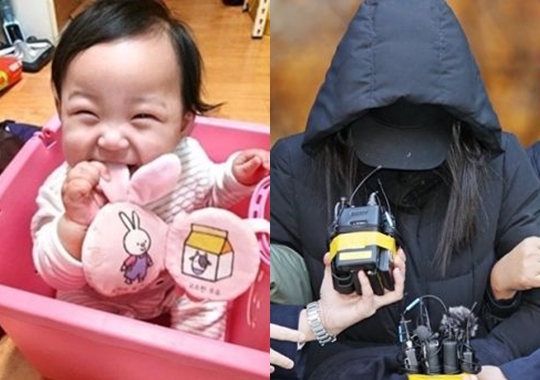
[Photo by Yonhap] #SorryJeongin Movement During the first three weeks of this month, many in Korea mourned for a dead infant, Jeong-in (정인), who was 16 months old when she died from domestic abuse at the hands of her adoptive parents. The giant wave of the #SorryJeongin (#정인아미안해) movement flooded many social media platforms. One of the most noticeable people who participated in that movement is Jimin from BTS. He uploaded a post with a black background and the words “I’m sorry” on Weverse. The Death of Jeong-in So, what happened to Jeong-in? Although Jeong-in’s story is one of many child abuse cases in Korea, her case received massive attention thanks to “Unanswered Questions (그것이 알고싶다),” a long-running popular TV program that covers current events and crimes. The program introduced Jeong-in’s story on January 2 with the title: “How did Jeong-in die -- assailants and bystanders of the past 271 days.” According to the program’s coverage, Jeong-in, who was eight months old then, was adopted through the adoption agency Holt International Children’s Services. Eight months after the adoption, on October 13, 2020, she was reported dead -- after having been brutally abused by her adoptive parents. What distinguishes Jeong-in’s story from many other such cases is that there were several attempts to stop the abuse. Before the baby girl died, three reports on domestic violence at the hands of the parents -- on May 25, June 29, and September 23, 2020 -- were made with the police. However, the police never conducted a thorough investigation of the parents and closed the case based on the foster parents’ testimony. What happened to Jeong-in on the day of her death? According to the police reports, in the morning of October 13, from 9:01 AM to 10:15 AM, the baby was abused as a punishment for “not eating her food.” As she lost consciousness and her heart stopped beating, Jeong-in was transferred to the Ewha Womans University Medical Center. However, the baby did not open her eyes again -- she died at 6:40 PM. The autopsy of Jeong-in’s body revealed that the cause of death was abdominal damage from an external force, which is solid evidence that she could have died from assault. The report also stated that the baby’s pancreas was severed and that she had untreated fractures on the back of her head, collarbone, and thigh bones. The incident caused nationwide outrage (Korean link), especially after the coverage by Unanswered Questions. The chief of the corresponding police station, Yangcheon, Seoul, was immediately replaced and the Commissioner of the National Police Agency made a public apology on how the police responded to the case. Thousands of people also endorsed a public petition filed with the Blue House, asking for the appropriate punishment for the abusive parents. Who Is to Blame? 1) The Police? Some people say that Jeong-in’s death could have been prevented if the police had taken the reports seriously. The police failed to visit Jeong-in’s home even after the three consecutive reports and failed to recognize the extent of the physical abuse. The Korean Society for the Prevention of Child Abuse published a statement on their official online forum that “Yangcheon police officials cleared their suspicion of the parents and terminated the reports, thus leaving Jeong-in to die from fractures, intestinal damage, and the severing of her pancreas.” While the police agreed that the baby’s death was indeed tragic and that the police could have done more to investigate, they said that they don’t have the authority to intervene in such cases. This is because domestic violence is generally perceived as a “family issue” and thus “private life.” The police cannot collect footage of security cameras, since private homes usually do not have those installed. The police can separate allegedly abused children from their parents only in an emergency with apparent signs of domestic abuse, according to the Act on Special Cases Concerning the Punishment, Etc. of Child Abuse Crimes (아동학대범죄의 처벌 등에 대한 특례법). And even if they do file charges to start the separation process, the parents may file a legal challenge to stop the process. Police officials added that child abuse cases require both thorough investigation and follow-up actions, which require more manpower and administrative support than the police have. Public service workers who specialize in childcare and other child protection services also need support, the police officials said. Oh Yoon-seong, professor of Police Administration at Soon Chun Hyang University, said the real problem is the protection of the children who are eventually separated from their abusive parents, besides the limited authority of the police. Prof. Oh added that the current aftercare system for abused children is not sufficient (Korean link). When public officials try to send children to designated shelters, the shelters often refuse to take the children because their rooms are full. 2) The Adoption Agencies? Processes surrounding foster homes and adoption in Korea have also come under scrutiny. In Korea, adoption was introduced as a humanitarian, good-hearted effort to house orphaned children after the Korean war. Some suggest that this is why there are not many regulations or legal provisions regarding adoption in Korea. Adoption agencies, less strictly regulated than other institutions and organizations, have long aimed for the highest number of adoptions possible to receive financial aid from other organizations and charities. The number of adoptions peaked in the mid 1980s but has fallen since then. Some agencies tell adoptive parents to do the bare minimum for their children and do often not carefully check for child abuse happening at the homes they monitor. Jeong-in’s agency, the Holt International Children’s Services, claimed that they followed Korea’s adoption guidelines, carried out counseling sessions with the foster parents, and provided follow-up care even after the adoption was completed, in face of the controversy. Disciplining Turned into Murder The criticism against Jeong-in’s adoptive parents intensified over time, with some protesters asking the prosecutors to charge them with literal death. The Yangcheon Police Office initially charged the mother, surnamed Jang, with child neglect, physical abuse, and child abuse resulting in death. The father, surnamed Ahn, was charged with aiding and abetting the abuse and child neglect. On November 19, the prosecution reviewed the case and charged Ahn with child abuse as well. While Ahn was not physically restrained, the mother was arrested. The prosecution later revised their indictment, now listing murder as the main charge and child abuse resulting in death as the preliminary charge. The prosecutors commented that the repeated violence even after the baby showed severe damage in the abdominal area and intestines show a clear intention to kill her. The parents and their lawyers denied the murder charge and said the baby’s death was not intentional. However, they admitted that there was physical violence, although its purpose was not to harm the baby but to discipline (Korean link) her. Changes, Ongoing Problems Several changes have been made since the incident. The police promised to establish a system (Korean link) that allows reports on crimes that involve vulnerable groups of society to go directly to the police chief and the corresponding officer in command. The Korean government also stated that adoption policies will be more strongly regulated from now on. Several revision bills on childcare also passed the National Assembly. Here are the highlights of the passed bills:
People in Korea started to talk about the issue of physical punishment at home again since Jeong-in’s death. Physical punishment within families is still a debated topic. While physical punishment in schools was banned about 10 years ago, punishment at homes is still considered something that is outside legal boundaries.
Will Corporal Punishment Get Banned in Korea?
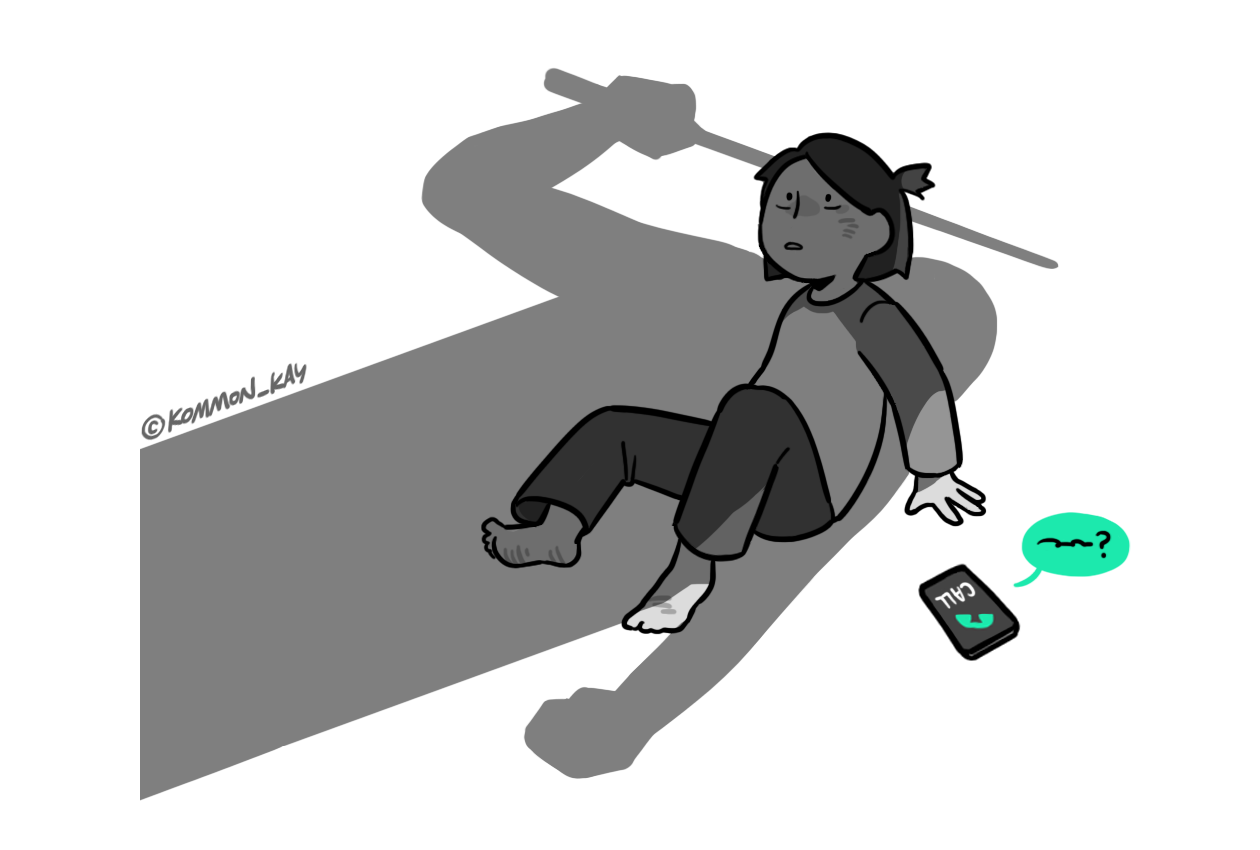
[Illustration by 케이] No More Corporal Punishment in Korea? Apart from the recent case of Jeong-in, there have been many other recent child abuse cases in Korea. Last June, in Cheonan, Chungcheongnam-do, a nine-year-old boy died after being locked in a suitcase by his stepmother for seven hours. In 2017, a child named Hyun-jun (Korean link) suffocated to death after his parents tied his neck with a leash. In 2014, a mother who was part of a pseudo-religious group killed and buried her three-year-old son (Korean link). She stated that her son was not properly potty-trained, and that she thought he had evil spirits inside him. She claimed to have killed her son to get rid of these evil spirits. As more and more child abuse cases have became known to the public, Korean society’s attitude towards corporal punishment has changed. On January 8, 2021, the National Assembly passed a bill that bans parents from using corporal punishment on their children. This new law prevents parents from using corporal punishment as an excuse when they are accused of child abuse. Debates Over the Ban on Corporal Punishment A survey (Korean link) conducted by CBS in May 2020 revealed that 43% of respondents were in favor of banning corporal punishment, whereas 47% were against it. 👊Proponents of a Corporal Punishment Ban Say: “Corporal punishment violates the fundamental human rights of children. There are many other disciplinary actions that parents can take -- it doesn’t have to be corporal punishment.”“There needs to be a law to prevent child abuse. In several child abuse cases, abusers claimed that they weren’t abusing their child, but trying to discipline them. Because the law protected a parents’ right to use disciplinary force on their children, the police had to accept that excuse. Only when corporal punishment is banned can abusers no longer use it as an excuse for child abuse.” ✋Opponents of a Corporal Punishment Ban Say: “While corporal punishment should not be the only way to discipline children, it still can be used when necessary. As such, banning corporal punishment is an intrusive policy.”“There may be a variety of side effects (Korean link) of banning corporal punishment. If the law punishes parents who engage in corporal punishment, abusers will be less willing to take their children to hospitals, for it will leave a piece of evidence that they abused them. In addition, this law may lead to divisions within families, because children may report their parents to the police.” In 1979, many Swedish citizens disagreed with Sweden’s decision to ban corporal punishment. Before the ban, 90% of households engaged in corporal punishment, according to a study published in 2010. However, within two years, 90% of parents replied that they agree with the ban. Only 10% of households reportedly engaged in corporal punishment after the ban. Although many Koreans may disagree with banning corporal punishment now, their position on the matter may change, as the parents’ viewpoint did in Sweden (Korean link). Will Corporal Punishment and Child Abuse Disappear in Korea? After the Jeong-in incident, members of the National Assembly have discussed to what extent the government should intervene in child abuse cases. As stated earlier in the Trending News section, the National Assembly has made some revisions (Korean link) on childcare regulations. However, experts say that corporal punishment and child abuse will continue. This is because there aren’t sufficient funds to support this new piece of legislation, and people’s attitude towards child abuse hasn’t changed significantly yet. 💸Money, Money, Money Before the recent legislative changes, the existing law stated the rights of children. However, the problem was the lack of budget to support the legislation. In 2021, the Korean government only spent ₩53 billion on preventing child abuse, which is 0.06% of the Ministry of Health and Welfare’s budget. For comparison, neighboring country Japan spends 0.5% (Korean link) of their Ministry of Health and Welfare’s budget on the prevention of child abuse. In 2014, each counselor at child protection agencies was responsible for 70 child abuse cases, which is more than three times the average number of cases assigned to a counselor in European countries. In Korea, there are only 76 shelters for victims of child abuse. These shelters can only accept up to 600 children (Korean link), and many children therefore do not have anywhere to go when they are separated from their parents. What’s worse, not all workers at these child abuse shelters are properly trained in childcare. Most workers also have their duties and positions changed every few years, which makes it difficult for them to take full responsibility for a case over the long-term. 👀Cultural Problems A 2018 survey revealed that four out of 10 parents (Korean link) believed that corporal punishment is necessary to discipline children. Moreover, child abuse is considered a private family matter, which makes third-party actors reluctant to intervene. While most Koreans are becoming more aware of the pervasiveness of corporal punishment and child abuse in Korean society, there are still practical as well as cultural problems which make it difficult to put an end to the practice.
Today's Vocabulary Hoecholi (회초리)
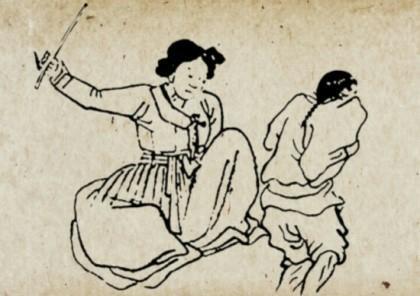
Hoecholi is a stick used for corporal punishment. In Korea, hitting the calf or palm of children has long been used as a light form of disciplinary action by teachers or parents. While hoecholi commonly refers to a thin stick, other objects like shoe horns, fly swatters, or clothes hangers are also used. As the practice is often considered a necessary measure to discipline a child, hoecholis are sometimes called “the rod of love”. This Week's Recommendations Unanswered Questions (그것이 알고 싶다) (SBS, 1992~) This is a 29-year-old Korean current events program aired on SBS. The program talks about unsolved mysteries and current political and social issues. Actor Kim Sang-joong has been the host of the show for the past 12 years. Many experts have gained prominence after being part of the show’s interviews. The show not only made the public more interested in social issues but has also helped arrest suspects of unsolved cases.
How was today's newsletter? We're waiting for your feedback! KOMMON TEAM 수수🌾 Sans🌻 바코🌊 오티오😈 쟈🍉 기린🌴 쏘🐥 기니👑 프레드🍰 라마🦙 타코🌮 Sunny🌞 호야🐻 가가🍒 케이☕ 코코🐦 Gumball🍬
|