For dark mode users,
Hello, reader! Today, we are covering: Cultural Insight: The Shutdown Law is Shut Down in Korea
Slang: 어그로(Eogeuro)를 끌다 This Week's Recommendations Ground Zero (그라운드 제로, 2021) Don't forget to leave your feedback below!
The Shutdown Law is Shut Down in Korea
Writer: Yeon Woo Lee, Solwon Pyeon Editor: Joonhee Cho Senior Editor: Regine Armann Editor-in-Chief: Fred McNulty Researcher: Yul Jun, Daeho Park, Sunny Um Illustrator: Ah-young Kim
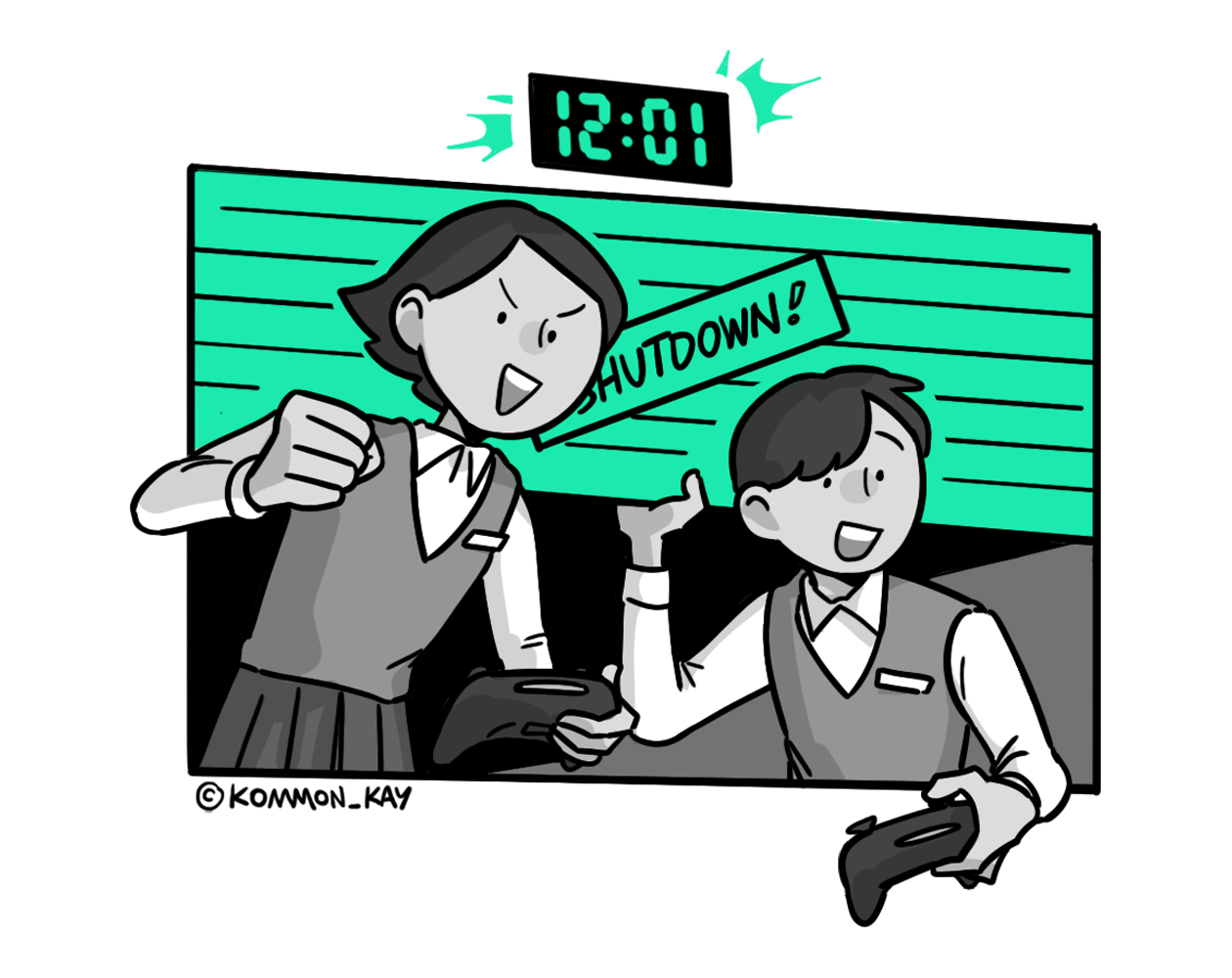
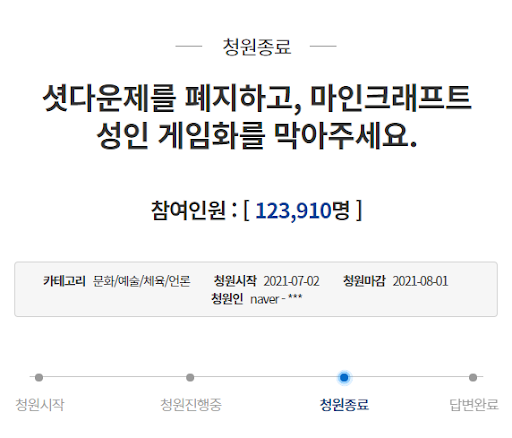
[Illustration by Ah-young Kim] After 10 years, the government recently decided to lift the infamous “gaming curfew”. The Youth Protection Revision Act (청소년 보호법 제26조), commonly known as the “shutdown law”, was originally implemented to prevent people under 16 from playing computer games between midnight and 6 am. After midnight, gamer IDs that are linked to minors’ identification numbers are automatically blocked. Online gaming companies are charged (Korean link) ₩10 million (or up to 2 years in prison for the person in charge) if they are caught providing game services to minors during the regulated time zone. This policy has caused a lot of controversies since its implementation. The gaming industry has claimed that the policy restricts users’ freedom to play games any time they wish. On the contrary, many in the medical community have claimed the law is needed to prevent damage, as playing computer games for an excessive amount of time can affect young people’s physical and mental health. Now, the government changed the system from a “total shutdown'' to a “selective game time system”. While the original shutdown policy generally restricted the time users under the age of 16 were allowed to play, the selective system provides more flexibility when it comes to choosing times to play and has a higher age limit. People under 18 or their legal guardians can now set up (Korean link) the desired time range (both day-wise and time-wise) for playing computer games. What was the reason behind Korea’s sudden modification of this policy? And why was this regulation even adopted in the first place? Background 1) Different perceptions toward computer games The adoption of the shutdown law in 2014 was largely based on differences in perception (Korean link) between parents and children when it comes to computer gaming culture. While younger generations who have adopted digital content from an early age embrace computer gaming as a culture and leisure activity, older generations who have no real experience with such games do not acknowledge them as healthy activities. The older generations’ views were all over the media during the time when adopting the shutdown law was first discussed. For example, “PC bangs” (PC방), computer centers where customers can play games for an hourly fee, were largely portrayed as places where juvenile delinquents gather and skip school. While PC bangs are cheap and 24/7 accessible spaces, PC bangs, and computer games are not a reason or driving force of youth delinquency. More and more parents nevertheless regard internet games and PC bangs as harmful for their children and started supporting the shutdown law more actively. 2) Prevent computer game addiction among teenagers The shutdown law was thus introduced due to Korean parents’ and teachers’ strong desire to prevent game addiction via legislation. Their worries grew further as Kwon Jang-hee, a manager of “Norimedia”, a non-profit organization that provides gaming addiction prevention education, mentioned in 2012 that the number of game addicts in Korea had reached 2 million (Korean link) and that almost half were teenagers on MBC’s 100 Minute Discussion (백분토론), one of Korea’s most popular television shows. He made this statement quoting the Ministry of the Interior and Safety’s “Investigation of Internet Addiction in 2010”. However, the numbers he provided were later found to be never mentioned in the quoted report.Public opinion toward internet gaming worsened even more when the WHO announced to include “gaming disorder” in its “International Classification of Diseases” (ICD) in 2019. Even though the Ministry of Culture, Sports and Tourism, which has positioned itself as an aide to the gaming industry, expressed its concerns (Korean link) and raised objections to the WHO classification, the Ministry of Health and Welfare agreed to adopt the new standard to Korea. 3) Ensure teenagers’ right to sleep Supporters of the regulation, mostly parents, say that restricting access to computer games from midnight to 6 am guarantees minors’ ability to sleep. This means that to protect children from gaming addiction and to keep them healthy, at least 6 hours of game-free time/sleeping hours should be protected by the government. Why did the Korean government now decide to apply less stringent regulations? 😬Online petition calling to stop Minecraft from becoming an “R-rated” game
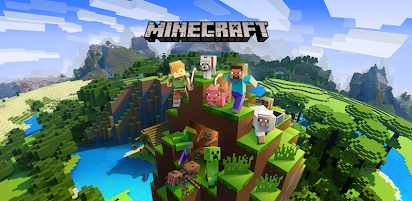
Source: Google Play Minecraft is a video game where players can build anything they want by using resources in 3-dimensional worlds. It has been recognized for its educational content and has also been used in classrooms as a creative learning tool. However, Minecraft changed its policy last year, to the effect that only people aged 19 or over will be able to play the game’s Java edition in Korea. Minecraft’s decision was based on a technical issue, as in Korea, gaming companies have to establish separate servers to shut down a specific group of users between midnight and 6 am. Rather than spending money on that process, Minecraft decided to change its target audience in Korea. Online communities of Minecraft gamers published a joint statement criticizing Korea’s shutdown law. A petition (Korean link) on the presidential office website called for the abolition of the shutdown law and wants to stop Minecraft from becoming an “R-rated” game.
The online petition calls for the abolition of the shutdown law. 📱Prevalence of multiple online contents including mobile games After the shutdown law was adopted in 2011, the media environment has drastically changed, and social media and the mobile game market have exploded. According to the Korea Creative Content Agency (KOCCA)’s “Investigation of Game Users in 2020 (2020 게임 이용자 실태조사)”, 82.4% of teenagers play mobile games while 58.8% play online games. This brings into question the effectiveness of the shutdown law, as it only regulates internet game players. 😴Questions regarding teenagers’ right to sleep One of the main arguments from those who support the shutdown law is that online gaming disturbs teenager’s sleeping habits. However, the KOCCA analyses show no significant relationship between the time teenagers play internet games and the time they spend sleeping, as outlined in its “2020 Game User Panel Survey (2020 게임이용자 패널 연구) ”. Moreover, The National Assembly’s Special Committee on the Fourth Industrial Revolution (국회 4차산업혁명특별위원회) announced that teenagers’ sleeping hours have increased only by 90 seconds after the adoption of the shutdown law. Stereotypes changing overtimes Last July, Euna Her, a member of the conservative People Power Party proposed a bill to repeal the shutdown law and change the term “internet game addiction” to “internet game indulgence”. Her insisted that using the word “addiction” is inappropriate (Korean link) as it suggests that gaming is a toxic activity. Further, it does not reflect the current status of gaming culture, which has developed into more of an art form, compared to the time when the shutdown law was first adopted. In addition, the public sector has come up with various projects (Korean link) to close the gap in perception between family members when it comes to computer games. For instance, the KOCCA has hosted its “Game Culture Family Camp (게임문화 가족캠프)” since 2015, where parents and children play games and get a chance to understand each other better.
Slang 어그로(Eogeuro)를 끌다 This word comes from the English word ‘aggravation’. The term first came out in a “massively multiplayer online role-playing game (MMORPG)” called EverQuest. When a soldier takes all the focus from the enemies while the same teammates are on the quest, that is when the soldier is “changing the aggro”, or known in Korean as "어그로 (eogeuro)를 끌다” or “어그로를 잡다". The word is now used when someone tries to draw others’ attention to themselves in a rather disagreeable or unpleasant way. It often refers to “attention seekers” in internet communities or to people who provoke others in an aggressive manner. Example: A: 야, 어제 어떤 사람이 자기는 한강 뷰가 보이는 아파트에 살면서 페라리 5대를 끌고 다닌다고 하더라. 선착순 5명한테 500만원 준다고 해서 트위터 난리였잖아. B: 그냥 어그로 끄는 거 아니야?🤷♀️ A: Hey, I heard someone lives in an apartment with a view of Han River and rides five Ferraris. He posted he would give ₩5 million to the first five people on Twitter and it went viral! B: He’s probably just drawing attention.🤷♀️ This Week's Recommendations Ground Zero (그라운드 제로, 2021) Krafton, the founder of the online game Battleground, produced its first short film called “Ground Zero”. The movie is a spinoff of the game Battleground and the PUBG (PlayerUnknown’s Battlegrounds) universe. Ma Dong-seok, known internationally as Don Lee, plays the main role of a notorious prisoner, Ma Gang-jae, battling other inmates who try to sell him out. Check out the official Battleground Youtube channel as well!
|