For dark mode users,
Hello, readers! Today, we are covering: Cultural Insight: Happy Seollal Everyone! Slang: 새해 복(福) 많이 받으세요. (“Saehae Bok Mani Badeuseyo”) This Week's Recommendations New Year Blues (새해전야, 2021) Don't forget to leave your feedback below!
Happy Seollal Everyone!
Writer: Yeon Woo Lee, Solwon Pyeon Editorial Assistant: Amal Kadir Senior Editor: Regine Armann Editor-in-Chief: Fred McNulty Illustrator: Ah-young Kim
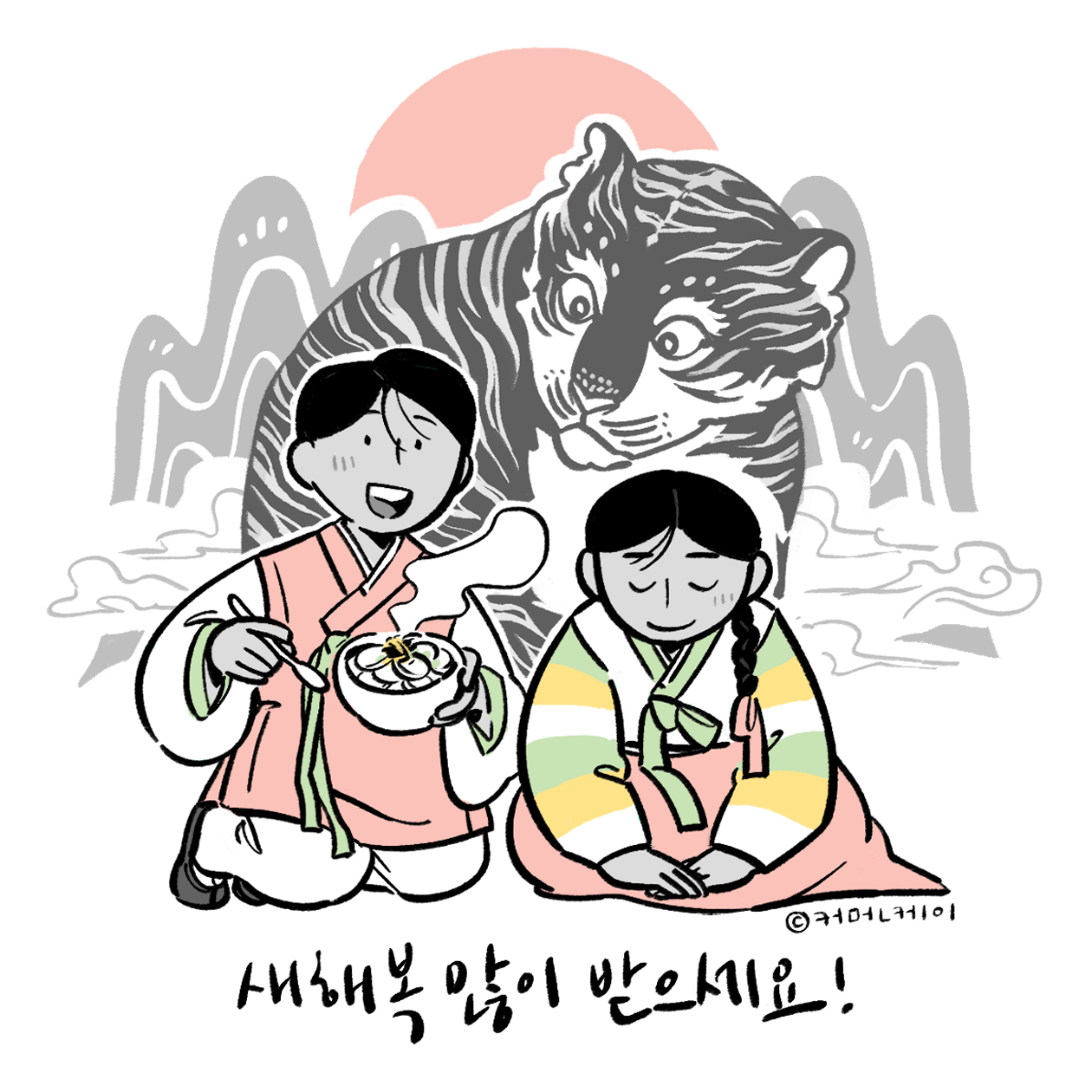
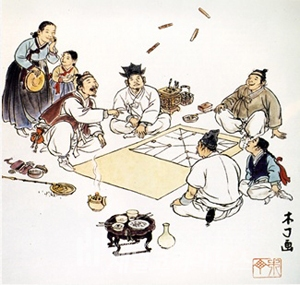
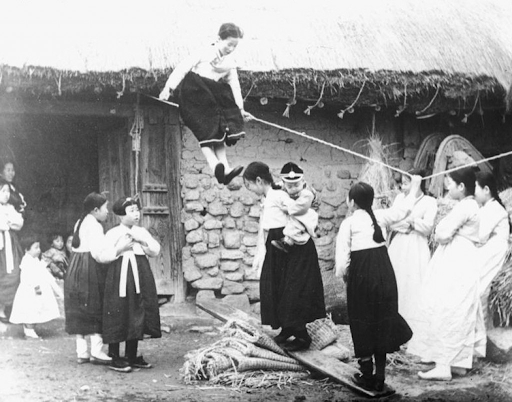
[Illustration by Ah-young Kim] It’s almost time for the biggest holiday of the year in Korea, Seollal (설날) or, as it is more commonly known, Lunar New Year. During Seollal, families gather to exchange words of blessings and good wishes for the new year. People travel back home, prepare special food, and pay respect to their ancestors. However, due to COVID-19, instead of highways packed with cars going home and houses filled with the smell of delicious food, Seollal this year might only feature small celebrations and look like just another normal day of the year. Since the pandemic started, things have changed a lot. Today, we will discuss how Seollal is typically celebrated in Korea and how the tradition has been impacted by the pandemic. What is Seollal? Seollal is the first day of the lunar calendar. Traditionally, Koreans considered the lunar calendar as important as the solar calendar, because it makes it easier to count the days without actually having a calendar. During the old days, farmers observed the changing shape of the moon to keep track of the days, and Seollal is one of the biggest holidays in Korea as it is considered the start of the year according to this ancient method. People celebrate and spend time with their extended family during this holiday. Seollal is not only one of the biggest holidays in Korea, but also the one with the most traditions to follow. Seollal Traditions In the following, we describe some of the common traditions practiced during Seollal. 1) Yut Nori and Nolttwigi (윷놀이, 널뛰기) During Seollal, Koreans often enjoy playing traditional games. The most common game is called yut nori (윷놀이). There is a map and tokens that are given to two players or two teams who take turns moving five sticks called yut (윷) into different directions. The sticks are named do (도), gae (개), geol (걸), yut (윷), and mo (모). Depending on how many sticks are facing forward after throwing the whole bundle on the ground, players can move their tokens. Whoever manages to get their tokens back to the starting point wins. For more information, check out these detailed instructions: How to play traditional Korean game Yut Nori (윷놀이) Next, we have nolttwigi (널뛰기). Nolttwigi is technically a stand-up see-saw. Two people stand on each side of a platform that can move up and down. One is always in the air and lifts the person on the other side up when they land on the platform again. This game used to be played by women. In the past, as women were more restricted and could not freely move and travel outside like men, it was believed women were able to see more of the world outside their residential walls by jumping higher on the nolttwigi. (Korean link)
Source: chkorea
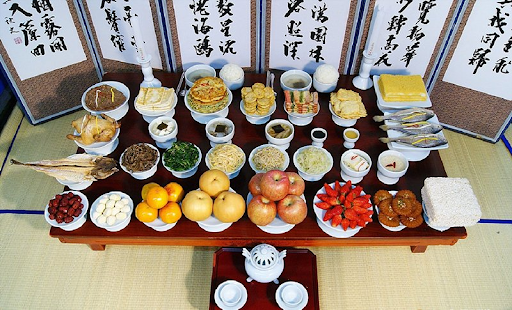
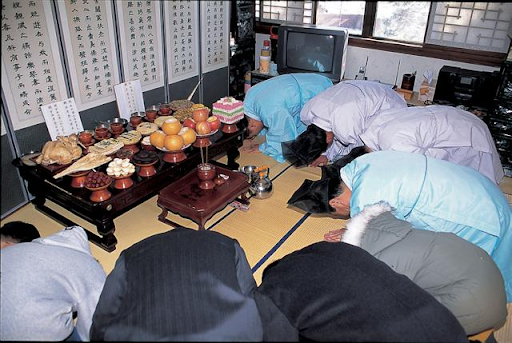
Source: National Museum of Korea 2) Charye (차례) Charye (차례) is a rite that is performed to remember one’s ancestors during Seollal and Chuseok (추석). Gi-jesa (기제사) and charye are the two common types of ancestral rites. They involve similar actions but have different meanings. Gi-jesa and charye both require a table full of seasonal fruits, meat and fish dishes, and other snacks that we like to share with our families such as yakgwa (약과) and hangwa (한과). However, for charye, the food table is usually much simpler and casual, mainly with just holiday treats like tteokguk (떡국), songpyeon (송편), or other seasonal food. Traditionally, the food is prepared by the lady of the house, and the ceremony is led by the man of the house where the family gathers for the rite (Korean link). After preparing the meal table, family members take turns bowing in front of the table to commemorate their ancestors. However, the purpose of gi-jesa is to mourn one’s own ancestors on the day of their death, whereas charye is more ceremonial and is dedicated to all ancestors. There is a difference in the location the rite is performed at, too. While both rites are normally done at home, charye can also be performed at the graveyard. Moreover, gi-jesa is typically performed during the nighttime, whereas charye is performed in the morning (Korean link).
Charye table Source: 설 차례상 차림그림 및 설 차례상 차리는 방법
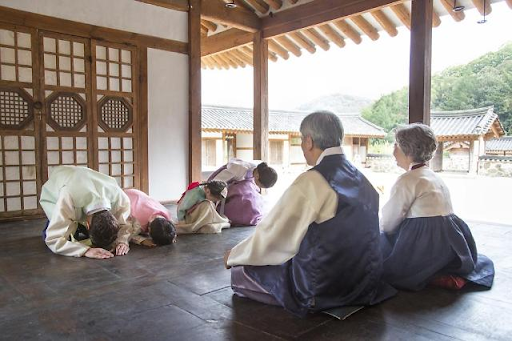
People bowing to the ancestors Source: 설차례 - 표제어 - 한국세시풍속사전 3) Sebaetdon (세뱃돈) Sebae (세배) is a Seollal tradition where the younger members of the family greet and bow to the elders. Families who do charye normally do sebae after completing the charye rites. After the bow, the elders give words of blessings and prepare some cash for them in return. The cash is what we call sebaetdon (Korean link). The amount can vary depending on how much the elders are willing to give. When this culture first started, it involved exchanging rice cakes or fruits, but since the early 1960s, the culture gradually changed to giving money, which signifies luck for the upcoming year.
People doing sabae to elders Source: 세배하는법
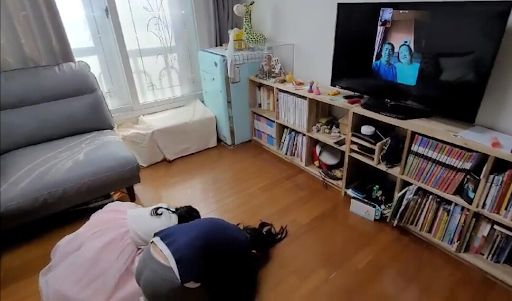
Sebae is practiced online, too, lately, since many people cannot visit their families due to social distancing rules 4) Tteokguk (떡국)
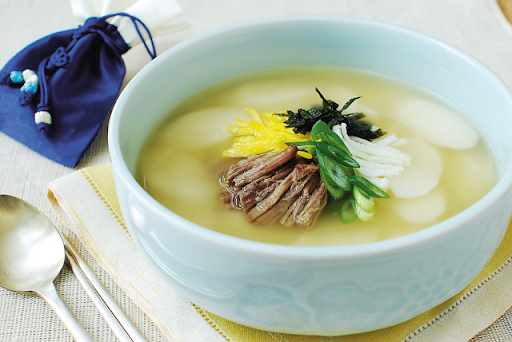
Source: Korean Bapsang Tteokguk (떡국) is a soup made with rice cakes served in a meat or anchovy broth. Tteok (떡) means rice cake and guk (국) means soup in Korean. Although it is not certain when Koreans started to incorporate rice cakes into a soup, the dish is mentioned (Korean link) in the Dongguksesigi (동국세시기), a 19th-century book that explains Korean culture and customs. In the past, rice cakes were not common as rice was scarce. Therefore, Koreans ate rice cakes on special occasions, for example, to celebrate Seollal. The custom is still practiced today. The ingredients and taste of tteokguk vary by region, and every home has its own version. Egg, seaweed, and green onions are added as garnish and for more flavor. Moreover, there’s a funny saying that eating tteokguk at Seollal will make you a year older—kids therefore sometimes ask for an extra bowl of tteokguk, hoping to get older faster. 5) Gift-Giving Culture
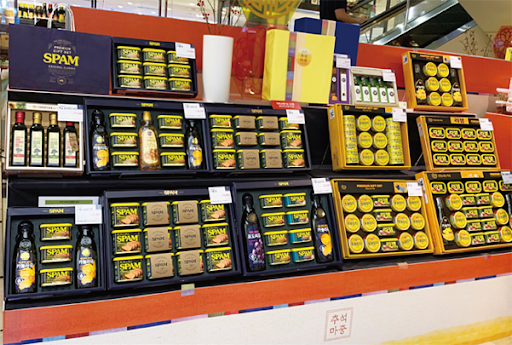
Source: Chosun Il-bo Koreans bring or send gifts to their family or business partners at Seollal to express their gratitude and love. This culture is not very different from other gift-giving cultures. However, instead of preparing something special for the day, Koreans usually give daily supplies or food as presents. A variety of gift sets are displayed on store shelves during this time of the year. Items vary from fruits and meats to toiletries. Spam and fruits are amongst the most popular gifts to share. How Have the Lunar New Year Traditions Changed? 1) No/Shorter Family Gatherings Normally, Seollal is a time for Koreans to return to their hometown to visit their families, and the bustling city of Seoul is usually empty during these days. However, due to the pandemic, people are either shortening their family visits or opting not to visit them at all. The government announced special measures against COVID-19 from January 20 to February 2, to prevent the further spread of the virus during Seollal. For example, passengers can only sit in window seats (Korean link) on trains to keep their distance from other passengers, and highway rest stops will prohibit customers from eating indoors. 2) Gift Givings Go Online According to Kakaopay (카카오페이), the number of people using digital Kakao “Seollal envelopes” to transfer money has increased to 271% in 2021 compared to the previous year. The amount of transferred money has increased to 442.4% (Korean link) as well. Rather than bringing the gifts by themselves, people are now using postal deliveries to send gifts during Seollal. This demonstrates how the pandemic has made it harder to gather and maintain close relationships. To cope with sudden increases in postal services, the government announced that they will prepare a workforce of around 10,000 extra delivery personnel (Korean link) for the parcel industry. While traditions are changing and people are resorting to online methods to celebrate Seollal due to the pandemic, the love for our families and friends and respect for ancestors will remain unchanged. We hope our readers have a wonderful Seollal!
Slang 새해 복(福) 많이 받으세요. (“Saehae Bok Mani Badeuseyo”) “Saehae Bok Mani Badeuseyo” is a way of saying “Happy New Year” in Korean. Saehae (새해) means “new year”, Bok (복) means”‘luck”, and Mani (많이) means “a lot of”. Badeuseyo (받으세요) is the respectful imperative form of the verb Batda (받다), meaning “to receive”. The phrase literally translates into “Please receive a lot of luck in the new year” and can be used both in formal situations and casual greetings. This Week's Recommendations
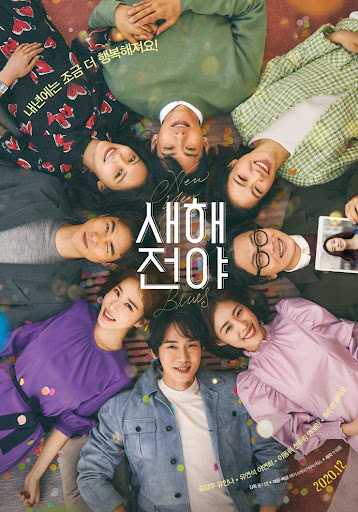
New Year Blues (새해전야, 2021) Available on Watcha (114 mins) The story follows four couples one week before the new year. A demoted detective comes upon a love interest in the civil service office; two people meet by chance on a trip to Argentina; a travel agent faces a personal struggle when his family is confronted with the fact that he is marrying a foreigner, and a paralympic player confronts the struggles of his relationship in the face of societal acceptance and prejudice. Get your own dose of holiday cheer from these endearing tales of love and connection.
|