For dark mode users,
Hello, readers! Today, we are covering: Index Zoom In No Social Distancing Anymore
Today's Vocabulary 마기꾼 (magikoon, maskfisher) This Week's Recommendations Pachinko (파친코, 2022) Don't forget to leave your feedback below!
Editor’s Note If you enjoy reading KOMMON and would be interested in joining our all-volunteer team, please consider taking a look at our open positions. We are currently looking for an Assistant Writer, a Staff Researcher, as well as someone who can produce visually appealing illustrations. As we explored last week, these positions have reasonable time commitments. If you are interested, please join us!
No Social Distancing Anymore Writer: Haram Lee, Loren Sarenas Editor: Sulagna Banerjee Senior Editor: Regine Armann Editor-in-Chief: Fred McNulty
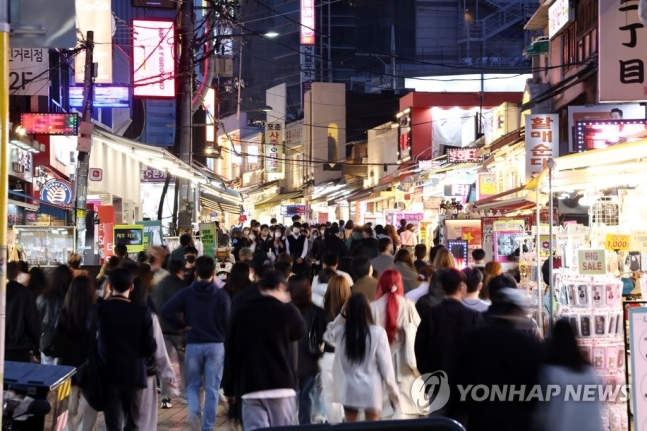
Photo by Yonhap After 757 days since the start of the COVID-19 pandemic in South Korea, the government has decided to lift all social distancing measures. This means that there is no limit (Korean link) to the number of people who can gather at a restaurant anymore, that business hours of restaurants and other establishments are not restricted anymore, and that dining-in at theaters and cinemas is allowed again. In addition, concerts and sports games can accept spectators at the facility’s maximum capacity. The first social distancing measures were implemented on March 22, 2022. Now the measures were lifted on April 18, 2022. Some people are welcoming the change while others still have concerns about safety. On the first day of their new “free from social distancing” life, many people gathered somewhere in Seoul to spend time with their friends and colleagues until late at night. Many are welcoming the shift back to the pre-Covid era. Popular neighborhoods, such as those around Gangnam (강남) and Hongdae (홍대) were packed with people well past midnight. Many were busy catching up with their loved ones, and restaurants were packed. Also, business owners were feeling a sense of relief as well. They were glad that their customers were finally coming back and had high hopes of making profits again. The South Korean government has been cautious about lifting the mandates because COVID cases had been hitting record highs until last month, driven by the recent Omicron surge. However, given that the Omicron variant seems to cause less severe illness, and maybe due to the population’s general fatigue after 2 years of restrictions on businesses and gatherings, “life after Covid” is officially here now. As for religious gatherings (Korean link), churches and temples can also go back to holding full, in-person, late-night congregations.
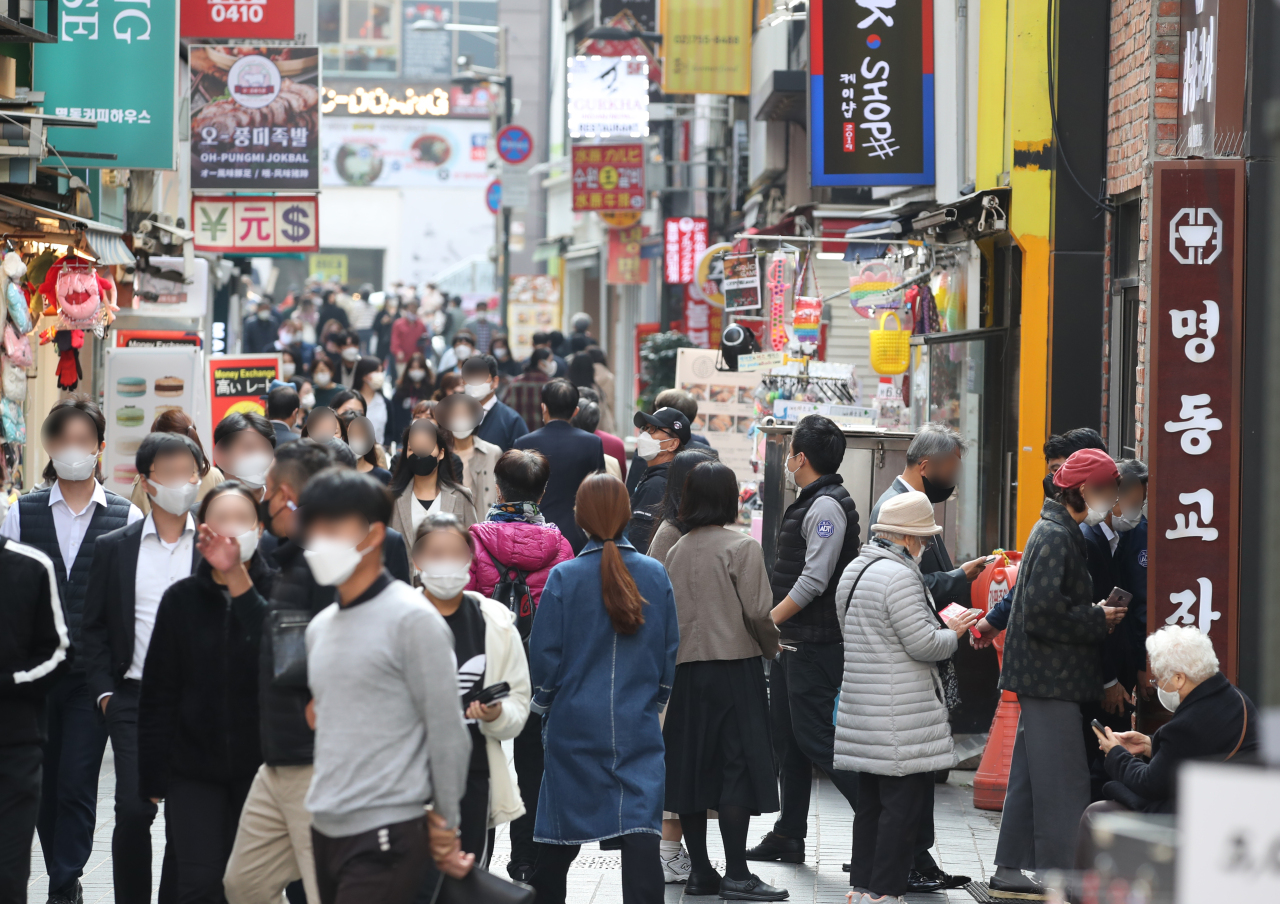
Photo by Yonhap What We Still Cannot Do There is still one thing that we need to stick to: wearing masks. Masks are still required to be worn at all times indoors for now, but this obligation is being anticipated to be lifted as well. The government has planned to re-consider policies toward mask mandates after observing COVID cases for 2 more weeks (Korean link). Masks still need to be worn in outdoor spaces where people cannot be 2 meters apart from others. However, even in many cases where masks could be legally removed, people are still wearing them. Even when not required, some people do not want to hassle with worrying about when a mask is necessary and when it is not, whereas others do so to ensure maximum protection from airborne illnesses. Others do so to avoid having to wear make-up. Remember the Curfews? Until April 18, curfews have been in effect everywhere in the country. Restaurants had to close at 21:00 for many months, and it was only last year when the government extended the general curfew to 22:00. Because of illegal late-night businesses, restaurants could not maintain their customer numbers and many went out of business. How the Disease is Dealt With Now The government’s approach towards dealing with the disease has changed as well. From the very start of the pandemic, COVID-19 has been classified as a “Tier 1 disease,” the highest level in the hierarchy of disease classification ranging from Tier 1 to Tier 4. However, the new mandate now considers COVID-19 a Tier 2 disease. The main reason behind this change was the low fatality of Omicron and the apparent inefficiency of strict social distance mandates in light of the higher infectiousness of the variant. There will thus be differences now in the way the disease is dealt with. The first change is that quarantine will soon be made an option, not an obligation. Furthermore, COVID-19 relief funds will no longer be provided as the disease will be considered a less urgent matter of national health. Concerns and Responses to the Changes However, amid lifting the restrictions, there are concerns that the government is rushing things too much and that this could lead to a sudden resurge of COVID cases. To address these concerns, Korea will go through a week of a “grace period” during which current COVID-19 protocols regarding quarantine and treatment will be maintained. Schools and companies have started going back to normal days. Students have started coming back to classrooms for in-person classes. If a student or worker is infected, only the infected person is subject to quarantine. Also, as late-night gatherings are back in daily life, hoesik (회식) is also back on the table. Public health centers (보건소) will continue to offer COVID tests, but as the number of new patients is decreasing, the government is planning to stop rapid antigen tests and only keep PCR testing. PCR testing will be available only for those with a positive self-test, infected family members, and those with a doctor’s note. All the testing is done completely free of charge. Until March 1st of this year, “vaccine passes” were required to enter certain establishments and participate in events, authorized via a QR code. The government-made application called “COOV” (COrona OVercome) can display a vaccine certificate, which can be used as a vaccine pass. However, QR code check-ins are no longer compulsory, and the COOV app is now pretty much optional. There has been some speculation that it could serve as an official vaccine certificate for domestic and international use, but nothing is set in stone yet. Furthermore, hospitals nationwide will now be treating COVID patients. In the earlier stages of the pandemic, only large hospitals or designated treatment centers were eligible to treat people with COVID. However, local clinics are now allowed to treat patients with COVID as well, so that people can get diagnosed more easily and prescribed medicine at their convenience. Non-citizen short-term travelers from almost every country will have an easier time as well. Those who are unvaccinated or do not wish to disclose their vaccination status have to quarantine for only 7 days (Korean link), which is down from the original period of 14 days and the revised period of 10 days. Those who have been vaccinated are exempt from quarantine if they receive a negative PCR test within one day of arrival. All visitors to Korea, regardless of vaccination status, must receive a negative test within 48 hours of leaving for Korea. If they are staying for more than seven days, they must also receive a negative test between six and seven days after arrival.
Today's Vocabulary 마기꾼 (magikoon, maskfisher) A new slang expression that was created in Korea during the COVID-19 pandemic describes a person who deceives others in terms of their appearance because they look better with a mask on. A: 어제 소개팅한사람 어땠어? B: 완전 마기꾼이었어! 대실망. A: How did your blind date go yesterday? B: This person was a total maskfisher. What a disappointment. This Week's Recommendations
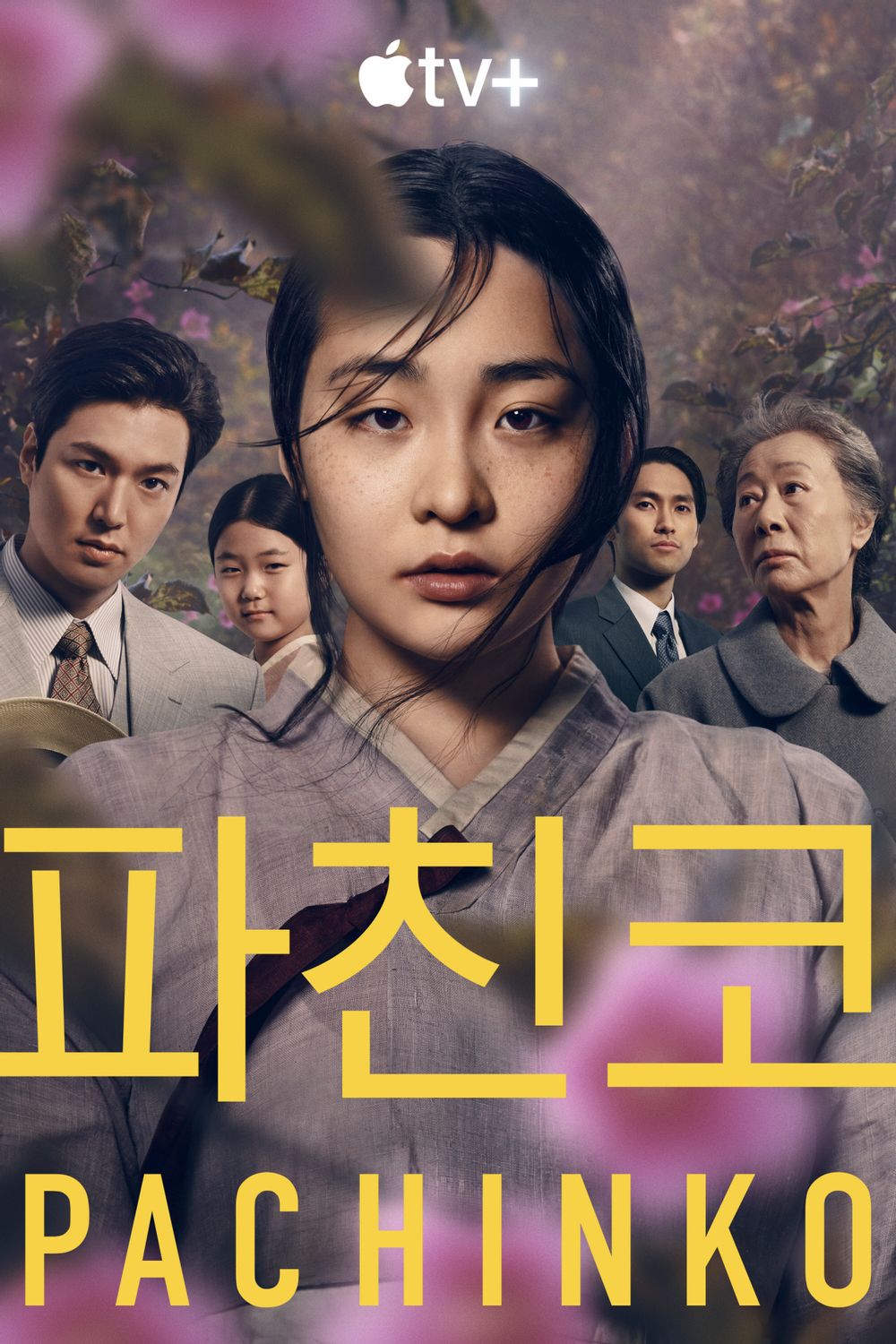
Pachinko (파친코, 2022) Available on Apple TV+ Pachinko is a story that traverses three generations of a Korean family and their hopes and struggles through the Japanese rule and ultimately, their life in Japan and beyond. Kim Sun-ja was born and raised in Busan, Korea in the early 20th century, while Korea was under Japanese rule. She falls in love with a man named Koh Han-su. She can see that he is a powerful person and from a different social class but is unaware of his background. Meanwhile, a church priest named Baek Isak comes to stay at the lodge run by Kim Sun-ja's mother who cares for him while he battles a bout of tuberculosis instead of reporting him to the authorities. When he learns of Kim Sun-ja's situation, he tries to give her advice, but when he experiences her unwavering conviction, he offers to marry her and raise the child as his own. Kim Sun-ja soon moves to Japan with him and faces difficult times as a Korean immigrant living in an unfamiliar land. In New York City in 1989, Solomon Baek is determined to succeed in the corporate world. A company wants to build a new hotel in Tokyo, but a Korean woman refuses to sell her land where the hotel is to be built. Solomon offers to his bosses to travel to Tokyo and persuade the woman to sell her land to the hotel group. He also goes to see his family there.
💚 Support us! 💚
|