Solidiem revived as a key beneficiary in the AI era KOSPI ▲4,624.78│ KOSDAQ ▲949.82│ KRW/USD▼1,468.40 |
|
|
As of 3:30 p.m. on the previous trading day |
|
|
✴ MBK Partners╎After prosecutors sought arrest warrants for Chairman Kim Byung-ju and other executives, MBK Partners denied all allegations, saying they were based on a misunderstanding by prosecutors. The firm also rejected claims related to Homeplus’s rehabilitation, stating it would clarify all issues in court and demonstrate that the investigation is excessive.
✴ IMM Private Equity╎As the Ministry of Oceans and Fisheries said the sale of Hyundai LNG Shipping held by IMM Private Equity and IMM Investment would not significantly disrupt the transport of strategic materials, concerns over government opposition have largely eased. The SPA with Indonesia’s Sinar Mas Group now awaits only approval from the Ministry of Trade, Industry and Energy, bringing the IMM consortium close to an exit after 12 years.
✴ EMB╎KONEX-listed EMB saw its planned move to KOSDAQ delayed, prompting the Villangs–SolidOne consortium, one of its major shareholders, to sell its entire stake via a block deal. The consortium recovered about $3.4 million (₩5 billion) in around 26 months, posting an IRR of about 5 percent, highlighting limits in KONEX exit conditions.
✴ Creon Unity╎IBK Venture Investment and Axis Investment invested $20.6 million (₩30 billion) in Creon Unity by combining policy finance, private capital, and strategic investors. The funding is seen as strengthening management stability while laying the groundwork for mid- to long-term expansion in financial IT infrastructure.
✴ Korea Investment Accelerator╎Despite a sluggish venture investment market last year, the firm made $8.2 million (₩12 billion) in new investments focused on AI, deep tech, and biotech startups. It is reinforcing a strategy that supports companies from early stage through scale-up, alongside follow-on investment and global and academic partnerships.
✴ JKL Credit╎JKL Credit is pursuing management control of DSEV to recover its investment and normalize operations, but approval of a waiver by a local Polish bank remains the final hurdle. With earnings uncertainty amid a downturn in the secondary battery market, it is cautiously weighing whether to convert bonds with warrants into equity for a buyout.
✴ Onconic Therapeutics╎Following successful drug commercialization, Onconic Therapeutics’ share price surged after listing, leading early investor BNH Investment to proceed with a strategic exit. BNH invested $4.1 million (₩6 billion) over four years and recovered $17.1 million (₩25 billion), achieving a four-times multiple and an IRR in the high-30 percent range.
✴ Nara Space Technology╎POSCO Technology Investment has begun recovering its investment by gradually selling its stake after a post-IPO share price rise. It invested $3.2 million (₩4.7 billion) through initial and follow-on rounds and has recovered $12.8 million (₩18.6 billion) so far, with a five-times multiple expected including remaining shares.
✴ Daishin Private Equity╎Moving beyond a traditional industry focus, the firm has invested tens of millions of dollars in growth-stage new-space companies Telepix and Next Aerospace. Rather than seeking quick exits, it is expanding its mid- to long-term investment scope into defense and space by emphasizing technology validation and commercialization potential.
✴ Musinsa Partners╎After investing $2.1 million (₩3.1 billion) in AU Brands in 2022, it began its first exit by selling part of its stake following the IPO. It secured $1.1 million (₩1.6 billion) in cash from a small sale alone, and including the remaining stake, the total recoverable amount exceeds $41.2 million (₩60 billion), delivering a simple multiple of about 20 times.
✴ Daishin Private Equity (Daishin PE)╎Amid competition in HBM, it acquired approximately $27.4 million (₩40 billion) in exchangeable bonds of semiconductor inspection equipment maker Techwing, betting on the repeat-demand structure of the testing process. The investment is viewed as targeting a defensive return structure linked to mass-production volumes and capital expenditure, rather than to industry cycles.
✴ SKS Private Equity╎During the fund formation process, the share of capital from related parties rose to as high as 40%, effectively blocking the attraction of external investors. If the fund fails to close, restrictions on participation in Korea Development Bank capital commitments could apply, making whether the fund can be formed within the remaining period the biggest risk.
|
|
|
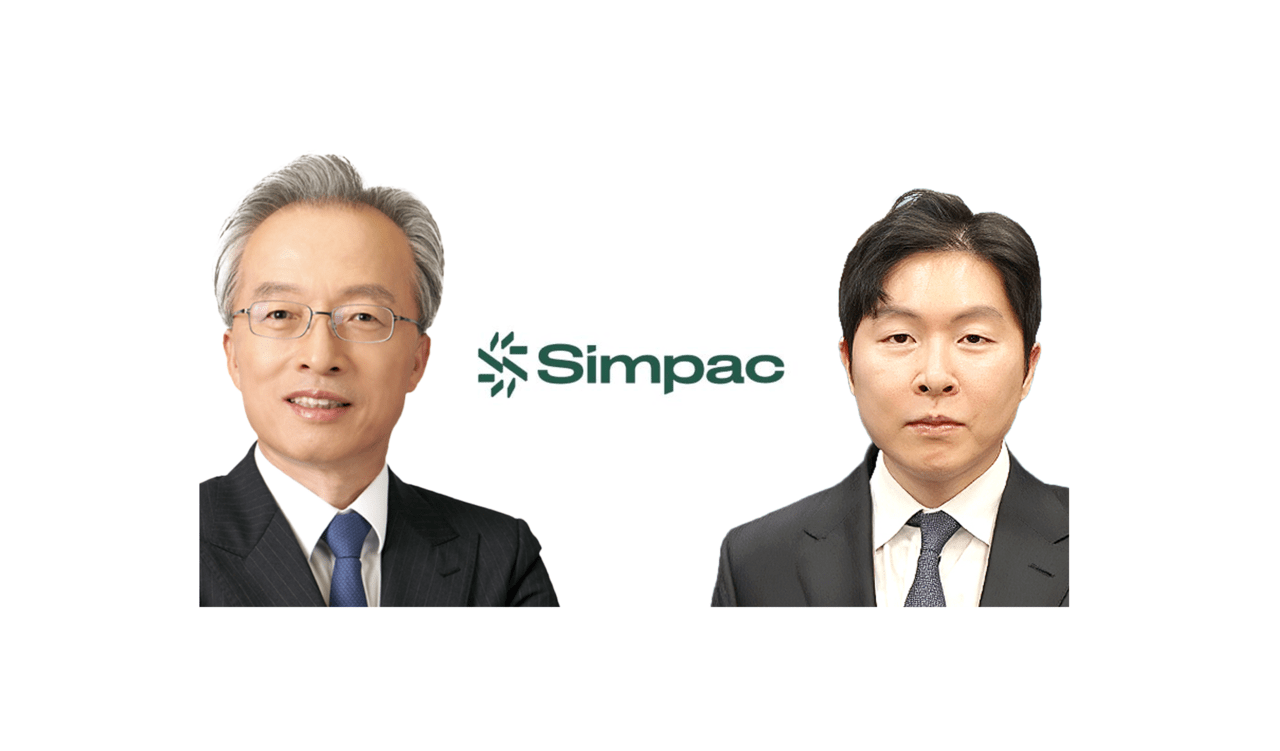
Will Simpac’s second-generation succession be wrapped up with treasury shares? |
|
|
⭑ Where did the 1.68 million treasury shares go?
On the 17th of last month, Simpac decided to dispose of 1.68 million treasury shares. Of these, 1.5 million shares were donated free of charge to the company’s employee welfare foundation, while the remaining 180,000 shares were granted as bonuses, 10,000 shares each, to 18 executives including Vice President Choi Min-chan.
Treasury shares held by a company carry no voting rights. However, once they are transferred to a welfare foundation or individuals, they become owned by independent entities and voting rights are restored. Employee welfare foundations are generally classified as internal organizations aligned with management, and shares granted to executives also gain voting rights under individual ownership.
Last year, Hanjin Kal similarly donated all of its treasury shares to its welfare foundation to counter Hoban Construction. Simpac said the treasury shares contributed to the welfare foundation would be managed as a long-term holding to generate dividend income, adding that dilution of share value would be minimal.
⭑ Vice President Choi Min-chan’s stake status
Vice President Choi Min-chan became the largest shareholder of Simpac Holdings in 2007 and currently holds a 39.6 percent stake. From 2010 to 2024, Simpac Holdings paid dividends totaling $25.7 million (₩37.5 billion), of which $10.2 million (₩14.8 billion) went to Choi.
When Simpac absorbed Simpac Holdings through a reverse merger in 2024, Choi became the second-largest shareholder of the listed company Simpac. He did not hold Simpac shares prior to the merger, but secured a direct stake through the recent treasury share bonus grants.
Choi Min-young, executive director and eldest daughter of Chairman Choi Jin-sik, was also included among the recipients of treasury share bonuses. She joined the company in 2018, was promoted to executive director earlier this year, and currently serves as head of procurement and finance at Simpac Holdings as well as head of the management division at Simpac.
⭑ Potential uses for the remaining 10 million treasury shares
Even after this disposal, Simpac still holds around 10 million treasury shares, equivalent to about 15 percent of total outstanding shares.
There are several ways to utilize treasury shares. One option is issuing exchangeable bonds. In the second half of last year alone, companies such as DB HiTek, Harim Holdings, Cuckoo Holdings, Shinsung ST, SP Systems, Ice Cream Media, Huons, Aurora, and Tess issued exchangeable bonds backed by treasury shares.
If investors exercise exchange rights, shares that were held as treasury stock or could have been canceled are released into the market, creating overhang risk. Conversely, if weak share prices prevent conversion, the company must repay only the bond principal.
Another option is building voting-right alliances. A recent example involved TS Investment, KX Innovation, and ODITEC. TS Investment purchased $2.1 million (₩3 billion) worth of KX Innovation treasury shares and $1.0 million (₩1.5 billion) worth of ODITEC treasury shares, followed by third-party allotment capital increases. KX Innovation and ODITEC then paid in cash equivalent to the purchase amounts, effectively converting non-voting treasury shares into common shares without cash outflows.
|
|
|
A capital markets official said that Simpac’s treasury share strategy makes it difficult to avoid criticism that it prioritizes the controlling shareholder’s interests over consideration of the government’s push to revise commercial law, noting again that around 10 million shares remain that could be used as a strong bargaining tool.
This use of treasury shares can be seen as a way to strengthen Vice President Choi Min-chan’s effective control while minimizing additional capital input. Securing friendly stakes through the welfare foundation and expanding direct ownership via executive bonuses are both efficient strategies from the controlling shareholder’s perspective.
From the viewpoint of minority shareholders, however, the picture may differ. How the remaining 10 million shares are used could lead to share value dilution or changes in voting power. As the strategy focuses more on management control and defense than on shareholder returns, Simpac’s future plans for treasury share disposal warrant close attention. |
|
|
Solidiem revived as a key beneficiary in the AI era |
|
|
⭑ Returned to profitability with QLC NAND flash
Solidiem, the U.S. subsidiary of SK hynix, has posted notable growth. As of the end of the third quarter last year, Solidiem’s net profit margin was close to 5%, the second-highest among SK hynix’s major subsidiaries.
Solidiem’s flagship product is quad-level cell (QLC) NAND flash. NAND flash is classified by how much information can be stored in a single cell. QLC divides each cell into four data states. Compared with the market-standard triple-level cell (TLC), QLC stores more data per cell, resulting in slower processing speeds, but offers higher capacity and lower prices.
Early last year, Solidiem exited the consumer general-purpose SSD market and shifted its focus to enterprise solid-state drive (eSSD) products using QLC, which are favored by data center customers. During this process, reduced production of TLC NAND products across the market led to supply-demand imbalances and higher selling prices.
Since being acquired by SK hynix in 2021, Solidiem had been considered a “pain point” after recording losses of about $73.7 million (₩107.4 billion) in 2021, about $2.3 billion (₩3.33 trillion) in 2022, and about $2.8 billion (₩4.03 trillion) in 2023. In 2024, however, it achieved its first turnaround to profitability, posting net income of about $569.7 million (₩830.6 billion).
⭑ AI inference era drives surge in data center demand
As the core of the artificial intelligence services market shifts toward inference, demand for high-capacity enterprise NAND flash has been rising sharply. Data centers equipped with high-performance computing infrastructure require large amounts of server storage to support fast and accurate AI inference, driving the rapid adoption of QLC eSSD products.
Hard disk drives (HDDs) have effectively been pushed out of competition, as shortages have driven prices sharply higher relative to performance. Solidiem has effectively come to dominate demand in the “ultra-high-capacity” segment.
SK hynix said in its third-quarter earnings call that the average selling price (ASP) of its NAND flash products rose by a low double-digit percentage. Market research firm TrendForce forecasts that NAND flash prices could rise by as much as 38% quarter on quarter in the first quarter of this year. In addition to expanding downstream demand, price increases are also expected as memory chipmakers allocate limited resources toward higher-margin products such as high-bandwidth memory (HBM).
⭑ IPO under review, but sale seen as difficult
SK hynix is pursuing a U.S. stock market listing of Solidiem to secure investment capital. However, the structure remains complicated due to the existence of a separate production entity in China. Previously, SK hynix transferred Solidiem’s plant in Dalian, China, to a Chinese subsidiary, taking into account U.S.-China tensions.
An industry source said SK Group had once considered selling Solidiem to China during the severe downturn in the NAND flash cycle, but the plan was withdrawn due to government concerns and geopolitical risks. “Even if the IPO is delayed, a sale would be difficult,” the source said.
Another industry source noted that Solidiem was long regarded as a burden for SK hynix during the NAND downturn, with significant employee dissatisfaction surrounding the acquisition. “As profitability has improved, centered on QLC NAND flash products, sentiment has clearly shifted,” the source said, adding that Solidiem accounts for a significant share of last year’s performance-based bonuses, which reached ratios of over 3,000%.
|
|
|
🎯IPO Rivalry╎A bid for a $6.9 billion valuation (₩10 trillion)
IPO competition is intensifying in the fashion and beauty sector. Musinsa and Goodai Global are both preparing listings targeting a valuation of $6.9 billion (₩10 trillion). Musinsa has already formed its underwriting syndicate, with overseas growth now the key variable. The focus is whether it can restore rapid growth by expanding both online and offline operations in China and Japan. Goodai Global is taking a different approach. With more than 10 brands acquired through M&A, the question is whether it can manage each brand independently while operating as a single entity in distribution and negotiation, putting its PMI capabilities to the test. |
|
|
📺Am I losing?╎First quarterly operating loss in nine years
LG Electronics’ TV business has faltered more than expected. Weak TV sales combined with one-off costs such as voluntary retirement expenses led to a quarterly operating loss for the first time in nine years. The fourth quarter was particularly challenging, as U.S. tariff risks and restructuring costs made losses hard to avoid. On a full-year basis, however, the picture looks different. Growth in B2B and platform businesses pushed overall revenue to a record high. The strategy for this year is clear: further expand high-margin businesses such as home appliances, automotive, and HVAC, while cutting costs and continuing platform expansion including webOS. |
|
|
🤖Stealing the show at CES╎Boston Dynamics’ Atlas
A symbolic moment emerged in robotics. Boston Dynamics’ humanoid robot Atlas was named “Best Robot” at CES 2026 by global IT outlet CNET. The newly unveiled next-generation electric Atlas features more natural walking movements and greater task flexibility, prompting assessments that it is now ready for real industrial use. Hyundai Motor Group plans to deploy the robot at its HMGMA plant in the United States from 2028, aiming to build a smart factory environment where humans and robots work together. |
|
|
💵Dollar exposure concerns╎SK On and POSCO face refinancing pressure
Foreign-currency bonds have become a major headache for corporate finance teams. Both SK On and POSCO need to refinance maturing foreign-currency debt. SK Battery America, SK On’s U.S. subsidiary, is preparing a green bond issuance of about $700 million (₩1.02 trillion), but higher U.S. Treasury yields have significantly raised funding costs. POSCO is also considering floating-rate bonds to ease interest burdens, but with the exchange rate hovering in the mid-₩1,450 range, both won-denominated debt levels and hedging costs are rising. As a result, foreign-currency bond refinancing has emerged as a key factor in determining financial stability rather than a simple funding exercise. |
|
|
💪Commitment╎Taking responsibility to the end
IPO underwriting strategies are also shifting. NH Investment & Securities is emphasizing the role of a partner that takes responsibility through the entire process, rather than competing solely on deal size rankings in the 2026 IPO market. From large deals such as K Bank and SK ecoplant to post-listing support, the firm aims to cover the full IPO lifecycle. The focus is on issuer trust and successful listings rather than short-term league table rankings, signaling an effort to revive its long-standing reputation through a globally connected, responsibility-driven IPO strategy. |
|
|
🧊KOSDAQ Listing╎Precision cooling technology IPO filing
RecensMedical has filed a securities registration statement and entered the KOSDAQ IPO process. The company plans to offer 1.4 million shares, aiming to raise up to $10.6 million (₩15.4 billion) based on the indicative price range, with bookbuilding scheduled for February and subscriptions in March. Backed by a precision cooling platform, it has built a portfolio of medical devices and validated its technology through global certifications and FDA De Novo approval. IPO proceeds will be used for production automation, R&D, and global sales expansion, accelerating its strategy to secure an early position in the cooling medical device market. |
|
|
2026 US IPO Anticipated Companies Analysis |
|
|
Discord
Discord originally started as a voice chat app for gamers, but it has evolved way beyond that. Today, it’s used for study groups, hobby communities, and creator-led spaces, basically a full-scale communication platform. Monthly active users are estimated at around 150 million, and most of the revenue comes from Nitro subscriptions and server boosts.
If Discord were to go public, the valuation often mentioned is around $15 billion, but there’s still no confirmed IPO timeline. You’ll sometimes hear Discord mentioned alongside AI communities, but it’s important to note that it’s more of a hosting space for those communities, not something that’s deeply or directly tied to specific AI companies.
Anthropic
Anthropic was founded by former OpenAI researchers, and the big idea behind the company is “Constitutional AI.” Instead of just pushing raw performance, they put a strong emphasis on safety, alignment, and interpretability. Their main model is Claude.
They’ve raised significant funding from Amazon and Google, which already tells you how seriously the market is taking them. In terms of valuation, around $40 billion is generally seen as the most realistic figure right now, while $60 billion is considered a more aggressive, top-end estimate.
OpenAI
OpenAI is the company that brought generative AI into the mainstream with ChatGPT. It also develops GPT-4-class models and advanced video-generation technology like Sora. Revenue comes from ChatGPT Plus subscriptions, enterprise API access, and business-focused solutions.
That said, OpenAI’s structure is very unusual. It’s a mix of nonprofit and for-profit entities, which makes the idea of an IPO pretty unclear. The $80 billion to $100 billion-plus valuation numbers you see floating around are based on private funding rounds, not a clear path toward public listing.
ByteDance
ByteDance operates TikTok globally and Douyin in China, with more than one billion users worldwide. Its AI-driven recommendation engine is one of the strongest in the industry.
The big issue is regulation. Ongoing concerns around TikTok in the US make a US IPO extremely unlikely. Even though private-market valuations have ranged from $200 billion to $270 billion, labeling ByteDance as a US IPO candidate isn’t really accurate.
Canva
Canva basically made design accessible to everyone. People who would never touch professional design software can create polished visuals in minutes. Monthly active users are reported at over 170 million, and the company runs primarily on a freemium model with paid subscriptions.
Based on recent internal share transactions, Canva’s valuation is estimated at around $25 billion to $26 billion, which aligns pretty closely with general market expectations.
SpaceX
SpaceX completely changed the space industry with reusable rockets. On top of launch services, it also runs Starlink, its satellite internet business, giving it two major revenue streams. The company holds multiple NASA contracts and dominates the private space infrastructure market.
Private-market valuations range from roughly $150 billion to $180 billion. However, Elon Musk has shown little interest in taking SpaceX public, so a near-term IPO looks unlikely.
Databricks
Databricks is best known for pioneering the data lakehouse architecture, combining data storage, analytics, and AI modeling into a single platform. It serves more than 9,000 customers, including many global enterprises.
As demand for AI infrastructure continues to grow, Databricks’ valuation is commonly discussed in the $43 billion to $55 billion range, and there’s relatively broad agreement around those numbers.
Stripe
Stripe is one of the core payment infrastructure providers for the internet. Its customers include Amazon, Google, and Shopify. Beyond payments, Stripe has expanded into services like Stripe Capital and Atlas, positioning itself as a broader financial platform.
Recent internal transactions suggest a valuation in the $65 billion to $70 billion range.
Overall
So when you zoom out, not all of these companies are equally realistic IPO candidates, even though they’re often grouped together. OpenAI, SpaceX, and ByteDance face structural or regulatory hurdles that make public listings uncertain or unlikely. On the other hand, Discord, Canva, Databricks, Stripe, and Anthropic look much more plausible as future IPO candidates.
That said, almost all of these valuation figures are based on private-market estimates. Changes in interest rates, regulation, or the broader AI cycle could shift those numbers significantly.
|
|
|
Meaning of Top-down in management? |
|
|
✴ SPA (Share Purchase Agreement)
A Share Purchase Agreement, usually called an SPA, is a formal contract used when buying and selling shares. When we buy listed shares such as Samsung Electronics or Hyundai Motor, a few clicks on a stock trading app are enough. The price is set automatically by the market, and there is no need to write a separate contract. The system handles the transaction.
Unlisted shares are completely different. Shares in startups, family-owned companies, or acquisition targets do not have a fixed market price. The seller and the buyer must meet and decide everything directly, including the price, when the money is paid, when the shares are transferred, and who is responsible if problems arise later. If this is left as a verbal agreement, disputes are almost guaranteed. An SPA is the document that puts all of this into writing.
The contract includes basic terms. It specifies who sells which shares to whom, how many shares are sold, the price per share, and the total amount. It also states when the deposit is paid, when the balance is settled, and when the shares are transferred. The procedure for registering the buyer’s name on the shareholder register is also included.
What really matters here is the detail. For example, the seller guarantees that the shares are not pledged as collateral, that there are no third-party preemptive rights, and that there are no hidden lawsuits or legal issues. The contract clearly states who is responsible if any of these turn out to be false later. If this part is weak, it can cause serious problems afterward.
In startup investment news, you often see phrases like “a VC invested in equity.” This does not mean just putting in money. The contract usually includes rights such as appointing directors, participating in major decisions, and the right to purchase additional shares in the future. In exchange for capital, the investor secures rights over the company through the contract.
In M&A, this becomes even more extensive. When acquiring an entire company or management control, the contract can run dozens of pages. Financial conditions and legal risks are thoroughly reviewed through due diligence, and responsibility for future issues is clearly allocated in the agreement. That is why people say in M&A that the contract itself is the deal.
Finally, this is important to remember. Paying the money and signing the contract is not the end. You only become a real shareholder after your name is registered on the company’s shareholder register. If this step is not completed, you could end up having paid the money without holding the rights. |
|
|
Send us any suggestions you’d like to share while reading Bitter’s newsletter! |
|
|
Advertising, inquiries : viter@thevistapartners.com / Published by Newstop. Unsubscribe |
|
|
|
|