Climatus College Giving New Life to Plastic: Hope in a Recycled Flowerpot – 2025 Earth Day, Seoul City Event at Yeouido Park
|
|
|
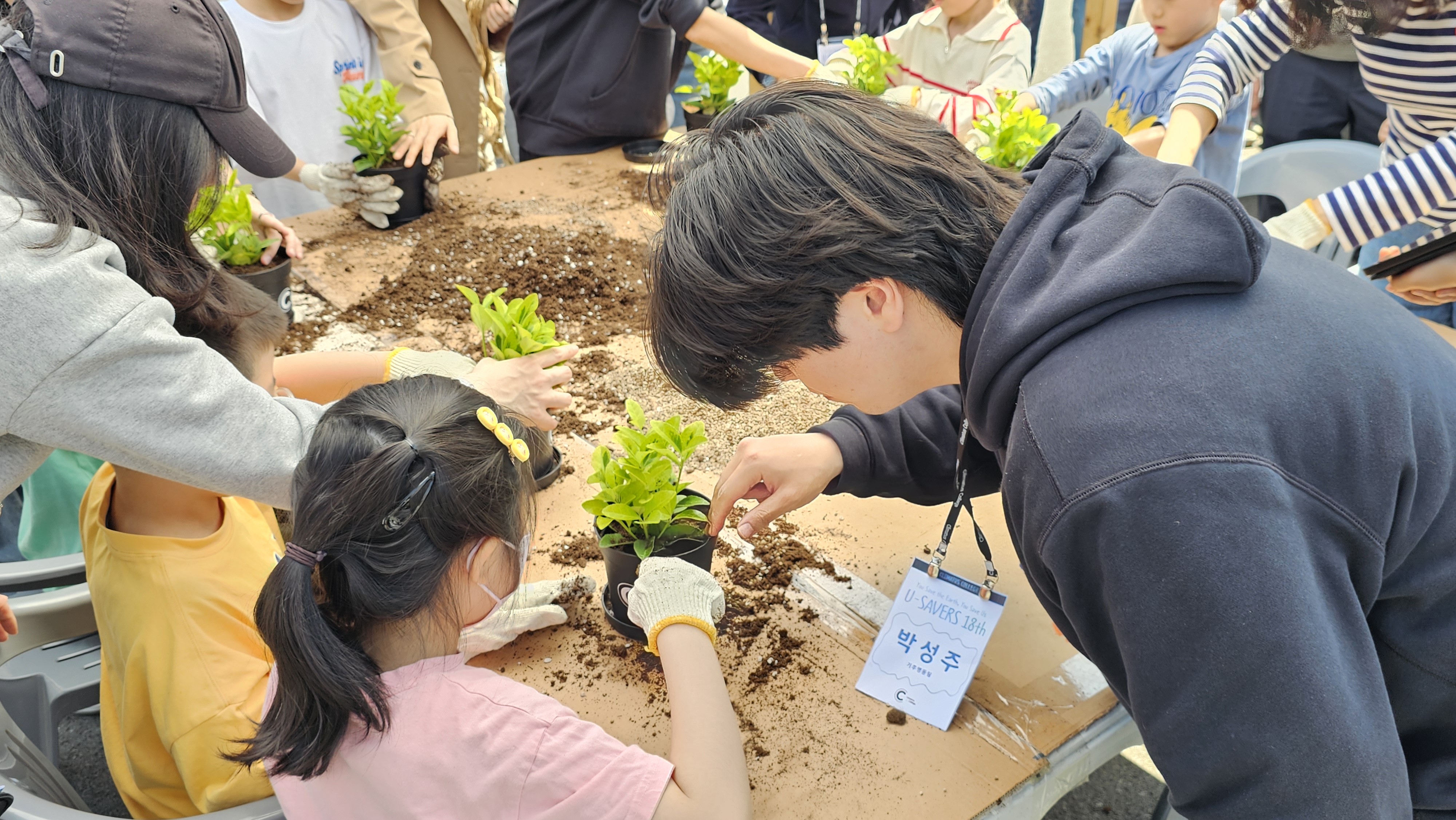
On April 20, the Seoul Metropolitan Government hosted an Earth Day celebration at Yeouido Park’s Culture Plaza, drawing participation from numerous environmental organizations and citizens. As part of the event, the Climate Change Center operated a booth titled “Hope in a GREEN Pot: Upcycling Waste Vinyl.”
According to the Ministry of Environment, more than half of the plastic waste found in volume-based garbage bags is vinyl waste that should have been sorted and recycled. In fact, of the 730 tons of vinyl waste generated daily in Seoul, 402 tons (55%) are incinerated or landfilled due to improper disposal. This reflects a widespread lack of awareness about vinyl as a recyclable material.
To address this, the Center invited citizens to take part in a hands-on activity using recycled plastic flower pots made from collected waste vinyl. Participants—ranging from children to families—planted greenery in the upcycled pots, engaging directly with the process of resource circulation. Through this experience, they gained a deeper appreciation for the value of recycling and the role it plays in building a more sustainable future.
|
|
|
Policy Field RE:VIEW The New Administration’s Climate Policy: Core Pillars of Ambition, Coherence, and Execution |
|
|
On May 8, the Climate Change Center hosted a policy forum titled “Policy Proposals for the New Administration: Ambition, Coherence, and Deliverability in Climate and Energy Policy.” The discussion focused on three key agendas: the formulation of Korea’s 2035 Nationally Determined Contribution (NDC), the transition of industrial and energy systems, and the restructuring of climate governance to support implementation.
Experts emphasized the importance of a coherent mitigation strategy, science-based policymaking, and market-based incentives to increase private sector engagement. There was broad consensus on the need to establish a new senior-level position for climate affairs, reform the current fragmented governance structure, and design a credible and actionable 2035 NDC.
Looking ahead, the Climate Change Center plans to hold a policy roundtable in the second half of the year in preparation for the launch of Phase 4 of Korea’s Emissions Trading Scheme (K-ETS). The Center will continue its dialogue with industries and related stakeholders to help develop pragmatic and field-based implementation strategies.
|
|
|
Carbon Market Brief Two Emerging Trends: Trust and Integrity at the Forefront |
|
|
In 2025, the global carbon market is undergoing a structural shift, shaped by two major trends : the tightening of international standards and the increased leadership of developing countries.
The Integrity Council for the Voluntary Carbon Market (ICVCM) has approved a new set of criteria to reassess approximately 423 million REDD+ credits, aiming to enhance environmental integrity. Meanwhile, the Science Based Targets initiative (SBTi) has introduced a revised net-zero standard that prioritizes absolute emissions reductions over offsetting.
The Climate Data and Operational Platform (CDOP) is developing a standardized framework to ensure data transparency, while Africa is emerging as a key supply region by reinforcing policy infrastructure and leveraging its rich ecological resources.
Notably, Nigeria has implemented a national registry system aligned with Article 6 of the Paris Agreement, establishing a credible foundation for trading verified mitigation outcomes and expanding private sector participation.
These developments are expected to provide a robust foundation for achieving global climate targets and ensuring the long-term credibility and sustainability of carbon markets, while significantly influencing future policy frameworks and corporate strategies.
|
|
|
New Highlight Climate Change Center Delivers Emergency Relief Donation for Earthquake Recovery in Myanmar |
|
|
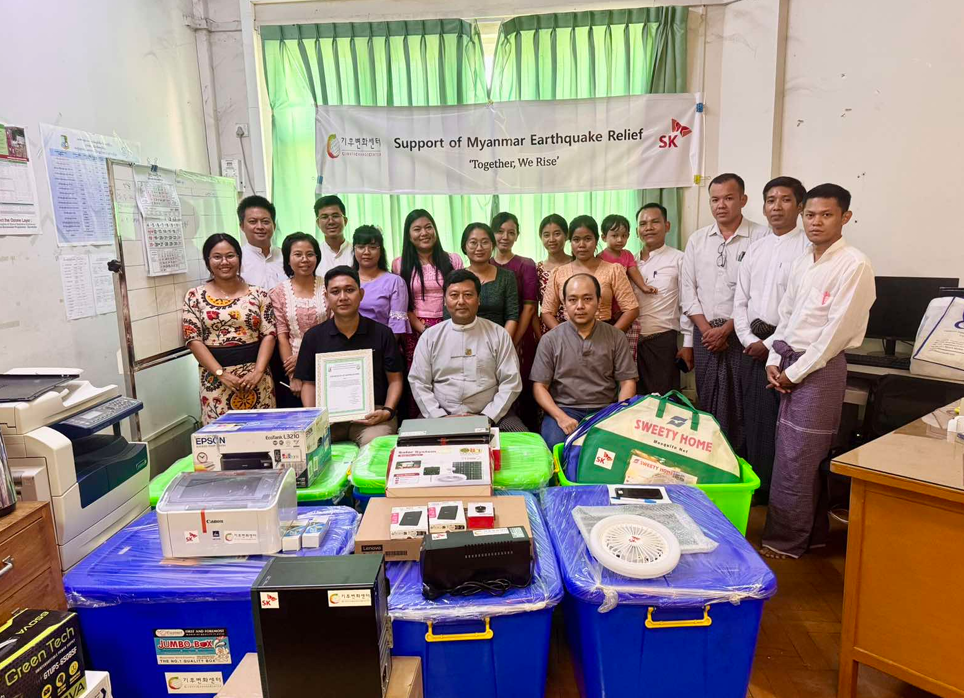
The Climate Change Center (CCC) delivered an emergency relief donation to support recovery efforts following the devastating earthquake that struck Myanmar on March 28. The quake caused severe damage in Naypyidaw, the capital city, where the head offices of the Ministry of Agriculture, the Ministry of Natural Resources and Environmental Conservation, and the Environmental Conservation Department (ECD) are located. These government bodies have been key partners in the joint implementation of a Clean Development Mechanism (CDM) project with CCC.
Since 2018, the Center has worked in close collaboration with the Myanmar government to distribute high-efficiency cookstoves across the country, contributing both to greenhouse gas reduction and local environmental improvement.
The emergency funds have been used to provide essential supplies such as clean water, sanitation products, temporary shelter, and medicine, and will also support long-term recovery and reconstruction in the affected communities. This initiative is not a one-time act of charity, but rather an extension of CCC’s continued commitment to corporate social responsibility (CSR) grounded in its long-standing CDM operations in Myanmar.
|
|
|
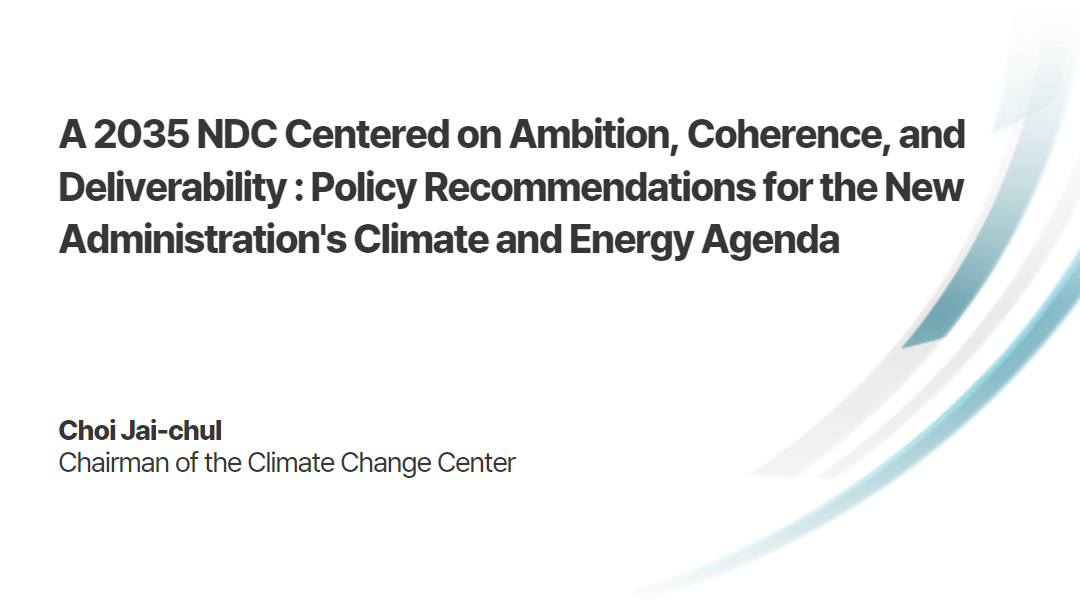
In 2025, the Republic of Korea will embark on a new chapter of national governance with the launch of a new administration—without the customary presidential transition committee. Amid rising uncertainty across the political, economic, and social spheres, the climate and energy sectors, in particular, face increasingly complex challenges, shaped by mounting international pressure, rapid technological innovation, and varying levels of industry readiness.
At the heart of this critical juncture lies the formulation of Korea’s 2035 Nationally Determined Contribution (NDC). This process is not merely about setting the next emissions reduction target; rather, it represents an opportunity—and imperative—to redesign the foundations of Korea’s transition strategy.
Climate action is no longer confined to environmental policy. It has evolved into a matter of structural reform across the entire national industrial and energy systems. Under Article 4 of the Paris Agreement, all Parties are required to submit updated NDCs by 2025, and these updates must reflect enhanced ambition—not simply numerical revisions. Korea’s 2035 NDC must therefore align with these international expectations while also ensuring domestic policy coherence and implementation feasibility. |
|
|
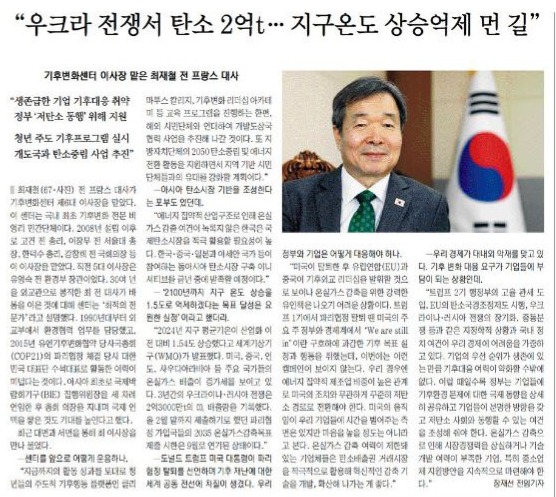
[Interview] Chairperson Choi Jai-chul stressed the need for flexibility in setting Korea’s 2035 NDC, suggesting conditional targets tied to future technologies and highlighting the international carbon market as a viable option. Learn more
|
|
|
[Commentary] Korea faces rising geopolitical and domestic instability. In this context, it is essential to keep climate issues above partisan politics and build broad national consensus to ensure effective action. Learn more
|
|
|
[Interview] Ambassador Choi Jai-chul, newly appointed Chair of the Climate Change Center, emphasized the need for flexible NDC targets, stronger international carbon market engagement, and consistent, bipartisan climate policy. He highlighted support for local governments and businesses as key to Korea’s low-carbon transition. Learn more
|
|
|
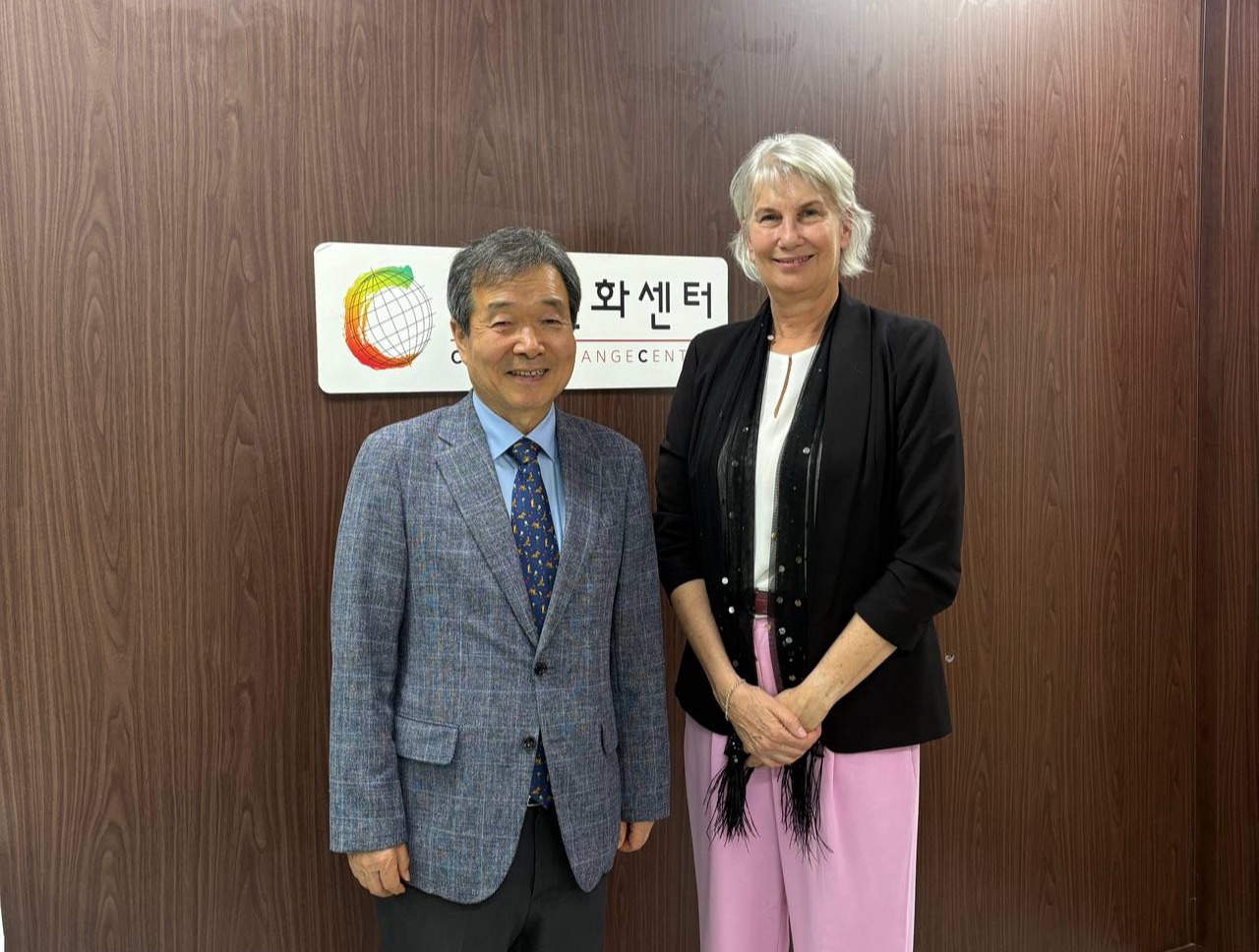
[Meeting Update] On May 16, Chairman Choi Jai-chul met with Mayor Paula Southgate of Hamilton, New Zealand, to discuss climate action and future collaboration. Mayor Southgate expressed interest in the Center’s youth programs, including Climaus College, and discussed potential for joint initiatives. Learn more
|
|
|
🍀Be part of our journey!
Even a small gesture can help create a healthier planet.
Donation Account : Woori Bank 1005-901-949649
Account Holder : Climate Change Center
|
|
|
Climate Change Center
T. 02-766-4351 | E. info@climatechangecenter.kr
Address : No. 306, Bldg 1, 22, Teheran-ro 7-gil, Gangnam-gu, Seoul, Korea, 06130
|
|
|
|
|