Samjong KPMG Launches Dedicated Carve Out Task Force. For you, racing after every move of money. Viter Newsletter, Tuesday, November 25 |
|
KOSPI ▲3,857.80 │ KOSDAQ ▼856.44│ KRW/USD▲1,476.68 |
|
|
Nasdaq ▲22,872.01 │ S&P500 ▲6,705.12 │ Dow Jones ▲46,448.27 |
|
|
As of 3:30 p.m. on the previous trading day |
|
|
✴ Duzon Bizon╎In 2024, the founder and financial-sector shareholders transferred management control to EQT as their stakes were sold for about $892 million. The company is undergoing strengthened reviews on regulation and customer trust due to data sensitivity, the entry of a foreign major shareholder, and controversy over the absence of a tender offer.
✴ MBK Partners╎In 2024, it secured $5.49 billion in commitments for its sixth buyout fund, placing it among the leading pan-Asian PEFs. It has returned 2.2 times principal to LPs over the past decade and continues a stable cycle with $2.9 billion invested and $2.4 billion exited this year.
✴ Daim Research╎In 2024, it raised $15.1 million through an RCPS issuance, lifting its valuation to about $686 million. After a $6.86 million Series A in 2023, it doubled its valuation within one year and is preparing domestic and overseas expansion based on AI logistics automation solutions.
✴ Atinum Investment╎In 2024, it invested an additional $5.49 million in Daim Research, taking responsibility for more than half of the $8.92 million round together with Stonebridge. Following its 2023 Series A, it also joined as a non-executive director.
✴ Stonebridge Ventures╎In 2024, it made a follow-on investment of $3.43 million in Daim Research, co-leading the $8.92 million round with Atinum. It added capital at a stage where the valuation had reached about $686 million.
✴ K2 Investment Partners╎Since its $4.8 million RCPS investment in CMTX in 2021, it added follow-on capital to reach a total of $5.90–6.72 million for a 12 percent stake. After listing, the stake value rose to about $748 million, entering a range where a ten-bagger return is possible based on estimates.
✴ CMTX╎Since its founding in 2013, it has raised a cumulative $24 million and debuted on KOSDAQ in 2024 with a stock price about 146 percent above the IPO price. With global customers such as Samsung Electronics and TSMC, semiconductor materials growth increased FI exit expectations.
✴ Picadi╎In 2024, it raised $1.1 million in a seed round to enhance its AI short-form creation solution “Picaclips.” With customer cases from EBS, JTBC, and 3PROTV, B2C subscriptions and B2B customized-algorithm revenue are growing.
✴ Kolon Industries╎In 2024, it shut down the PET chip production line at Gimcheon Plant 1 to adjust output from a low-profit segment. Despite Chinese oversupply and weak demand, its industrial materials revenue remained around $1.17 billion, and its high-value-added portfolio limited the impact on overall earnings.
✴ Agricultural Service╎Since 2018, it has formed five regional funds totaling $39.1 million, and in 2024 it created an additional $6.86 million Chungnam regional revitalization fund. Through an MOU with Chungnam Province, it invests over 70 percent of capital into local agri-food companies.
✴ Korea Investment Partners╎In 2019, it invested $6.86 million in the Jeximix pre-IPO round and later recovered $4.94 million through on-market and block sales. Including the current stake valued at about $11.4 million, it is expected to achieve roughly a 1.6× return over six years.
✴ Jeximix╎In its 2019 pre-IPO round, it raised $6.86 million from VCs, laying the foundation for its KOSDAQ listing. However, after listing, the share price remained near the pre-IPO valuation, limiting returns despite reduced overhang pressure.
✴ SBI Investment╎Acquired the 2024 Lucen Technologies CB for $4.8 million, and the likelihood of an exit within one year has grown on expectations of a KOSDAQ transfer listing. It is aiming for an equity value increase supported by growth in semiconductor inspection components.
|
|
|
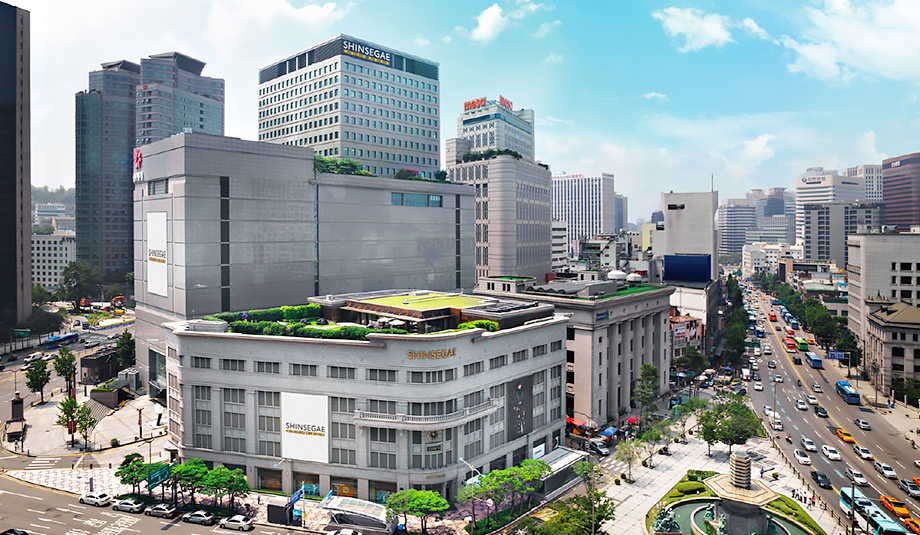
Shinsegae DF secures “Four Years of Recovery Time” with perpetual bonds |
|
|
⭑ Slowing debt pressure through perpetual bonds
Shinsegae DF issued perpetual bonds worth $68.6 million for the first time since its establishment. Of this, $48 million will be used to repay short-term CP and $20.6 million will be used as operating funds.
Perpetual bonds have virtually no maturity and can be extended by the issuer, so they are treated as equity. As a result, debt converts into capital, and the debt ratio is expected to fall from 258 percent to about 180 percent.
However, interest rates are a variable. The perpetual bonds carry a 4.24 percent coupon, requiring $2.9 million in annual interest, higher than the existing CP interest of $1.9 million, creating short-term burden.
⭑ Step-up in 2029, raising the possibility of higher rates
The perpetual bonds include a step-up clause that raises the coupon in four years.
The rate will be reset by adding the 3-year government bond yield, a credit spread, and a fixed 2 percentage points, creating scenarios where the coupon may reach around 6 percent.
The market views this as Shinsegae DF “securing four years of time.” During this period, it must raise earnings to handle the higher coupon or determine whether to redeem the bonds.
The key question becomes whether performance normalization is possible.
⭑ Returning DF2 to reduce losses and shift to core zones
Shinsegae DF has already taken action.
In April 2026, the company will return its Incheon Airport DF2 concession (liquor, tobacco, cosmetics, perfume) ahead of schedule. DF2 recorded $277.1 million in revenue last year but generated operating losses in the hundreds of millions of dollars, as airport rent rises with passenger traffic and demand from Chinese daigou, its former core customer base, has declined.
After the return, the company plans to focus on more profitable areas such as DF4 (fashion, accessories, boutique) and its Myeong-dong downtown duty-free store. Industry views say there is room for profitability to recover if rental burdens decrease.
Over the next four years, the time secured through the perpetual bonds will likely show what changes will occur for Shinsegae DF.
|
|
|
Samjong KPMG launches a dedicated carve-out task force |
|
|
Samjong KPMG has launched a new task force dedicated to carve-out transactions, which involve separating and selling a specific business unit of a company.
⭑ Why now?
Large conglomerates are expected to push business restructuring more aggressively starting next year, and the move aims to prepare in advance for increasingly complex deal structures.
The task force is led by Executive Director Junsang Lee, who has headed the Integration & Separation (I&S) team in charge of acquisition and separation work. Given the difficulty of actual separation procedures, the group is composed mainly of experienced specialists.
A carve-out is far more complicated than a general M&A, since many elements must be separated. If the unit is not an independent legal entity, personnel, assets, existing contracts, and IT systems must all be divided, which inevitably extends the timeline.
While general M&A deals typically close within about three months, many carve-outs take more than six months, underscoring the difference. Samjong KPMG’s launch of a dedicated task force reflects its view that such transactions will appear more frequently.
⭑ Restructuring among major conglomerates has already begun
Korean conglomerates are accelerating the use of carve-outs to shed non-core businesses.
SK Group began rebalancing last year, selling its fine ceramics unit and PU raw materials unit to Hahn & Co. and Glenwood PE. This year, it accelerated sales by divesting SK Enpulse’s CMP pad unit and SK Inc.’s stake in SK Specialty.
LG Chem has also joined the restructuring trend by selling its water treatment unit to Glenwood PE and its aesthetics unit to VIG Partners.
In the IB industry, expectations continue to rise that carve-out transactions will increase rapidly. As conglomerates strengthen selection-and-focus strategies, carve-outs are seen as a likely main restructuring method.
Against this backdrop, Samjong KPMG’s new task force is viewed as a preemptive step to prepare for a growing market, and attention is turning to which companies will join this trend next.
|
|
|
Recent moves by major conglomerates show a clearer trend of keeping only core businesses and decisively disposing of non-core assets.
Since global companies have already carried out similar rebalancing, it appears that Korean companies are naturally expanding the same strategy.
There is also talk that, especially for large and complex transactions like carve-outs, having a specialized task force first can become a real competitive advantage. Samjong KPMG’s quick establishment of a dedicated organization can be interpreted as a decision made with this trend in mind.
It remains a point of attention which company will be the next to divest a business unit and how fast this market will grow. |
|
|
🦾Physical AI╎Samsung Electronics Raises Robot Accuracy With VLA
Samsung Electronics is accelerating the advancement of physical AI based on VLA (Vision-Language-Action) to enable robots to operate stably in both manufacturing and everyday environments. The company confirmed a 95% success rate from training 3,000 episodes built through its own robot data factory, and the scale of data is emerging as the core factor driving performance differences. Since it expands data by using real work videos, wearable grippers, and simulation, competition in robot development is expected to hinge on who secures more real-world data. |
|
|
💪Only Strong Survives╎IPO Market Shows Gains Only for Real Technologies
This year’s IPO market was active around AI special listings, but post-IPO prices reflected technological differences clearly. Companies with fundamental technologies such as on-device AI model compression, including Nota, S2W, and Neurophet, recorded large gains compared to their offering prices. In contrast, companies with service-focused models or weak exclusive technological entry barriers showed notable declines. Next year, the market is expected to apply stricter standards on real revenue-generation capabilities rather than bubbles. |
|
|
🚀K-Defense Cooperation╎Hanwha Aerospace And UAE
Hanwha Aerospace agreed to jointly develop smart radar and an AI platform for autonomous UGVs with Edge, the UAE state-owned defense company. The key approach is to combine real-world data accumulated in Middle Eastern desert environments with Hanwha’s AI models to build locally optimized technologies. Cooperation is expanding into integrated air-defense systems, MRO center establishment, and shipbuilding, and even the possibility of a joint venture has been mentioned as the technological alliance deepens rapidly. |
|
|
📋Who Is Responsible╎Bessent Remains Optimistic, Trump Applies Pressure
U.S. Treasury Secretary Bessent said a 43-day shutdown caused $11 billion in losses, but noted that interest-rate cuts and tax-relief effects make next year’s outlook positive. She rebutted the Trump administration’s criticisms on tariffs and inflation, pointing to falling energy prices and regulatory differences as stabilizing factors, while the White House also referenced a manufacturing rebound to suggest a possible recovery in 2026. |
|
|
🏢Real Estate Surge╎Musinsa’s aggressive building acquisitions shake IPO expectations
Musinsa has continued expanding its Musinsa Town by repeatedly purchasing buildings in the Seongsu and Seoul Forest areas. As its moves become centered more on real estate than on its core business, questions have emerged over the credibility of its claimed valuation of about $6.86 billion, and some point out that this could increase the burden in its IPO assessment. |
|
|
🗳️Dispute Over Credit╎Political Clash Over Lone Star Ruling
After winning the ISDS case for the first time in 20 years, Prime Minister Kim Min-seok highlighted the current administration’s achievements, while former Minister Han Dong-hoon criticized him for “taking credit,” intensifying the conflict. As debate continues over which administration contributed more, some evaluate it as the result of bipartisan efforts, and speculation about Han’s political comeback is drawing renewed attention. |
|
|
The Salt Farm Slavery Has Not Ended in Korea |
|
|
Salt Farm Slavery Issue, Still Ongoing
Do you remember the 2014 Shinan salt farm slavery case that shocked Korea?
One of the perpetrators from that case was re-elected in 2018 and 2022, and is still serving today as a Shinan county council member.
The problem did not stop there.
A similar form of victimization occurred again in 2021, and many of the rescued individuals lacked support for independent living. Some moved to even harsher workplaces or ended up returning to salt farms.
This is why the case is seen not as a one-time tragedy but as a deeply rooted, structural system of exploitation.
United States Involvement
In April 2025, U.S. Customs and Border Protection (CBP) blocked the import of solar salt from the Shinan Taepyeong Salt Farm, citing forced labor and exploitation of vulnerable people. It was the first time the U.S. suspended imports targeting a Korean company, which caused major shock.
The Korean government argues that domestic solar salt has no connection to forced labor and has requested the lifting of the import ban. But the U.S. views this case as a key example in eliminating forced labor from global supply chains and is maintaining long-term monitoring.
With repeated cases and a perpetrator being re-elected within the local power structure, the international community increasingly sees this not as an individual crime but as a structural human rights issue.
A crack in Korea’s supply-chain credibility raises a bigger question
This decision could affect not only Korea’s solar salt industry but the credibility of Korea’s entire food and raw material supply chain. Export risks and compliance costs for Korean companies may rise.
There are also concerns that the case may influence Korea’s rating in the U.S. Trafficking in Persons (TIP) Report, which evaluates national responses to human trafficking.
In the end, the question becomes less about why the U.S. stepped in, and more about why Korea’s response system has not resolved the problem for so many years.
|
|
|
Meaning of RCPS in management? |
|
|
✴ Redeemable Convertible Preferred Shares
RCPS is a form of preferred shares that combines redemption rights, conversion rights, and preferred rights. It provides investors with both protection and opportunities for profit participation, and it serves as a flexible financing tool for companies.
Redeemable
Investors may require the company to repurchase the shares after a certain period under agreed conditions. Because they can recover the principal and the agreed return, it offers stability similar to debt.
Convertible
Investors may convert the RCPS they hold into common shares. If the company’s valuation rises, conversion allows capital gains or participation in voting rights, giving investors an upside from growth.
Preferred
Investors hold priority rights over common shareholders in dividend payments and in the distribution of residual assets in the event of liquidation. It operates as a protection mechanism for investors during losses.
For companies, RCPS allows early-stage startups to raise capital without heavy immediate burdens. Interest and redemption pressure are relatively low, and depending on conditions, it can be recognized as equity, which can benefit the financial structure.
For investors, if the company performs well, conversion can expand returns, and if performance falls short, redemption enables recovery of principal, allowing both growth potential and stability at the same time. |
|
|
Send us any suggestions you’d like to share while reading Bitter’s newsletter! |
|
|
Advertising, inquiries : viter@thevistapartners.com / Published by Newstop. Unsubscribe |
|
|
|
|