#collectivism #individualism #COVID-19 #restrictions #no_mask For dark mode users,
!WE NEED YOUR SUPPORT! Our Dearest Readers, KOMMON started out as a group of students who came together with a shared commitment for quality content for non-Koreans. We each had experience as aliens in a foreign society, and believed access to comprehensive cultural and social insight to be critical. It has been a whirlwind of a journey. KOMMON has operated without a sponsor for more than 6 months. For us to continue this journey, we now need your support more than ever. We love what we do. Thank you so much for making this journey possible. Yours truly, Susu🌾, Founder.
Hello, reader, this week we are covering: Index Trending News Did Confucianism Beat Coronavirus In South Korea? Zoom In How Did Korea Become a Collectivist Society? Today's Vocabulary Ojilap (오지랖) This Week's Recommendations I Live Alone (나 혼자 산다) Don't forget to leave your feedback below!
Did Confucianism Beat Coronavirus In South Korea?
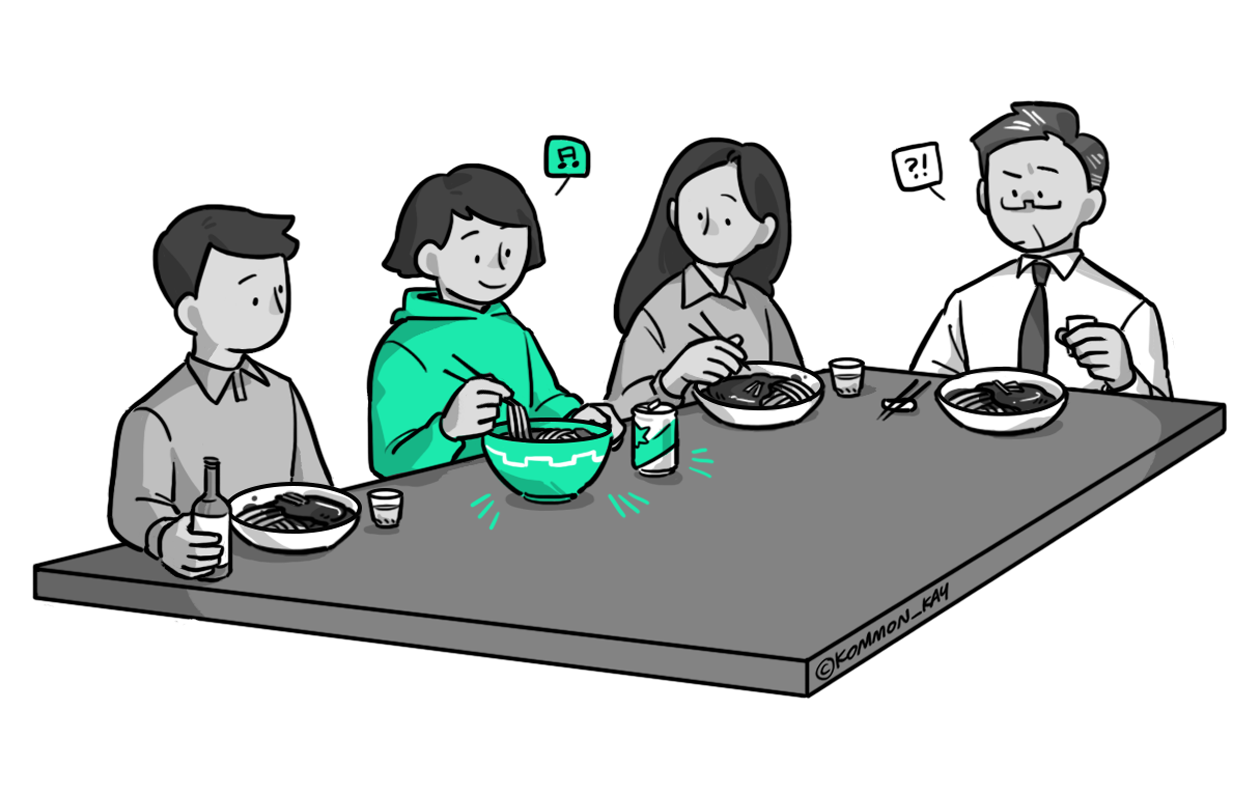
[Photo by TBS] Korea's success in the control of COVID-19 received praise from many countries around the world. However, it also raised questions on what role culture might play in disease control. Many media outlets, including the New York Times, reported that Korea's way of controlling the pandemic cannot become an international role model, saying that the country's "social trust is higher than in many other countries." The collectivism-versus-individualism analysis is not limited to non-Korean media. The Dong-A Ilbo published an article (Korean link) describing a study that showed that individualistic people are less likely to comply with social distancing rules. The article also quoted the study as suggesting that a collectivist mindset makes people feel less helpless and less vulnerable against misinformation, as they feel like they're "in the same boat". It is a common belief that collectivist, community-oriented countries do a better job in dealing with social, national crises. The study results described in the Dong-A Ilbo article are in line with that belief. This belief may sound plausible, considering that some Asian countries that are traditionally collectivistic, including China, Singapore, and Vietnam, did a better job in controlling the virus than others. Indeed, Korea's disease control measures, directed by the central government, have been readily accepted and followed by the public. Since the beginning of the pandemic, even before the government implemented the blanket compulsory mask rule in November 2020, wearing masks has generally been perceived as a necessity. The frenzy that swiped toilet papers off the shelves in other parts of the world had its counterpart in Korea -- the panicked run on masks. It reached a point where the government launched mask inventory apps that allowed people to check the remaining supplies at pharmacies close to them. This appeared to be in stark contrast to the "culture war" that took place in some countries, such as the United States, where people saw mask rules as an infringement upon their freedom. According to a survey (Korean link), 81.7% of Koreans wear masks when they leave the house and 98.7% wash their hands regularly with either a soap or a hand sanitizer. The general public also welcomed the government tracing of how the virus spread and sending real-time emergency alerts on newly confirmed cases. Numerous reports explained that Koreans complied with these rigorous government rules -- which could be seen as an infringement upon individual freedoms and rights -- because of the country's collectivist culture. However, some say that the cultural aspect is just one of the factors that contributed to the success of the pandemic control in Korea, and that Korea's success is due to pragmatic and efficient contact-tracing measures, quick testing, and advanced technology, rather than restrictions of people's freedom or infringements on individual rights (Korean link). So, was it the country's collectivist mindset that beat COVID-19? Are Koreans really willing to sacrifice their individual freedom for the sake of their community's well-being? The answer to these questions may be more complicated than you think. Keeping a Balance between Privacy and Transparency Koreans have dealt with the issue of privacy in regards to the contact-tracing of confirmed COVID-19 cases in a manner that could be seen as "messier" than many news reports and analyses of the country's pandemic control measures might have suggested. At an early stage of the virus spread, the Korean government started to trace physical contacts, places visited, the age, and the place of residence of each confirmed case. It then released the information to the public. This was to encourage those who could have come into contact to get tested voluntarily. However, the information was detailed and comprehensive enough to identify some individuals and speculate about their private lives. The government's contact-tracing policy therefore came under fire, which led to a huge social controversy. As a result, the National Human Rights Commission released a contact-tracing guideline (Korean link) to advise healthcare officials to publicize only the necessary information of infected cases to the public. Currently, the government cannot reveal a confirmed case's gender, age, and other personal information irrelevant to the virus spread. Collectivist Boomers vs. Individualistic Millennials In Korea, a clash between the younger generations and the older generations can be observed and traced back to the emergence of individualism. Younger generations, feeling pressured by the collectivist norms of the previous generations, prefer to focus on their own, individual comfort over the well-being of a community or a group. For example, slang expressions with the prefix "hon" (혼) -- which means "alone" -- are widely used among younger generations these days. This prefix is put before any activity that was traditionally done with other people, such as drinking (Honsool, 혼술) or eating out (Honbab, 혼밥). It used to be difficult to find a restaurant or a bar that offered one serving for people who preferred to eat or drink alone before this trend settled in Korean society. Now, more and more places welcome individual diners and drinkers. To older generations, on the other hand, jeong (정), warmth towards one's community, has always been an important social aspect, and certain individualist attitudes are still considered to be egotistical or rude. Some say that there is in fact no Korean word that translates the full meaning of the term "individualism". A Korean word for "individualism" is gaeinjuui (개인주의), but it is often linked to selfish behaviors rather than an individual's well-being. The younger generations' individualist attitudes and the older generations' collectivist attitudes often clash, which leads to conflicts. Younger generations dub the older generation "old-fashioned," while the latter condemns the former for acting "selfishly". Case #1 😬Boomer: Think of your co-worker like your family! We should all depend on and support each other. Events that can bring all workers together are important to strengthen our teamwork. That is why I want to invite all my workers to the third hoesik (회식) of the week. 🙄Millennial: I just want to go home. Work is work, my co-worker is just a co-worker. Let me have my alone time, please. I do not hang out with my boss. I have friends. Case #2 Wedding 👨👩👧👦Boomer: My child is finally getting married! I am going to invite ALL of my friends, my friends' friends, and one associate of an associate -- I attended his cousin's marriage nine years ago. The more the merrier! 👤Millennial: I am finally getting married! I just want to invite my closest friends and a few family members. I do not want to invite people I barely know. Small, simple, cozy wedding, here I go.
How Did Korea Become a Collectivist Society?
[Illustration by 케이] What is Collectivism? Collectivism is the culture of prioritizing a group or a community over individuals within it. It encourages members of a group to make sacrifices for the benefit of the collective. Individualism, on the other hand, gives more freedom to individuals. The cultures of Korea and Japan show a strong sentiment of collectivism, whereas the U.S. and some European countries show stronger individualistic tendencies. Where Does Korea's Collectivism Come from? There are many different opinions on how Korea became a collectivist society. 1) Less than a century ago, most people were still farmers, used to work together, and relied on each other for their farm work. Many collectivist values can be traced back to those days, even after the country was industrialized. 2) Korea developed strong nationalistic tendencies when the country was under Japanese rule and during the Korean War. People felt like they needed to come together and fight against an external enemy. This sentiment became stronger under Japanese occupation, when independence activists like Shin Chae-ho used the idea that Koreans are a homogenous race to fight against Japanese colonization. 3) Korean society has been heavily influenced by Confucianism. Confucianism encourages individuals to play their respective roles within a group or a community. Korean Society is Changing Korean society has, however, become more individualistic in various aspects. ✍At Work Young Koreans have started to prioritize their work-life balance. According to current laws, people cannot work over 52 hours per week and companies are supposed to give extra pay for overtime work. Companies now have fewer workers who are willing to attend hoesik than before, too. 🏫In School Korean universities are starting to become less hierarchical. For instance, fewer and fewer universities force their students to participate in sabalsig (사발식), a tradition that requires freshmen to drink alcohol together.
Primary and secondary schools have also put a greater emphasis on individual rights. Gyeonggi province implemented the Students' Human Rights Ordinance in 2010, and Seoul implemented it in 2012. As a result, schools have become more democratic. 🤝Society The marriage rate in Korea has been decreasing gradually. As of 2020, 30% of Korea's households are single households. The rate is even higher among those in their 20s.
Why is the Korean Society Becoming More Individualistic? 💰Socioeconomic Reasons In the 1960s and 1970s, the Korean government pursued policies that led to the rapid economic development known today as "the miracle on the Han River" (한강의 기적). As economic growth was heavily prioritized above almost all else, Korean society became increasingly competitive for entrance to top universities and careers with good pay and job security. Many believe that this sense of competition has led to overall cultural shifts in the direction of individualism. To compound matters, it is more difficult to find a job these days than it was a couple of decades ago. In 2006, 67.6% of university graduates were able to become regular employees at companies, while only 56.7% were able to do so in 2019. Moreover, in 2019, 24.7% (Korean link) of young employees worked under contracts of less than one year, whereas only 9% worked under such contracts in 2006. Also, a recent survey shows that 30% of Korean workers under the age of 30 already had more than one workplace. Koreans now seem to feel less attached to their workplaces and less compelled to form connections with other people. Moreover, Korean youth are suffering economically from high housing prices and unemployment. Many young Koreans are busy working part-time jobs or focusing on their university grades, which leaves them with very little time to socialize. 📱Cultural Reasons Young Koreans have been exposed to an educational system (Korean link) that places a greater emphasis on individual rights. This has made youth more willing to stand up for their own rights when asked to make sacrifices for the larger collective. In addition, due to the advent of technology, many young Koreans spend their free time on the internet, which gives them less incentive to socialize in the real world.
Today's Vocabulary Ojilap (오지랖) <오지랖이 넓다> The expression "ojilap-i neolbda (오지랖이 넓다)" describes a person who excessively interferes in other people's business. Ojilap-er refers to a person who is nosy. People are likely to say that you are ojilap-i neolbda if you help people when they never asked for assistance. Usage: A: 너 지난달에 결혼 했다며? 애는 언제 낳을거야? 너 나이 많으니까 최대한 빨리 낳는게 좋지 않을까? 잘 안생기면 병원 한번 가봐. 내가 추천해줄까? A: I heard you got married last month. When are you going to have a baby? You're already old, so you should have a baby as soon as possible. If you're unable to give birth, you should visit an obstetrician. Shall I recommend a good clinic for you? B: Thanks for your concern, but I will figure it out myself. (Inner monologue: Why is he/she so nosy?) This Week's Recommendations This is an entertainment program that showcases the lives of celebrities who live alone. This show has gained popularity as more and more Koreans have started to live alone. If any of the featured cast gets married, they no longer can be on the show. One comedian who started participating in MBC's show called We Got Married (우리 결혼했어요) was no longer eligible to participate in 나 혼자 산다. Recently, the program was criticized because the show started to show how celebrities hang out with their friends and the rest of the cast, rather than showcasing how they live alone.
Did you enjoy this reading? We're waiting for your feedback! Do you want to see more works like this? Click below to send us support! KOMMON TEAM 수수🌾 Sans🌻 바코🌊 오티오😈 쟈🍉 기린🌴 쏘🐥 기니👑 프레드🍰 부엉🦉 타코🌮 Sunny🌞 호야🐻 가가🍒 케이☕ 코코🐦
|