For dark mode users,
Correction: The title of last week’s newsletter “The Lee Jun-seok phenomenon: sensational rise of a young political leader” was incorrectly put as “Why are Koreans in love with real estate”. The title is currently corrected in our article archive. Hello, reader! Today, we are covering: Cultural Insight: Korean Houses - Then vs. Now Slang: 집돌이/집순이 (masculine: Jipdori/ feminine: Jipsuni) This Week's Recommendations The Way Home (집으로, 2002) Don't forget to leave your feedback below!
Korean Houses - Then vs. Now
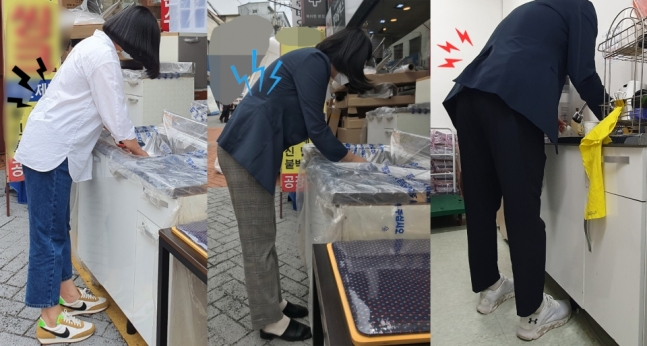
Writer: Haram Lee Editor: Regine Armann, Aleya Sharif Editor-in-Chief: Fred McNulty Researcher: Yul Jun, Heejin Ahn Over the past few decades, Korean homes included kitchens with a standardized sink height. However, more recently, this feature has led to difficulties for residents. Unlike in the past, it is now common for both men and women to work in the kitchen. However, due to the low height of the typical kitchen counters, many people, especially men, have reported having struggles while washing the dishes at home. Especially the low sink that makes it difficult to carry out the task without bending down has been causing extreme discomfort.
Source: 남자들이 설거지만 하면 허리 아픈 이유, 싱크대에 있다 People are having difficulty because of the standardized 85cm high sink.
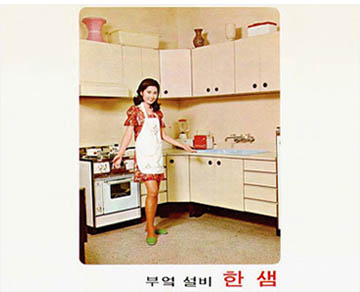
1970s Hanssem Commercial: reflects the social perception at the time - kitchen is a space only for women.
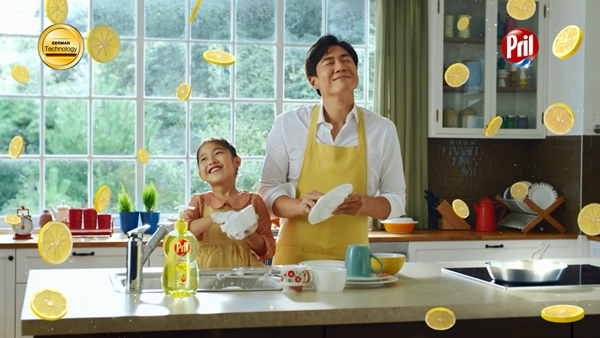
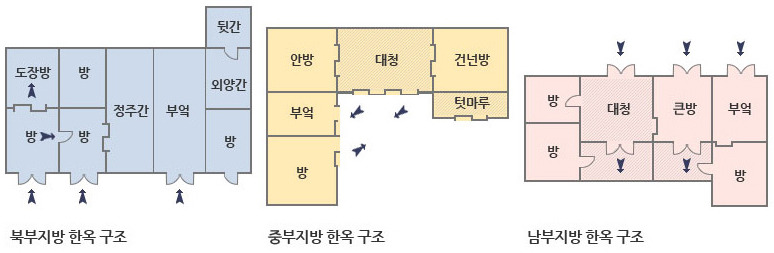
2018 Henkel Korea commercial: having a male model being portrayed in the kitchen, this commercial reflects changes in social perceptions. Currently, kitchen sinks in Korea are standardized to measure between 80 and 85 cm in height. This is optimal for women in Korea whose average heights are between 155 and 160 cm tall. This standard model was initially proposed during the 1970s, as it was a common perception back then that only women would be using the kitchen. Over time, social perceptions have changed, and it is now considered normal to find men in the kitchen. As most of the current sinks are still designed according to old standards, complaints are increasing. Many people - men, women, and the disabled - are reporting difficulties using standard kitchen sinks. Thus, voices calling for an update of universal design standards have emerged. The issue has opened discussions on the differences that can be found in Korean houses between the past and the present. How much have the inner workings of Korean houses changed over the years, and for what reasons? 1. Korean Houses: Past vs. Present 1) Past: Hanok (한옥) Traditional Korean houses are called hanok (한옥), and are constructed using wood and kiwa (기와), Korean traditional roof tiles. Hanok houses were first designed and built in the 14th century during the Joseon Dynasty. Korean architecture carefully considers the positioning of the house in relation to its surroundings, with thought given to the land, the soil on which the Hanok is built on, as well as the seasons. The interior of the house is also planned accordingly. This principle is called baesanimsu (배산임수), and means that the ideal house is built with a mountain in the back and a river in the front. The significance of this ideal arrangement mainly has to do with weather. In the winter, the mountain can block cold air from Siberia, and in the summer, the river provides cool breezes and water necessary for living and irrigation. Thus, baesanimsu is still considered the optimal location for a home in Korea, even today. Hanok shapes also differ by region. In the cold northern regions of Korea, hanoks are built in a square with a courtyard in the middle in order to retain heat, whereas in the south, Hanoks are constructed in open L-shapes to allow active air circulation for cooling the house down. Hanok architecture represents a valuable historic tradition that many argue is closely tied to Korean identity. Some people still live in hanok houses as they prefer a more traditional lifestyle. Hanok houses are also used for tourism as well - both as accommodation and attraction. Popular hanok tourist spots include the Bukchon (북촌), Jeonju (전주), Eunpyong (은평), and Andong (안동) hanok villages (한옥마을).
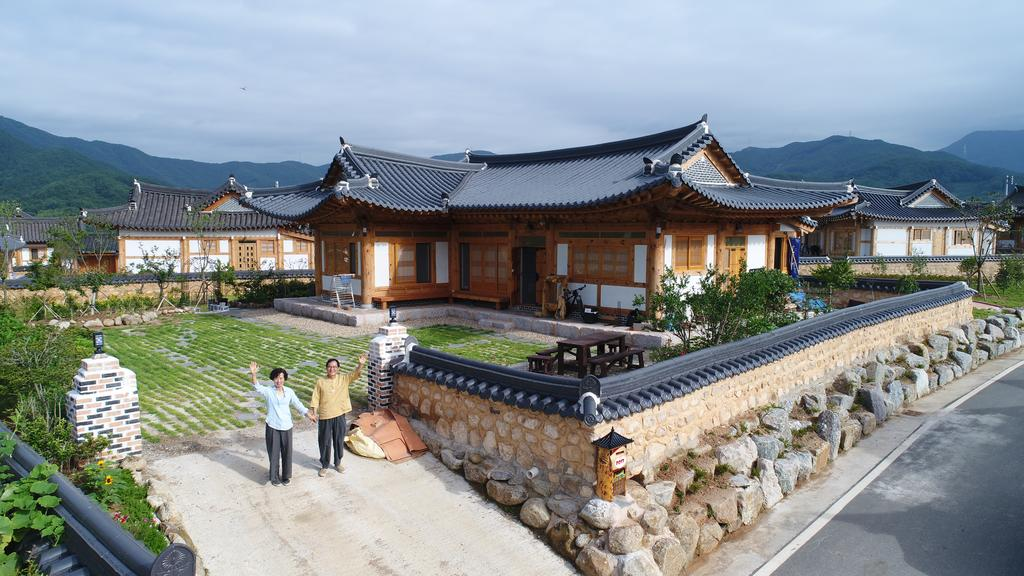
Hanok Source: 미리내 전통한옥, 광양
Hanok Layouts (Northern, Central, and Southern regions respectively) Source: 전통 한옥 구조 2) Present: Apartments (아파트)
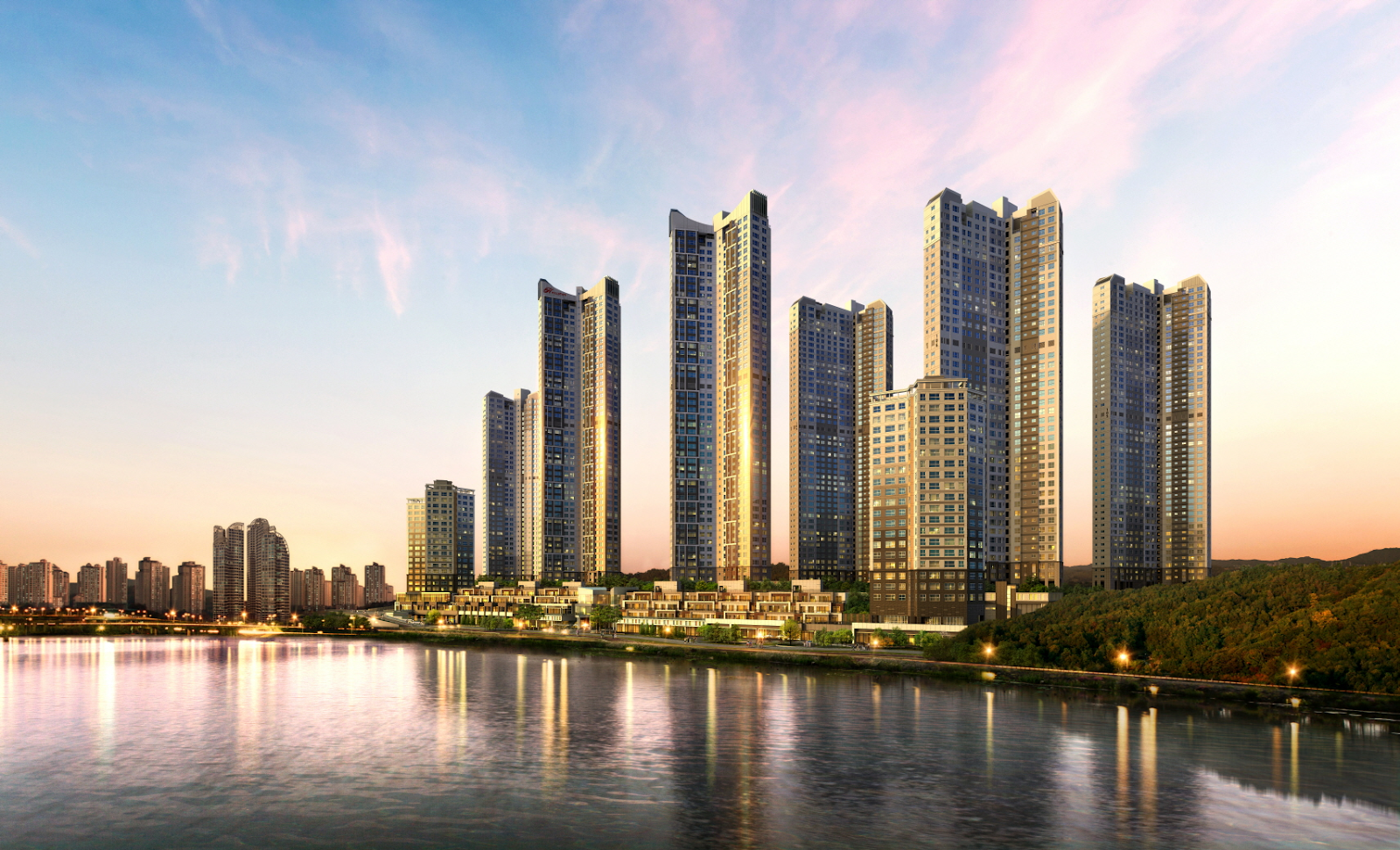
Source: https://realestate.daum.net/news/detail/all/MD20141127132008671.daum
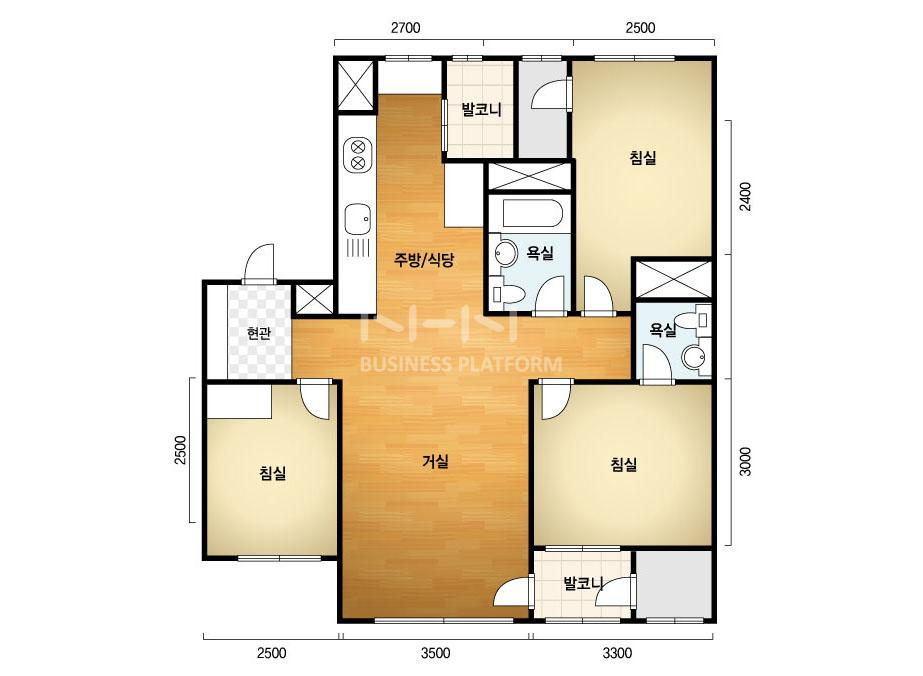
Indoor layouts Apartments (아파트) were first introduced in South Korea in the 1930s, after the completion of the Mikuni Apartment, the first apartment building constructed in the country by a Japanese company during the Japanese colonial occupation. This was primarily used for Japanese workers stationed in Korea. - How modern-day apartments differ from traditional Hanoks:
- Why do Koreans prefer apartments? Due to Korea’s high population density, the Korean government had to find effective means of providing housing. Apartments seemed to be the most effective solution and have become more common after the implementation of a series of economic development plans under former President Park Chung Hee (박정희), between 1962 and 1981. The many reasons why apartments are the most preferred residence to live in for many people in South Korea today include aesthetic appearance and convenience. Modern Korean apartment buildings have drainage pipes and electricity lines inside the buildings, making them invisible, which makes the buildings more aesthetically pleasing. As visual aspects are crucial for Koreans, many apartment construction firms now focus on exterior building and complex design as well. This is common regardless of high-or low-end construction plans. A lot of modern apartments these days are meticulously designed in collaboration with professional designers, and even old apartments go through renovations and repainting to meet aesthetic standards, which can also increase the overall building value. In addition, security, building maintenance, and waste management are efficiently controlled within apartment complexes. With security guards present 24/7 and trash pick-up arranged by the management, many people find apartments more convenient to live in. Also, location plays a key role and is one of the deciding factors of an apartment’s overall value, although the ideal position within the natural landscape is not being considered these days. Rather, the closer an apartment complex is to the next subway station, the more expensive the apartments within that complex get, as most people want to lose as little time on their daily commute as possible. However, the price is a significant barrier for many people. Apartments located in popular locations - Seoul and Gyeonggi - have seen prices soar consistently over the last years. In 2018, the average price of an apartment in Seoul stood at ₩1.2 billion, which is much more than what most people can afford. Also, noise issues have emerged as a common problem in apartment buildings. As all rooms are piled up on each other, noise easily makes its way from the bottom to the higher levels of a building. This often leads to conflicts among residents and has become a major downside of living in apartments. 2. Interiors of Korean Homes: Past vs. Present 1) Heating System Whether it’s apartments or houses, the heating system is embedded underneath the floor (a system that is called ondol, 온돌), which enables direct and consistent heating of all rooms. 2) Furniture In the past, all kinds of home furniture had to be purchased. However, wardrobes are now installed within rooms, so it is not necessary to purchase wardrobes, unless extra storage space is needed. Also, home appliances like dryers, dishwashers, coffee machines, wireless vacuum cleaners, refrigerators with ice and water dispensers, along with Kimchi refrigerators, are now considered to be an essential part of the house, which was not the case in the past. Thus, making purchases on such items is now a crucial part of the process of moving into a new home. 3) Coexistence of Tradition and Modern Culture There are aspects where traditions and modern customs do not match. Koreans are accustomed to sitting on the floor instead of on sofas, for instance, and many are therefore still more comfortable with the traditional arrangement when it comes to seating. Many Koreans also still prefer to sleep on the floor instead of on a bed, as they find it more comfortable and consider it better for their spine. In the old days, Koreans were sitting on the floor while eating, sleeping, reading, and performing all kinds of other activities. As time has passed, it has become common to sit at tables and on chairs. However, some people, especially the older generation, still feel more comfortable sitting on the floor, even when living in modern apartments filled with modern furniture and appliances. Thus, some traditional aspects of living are surviving all the recent changes in lifestyle, even to this day. As all these insights into past and current houses in Korea show, a home reflects a way of living as well as a culture. In the past, Korean people focused on living with their extended family while the most common living arrangement these days is nuclear family only. As a result, the overall size of Korean homes has shrunk. Apartments have become the most effective way of providing accomodation to as many people as possible and are now the norm in cities all over Korea. However, this might be changing again in the future. Some people have started disliking the apartment lifestyle, mainly because they feel like they are “caged” within the property and need more freedom. This has started a new trend of living in one’s own house. Reflecting this new development, MBC, a Korean broadcasting company, has launched a TV show called “Get Me! Homes (구해줘! 홈즈)” that aims to help those who desire to live in a house to find the right match according to their preferences and budget - similar to the American TV show “Love it Or List It” that is broadcasted on HGTV.
Slang 집돌이/집순이 (masculine: Jipdori/ feminine: Jipsuni): Describes someone who spends most of their time at home and prefers staying indoors rather than going out. Example: A: 너 주말인데 어디 안 나가? A: Aren’t you going anywhere for the weekend? B: 나는 집돌이/집순이라서 집에서 넷플릭스나 보는 게 훨씬 좋아. B: Nah, I’m a Jipdori/Jipsuni. I like watching Nexflix at home. This Week's Recommendations The Way Home (집으로, 2002) The seven-year-old Sang-woo, who used to live in the city, is moving to a rural house where his maternal grandmother lives alone, because his mother left him temporarily to solve her financial difficulties. His grandmother's house is located in a remote area in the countryside that takes a long time to get to. This movie describes the daily life of a grandmother who cannot speak or read and her young grandson, and shows the traditional old housing style that was common in the Joseon dynasty. You can watch it on Watcha!
|