#Brave_Girls #K-POP #YouTube #Music_Chart For dark mode users,
Hello, reader! Today, we are covering: Cultural Insight: Chart Resurgence: The Dynamics of Korean Music Charts Slang: Wait for Your Turn: Jon-beo (존버) KOMMON Is Looking for New Members: Check out the form at the end of the newsletter🙌
Chart Resurgence: The Dynamics of Korean Music Charts
Writer: Gayeon Shin Senior Editor: Hayeon Cho Editor-in-Chief: Fred McNulty
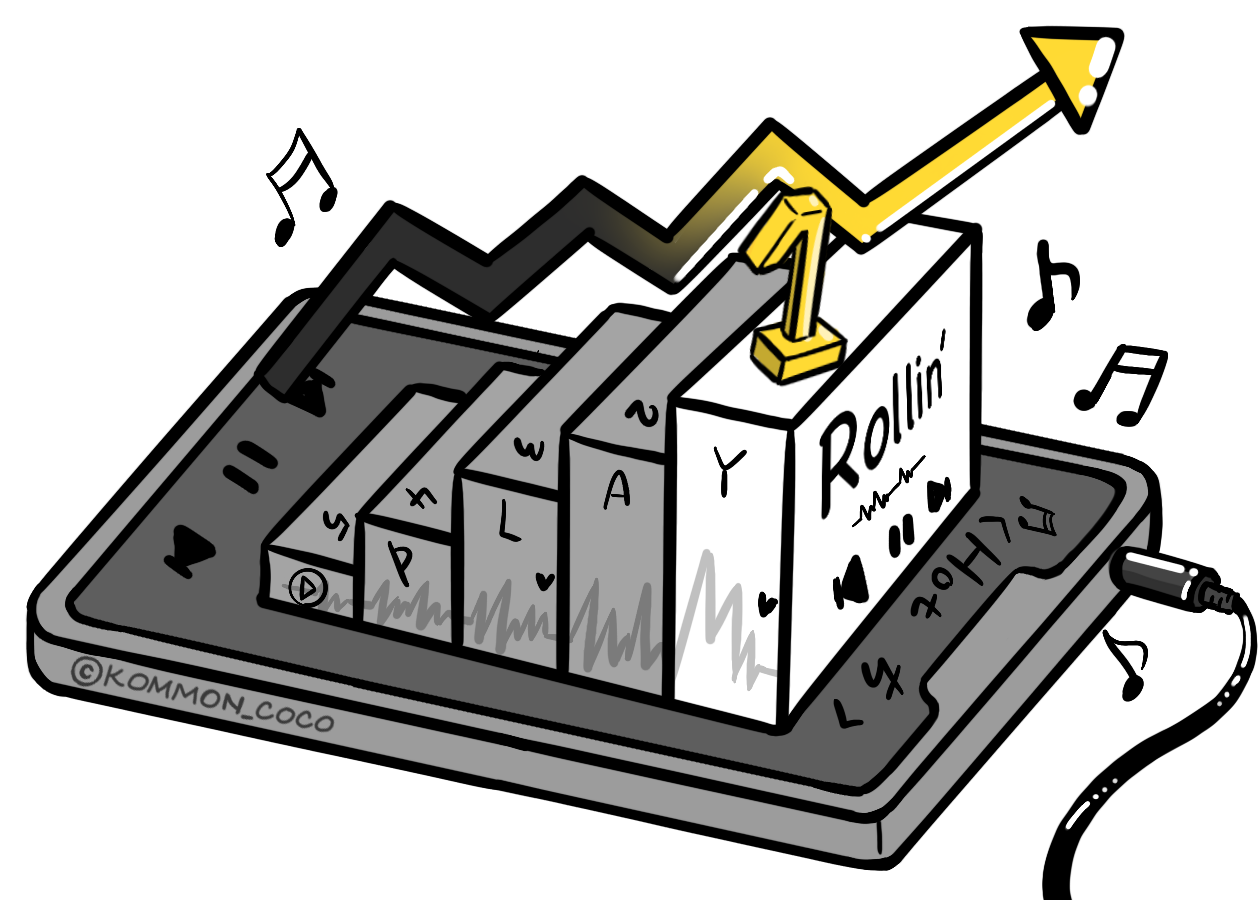
[Illustration by COCO] Soaring Popularity of a 4-year-old Song If you wonder what music is popular in Korea these days, you should definitely check out this song. The track “Rollin’” by girl group Brave Girls has been ranking number one on Korean music charts for several weeks—but it’s not a new song. Brave Girls debuted in 2011 but despite their years and years of efforts, they remained off the music chart and out of the mainstream entertainment circle. The song “Rollin’” was actually released in 2017. These repeated failures forced Brave Girls to be on the brink of disbandment. However, their situation finally started turning around when a fan-made video went viral on YouTube. About a month ago, an internet user put together performance videos of Brave Girls with witty comments on display; it was a so-called comments compilation video. Reactions were unexpectedly tremendous. Especially people who served in the army were enthusiastic about voluntarily promoting the song, as a way of thanking Brave Girls for having frequently visited army bases to perform. Thanks to this video, the song suddenly rose from the ashes and earned its belated chance to be a mega-hit after 4 years.
A growing number of people these days enjoy videos on YouTube while skimming through the comment section. Comments compilation videos eliminate that hassle by combining videos (usually of singers) with a variety of funny and most-liked comments. These comments are usually displayed at the bottom of the video. Click here for Brave Girls’ comments compilation! Korean Music Charts and Chart Resurgence With the video gaining more popularity, Brave Girls subsequently received invitations from well-known TV programs and performed on music shows despite the song being released quite a long time ago. Brave Girls have even won the first place trophies in music shows for more than a week. Music charts are a big part of the Korean entertainment industry. Given that there are a number of domestic music charts—such as Bugs or Melon—simultaneously ranking high on various charts shows how popular the song is. At most times, charts are usually dominated by new releases of well-known singers. Therefore, Brave Girls ranking number one in multiple charts with a song from 4 years ago was considered remarkable. When an old song suddenly climbs straight up to the top of the chart like this, it’s called “Chart Resurgence'' or Chart yeokjuhaeng (역주행) in Korean. “Yeok” means “reverse” and “juhaeng” means “to drive.” Brave Girls has literally become an icon of the chart resurgence. In fact though, they are not the first ones to achieve this. Another K-pop girl group EXID was one of the first singers to benefit from the chart resurgence. Early in 2014, a fancam of EXID’s member Hani performing “Up&down” went viral and transformed the obscure girl group into a household name. Last year, male soloist Rain’s “Gang” also came back into the spotlight 3 years after its release. A high school student’s short but hilarious dance cover video of “Gang” on social media brought the song into public consciousness. Accordingly, “Gang” rapidly topped the chart thanks to the people producing countless memes and parodies related to the song. Chart resurgences often take place after fan-generated videos or other related contents go big in social media. Chart Manipulations? However, sometimes the resurgence particularly seems too abrupt and unnatural. Most might agree that it can be hard to pinpoint a specific reason for the trend; even for Brave Girls, it’s quite unbelievable that a single fan video resulted in such an unpredictable success. Still, if, for example, a new song of an unknown singer suddenly overtakes the top spot that previously belonged to Ariana Grande’s new release, it may seem suspicious. Music charts are both the creation and the creator of trends. Once the song is at the top of the chart, it kindles public interest. For example, news articles and blogs write about the number one songs. Ranking high on the chart thus lends itself to publicity. Even the people who are not interested eventually get to know the trending song because it’s often played in cafés and restaurants. Hence, music charts have always been considered vulnerable to manipulations. Since the ranking is calculated with the frequency of streaming and the numbers of downloads, some companies were suspected of hiring people to repeatedly stream and download the song. Allegations on chart manipulations were frequently reported and people started losing trust in the music charts. Considering this controversy, Korea’s most popular music streaming website Melon recently replaced real-time song charts with 24-hour hits. Now the users can only see the list of songs that were trending the most during the last 24 hours instead of an hourly updated music chart. 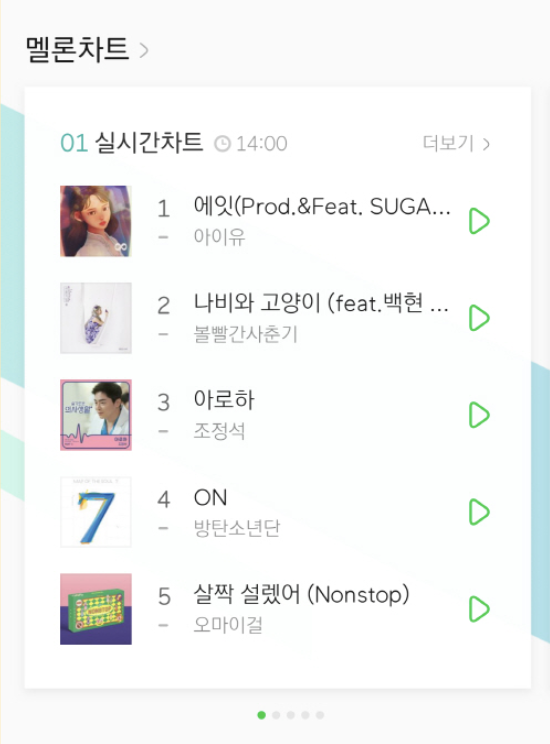 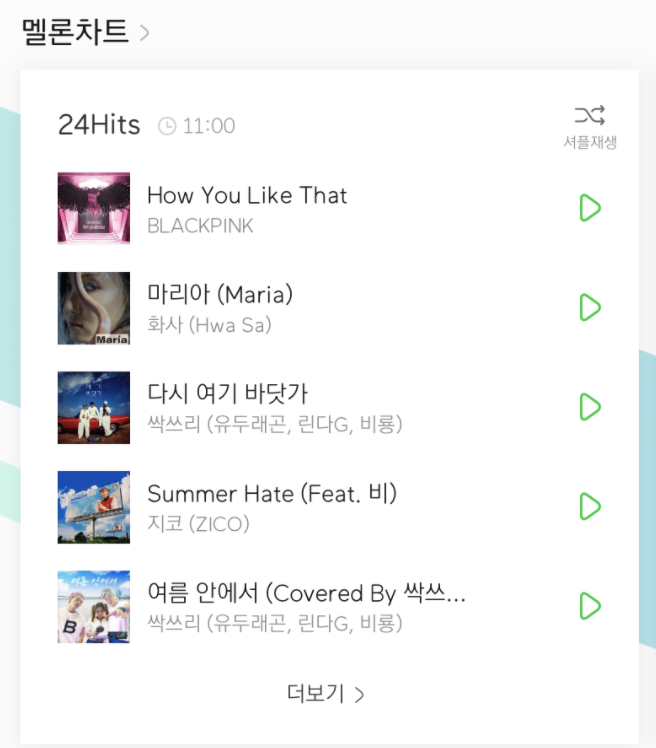 Real-time music chart ranking system (left) that technically counted the numbers of streaming and downloads per hour has been changed to a 24Hits chart that shows the cumulative trend of the last 24 hours. 24Hits ranking is calculated by adding streaming scores (40%) and download scores (60%). Chances Earned with Efforts With the success of Brave Girls, the story behind them is also getting the spotlight. Just a week before the YouTube video upload, Brave girls were talking about disbandment having been worn out of striving for a seemingly hopeless future. The video changed their fate completely in a week. Meanwhile, other unpopular groups who performed as frequently and passionately as Brave Girls in army bases are also being recognized. One of them is a group named “Laboum” and their hidden great songs are actively being shared on social media these days. It’s often said that Koreans quickly fuss and easily forget. So whether Brave Girls and other groups that resurged will continue to be the trend in Korea or not is uncertain. However, just like the saying that chances favor only the prepared mind, it’s probably time for people to try to see the endeavors behind the sudden resurgence and keep supporting them.
Slang Have you ever desperately wanted something that you’ll just wait for days and nights until you finally get it? If you have, Jon-beo (존버) is a perfect word to describe your experience. Jon-beo is an abbreviated version of a combination of a slang word that means “very much” and beo-ti-da (버티다) meaning “to endure.” Since the expression includes a slang that can’t be openly used in TV programs, some people say it’s an abbreviation of Jon-jung-ha-meo beo-ti-gi (존중하며 버티기) that means to respect and endure. With the increasing number of people newly getting into the stock market these days, jon-beo has also been often used as a stock investment term. It refers to the situation when you hold dropped stocks and endure until their prices go up again. Here’s a popular phrase using today’s slang: A: 존버는 승리한다. A: Those who hang in there win in the end.
KOMMON Is Looking for New Members Want to join our team? KOMMON is produced by an all-volunteer staff and we are actively looking to expand. We are particularly looking for a writer who can conduct research in Korean and write in English, but if you have other talents to bring to the team we want to hear from you. Please fill out the following form to apply:
KOMMON TEAM 수수🌾 바코🌊 오티오😈 기린🌴 기니👑 프레드🍰 부엉🦉 타코🌮 Sunny🌞 케이☕ 코코🐦 Gumball🍬
|