Who’s Running: Final Candidates for S. Korea’s Snap Election Lee vs. Kim: South Korea’s Snap Election Race Kicks Off |
|
|
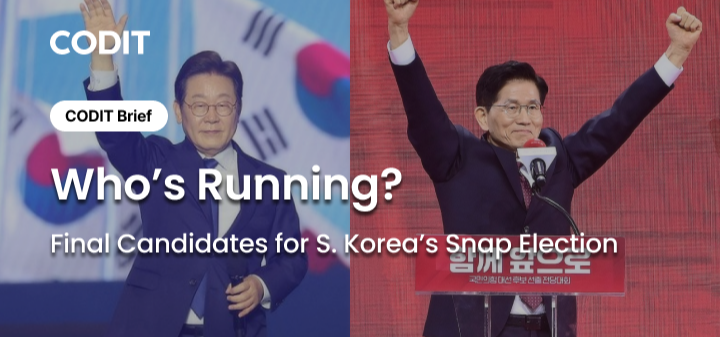
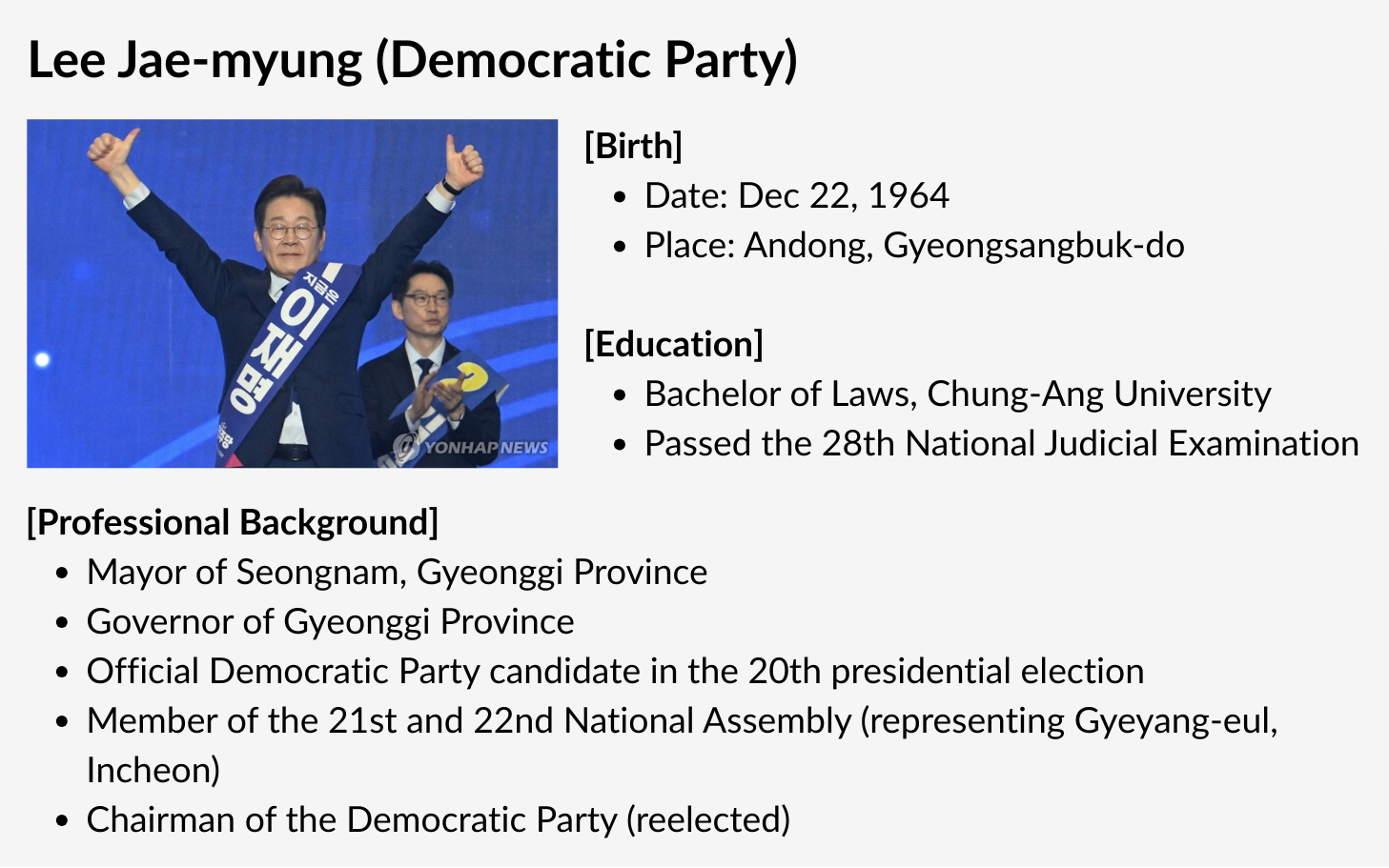
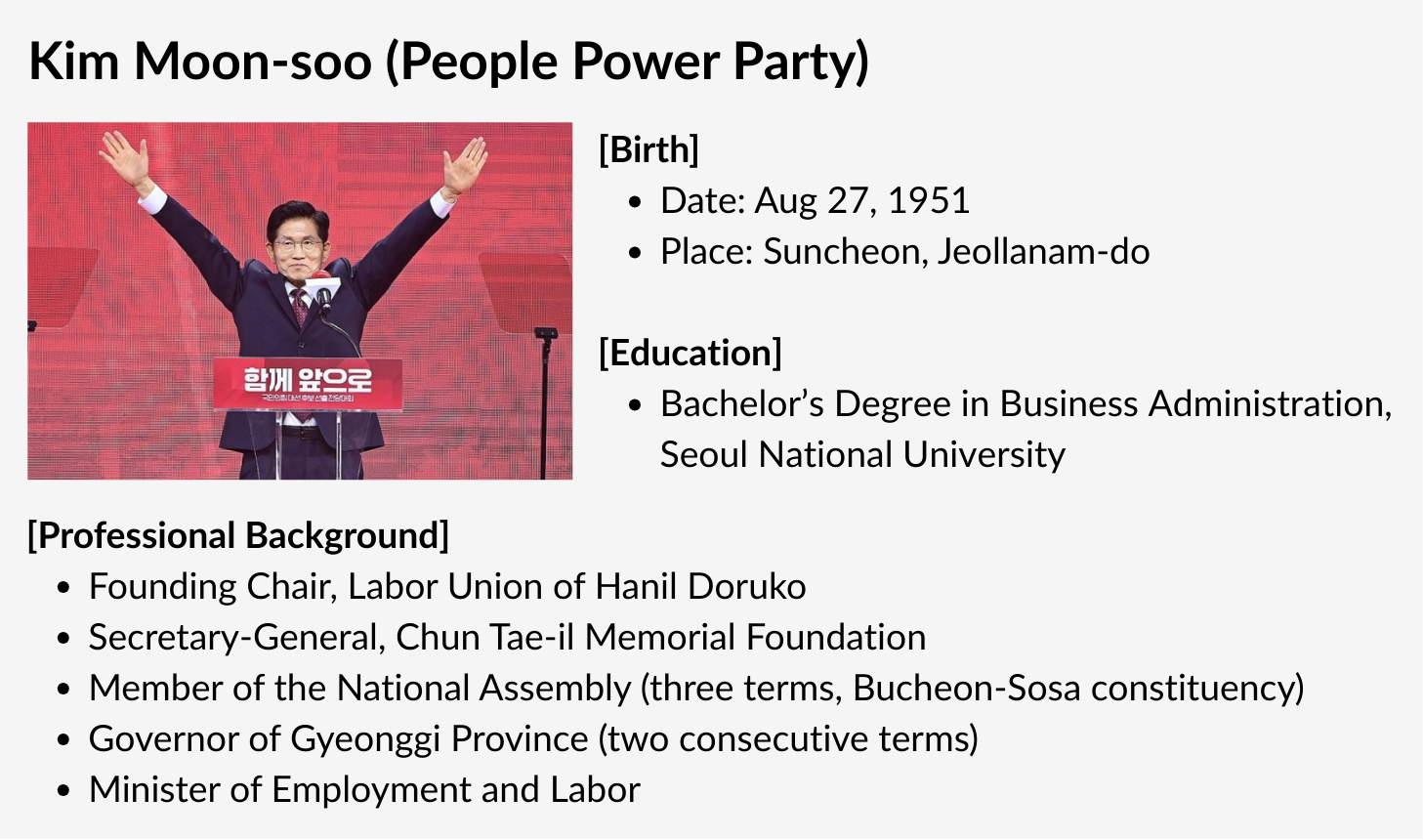
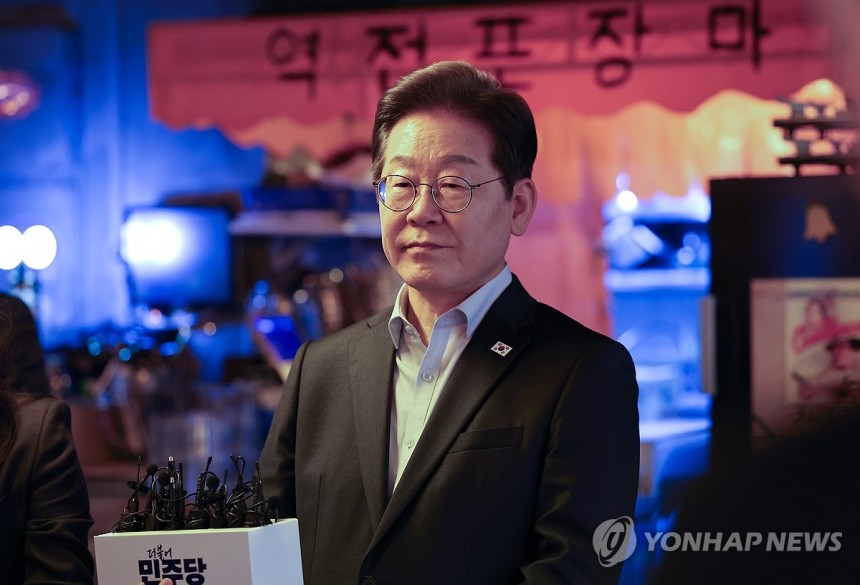
- Following the Democratic Party’s nomination of Lee Jae-myung on April 27, the People Power Party confirmed Kim Moon-soo as its candidate on May 3—setting the stage for South Korea’s 2025 snap presidential election.
- Lee secured his party’s nomination with 90% of the vote in a largely uncontested race. Attention now turns to the Supreme Court’s pending remand ruling, which could influence centrist voter sentiment just weeks before the election.
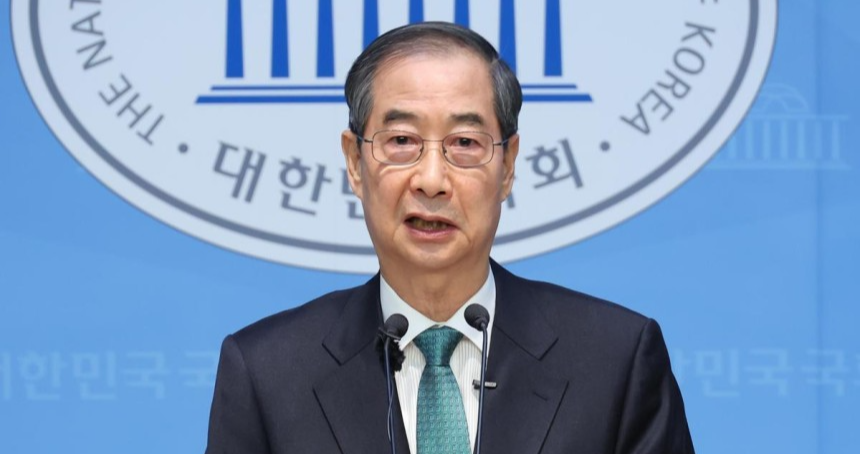
- Uncertainty remains within the PPP, as Acting President Han Duck-soo resigned as Prime Minister on May 2 and launched his own presidential bid. With candidate registration set for May 10–11, speculation is rising over a potential conservative unification deal.
|
|
|
1. Who are the leading candidates? |
|
|
[Strengths]
- Dominant Election Framing: With the race shaped as “Lee vs. Lee,” Lee Jae-myung has taken full command of the campaign discourse, setting the agenda and outpacing rivals in media presence and issue framing.
- Resilient Support Base Amid Divided Right: Lee maintains strong backing from both the Democratic Party and its grassroots base, giving him stability in the race despite his high unfavorability. Meanwhile, the conservative camp remains fractured, weakening its overall competitiveness.
- Strong Base & Conservative Fragmentation: He enjoys solid support from both party members and the broader public, while the conservative bloc remains divided between hardline and moderate factions.
|
|
|
[Strengths]
- Experienced Administrator with Policy Results: As Gyeonggi Governor, Kim spearheaded investment attraction, transit expansion, and administrative reforms—leaving a record of visible execution.
- No Ongoing Legal Risks: Despite past activism-related charges, Kim has avoided corruption scandals or current investigations, maintaining a reputation for integrity.
- Strong Appeal Among Conservative Voters: His consistent ideological stance energizes the traditional conservative base, which propelled him through the party primary.
|
|
|
[Vulnerabilities]
- Limited Appeal to Moderates: His hardline conservative stance may alienate centrist voters seeking pragmatic leadership.
- Controversial Public Record: Past remarks and incidents, including the 119 call and colonial history comments, have sparked criticism and credibility concerns.
- Perceived Lack of Readiness: Out of elected office since 2014 and entering the race late, Kim may seem underprepared next to long-positioned rivals.
|
|
|
2. Key Dynamics to Watch Ahead of the Vote
|
|
|
1. Could Lee Jae-myung’s Trial Sway the Election?
|
|
|
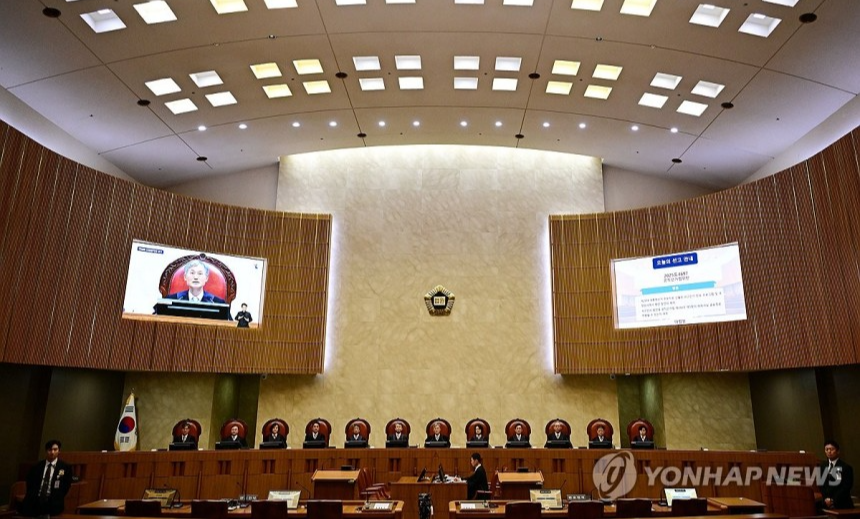
- Lee Jae-myung’s May 15 remand hearing won’t disqualify him before June 3, but the Supreme Court’s guilty-leaning ruling has re-ignited debate.
- While procedural delays make a final verdict unlikely before the vote, the ongoing case fuels opposition attacks and may unsettle swing voters.
|
|
|
- Democrats argue the judiciary is being politicized to influence the race, casting the trial itself as part of the campaign battleground.
|
|
|
2. Will the Right Unite in Time?
|
|
|
- With Kim Moon-soo nominated and Han Duck-soo entering the race, conservative unification now seems likely.
- Kim has pledged to ally with “any force” to block a progressive win, and despite stylistic differences, their overlapping support bases make a deal feasible.
|
|
|
3. Will a Head-to-Head Race Hurt the Democratic Party Again? |
|
|
- History shows that head-to-head contests have often disadvantaged Democratic candidates—even in the wake of major crises.
- Lee’s high unfavorability and consolidation on the right may further narrow his path, making the battle for moderate voters pivotal in shaping the election’s final direction.
|
|
|
3. What’s next?—Key dates and milestones |
|
|
-
May 10 (Sat) – May 11 (Sun): Candidate registration
-
May 12 (Mon): Official campaign period begins
-
May 29 (Thu) – May 30 (Fri): Early voting
-
June 3 (Tue): Election day
※ Final candidate unification within the People Power Party is expected before the registration deadline.
|
|
|
South Korea’s snap election, triggered by the president’s impeachment, is unfolding amid heightened political volatility—with a court ruling affecting the leading opposition candidate and conservative unification talks still in flux. |
|
|
With just a month until the vote, further shifts remain likely, making it essential for businesses to stay attuned to key developments and respond strategically. |
|
|
What’s Next: Party Platform Analysis Coming May 13CODIT provides real-time insights to help organizations navigate uncertainty and take timely, informed action throughout the election period. On May 13, CODIT will release a comparative analysis of party platforms—offering stakeholders a clear understanding of each candidate’s policy direction and its implications for business and governance. |
|
|
2nd Floor, 39, Gukjegeumyung-ro, Yeongdeungpo-gu, Seoul, Republic of Korea
|
|
|
This document is the property of CODIT. Unauthorized use or distribution is prohibited. It reflects independent research and does not represent the official position of any government or institution. All responsibility for its use rests with the reader. |
|
|
|