Weekly updates on the future of mobility
| Company |
Article |
| dSPACE, MathWorks |
dSPACE & MathWorks expand partnership to speed up autonomous driving simulation |
| Waymo |
Google Is Using The Genie 3 World Model To Simulate Edge Cases To Train Waymo’s Self-Driving Cars |
| Honda, Mercedes-Benz |
Honda and Mercedes-Benz declare war on potholes – new LiDAR and suspension tricks aim to soften the blow of government failures |
| Hesai, Grab |
Hesai Announces Partnership to Accelerate Lidar Development |
| Tranton, Plus AI |
TRATON Deepens Autonomous Trucking Push With Expanded PlusAI Partnership |
| Feautred |
Rivian’s AI Master Plan: Hands-Free Driving, R2 + LiDAR, and the Road to Personal Level 4 Autonomy
|
|
|
dSPACE & MathWorks expand partnership to speed up autonomous driving simulation
|
|
|
📌 dSPACE and MathWorks integrated RoadRunner and ASM OpenX to streamline ADAS and autonomous driving simulation through open standards–based workflows.
|
|
-
dSPACE and MathWorks expanded their long-standing partnership to improve autonomous vehicle traffic simulation efficiency.
-
Road networks and scenarios created in MathWorks’ RoadRunner now run directly in dSPACE’s ASM OpenX environment.
-
The integration removes file conversion and manual rework between road modeling and traffic simulation tools.
-
Both platforms align on open standards, including OpenDRIVE and OpenSCENARIO.
-
Engineers can reduce errors and shorten development cycles for ADAS and automated driving functions.
-
The unified workflow supports faster iteration of complex traffic scenarios and validation processes.
-
The collaboration highlights growing industry reliance on open, interoperable simulation toolchains.
|
|
|
Google Is Using The Genie 3 World Model To Simulate Edge Cases To Train Waymo’s Self-Driving Cars |
|
|
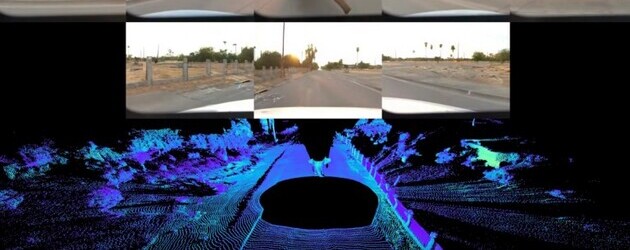
📌 Waymo is using a Genie 3–based world model to simulate rare edge cases across camera and LiDAR modalities, accelerating safety validation for autonomous driving. |
|
-
Waymo introduced the Waymo World Model, a specialized adaptation of Google DeepMind’s Genie 3 world model for autonomous driving simulation.
-
The model generates rare and extreme edge cases, including natural disasters, wrong-way drivers, and abnormal road users, that are impractical or unsafe to capture in real-world testing.
-
Waymo combines nearly 200 million autonomous miles on public roads with billions of miles driven in virtual simulation environments.
-
The system supports multimodal simulation across both camera and LiDAR sensors, extending beyond purely visual world models.
-
Engineers can control simulations through driving-action counterfactuals, scene layout configuration, and natural language prompts.
-
Genie 3’s pretrained world knowledge transfers to Waymo-specific 3D LiDAR outputs, enabling realistic physics and behavior in unseen scenarios.
-
Waymo developed a more efficient variant of the model to support long-duration simulations at reduced computational cost.
-
The approach highlights how large-scale generative world models are becoming central to autonomous driving safety validation and scaling.
|
|
|
Honda and Mercedes-Benz declare war on potholes – new LiDAR and suspension tricks aim to soften the blow of government failures
|
|
|
📌 Honda demonstrated how existing vehicle camera and LiDAR sensors can automate road condition monitoring, significantly improving infrastructure maintenance efficiency. |
|
-
Honda completed a pothole-detection pilot with DriveOhio and the Ohio Department of Transportation using production-grade camera and LiDAR sensors.
-
Honda test vehicles monitored approximately 3,000 miles of public roads, detecting potholes, damaged signs, guardrails, and insufficient road markings.
-
The system processed vehicle-generated data with Edge AI models and analyzed it through Honda’s cloud platform.
-
Road condition insights integrated into Parsons’ iNET Asset Guardian system to support automated infrastructure maintenance workflows.
-
The pilot achieved 99% accuracy for damaged or obstructed signs, 93% for guardrails, and 89% average accuracy for pothole detection.
-
Honda and DriveOhio estimate the approach could save over $4.5 million annually by reducing manual inspections and enabling proactive repairs.
-
The project highlights how vehicle perception data can extend beyond driving to support large-scale public infrastructure management.
-
By contrast, Mercedes-Benz applies road-surface detection primarily to vehicle comfort through adaptive suspension and Car-to-X data sharing.
|
|
|
Hesai Announces Partnership to Accelerate Lidar Development |
|
|
📌 Hesai appointed Grab as its exclusive distributor in Southeast Asia to accelerate large-scale LiDAR adoption across robotics, autonomous systems, and mapping.
|
|
-
Hesai Technology named Grab as its exclusive distributor for LiDAR products across Southeast Asia.
-
Grab will consolidate sales, customer support, and marketing for Hesai’s LiDAR portfolio throughout the region.
-
The partnership targets faster LiDAR deployment for robotics, autonomous systems, and high-definition mapping applications.
-
Hesai will leverage Grab’s established regional distribution network to lower adoption barriers and improve sensor accessibility.
-
Grab secures a stable supply of LiDAR hardware to support its autonomous mobility and mapping initiatives.
-
Hesai cited strong regional demand for LiDAR across manufacturing, logistics, and service robotics.
-
The collaboration aims to advance Physical and Embodied AI by enabling machines to operate safely in dense, complex urban environments.
-
The deal reflects Southeast Asia’s transition from LiDAR validation to large-scale commercial deployment.
|
|
|
TRATON Deepens Autonomous Trucking Push With Expanded PlusAI Partnership
|
|
|
📌 PlusAI and the TRATON Group expanded their partnership to accelerate factory-integrated Level 4 autonomous trucking across the U.S. and Europe. |
|
-
PlusAI and TRATON Group expanded their global partnership to advance on-highway autonomous truck commercialization.
-
TRATON will provide up to $25 million in non-dilutive R&D funding to support factory integration of PlusAI’s SuperDrive autonomous driving software.
-
The funding targets development, validation, and industrialization of autonomous truck platforms for series production.
-
The agreement includes board representation for TRATON following PlusAI’s planned public listing via Churchill Capital Corp IX.
-
TRATON is eligible for milestone-based warrants linked to early autonomous deployment revenue, aligning incentives around commercialization.
-
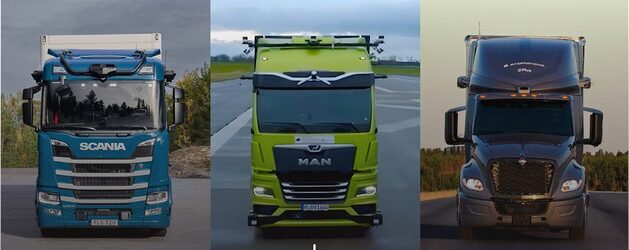
SuperDrive is positioned as the autonomous platform across multiple TRATON brands, including Scania, MAN, and International.
-
The partners have already completed fleet trials in Texas, driverless safety maneuver validation, and NVIDIA-based development integration.
-
The collaboration underscores closer OEM–software alignment as autonomous trucking moves toward factory-built deployment at scale.
|
|
|
* This edition was generated with the support of AI and reviewed by an editor. |
|
|
Rivian’s AI Master Plan: Hands-Free Driving, R2 + LiDAR, and the Road to Personal Level 4 Autonomy |
|
|
VuePoint, published by Vueron Technology, is a weekly newsletter that delivers key updates on the future of mobility—including autonomous driving, smart infrastructure, urban innovation, and LiDAR technology.
Starting with its LiDAR perception solutions, Vueron Technology is realizing AI-driven innovations in the mobility paradigm to create a safer world.
|
|
|
How did you like today's Mobility Weekly? |
|
|
|
Vueron Technology | mkt@vueron.com
2033 Gateway Place, Suite 500, San Jose, CA 95110, US
|
|
|
|