For dark mode users,
Hello, readers! Today, we are covering: Cultural Insight: Busking in Korea Slang: 씽라 (sing-ra) “singer/songwriter” This Week's Recommendations Wassup Man (와썹맨) Don't forget to leave your feedback below!
Busking in Korea
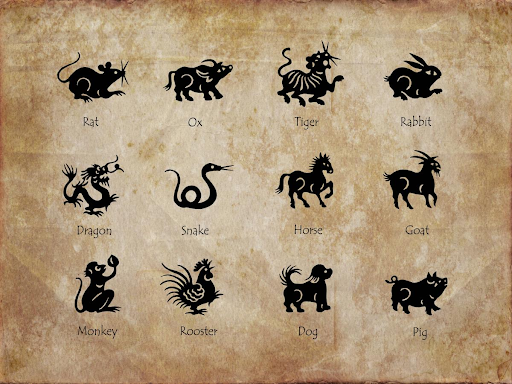
Writer: Haram Lee, Daeho Park, Youngeun Jang Editor: Aleya Sharif Senior Editor: Regine Armann Editor-in-Chief: Fred McNulty Researcher: Sunny Um New Year Message Happy New Year! The year 2022 is the year of the tiger in Korea. In Korea and other Asian countries, they have twelve zodiac animals and each takes turns to represent the year. The twelve zodiac animals are rat, ox, tiger, rabbit, dragon, snake, horse, goat, monkey, rooster, dog, and pig. Given this order, 2023 will be represented by the rabbit. In Korea, this year is described as iminnyeon (임인년), where im (임) stands for black, in (인) for tiger, and nyeon (년) for a year. In Korean mythology, tigers represent energy, passion, and honesty, and this year's black tiger, therefore, represents both energy and bravery. Some economists are also hoping this year will mark the beginning of a revival of the economy after the onset of the COVID-19 pandemic, as in Korean culture, tigers are believed to defeat evil and bring good fortune.
12 Zodiac Animals Source: The Intricate History of Astrology and Its Various BeliefIn the past, many tigers wandered through the mountains of the Korean peninsula. Now, all have gone extinct since the Japanese occupation era (the 1940s) due to widespread hunting. Since the animal’s shape also resembles the shape of the Korean peninsula, tigers have become the mascot of Korea for significant national events such as the Olympics. For example, in the 2018 Pyeongchang Olympics, a white tiger character named Soohorang (수호랑) was the mascot that embodied a guardian and a friend for participants and spectators. Intro Aside from K-pop megastars such as BTS and Blackpink, there are many hidden talents within the Korean music industry that are less popular amongst fans, since they do not belong to major agencies. Last year, a program called “Sing Again” on the television network JTBC featured artists and individual trainees from small-sized agencies. The show served as a good debut stage for artists who were not yet well known to the public. In addition to these contests, busking is another way for unknown artists to become popular without the support of a big agency. Today, let's look at how the busking culture is like in Korea (which is not much different from the culture in many countries) and famous busking hotspots in Korea. Busking in Korea Busking in Korea, like in other countries, means that singers or musicians set up on the streets and perform for free for whoever passes by. Audiences can enjoy such performances without paying for a ticket. However, busking has in fact been considered taboo for a while in Korea, perhaps related to the influence of the conservative society. Today, even though busking has become part of Korean mainstream culture, this sentiment still exists but is usually only expressed as an aversion to noise. Over time, busking gradually began to boom in the Seoul metropolitan area from the 2000s, with the rising popularity of alternative music bands, such as Crying Nut (크라잉넛) and Yellow Kitchen (옐로우 키친). The busking culture later became popular nationwide. This boom is perhaps due to the influence of music audition programs such as Superstar K (슈퍼스타 K) and the overall popularity of K-pop stars in the 2010s. In particular, an indie band that goes by the name Busker Busker (버스커 버스커), who won second place on Superstar K3 in 2011, has raised long-lasting interest in busking, which they often used to practice before auditions. Busking does not require a separate permit, but there is a limited number of places where artists are allowed to busk. Buskers who perform outside of such designated areas can potentially receive complaints for excessive noise. Today, the most well known busking spots are located in Hongdae (홍대), a vibrant university neighborhood in Seoul.
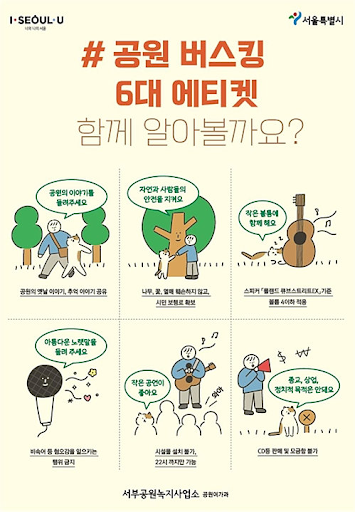
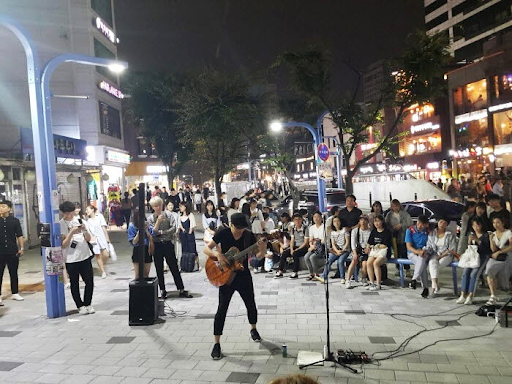
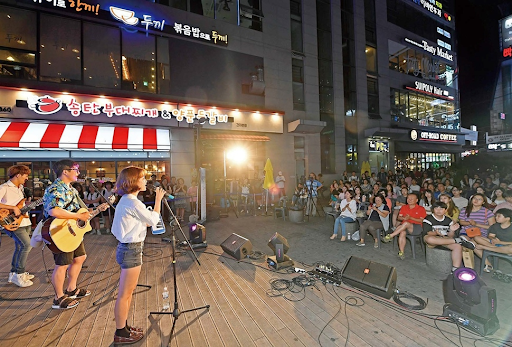
Source: 서울 서부공원녹지사업소 https://www.seoul.go.kr/news/news_report.do#view/296188?tr_code=m_snews "The Six Etiquette Rules" that you need to know when busking When busking in Seoul, six rules are expected to be followed, especially by people who want to busk in a park. ▲Protect Nature and People's Safety ▲Perform at a low Volume ▲ Sing Appropriate Songs ▲ Keep the Audience Small ▲ No Political or Religious Content ▲ Share Park Culture These are the criteria for imposing fines under the Act on Urban Parks and Green Areas. 1. “Protect Nature and People's Safety”: singers are required to make sure they do not damage trees, flowers, or fruits wherever they choose to perform. 2. “Sing Appropriate Songs”: acts that are designed to cause disgust or upset with sexual or hateful content are banned. 3. “Perform at a Low Volume”: large-scale facilities cannot be installed and performance time ends at 22:00. 4. "Do Not Perform for Political/Religious/Commercial Purposes”: Selling CDs and installing fundraising boxes are prohibited. 5. “Perform at a Small Volume”: noise needs to be limited to 80 db, which is based on the speakers that are used by 80% of street performers. 6. Finally, buskers are recommended to "Share Park Culture”, by telling the history of the park – not mandatory, because not all buskers have the knowledge of who founded the park or what historic values does the park contain – and their pleasant memories about the park to the audience. Although many performances have been canceled and restricted since the outbreak of COVID-19 in 2020, small-scale personal performances can still be seen from time to time. While singing outside is not possible at all, artists can still play musical instruments at subway stations. Popular Busking Venues in Seoul Hongdae (홍대) Hongdae has become the most popular spot for busking, since several street artists moved into the area in the 1980s and led the emerging street busking phenomenon during the 2000s.
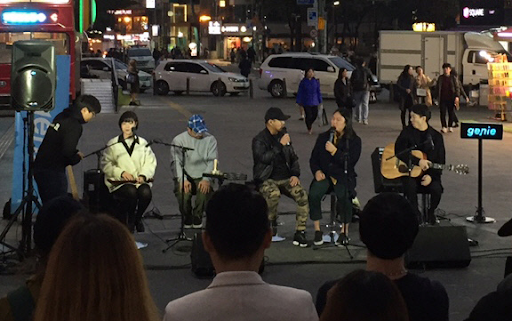
Source: 경기일보 Sinchon (신촌) Yonsei-ro, a street stretching through Sinchon (close to Ewha Women’s University, 이화여자대학교), has become a popular spot for busking since the street was made into a vehicle-free zone to give street artists more opportunities to perform.
Source: 경기일보 Konkuk University (건국대학교) Near the Konkuk University area, there are official stages for outdoor performances.
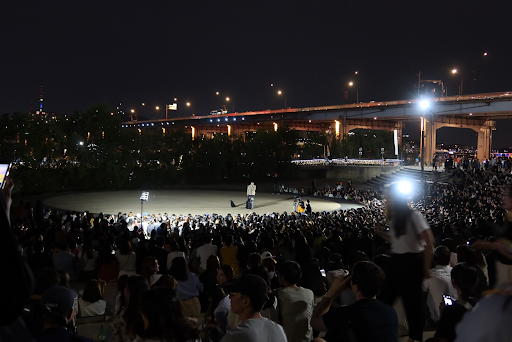
Source: 어둠침침한 쓰레기장, 젊음의 광장으로 변신 Han River Parks (한강공원) At the Banpo (반포), Mangwon (망원), Yeouido (여의도), and Ddoukseom (뚝섬) Han River Parks, performances are often held outside.
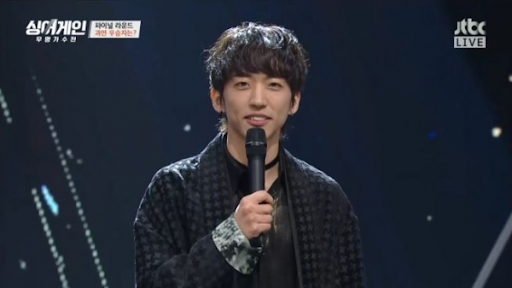
Buskers vs. Celebrities Artists who busk usually try to make themselves known to the public. The most common way for artists to make a debut is through a major entertainment agency, but those who do not make it or create music different from the public taste and want to pursue their own style of music have more difficulties gaining popularity. Due to lack of income, these artists often struggle financially. As their final resort, they choose to busk to make money. Although tipping for paid services is considered unnecessary in Korea, tipping buskers specifically is considered culturally acceptable. Because of COVID-19, the situation has gotten even worse for those who have depended on busking for their livelihood. Lee Seung-Yoon (이승윤), a singer who won the audition program Sing Again in 2021, had been working as a musician for more than ten years. Yet he could not make himself known to the public, because of the nature of the Korean music industry, which is dominated by major entertainment agencies-JYP, SM, YG, etc. During an interview with the Joong-Ang Ilbo, Lee said, “I thought if I couldn’t make something out of my music by 2020, I was going to quit.” But, he did not give up but instead joined Sing Again, which started in late 2020. He received positive reactions from both the judges and the public, and eventually won the competition. Only then was his music recognized by the public.
Lee Seung-Yoon on his final stage of Sing Again
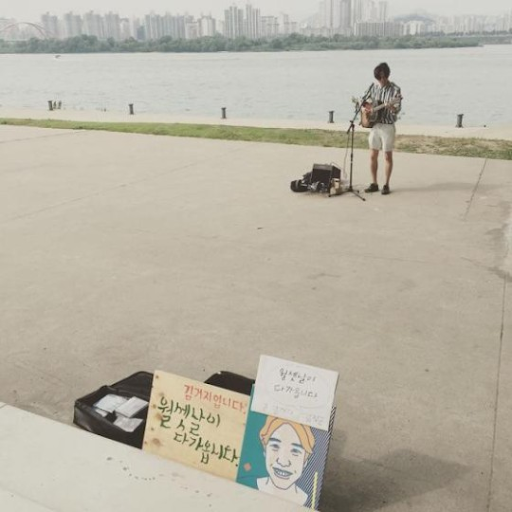
On the sign: “My rent is due soon” Source: "월세 40만원위해 버스킹"…'한강'에 몰리는 프로 가수들 Outro As there have been barriers for artists to perform in public for a long time, because of the pandemic, many have turned to YouTube. One example is a channel called Youth Mic (청춘마이크), which uploads performances of aspiring artists offering a chance for the artists to make their music known, and expose the public to a variety of musical genres.
Slang 씽라 (sing-ra) “singer/songwriter” A shortened term for “singer-songwriter,” it describes the artists who compose and perform music on their own. A: 진정한 아티스트라면 역시 씽라지. B: 나도 그렇게 생각해. A: Sing-ras are genuine artists. B: I say the same. This Week's Recommendations
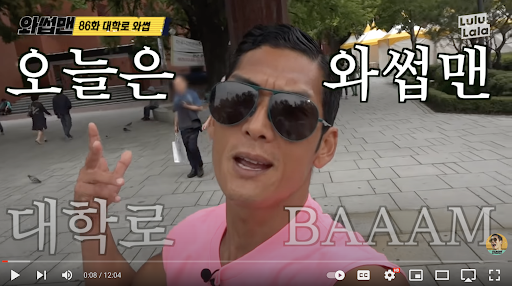
Source: https://youtu.be/3cKf4V0kaK4 Wassup Man (와썹맨) is a YouTube show hosted by a member of the boyband g.o.d, Park Joon-hyung, as he visits multiple spots across the country to find popular and hip places for dining and entertainment. In this episode, he visits the mecca of busking, Daehak-ro (대학로), and indulges in the area's bustling art scene. He concludes his trip with a delectable feast at a popular restaurant. You can watch this episode of Wassup Man on YouTube.
|