“If love merely declares itself, it is only sentiment. Love that reveals itself exercises restraint, makes sacrifices, and protects day after day. AI governance, too, must be built not on grand declarations, but on the daily work of implementation.”
- Muhammadou M.O. Kah, Ambassador and Permanent Representative of The Gambia to the United Nations Office at Geneva and Chair of the UN Commission on Science and Technology for Development (CSTD)
|
|
|
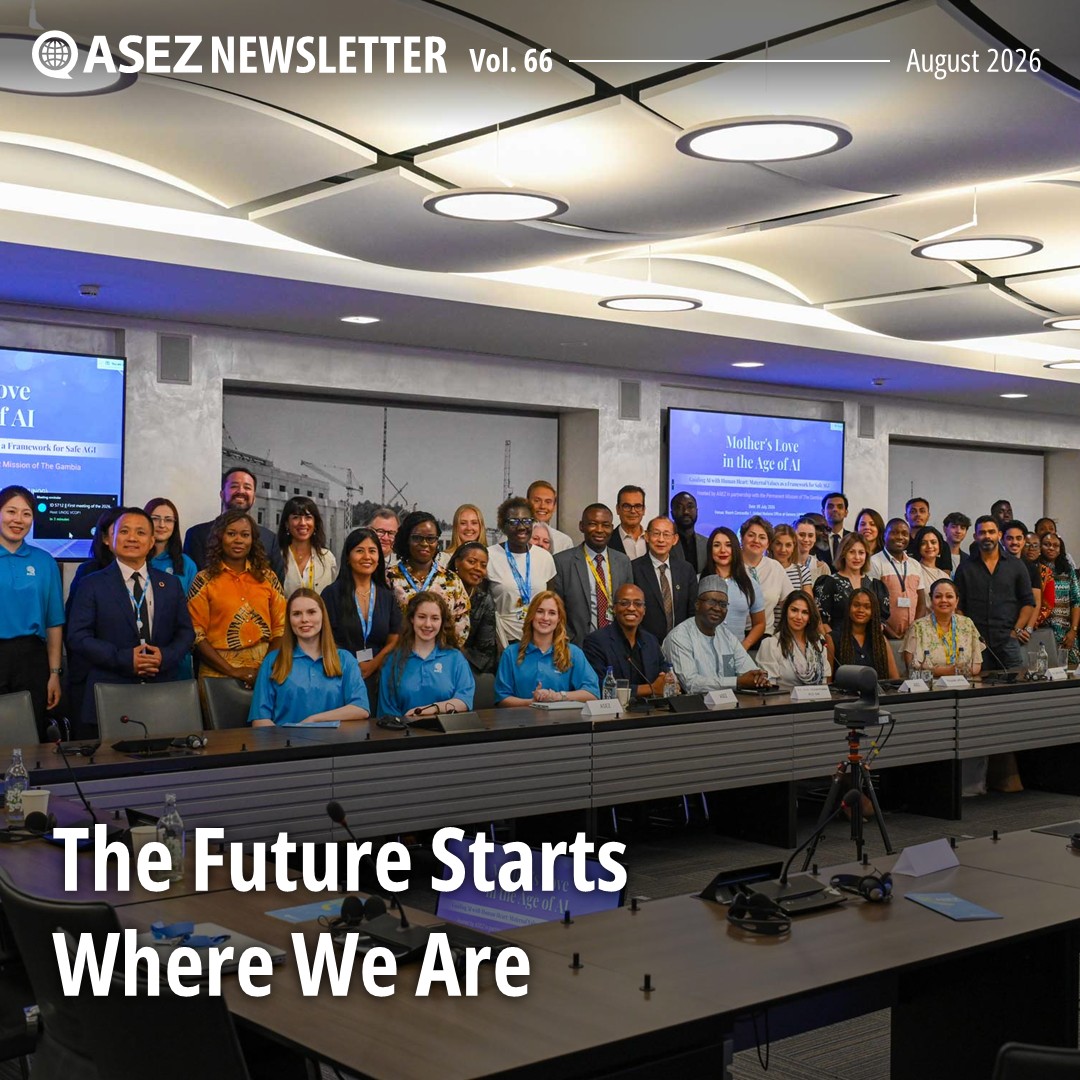
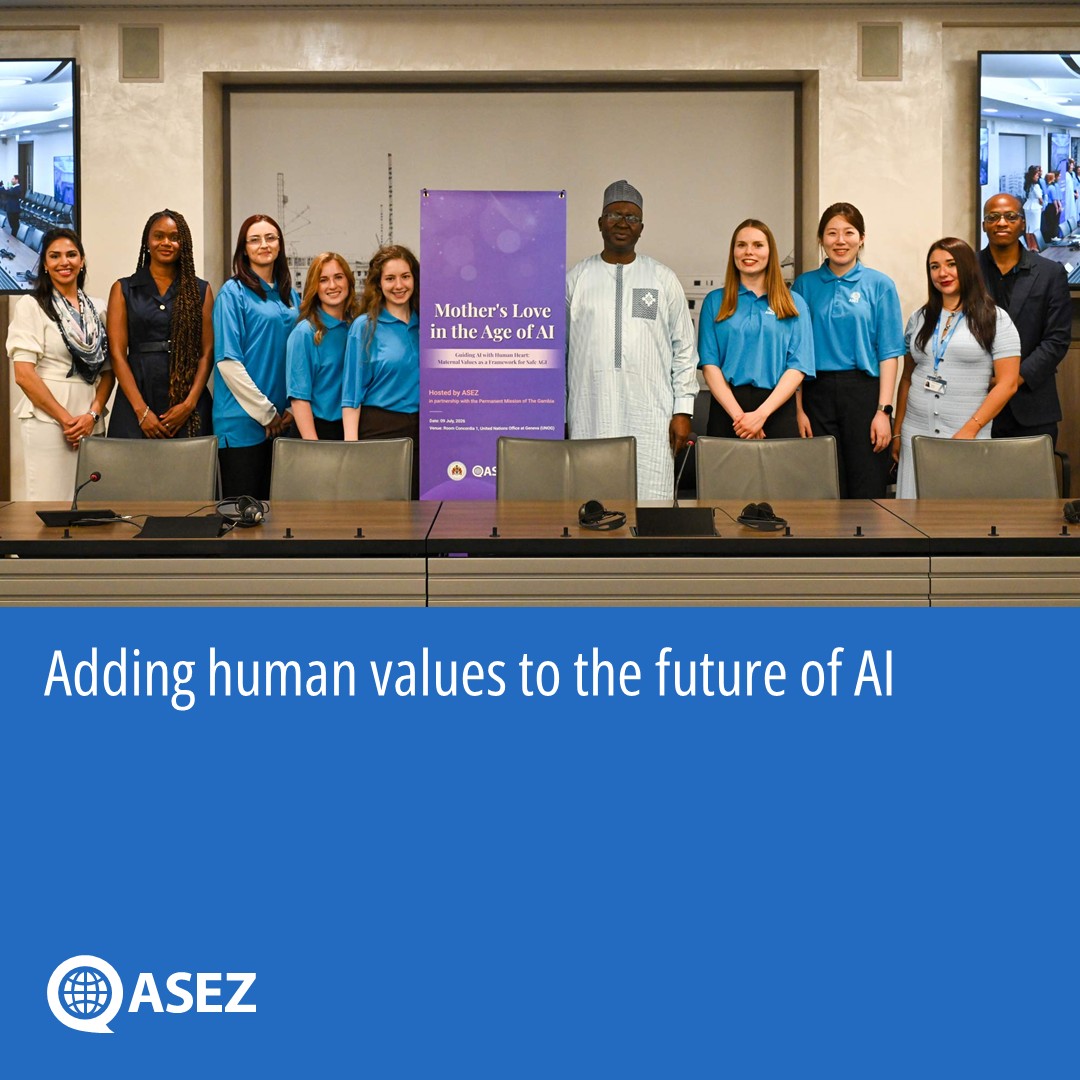
ASEZ Holds Official Side Event in Geneva on “Mother’s Love in the Age of AI”
|
|
|
On July 9, ASEZ co-hosted an official UN side event in Geneva, Switzerland, with the Permanent Mission of The Gambia to the United Nations Office at Geneva under the theme “Mother’s Love in the Age of AI.” Held during the AI for Good Global Summit 2026, co-organized by the International Telecommunication Union (ITU) and the Swiss government, the event was particularly meaningful in that ASEZ went beyond simply participating or making a presentation and directly organized and led an official event to discuss the future of AI with the international community. A total of 57 participants from international organizations, academia, industry, and youth groups attended. |
|
|
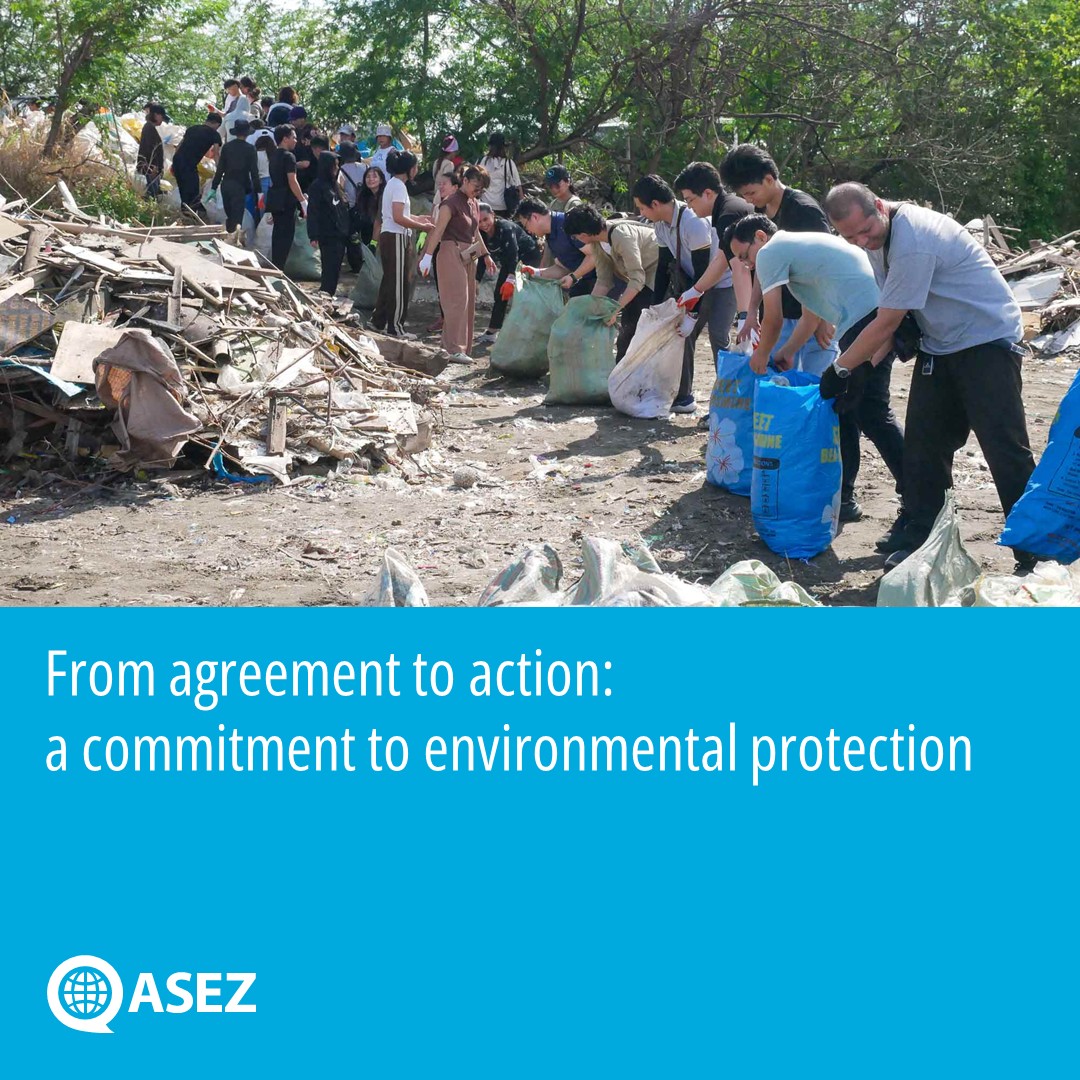
From Agreement to Action: ASEZ and the Villar Foundation Protect Wetland Ecosystems
|
|
|
The partnership between ASEZ and the Villar Foundation, which joined forces for environmental protection in January, is now translating into action on the ground. On June 10, ASEZ held the 10th ASEZ Cleanup Campaign with the Villar Foundation at the Las Piñas–Parañaque Wetland Park (LPPWP) in Las Piñas City, the Philippines. The activity put into practice the two organizations’ continued commitment to environmental protection under the memorandum of understanding (MOU) they signed on January 28 this year.
|
|
|
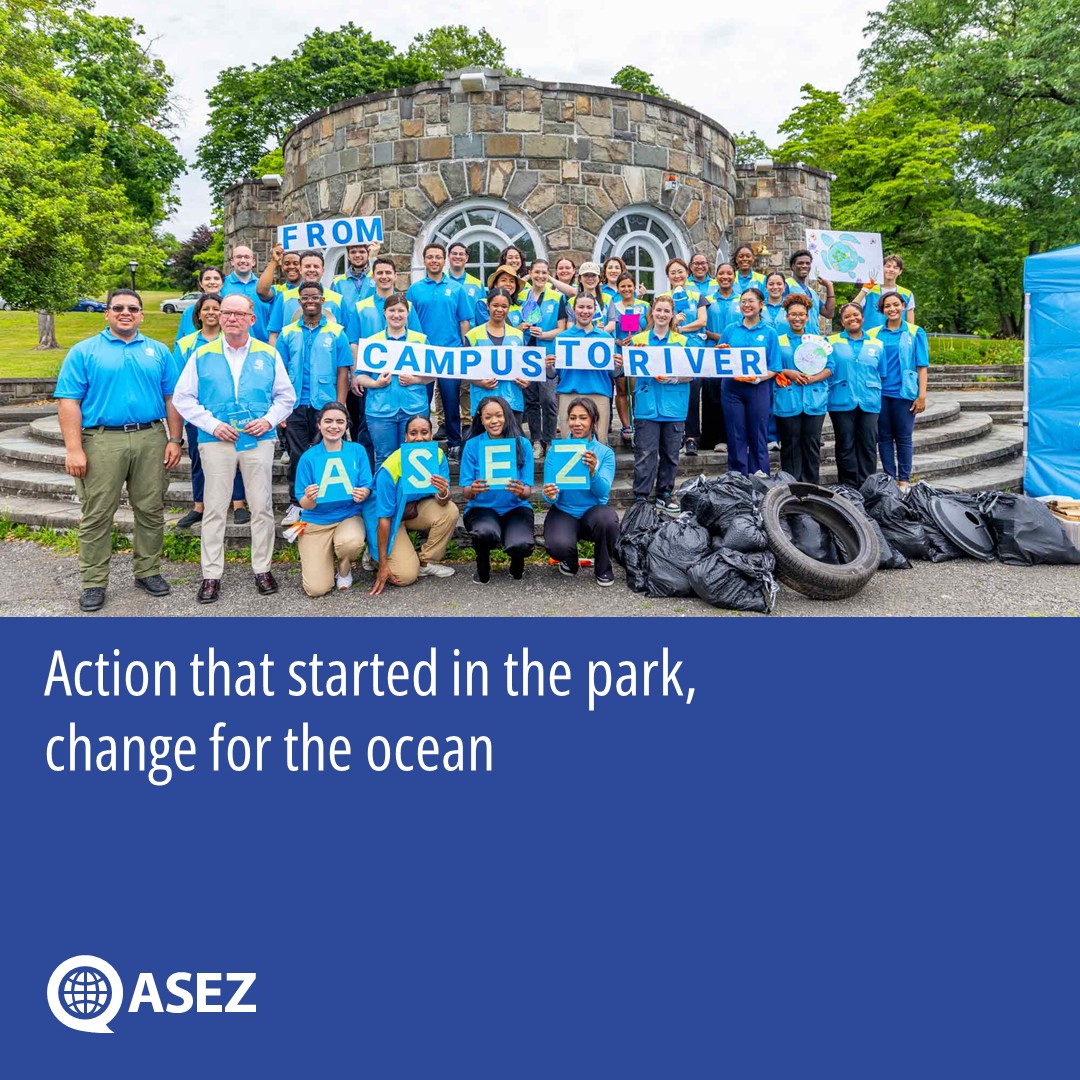
ASEZ Joins Local Community for Blue Carbon Cleanup at Downing Park
|
|
|
On June 14, ASEZ members gathered at Downing Park in New York State to collect discarded plastic and other waste throughout the park and help improve the local environment. Held as part of the ASEZ Global Blue Carbon Ecosystem Protection Initiative, the activity aimed not only to create a cleaner park but also to reduce the amount of waste from everyday environments that can make its way into waterways and eventually the ocean. Members collected litter throughout the park and surrounding areas while introducing local residents to the purpose of the campaign. They shared that protecting the ocean does not begin at the coast alone, as litter discarded on streets and in parks can be carried by rain through storm drains and waterways. Even small actions to keep nearby living spaces clean can help protect local waterways.
|
|
|
ASEZ Students Take Action to Protect Blue Carbon Along Gwangalli’s 6 km (4 mi) Coastline
|
|
|
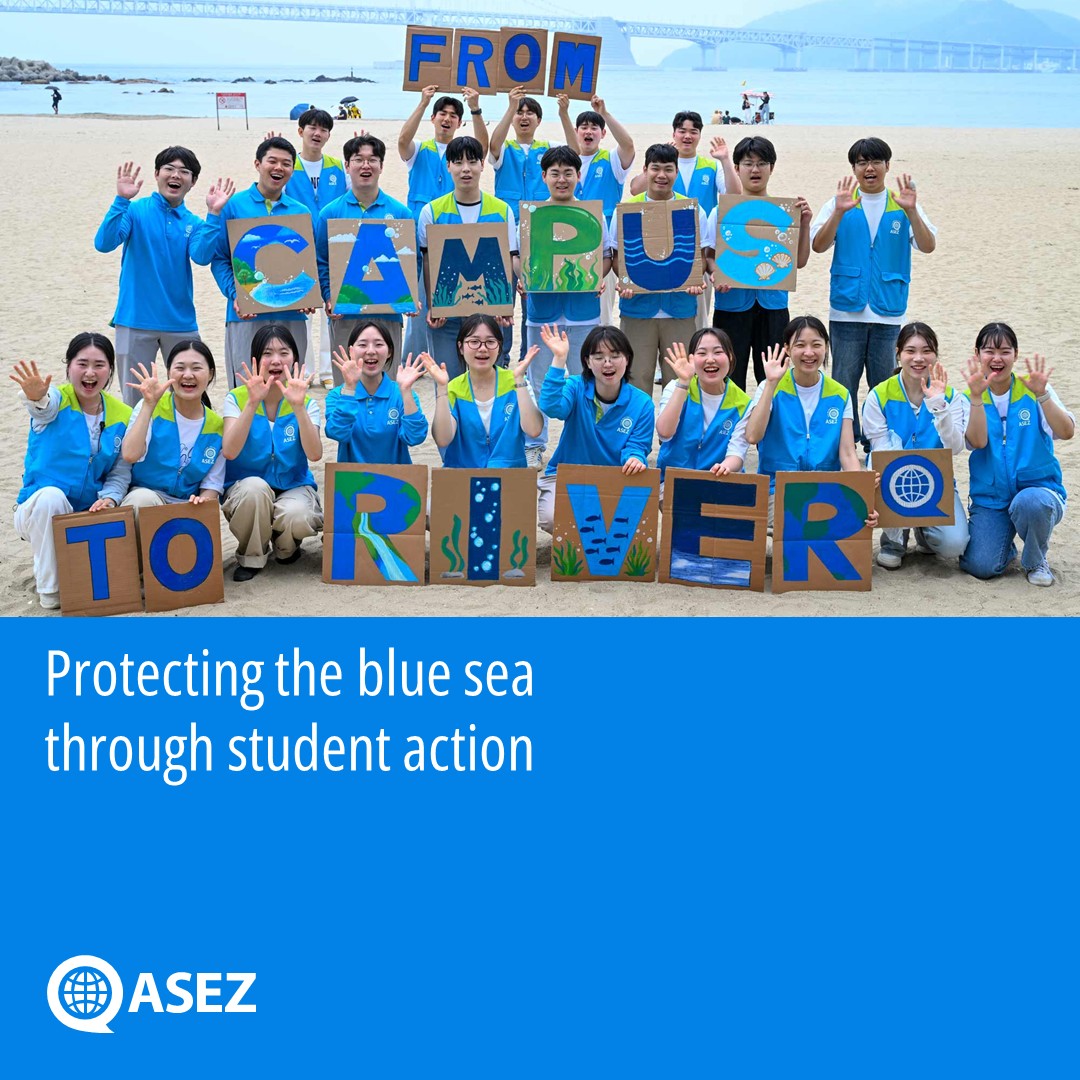
On the morning of June 7, university students gathered at Gwangalli Beach in Busan. About 120 ASEZ members from Dong-eui University, Kyungsung University, Tongmyong University, Pukyong National University, and other universities walked along approximately 6 kilometers (4 miles) of coastline, collecting plastic and household waste left along the shore. Their efforts to protect blue carbon ecosystems began right where the land meets the sea. That day, ASEZ held the ASEZ Blue Carbon Ecosystem Cleanup and Campaign 2026 at Gwangalli Beach. The event began with an opening ceremony introducing the value of blue carbon ecosystems and the need to protect them, followed by a cleanup and public awareness campaign.
|
|
|
Why Young People Need a Seat at the UN Table |
|
|
We often think of humanity as the master of nature. We believe that we are capable of building cities, developing natural resources, and managing ecosystems according to our needs. In reality, however, human survival itself depends on the benefits provided by the vast system of nature’s ecosystems. This is why numerous ecologists regard biodiversity as an essential element directly linked to human survival. According to an analysis by PwC, a global accounting and consulting firm, 55 percent of global GDP—equivalent to approximately USD 58 trillion—is moderately or highly dependent on nature. Protecting biodiversity, therefore, is not simply a matter of preserving plants and animals. It is a crucial factor that affects the entire global economy. When biodiversity is destabilized, everything built upon it is inevitably destabilized as well. |
|
|
This mail is sent to our special supporters.
asez@asez.org50, Sunae-ro, Bundang-gu, Seongnam-si, Gyeonggi-do, Rep. of Korea
|
|
|
|