KUCRF Newsletter Vol. 04 📌 Please introduce yourself.
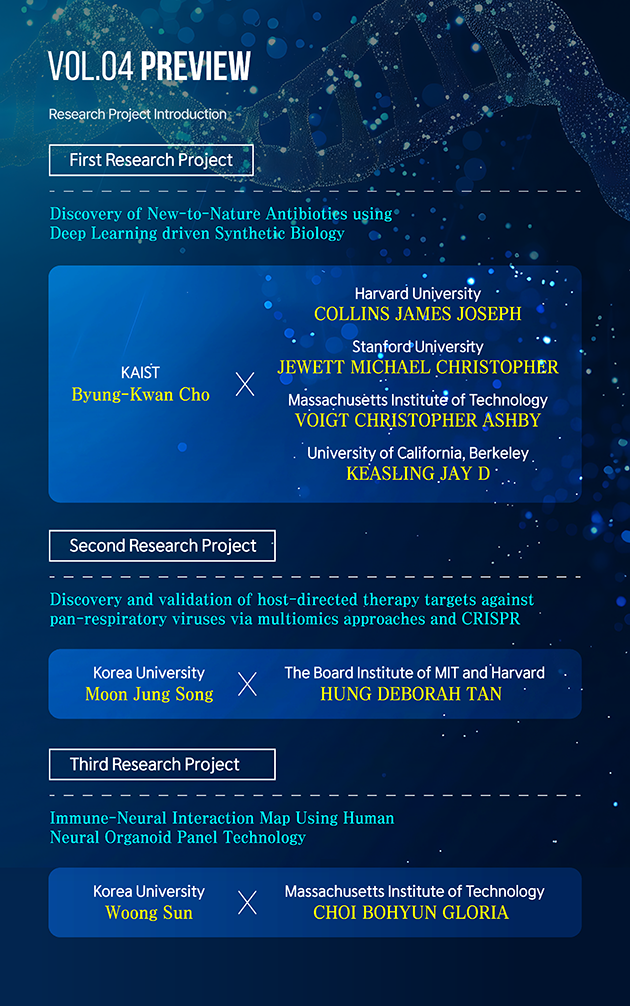
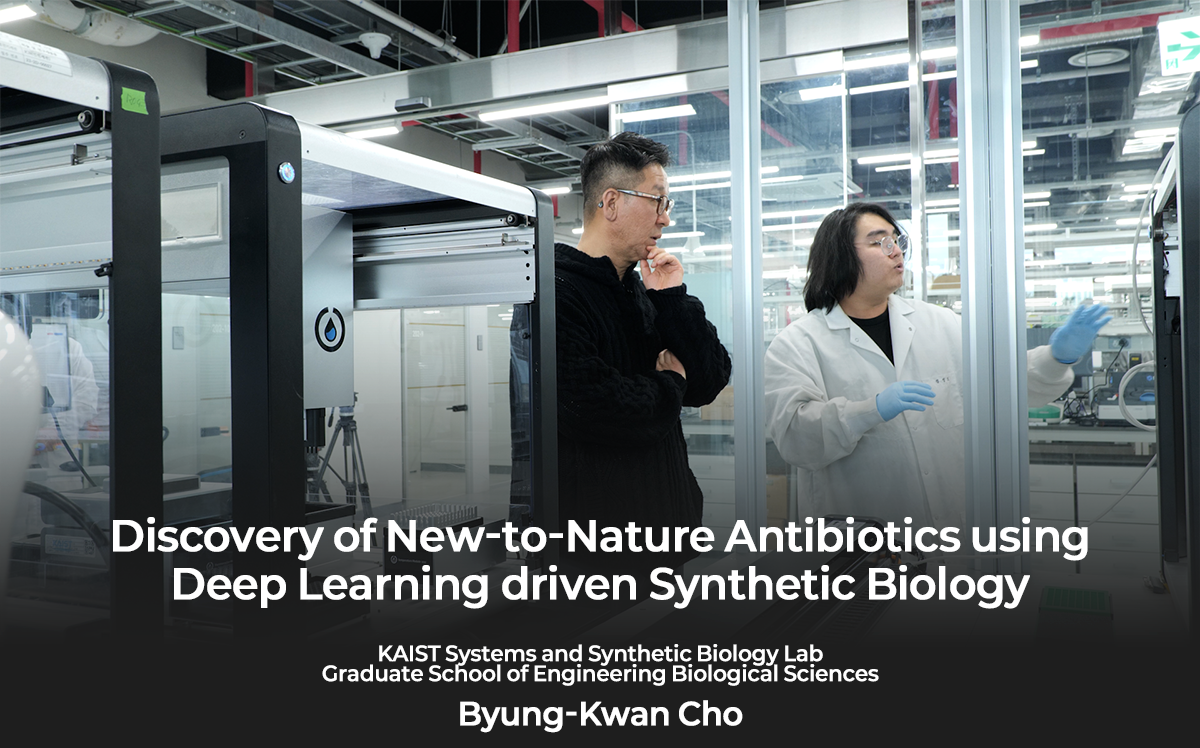
I am Professor Byung-Kwan Cho of the Graduate School of Biological Sciences at KAIST, and I am the principal investigator of a project on the development of innovative-structure antibiotics using deep learning-based synthetic biology.
Our team is conducting collaborative research with researchers from KAIST, the Korea Research Institute of Bioscience and Biotechnology, Chonnam National University, and several institutions in the United States, including MIT, Harvard, Stanford, and Berkeley.
📌 Please explain your ongoing research project.
As the title suggests, we are developing new antibiotics that can combat antibiotic-resistant bacteria. Antibiotic-resistant bacteria are one of the major problems facing humanity today, and we are conducting research on the development of antibiotics with novel structures in order to respond to this challenge.
Many members of the general public are already familiar with antibiotic-resistant bacteria. These bacteria are a major threat because they can break down antibiotics or prevent them from being taken up into the cell, making existing treatments ineffective. As a result, it becomes very difficult to treat infected patients.
For this reason, many researchers at pharmaceutical companies and university laboratories are trying to develop new antibiotics. In general, they directly test a wide range of compounds and develop those with antibacterial activity into antibiotics. However, this process takes a great deal of time, and the resulting antibiotics often end up having structures similar to those already known. When that happens, resistant bacteria rapidly acquire resistance again, and the cycle repeats, leaving us once more without usable antibiotics.
To solve this problem, our research team decided to use artificial intelligence. Our goal is to design new antibiotic structures with AI, predict their antibacterial effects using computational methods, and ultimately produce them using microbial cell factories. The antibiotic compounds created in this way are substances that do not exist on Earth, with completely new structures, and even the methods for making them do not yet exist.
Therefore, one of our major challenges is to develop ways to produce what cannot currently be made. By newly designing and developing the various enzymes and metabolic pathways found in microorganisms, we aim to make it possible to produce these newly designed compounds. In the end, our goal is to use AI to create new-structure antibiotic compounds and then actually produce and develop them into medicines through microbial cell factories.
📌 What was the reason for selecting this research topic?
As mentioned earlier, antibiotic-resistant bacteria remain one of the major infectious disease problems that humanity has not yet solved. This problem is extremely difficult to address, and the only solution is to develop new antibiotics. However, the greatest challenge has been the technical limitations of current antibiotic development.
After much consideration, we came to the conclusion that AI should be used. By training AI models on the vast amount of data we currently possess, we were able to design compounds that show new antibacterial activity.
We now have newly designed antibiotic candidates and are in the process of manufacturing them using microbial cell factories. Even if a newly developed antibiotic is created, it cannot be used to treat patients in practice unless large-scale production is possible. Therefore, we hope that through clinical development and productization, we will eventually be able to treat patients suffering from antibiotic-resistant bacterial infections.
📌 What is the goal you aim to achieve through this research?
The ultimate goal of this research is, without question, the development of antibiotics. These antibiotics will target antibiotic-resistant bacteria, and that is our first and most important goal.
Another point is that antibiotic-resistant bacteria will continue to emerge in the future. Even if we develop antibiotics with innovative structures, bacteria that are resistant to those antibiotics will eventually appear. That means the antibiotics we develop will also one day face resistance.
For that reason, our second and final goal is to turn antibiotics into something like a “vaccine” for antibiotic-resistant bacteria, so that when new resistant strains emerge, they can be treated much like we treat colds or receive COVID vaccines.
📌 What are the expected effects and social impact of this research?
I believe the greatest innovation is artificial intelligence. Until just last December, it was difficult to imagine that AI would advance this quickly. But AI has developed at an extraordinary pace, and it is now being actively applied in the bio field as well. We believe the AI developed by our research team can also make major contributions to many other research fields.
From a social perspective, we hope that the antibiotics we develop will eventually lead to real therapeutic options, allowing patients suffering from antibiotic-resistant infections to receive at least some benefit from treatment. We also expect this research to contribute to reducing the social costs associated with antibiotic infections.
The people who will benefit most are patients. Our goal is to develop ways to treat patients suffering from antibiotic-resistant bacteria. Companies that develop and commercialize such antibiotics will also benefit. In addition, graduate students and the many professors and researchers involved in this project will gain exposure to new technologies, and we hope this work will serve as a stepping stone toward innovative technological development.
📌 What are the outcomes of this research?
As research progresses, many outcomes emerge. The first is foundational technology. The AI-based antibiotic design technology we are developing can be applied not only to antibiotics but also to the development of other medicines.
The second is the microbial cell factory. This large-scale production technology can be directly used not only for the antibiotics we create, but also for producing other types of compounds. Therefore, it can make a substantial contribution to the development of other industries and other medicines as well.
So far, over the past two years of this research project, we have published 13 papers and secured 3 patents. We hope that by continuing the research during the remaining period, we will be able to secure even more foundational technologies and contribute to the development of antibiotics and other medicines. |
|
|
📌 Please introduce yourself.
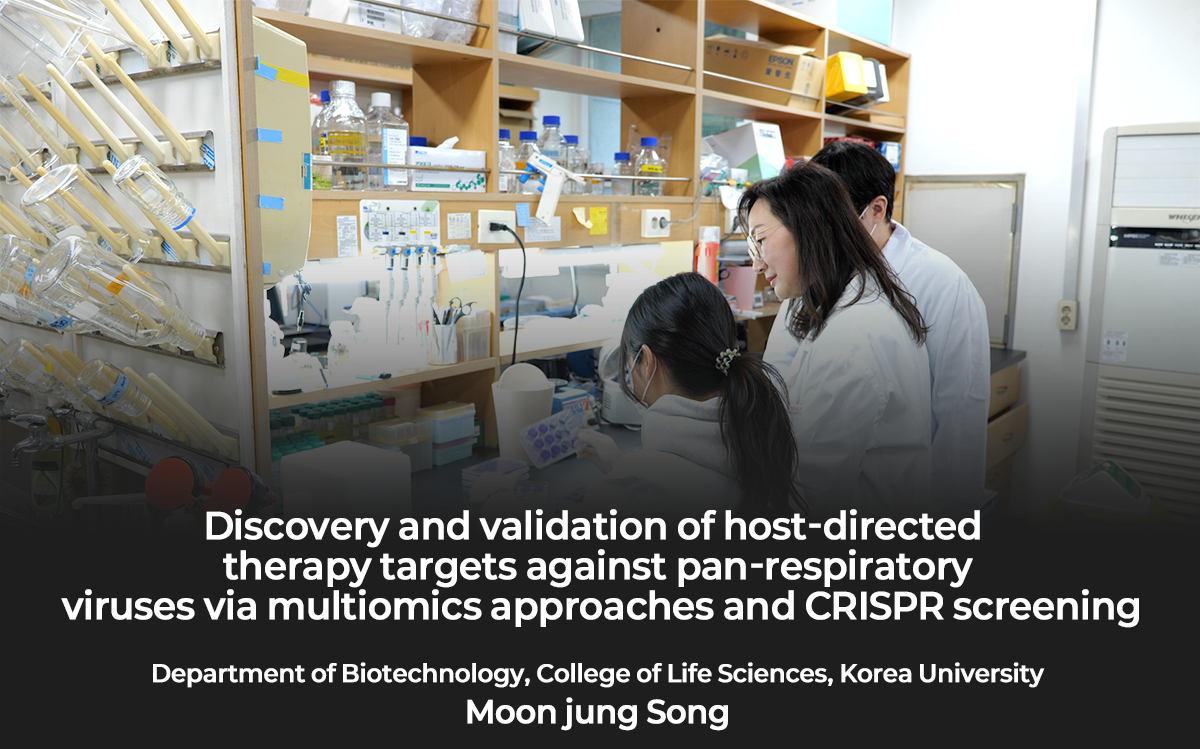
I am Professor Song Moonjung from the Department of Biotechnology, College of Life Sciences, Korea University, and I serve as the principal investigator for the project on discovering and validating broad-spectrum host-targeted therapies for respiratory viruses based on multi-omics and CRISPR screening.
At the Korea Research Institute of Biosafety, where I serve as director, we have been making various efforts to respond to biological threats and natural pandemic events. Through this project, we aim to develop a next-generation host-targeted antiviral therapy that can respond to the next pandemic as a broad-spectrum treatment for respiratory viruses.
📌 Please explain your ongoing research project.
As the title suggests, we are developing new antiviral therapies that can respond to antibiotic-resistant bacteria. Respiratory viruses such as influenza, RSV, and coronaviruses spread very rapidly and can cause major social problems, along with substantial economic costs. As we experienced during the COVID-19 pandemic, they can also have a tremendous social impact.
The biggest problem, however, is that these viruses have RNA genomes and therefore constantly mutate. Existing antiviral drugs target the virus directly, so they are highly selective and effective, but in the case of mutating viruses, one has to keep tracking the evolving strains. Antibody therapeutics face the same issue, as antibodies developed against the original strain often do not work against later variants, and vaccines face similar limitations.
In addition, when a new pandemic is caused by an unknown virus, it is difficult to develop any treatment or vaccine until the virus has been identified, and this takes a great deal of time. With this in mind, we have focused on the fact that viruses can only replicate by depending on the host, and we are conducting research based on the idea that if respiratory viruses share common host pathways, then blocking those pathways could lead to antiviral therapies effective even against unknown viruses.
We are focusing on host-targeted antiviral therapies rather than virus-targeted therapies. In other words, this project is being pursued as a rapid-response tool that can help us gain time until a new treatment is developed, even if we do not yet know exactly which virus is causing the infection, as long as it is a respiratory virus.
📌 What led you to choose this research topic?
I am a researcher who studies virus-host interactions. Because of that, I had long believed that antiviral drugs should naturally target the virus itself in order to be highly selective and effective. However, my perspective changed after going through COVID-19. During that year or so when we felt helpless and could do almost nothing, I began to question whether targeting the virus was truly the best antiviral strategy, and I wanted to pursue research on this issue.
Once I learned that host-targeted therapeutic research was possible, the rapid development of CRISPR gene-editing technology provided the technical foundation to screen more than nine different viruses simultaneously, which led me to propose this project.
The multi-omics and CRISPR screening approaches we use in this project are fields that are very well developed in the United States. That is why we are carrying out this project in collaboration with the Broad Institute. Target discovery through CRISPR screening is being carried out in the United States, while target validation and inhibitor discovery are being focused on here in Korea. In addition, multi-omics research for identifying biological targets is also being conducted in the United States, while we are responsible for analysis and validation, working together to maximize the benefits that Korea can gain through this international collaboration.
📌 What are the expected effects and social impact of this research?
Until now, conventional antiviral research has focused on how host factors respond when a viral infection occurs, or how specific host factors regulate viruses. In other words, existing antiviral studies have been limited to the interaction between one or a few host factors and the resulting changes in viral replication. By contrast, the originality of our research lies in presenting a broader vision: how nine or more different viruses can commonly interact with host factors and regulate viral replication.
When biologically separate studies are viewed in an integrated manner, they often reveal new biological pathways that were previously unknown. From this perspective, our goal is to uncover novel biological mechanisms that have not yet been identified.
From a social standpoint, if we can identify common host factors and develop inhibitors that can control them, rather than directly targeting the virus as in conventional approaches, then when an unknown respiratory virus emerges, we will at least have a means of controlling it during the time needed for antiviral drugs, antibody therapeutics, or vaccines to be developed. In that sense, this research could make a major contribution to rapid-response preparedness.
There is a saying that viruses know no borders. Viruses can move from one country to another at any time, and once they spread, everyone becomes a victim, as we experienced with COVID-19. However, if we develop this kind of host-targeted therapy, we may all become far more protected from the threat of new viruses. In the end, everyone could benefit, and above all, it is likely to benefit the frontline medical staff who must fight pandemics directly.
📌 What are the goals you hope to achieve through this research?
Strictly speaking, the term “host-targeted therapy” is used mainly in the antiviral field. But in a broader sense, all medicines are, in some way, host-targeted therapies. One of the biggest concerns in antiviral development, however, is toxicity. Because targeting the host may pose greater toxicity risks than targeting the virus directly, very few drugs of this type have been developed so far.
If we can identify the appropriate therapeutic target and dose, then host-targeted therapy becomes a high-risk, high-return project.
Because nothing like this has been developed before, if we succeed in developing a broad-spectrum antiviral for respiratory viruses, I believe we will become the first team to develop what would truly be a first-in-class and best-in-class drug. All of our researchers are working together hard toward that goal.
📌 What are the outcomes of this research?
As the title suggests, we are using two advanced screening approaches: multi-omics, an advanced biotechnology platform, and CRISPR, a gene-editing technology. Through CRISPR screening, we tested whether viruses could infect and grow when a single gene was removed. As a result, we identified key pathways that commonly prevent viral growth across multiple viruses through large-scale screening. Based on this, we have selected four host pathway factors that control viral replication, and we are currently conducting mechanistic and validation studies on them.
At the same time, if you think back to COVID-19, you may recall reports showing that although the virus was well controlled, disease severity did not improve. This told us that viral replication and disease severity proceed through different mechanisms. We therefore thought that there might be separate targets capable of regulating the severity of infection.
For the second line of research, we are using multi-omics analyses to identify host factors that act commonly during infection, with the idea that these may reveal targets that can also alleviate disease severity. In this way, we are pursuing research in two directions.
The targets identified through CRISPR are currently in the validation stage, while the targets identified through multi-omics are now in the discovery stage. As we have completed the first phase and move into the second phase, the research is progressing step by step in a sequential manner.
|
|
|
📌 Please introduce yourself and your research.
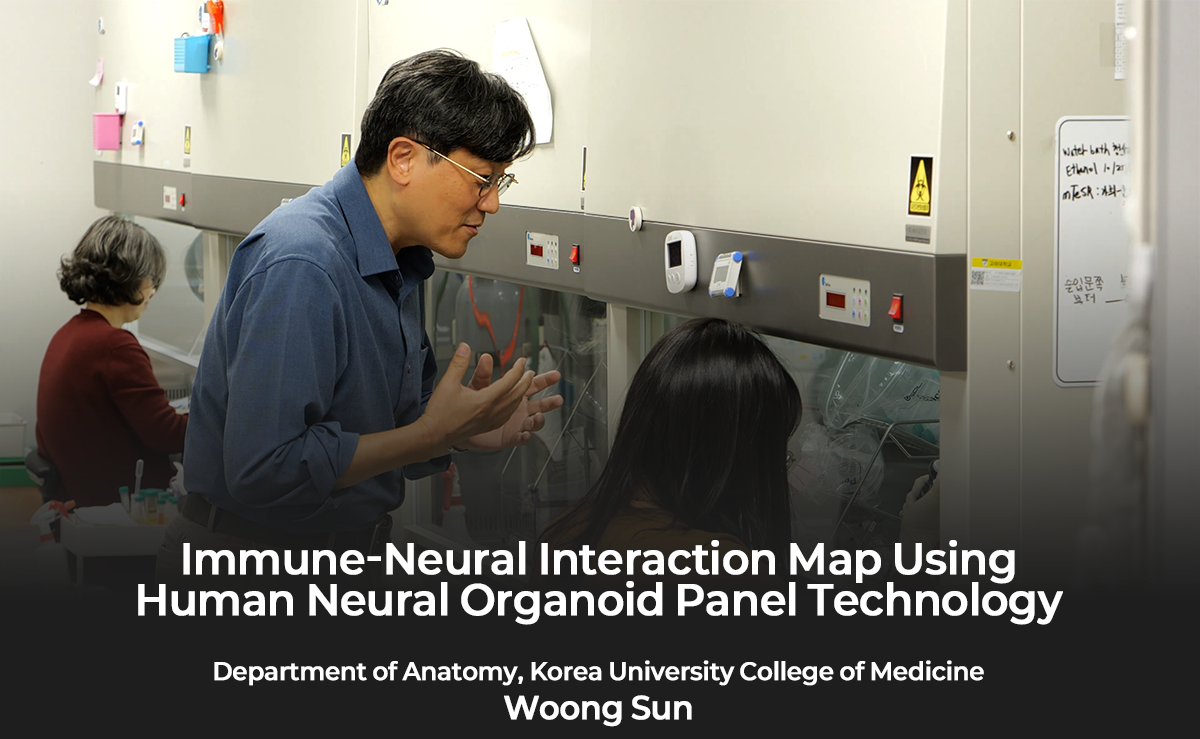
Hello, I am Seon Woong from the College of Medicine at Korea University.
I am currently leading a project on mapping immune-neural networks using a human neural organoid panel.
In the past, people thought that the immune system and the nervous system function independently of one another. But when we catch a cold, for example, we often feel down, want to keep our distance from others, and prefer to be alone, showing emotional changes and changes in brain function. Until recently, it was not well understood how this interaction occurs. However, recent studies have revealed that immune-related factors can directly stimulate brain cells and cause such changes.
Because many studies have come from animal research, we aim to create a human neural organoid panel and directly investigate how various cytokines and immune factors affect the nervous system.
The most important first task, in my opinion, is to make human neural organoids very well. So we have developed a method to generate different types of neural organoids uniformly at the same time, and we are now treating them with cytokines and analyzing their responsiveness through various methods.
📌 What led you to choose this research topic?
I had been thinking about how to conduct organoid research that could contribute to humanity by making organoids well. Then I learned that Professor Gloria Choi at MIT, our partner in this project, was achieving very important results using animal models regarding the key interactions between the immune and nervous systems. I thought that if we collaborated with this team, we could extend findings from animals into information that is closer to humans by using human organoids, and that is how we came to form this team.
As I mentioned earlier, if we can better understand how the immune system affects the nervous system, we may be able to explain why emotions change when we are ill, or how diseases such as autism arise under the influence of the immune system. So our goal is to open up new perspectives through this work and to develop related therapies.
📌 What are the expected outcomes and social impacts of this research?
If this research allows us to gain a more accurate understanding of how the immune and nervous systems interact, we expect it to contribute greatly to solving related diseases. Academically, it will provide many new insights into things we did not know before, and industrially and socially, it will make a significant contribution because it may lead to technologies for treating these diseases.
In the short term, we aim to gather a large amount of information through this project and build a database from it. Therefore, the first beneficiaries will be researchers working in this field.
In the second stage, if this research expands further and ultimately leads to the development of therapies, I believe it could also help many patients who are suffering.
📌 What are the achievements and ultimate goals of this research?
Rather than focusing on immediate results, our main objective is to collect a large amount of data and interpret it well using AI-based methods. We are still in the data collection stage, but we plan to build a high-quality data map.
What we want first is to establish a solid foundation of basic knowledge and secure important information for future research. That is our first goal. Beyond that, if this work ultimately leads to therapeutic technologies, I believe there would be no greater reward as a researcher. |
|
|
You can check out more details about each research project
in the introduction videos uploaded
on the "KUCRF" YouTube channel!
(Subscribe and turn on notifications to watch them first! 😁)
|
|
|
March 2026
KUCRF NEWSLETTER Vol.03
|
|
|
January 2026
KUCRF NEWSLETTER Vol.02
|
|
|
October 2025
KUCRF NEWSLETTER Vol.01
|
|
|
If you subscribe,
you will be the first to receive a variety of updates
from KUCRF Office every quarter.
|
|
|
Korea US Collaborative Research Fund(KUCRF)101, Daehak-ro, Jongno-gu, Seoul 03080, Republic of Korea(Yeongeon-dong 28, Seoul)Unsubscribe |
|
|
|
|