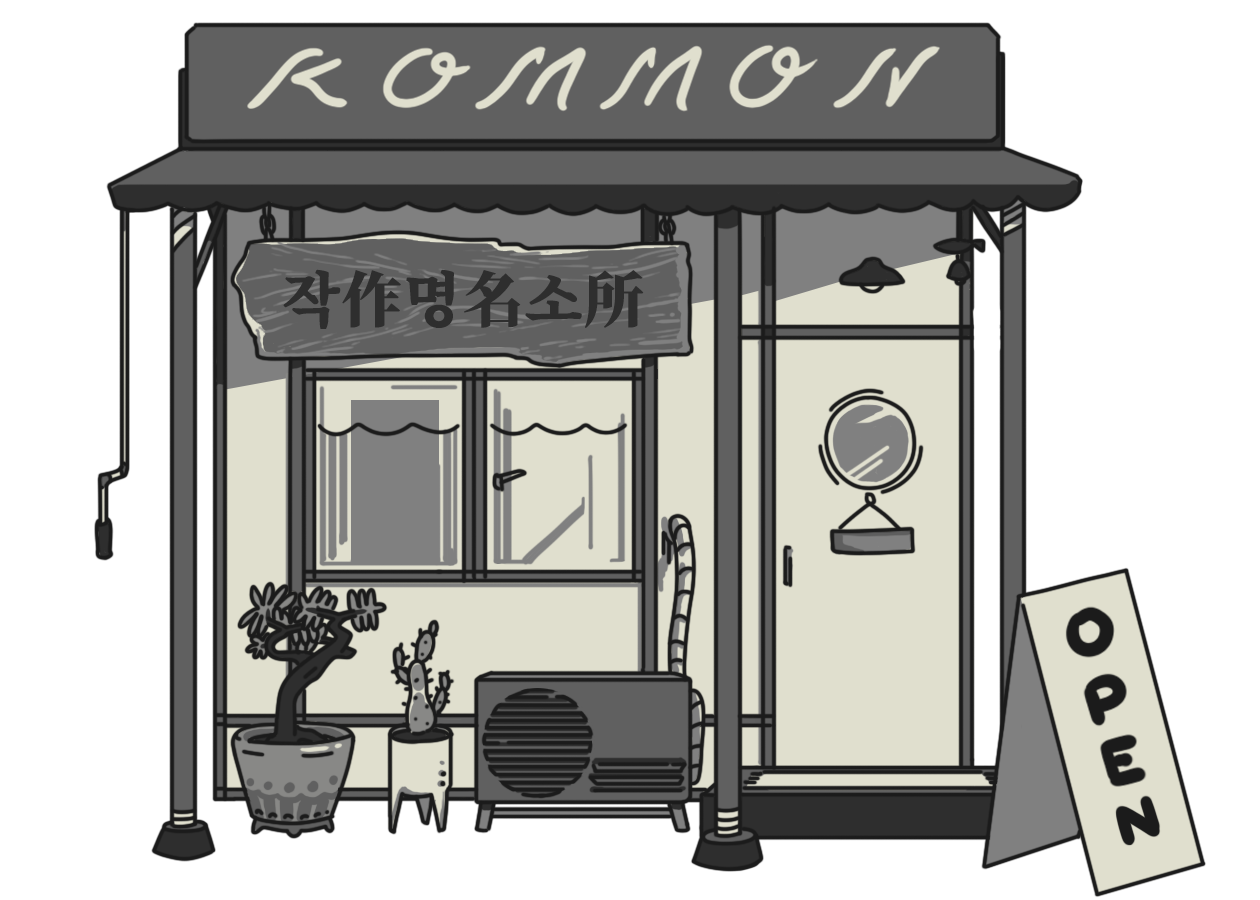
#Headlines #COVID-19 #Korean name #KOMMON 작명소 OPEN!
Hello, reader. This Tuesday, we bring you weekly headlines you won't want to miss, fun facts regarding the names in Korea, and useful expressions you can use in your daily life. Enjoy! 😁 *For articles giving in-depth background knowledge of the recent issues, stay tuned for our newsletters on Friday. Please leave your feedback at the end of the newsletter!
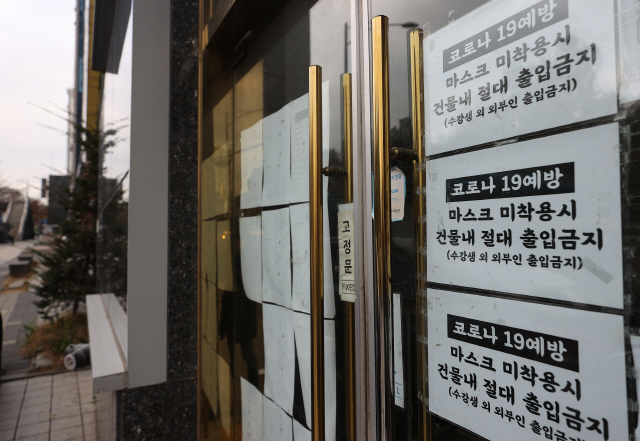
[Photo by YeonhapNews] COVID-19 Would-be teachers tested positive just a day before the test There was a mass infection of COVID-19 in the Noryangjin (노량진) area of central Seoul, where many students gathered and studied for state examinations, such as the teacher certification examination on November 21.
Sixty-seven students tested positive just a day before the test and, therefore, could not take it. The test only takes place once a year. These tests were administered throughout the nation, and the proctors are school teachers who meet students every day; thus, there's a higher chance of mass infection throughout the country. Link Social distancing level elevated to level 2 after hundreds test positive The number of people who have tested positive with COVID-19 has doubled within the last week. Starting November 24 at midnight, social distancing will be elevated to level 2 in the Seoul Capital Area and 1.5 in North and South Jeolla Provinces.
Under level 2 social distancing, most places of public accommodation, including restaurants, should close by 9 pm. Only take-out or delivery will be available in cafés. Link Environment Carbon Neutral until 2050? Get it done by 2025!" : Youngsters protest in front of the national assembly About ten young men tied their necks to the front gate of the National Assembly with bike locks to criticize the government's plan to make carbon-neutral by 2050. They argued that the goal is insufficient, and the government should plan to get it done in five years. They also argued that the disadvantaged should have a louder voice regarding environmental plans since they are more likely to be affected by those plans. Link (Korean link) Gender Foreign minister discusses sexism she has experienced Foreign minister Kang Kyung-wha, the first female Foreign Minister in Korea, said she could sense the discrimination against women in the patriarchal culture while she serves as a minister. She said, "even if I'm trying to do my best at this position with a heavy responsibility, sometimes I get to question that if something happens to me just because I am a woman, and whether I am accepted in this patriarchal culture."
Some see that the statement as referring to meetings or events where she was not invited, even despite past Foreign Ministers attending similar ones. Link Human Rights Unlock suspects' phones without their consent? Minister of Justice Choo Mi-ae argued for implementing a law that gives investigators the power to unlock suspects' phones forcibly. She said this is to stop suspects from maliciously impeding investigations. The backlash was severe, and NHRCK (National Human Rights Commission of Korea) has begun to investigate whether the law would be a violation of human rights. Link North Korea Minister of Unification Lee In Young said, "Let's share vaccines with North Korea"
Unification Minister Lee In Young suggested that the South Korean government provide North Korea with the COVID-19 vaccine when it becomes widely available. However, given the South Korean government's vaccine supply and demand situation is uncertain, the Unification Minister's statement was controversial. The North Korean government claims that it has 0 cases of COVID-19, although medical experts find this hard to believe. Link (Korean link) International Relations Using numbers instead of the "East Sea" and the "Sea of Japan" For years, the South Korean and Japanese governments have argued about what to call the body of water that lies between the two countries; South Korea has pushed for it to be referred to as the East Sea, whereas Japan supports the Sea of Japan. The International Hydrographic Organization (IHO) has tentatively decided to adopt a measure to give seas around the world a unique identification number instead of a name. Japan presented the S-23, published by the IHO in 1929, as a basis for settling territorial disputes. Some see the change as a diplomatic accomplishment of the Korean government, while others see it as the IHO avoiding the root of the initial controversy. Link Economy KFTC: "There must not be a monopoly of delivery apps" The Korea Fair Trade Commission (KFTC) stipulated that the German-owned Delivery Hero (DH) corporation must sell Korean delivery app Yogiyo if it wants to take over Woowa Brothers, another delivery service which has about 60% market share. If the two companies are merged, the total market share will be over 90%. KFTC appears to be concerned that if the first and second leaders in the domestic delivery industry are combined, they will hinder the competition in the delivery application market. The KFTC fears that a monopoly may lead to consumers experiencing higher fees and a lower quality of service. How DH reacted: Link Culture Producers who manipulated audition programs' rankings are sentenced The producers who manipulated voting for the popular music competition series "Produce 101" were sentenced to prison terms in their second trial. The judiciary revealed the list of 12 victims who were eliminated due to ranking manipulation and ruled that the voters were illegally compensated for ₩100 for voting by text message. Link
Why there are so many Kims in Korea?
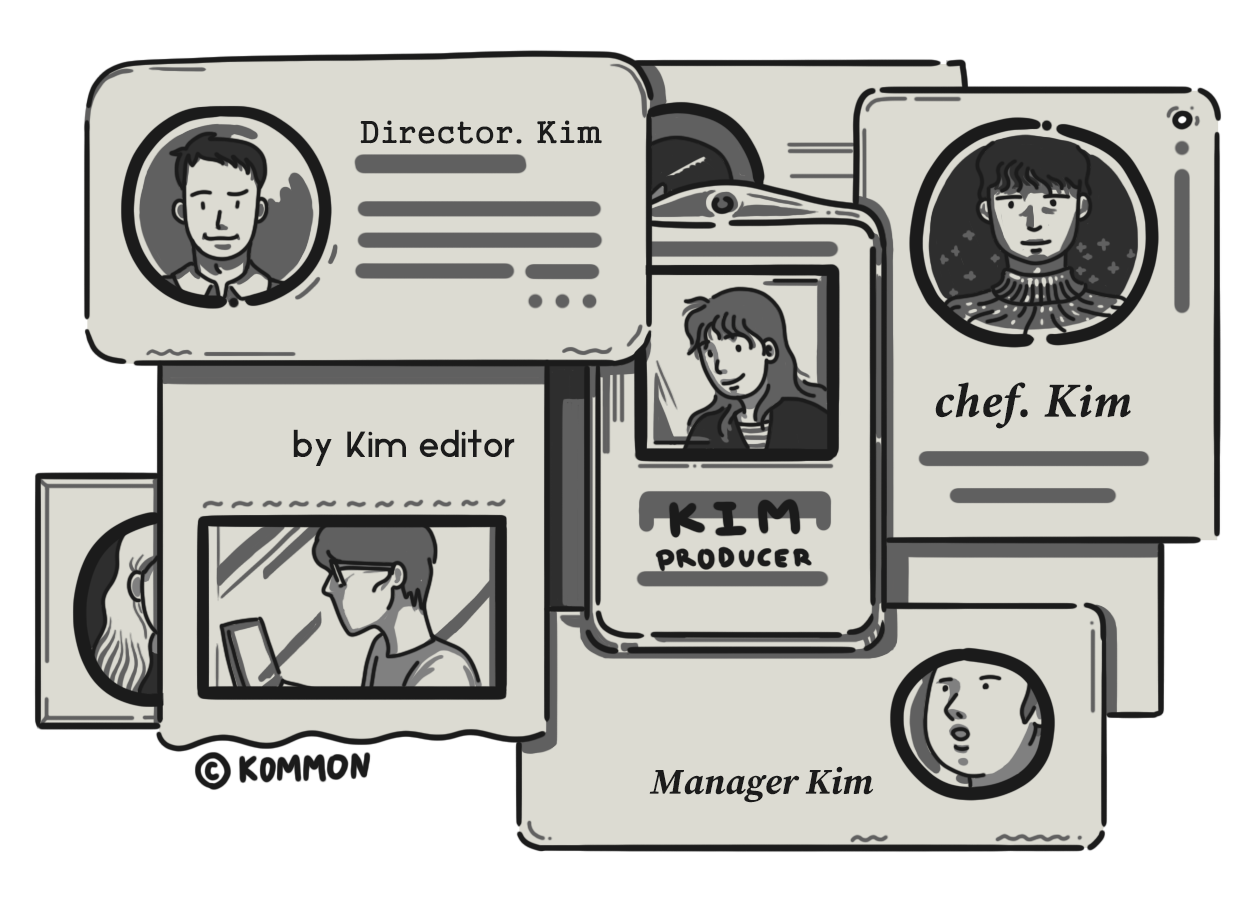
[Illustration by O.T.O] Kim Jung-eun, Kim Nam-joon, Kim Seok-jin... - they’re all "Kim" but they're not as similar as you might think. Why? Let's find out below. One character for a surname, two characters for a first name As you might already know, last name comes first before the first name in Korea. Historically, a Korean name comprises a surname (typically a single character, such as 김) and a first name (typically two characters, such as 정은). However, there are exceptions, as well. There are also names consisting of two characters or four characters, such as Heo (Last name) Jun (First name) or Nam Gung (Last name) Min Soo (First name). Interesting facts regarding last name 👉1) Regions related to last names Traditionally, specific Korean last names came from specific regions. For example, there are lots of Kims: 김해 김 (Gimhae Kim), 안동 김 (Andong Kim), 경주 김 (Gyeongju Kim), and so on. So even if you know two different Koreans with the last name of Kim, they are not necessarily from the same family. Koreans usually don't really ask or distinguish the region of their last name in everyday life, but sometimes older people who believe blood ties matter still ask for the region. (And they will like you if you are from the same region as them!) 👉2) Gender equality movement regarding last names Unlike some other cultures, Koreans do not typically change their last names when married. However, there is controversy regarding children's last names. Traditionally, children are given the father's last name. Using the mother’s last name is technically possible, but is very rare and requires more documents. This is because Korean civil law states that "the child's last name follows that of fathers, and only if both parents agree it follows mother's last name." Spearheaded by feminist organizations, many are arguing that the mother's last name should be considered equally. One National Assembly member proposed a revised bill (Korean link) which would amend the law to state that "the child's last name follows mother or father's last name." In fact, a growing number of people choose to use their mother's last name or use both of their parents' last names. (For example, 권김현영) 👉3) Skewed distribution of last names According to the 2015 Population and Housing Census, one out of five Koreans are Kims. Lee (14.7%) and Park (8.4%) are the second and third most common surnames. The reason why certain last names have become popular in Korea is that many people intentionally selected these last names in the early 20th century. Until that point, about half of all Koreans had no last names. However, after a new family registration law was implemented, everyone needed to register their own name. When choosing their surnames, people chose the surnames of the most powerful families, such as Kim. Therefore, that is why there are so many Kims today. Here are some of the rarest Korean last names: 궉 (Gwok): There are only 248 people in the country. 뇌 (Noe): Only 12 people in the country. Also, there are 계 (Gye) and 피 (Pi). Do you have any friends with these last names? Probably not. Interesting facts regarding first name 👉1) Meanings of first names All Korean first names have special meanings.
In the case of Chinese characters, each syllable has a meaning, making the whole name meaning.
Shall we check the name of President Moon Jae In? Moon (文 글월 문) Jae(在 있을 재) In (寅 호랑이 인) Moon (文) means "literary skill," Jae (在) means "myself," and In (寅) means a "valiant tiger”. When you combine the three characters, it means a person who excels in both scholarship and martial arts.
Even when the name is composed only of pure Korean words, it contains meaning such as 슬기 (Seul Gi: Don't always lose your discretion) and 하나 (Ha Na: The only precious child in this world). 👉2) How Koreans make their child’s name There are many ways to make names.
In the past, most Koreans used 돌림자 (dol-lim-ja). 돌림자 means a part of a name that is common to the same generation of a family.
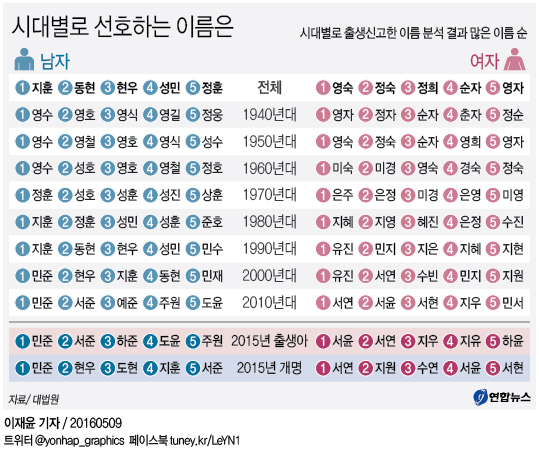
However, these days it only accounts for 3.5% of all new names. Instead, many parents name their children themselves, or they selected names at a business specializing in making names (작명소). In Korea, there are places where people's or business' names are created for only around ₩100,000. Names are also sometimes created by grandparents or other adult relatives. 👉3) Trends of names in Korea Some names were more popular in the past than they are now.
[Source: YeonhapNews] There were many Young Soo(영수), Young Cheol(영철), Young Ja(영자), and Soon Ja(순자) who were born in the 1940-60s. In the 1970-80s, you could have seen lots of Yeong Soo, Jung Hoon(정훈), Seong Min(성민), Eun Ju(은주), and Ji Hye(지혜). And Ji Hoon(지훈), Min Jun(민준), Yu Jin(유진), and Min Ji(민지) in 1990-2000s. Many of the babies born this year have the names Do Yoon(도윤), Seo Jun(서준), Ji An(지안), and Seo Ah(서아). If you name your child "영수" or "순자", it would not be a good choice. John Doe in Korean? In English, the name "John Doe" is used to conceal someone's true identity or used as a placeholder. There is a similar name in Korean: It is 홍길동 (Hong Gil Dong). Like John Doe, 홍길동 is used as a sample in various documents in Korea.
Slang The word you put after the name Like Mr. or Ms., Koreans put certain words after the name. Let's take a look below. [Formal]: To show respect to one another.
Similar to sir or madam. 1) ~님 [Nim] Ex. 김민수님 [Kim Minsu Nim]: Sir Kim Minsu 문재인대통령님 [Moon Jae In DaeTongryeong Nim]: President Moon Jae In (in a respectful way) 2) ~씨 [Ssi] Ex. 김민수씨 😱Warning: putting "씨" after the name sometimes might sound a bit impolite and not respectful.
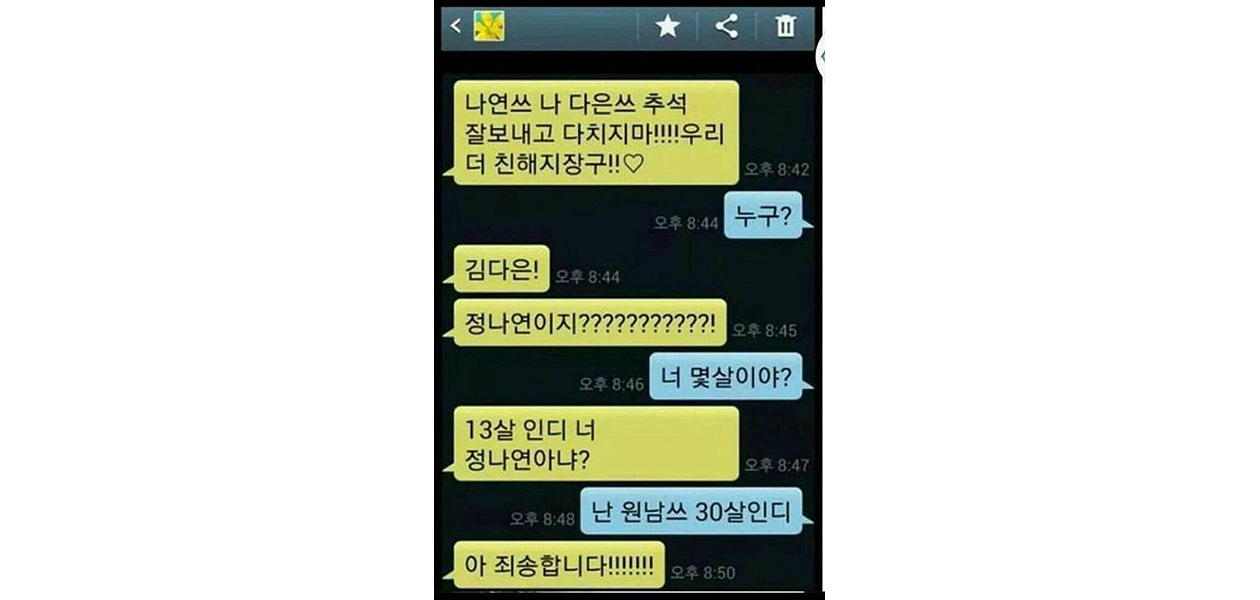
Far from its dictionary meaning, people usually put "씨" after the name of the ones who are in a lower than or similar position to them. One comedian faced backlash (Korean link) after he called president Moon "문재인씨" on an entertainment show. He did not intend to be disrespectful, but some critics argued that it’s disrespectful to refer to the president in such a way, especially on a broadcast. The broadcasting companies were pressured into deleting the video clips after the backlash. In a similar case, a news outlet faced backlash (Korean link) after they refered to the First Lady Kim Jung-sook "김정숙씨". They said they always put "씨" after the first lady's name. However, some criticized this decision, saying that it shows that the outlet does not respect the First Lady or the president. The news outlet had to change the notation from "김정숙씨" to "김정숙 여사". [Informal] :Being friendly ~쓰 It's a young person thing. Nobody knows how it started, but at some point, people began to casually put "쓰" after names, usually among friends. Teenagers use this a lot. Ex. "나연쓰”
"KOMMON 작명소 open!"
[Illustration by O.T.O] Does anyone want to have a (new) Korean name? Let us make it for you! This service would be provided free of charge, of course! 😁 What we need to make your name is what kind of person you are wanting to be. For example, if you want to be someone wise, perhaps "지혜 (智慧)", which means wisdom in Korean would be a great name for you. If you submit this form and we'll make one for you. 💥Warning: 1. This is just for fun! Please do not take it seriously. 2. We would share the names we made on next week's newsletter! KOMMON TEAM 수수🌾 Sans🌻 바코🌊 오티오😈 쟈🍉 군밤🌰 기린🌴 쏘😺 기니👑 프레드
|