Global Scorecard, Samsung Stagnant While LG Falls Back KOSPI ▲4,220.56│ KOSDAQ ▲931.17│ KRW/USD▼1,432.44 |
|
|
As of 3:30 p.m. on the previous trading day |
|
|
✴ BSK Investment╎The holding of affiliate shares by a related party was found during a regular inspection to violate the Enforcement Decree of the Venture Investment Act. The Ministry of SMEs and Startups issued a warning, increasing the burden in qualitative evaluations for future government-backed fund programs.
✴ Daehan Investment Partners╎The firm failed to correct reporting obligation violations despite a prior warning, resulting in repeated breaches. The ministry imposed a business suspension until June next year, citing the cumulative violations as serious.
✴ Aura Investment╎Multiple violations were identified at once, including related-party transactions, breaches of cross-shareholding restrictions, and failure to meet major shareholder credibility requirements. The ministry issued three corrective orders and one warning, and demanded improvements to major shareholder qualifications by March next year.
✴ Dawon Investment╎The firm failed to resolve capital impairment within the required period despite a management improvement order. The ministry maintained the corrective order and placed the firm under supervision.
✴ NeoInsight Ventures╎After a prior management improvement order over capital impairment, the capital impairment ratio again exceeded 50 percent. Repeated failure to improve led to a corrective order, increasing the burden for participation in government-backed fund programs.
✴ SC Quantum Venture Capital╎Failure to properly fulfill reporting obligations during electronic reporting procedures was identified. The ministry issued a warning, citing the violation as minor but potentially repeatable.
✴ Ato Investment╎The firm failed to meet operational requirements due to the absence of investment activity for more than one year. The ministry issued a warning over fund management adequacy.
✴ Stallion Partners╎An inspection confirmed investments in companies subject to cross-shareholding restrictions. The firm received a warning, raising concerns for future investment reviews and government fund participation.
✴ Alpha One Investment╎The acquisition of prohibited financial institution shares was identified. The ministry issued a corrective order, citing the need for immediate remediation.
✴ KY Private Equity╎Under a dual-CEO structure led by former bank IB executives, the firm launched a blind fund targeting $343 million (₩500 billion) and has raised $206 million (₩300 billion) so far. The CEOs’ LP networks and pre-IPO track records are expected to support additional fundraising.
✴ Venture Investment╎Although selected as a GP for a Growth Finance K-content fund, the firm abandoned year-end formation after failing to secure private capital matching. The recent formation of a $41 million sub-fund constrained available capital.
✴ Affirma Capital╎After acquiring Sungkyung Food in 2017 for $104 million, the firm exited eight years later through a sale to Samchully. Including acquisition financing and approximately $34 million in dividends, the effective return is assessed at more than two times.
✴ RideFlux╎It raised $13.7 million at the pre-IPO stage, bringing cumulative funding to $51.6 million. With participation from Korea Development Bank, expectations for commercializing unmanned autonomous driving and a KOSDAQ listing have increased.
✴ JKL Partners╎Issues including a portfolio company bankruptcy, a financial regulator’s management improvement recommendation, and a worker death accident emerged in succession, highlighting risk management problems throughout the year. Despite forming a fund of around $686 million and completing the CleanTopia sale, overlapping negative events weighed on market assessment.
✴ ATU Partners╎It formed a $43.2 million (₩63 billion) content and media strategy fund with capital from Growth Finance. The structure assumes operational involvement and IP expansion rather than pure financial investment, and is viewed as a meaningful attempt in terms of policy fund investment direction. |
|
|
Sias Fails Second IPO Attempt, Warning Sign for Now IB Exit |
|
|
⭑ A signal of repeated IPO failure
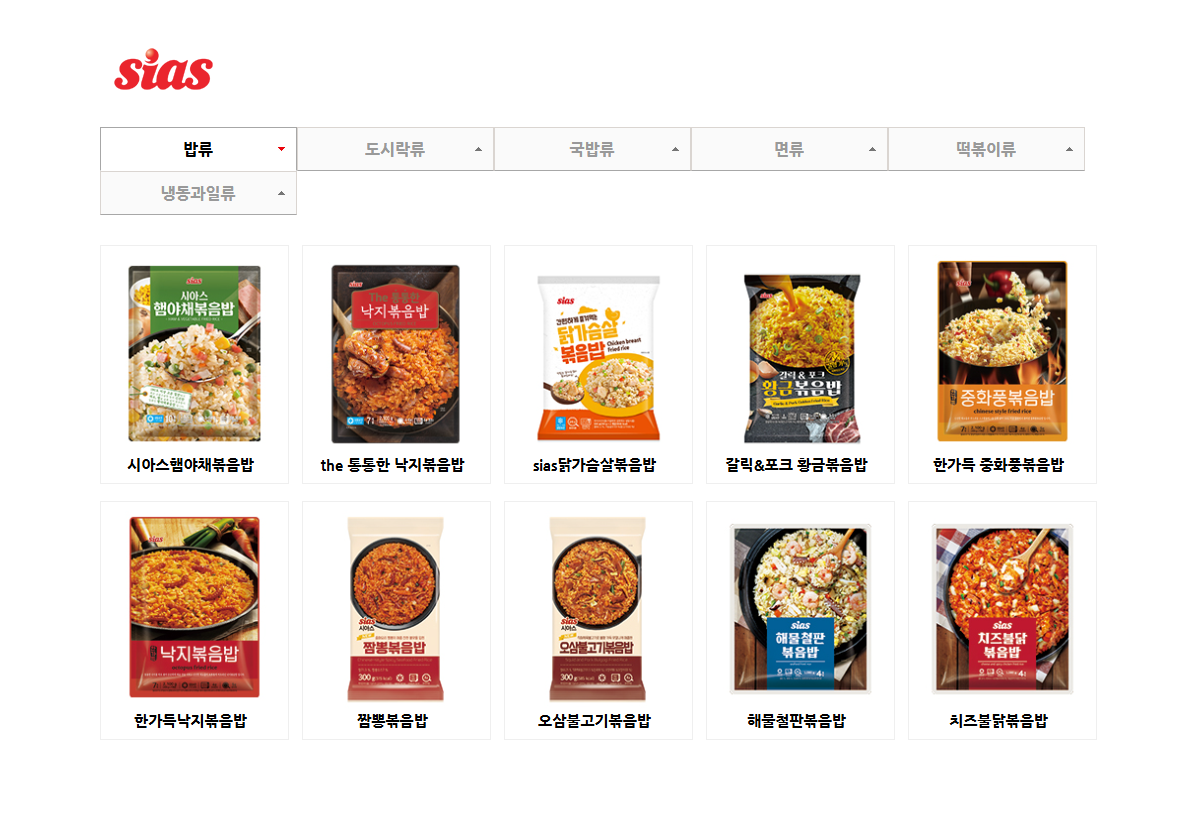
Lunchbox and ready-meal maker Sias has withdrawn its merger with Yuanta No.12 SPAC. The decision came five months after it filed for a preliminary KOSDAQ listing review in July 2025.
With its IPO attempt falling through for a second consecutive time following 2023, market skepticism is growing over whether the company is structurally convincing. Yuanta No.12 SPAC, which listed in March 2023, is also being viewed as effectively on a path toward delisting.
⭑ Time matters more than money
Now IB Capital reinvested about $34.3 million (₩50 billion) through three funds in 2021 and added $10.3 million (₩15 billion) via convertible bonds in early 2025. Total investment exceeds $44.6 million (₩65 billion), with a 43.4% stake, higher than that of the largest shareholder.
However, it gave up put options by converting RCPS into common shares, and dividends are blocked due to accumulated losses of more than $12.3 million (₩18 billion). With the earliest fund maturity in May 2026, the focus now appears to be shifting from returns to the feasibility of exit.
⭑ Yuanta Securities also faces pressure
Yuanta Securities attempted two listings using the same SPAC, but both failed. As a result, it recorded zero IPO lead-manager deals in 2024–2025.
Assessments suggest its credibility in SPAC-based deal sourcing and completing listings has been damaged. This may be interpreted not as a single failed deal, but as an issue affecting the firm’s overall track record.
|
|
|
Now IB Capital’s investment in Sias recalls what the private equity industry often calls the success trap. Its clean exit from the initial investment in 2013, which generated about $3.4 million (₩5 billion) in profit, appears to have reinforced confidence behind the 2021 reinvestment decision. It is natural for past success to influence later judgment, but it can also dull caution.
What stands out in particular are the reinvestment terms. Now IB accepted a valuation of ₩116,400 per share, 66.3% higher than the previous issue price, implying a pre-money valuation of about $90.6 million (₩132 billion). The minimum guaranteed return was also lowered from 8% to 6.5%, suggesting a strong belief in Sias’s growth prospects. Two consecutive failed IPO attempts, however, raise the possibility that those expectations diverged from the market’s view.
The exit strategy is even more burdensome. Once RCPS were converted into common shares and put options were waived, a successful listing effectively became the only viable exit scenario. With a debt ratio exceeding 240% and accumulated losses of more than $12.3 million (₩18 billion), recovery through M&A or dividends appears difficult. The narrowing of options, combined with the passage of time, is what makes the situation more concerning.
As fund maturities approach within the next one to two years, explaining the situation to LPs has also become a key challenge. Industry attention is focused on how this case may affect Now IB Capital’s future fund-raising efforts. Securing another good investment matters, but how many exit scenarios are prepared in advance may ultimately make the bigger difference. |
|
|
Global Scorecard, Samsung Stagnant While LG Falls Back |
|
|
⭑ Hit by slowing demand, losses compound
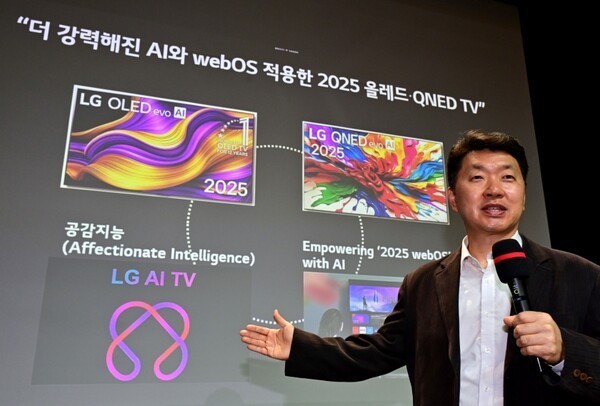
In the third quarter this year, Korea’s two major TV makers both posted operating losses.
Samsung Electronics’ VD and DA division recorded an operating loss of $68.6 million, while LG Electronics’ MS division posted a loss of $207.5 million. Global TV demand weakened amid uncertainty over U.S. tariff policy, compounded by aggressive low-priced competition from Chinese manufacturers.
Market research firm Sigmaintell forecasts global TV shipments in 2025 at 221 million units, down 0.7% from the previous year.
⭑ Samsung holds with LCD, LG comes under pressure
Samsung maintained its global No.1 position this year, centered on premium LCD TVs that account for 80–90% of its total shipments. While TV LCD panel production has effectively been consolidated in China, Samsung lowered costs by shifting supply from China Star to BOE.
At the same time, it has increased the use of LG Display’s W-OLED panels to diversify its portfolio. LG Electronics, with a higher share of OLED TVs, faced direct pressure from low-priced Chinese LCD TVs. Its market share fell 0.5 percentage points to 9.4%, and shipments declined 5.4%, trailing TCL and Hisense.
⭑ The OLED dilemma and what comes next
OLED TVs clearly offer superior picture quality, but high prices remain a barrier to mass adoption. Although W-OLED panel costs have declined as depreciation has ended, the price gap with Chinese LCD panels remains wide. As a result, set makers increasingly see applying OLED to monitors rather than TVs as more favorable for profitability.
As premium OLED TVs lose momentum, reliance on Chinese LCDs continues to rise. In a shrinking market, the pressure to choose between defending the premium segment or restructuring the business is intensifying. Whether OLED can reclaim its role as the core of the TV market, or find its breakthrough in other display categories, will depend on the next strategic move.
|
|
|
📉Profitability pressure╎Earnings outlook flips one year after listing
Top Run Total Solution cut its 2025 operating profit and net profit forecasts by more than 60% and nearly 80%, respectively, revealing a wide gap from the growth expectations presented at the time of its IPO. Revenue held up, but higher costs, weakness in downstream industries, and expanded M&A and R&D spending sharply pressured profitability. An opposite disclosure came just 11 days after a turnaround analysis was released, reviving controversy over information asymmetry and an “IPO peak” debate, with a 2026 earnings rebound emerging as key to restoring trust. |
|
|
💸Supply overhang╎Share price adjustment on EB exchange
Holders of exchangeable bonds issued by AJU IB Investment exercised exchange rights for about 1.21 million shares, sending the stock down about 8% on the first trading day after the disclosure. Although the exchange was settled by delivering treasury shares rather than issuing new ones, the perception of increased sellable supply weighed on near-term demand. EB proceeds are being used for core VC activities such as new fund commitments, and the low interest rate and non-dilutive structure limit cost burdens. Still, further exchanges could revive overhang concerns, leaving the market focused on fund usage and remaining balances. |
|
|
🚨Capital impairment╎Re-issues $68.6M in perpetual bonds in one month
SK Advanced, facing capital impairment risk amid an industry downturn, issued an additional $68.6 million of perpetual bonds on the 24th to shore up short-term liquidity. The coupon is 7.58%, with an additional 2 percentage points added if the one-year call option is not exercised. The deal relied on a capital support commitment from its largest shareholder, SK Gas, and is viewed as effectively close to a one-year instrument. At the same time, the credit rating outlook was revised to negative, and funding next year is also seen as difficult without shareholder support. |
|
|
🛩️Defense cooperation╎Performance upgrade contract signed
Korea Aerospace Industries signed a contract with the Philippine defense authorities worth about $63.8 million for FA-50PH performance upgrades and follow-on logistics support. The project covers 11 aircraft delivered between 2015 and 2017 and runs through 2029, enhancing precision-guided munitions capability, range, and network-enabled operations. Including additional units, a total fleet of 23 aircraft is covered, with KAI strengthening export competitiveness through a full lifecycle responsibility model. |
|
|
🫨Loss of direction?╎Time Villas loses momentum
Lotte Shopping’s next-generation mixed-use mall brand Time Villas has lost momentum amid weak performance in Suwon, delays in the Gunsan renewal, and a suspension of construction in Songdo. The Suwon flagship invested $68.6 million, but transaction volume fell versus pre-renewal levels, while the Gunsan site underwent only a partial revamp without a clear concept. With the Songdo project halted and the former CEO stepping down, analysts point to a group-level strategic review behind a scaled-back $4.8 billion investment plan. |
|
|
💼New K-Industry╎Toward an investment-friendly country
Ryu Jin, chairman of the Federation of Korean Industries, stressed in his New Year address the need to transform Korea into a country favorable for businesses and investment through regulatory rollbacks and institutional reforms. Amid an AI-driven shift in technological civilization, his remarks are read as a strategy to strengthen public-private cooperation and leadership in global standards, anchored in manufacturing competitiveness.
|
|
|
The Next Driver of K-Beauty ODM, C&C International |
|
|
Calm on the surface, shifting underneath, the K-beauty ODM landscape
The K-beauty ODM market still appears to be dominated by large players, but internally, a clear shift in power is under way. As growth at major ODMs slows, mid-sized ODMs specializing in color cosmetics are rapidly scaling up.
At the center of K-beauty today is ODM. Unlike OEMs, which focus only on manufacturing, ODMs handle the entire process, from trend analysis and formulation to color, packaging development, production, and delivery. This dependence is even higher for indie brands, estimated by the industry at 70% to 90%. As a result, products perceived as completely different brands are often produced at the same factories.
Large ODMs slow, mid-sized ODMs accelerate
Within this structure, the contrast is clear.
Kolmar Korea’s recent growth has remained in the 6% to 7% range, while its expanding investments in North America, pharmaceuticals, and healthcare have diluted its focus on cosmetics. Cosmax also saw a decline in operating profit in the third quarter of 2025, exposing the slowdown in China’s reopening and the limitations of a portfolio centered on large brands.
Mid-sized ODMs, however, are on a different trajectory.
Cosmecca Korea has increased orders from North American indie brands, expanding from a skincare-focused base into color cosmetics. C&C International has gone further, concentrating almost entirely on color, particularly lip products, to accelerate growth. In growth rate terms, mid-sized ODMs are clearly outperforming larger peers.
Color cosmetics as the battleground, C&C International’s structural shift
This shift reflects changes in K-beauty trends. While skincare and sheet masks once dominated, demand for color products such as lip items, blur textures, and soft matte finishes has surged over the past two to three years. K-beauty exports reached about $8.5 billion in 2025, marking a record trend, while color cosmetics exports exceeded $1.3 billion in the first three quarters, up more than 17% year on year. The competitive edge has moved from mass skincare production to color technology.
C&C International stands out in this context.
The company is almost fully focused on color ODM, particularly the lip category. About 70% of its revenue comes from lip products, with a client portfolio spanning both indie and global brands.
Domestically and among indie brands, it first validated color trends with names such as 3CE, Rom&nd, Peripera, and Clio, before expanding supply to global brands including Dior, Yves Saint Laurent Beauty, and Rare Beauty.
This has created a natural structure in which trends are tested quickly with indie brands and then scaled into mass production for global brands once validated. In this process, C&C International functions not just as a manufacturer but as a hub for color trends.
The third-quarter 2025 results quantify this shift. Overseas sales accounted for 51.5% of revenue, with overseas revenue surpassing domestic sales for the first time. Overseas revenue growth also recorded double-digit expansion year on year, signaling a turning point toward an export-led structure.
Color ODM is a high-barrier field that requires simultaneous control of color stability, consistent pigmentation, compliance with global regulations, and defect management at scale. Once relationships are established, switching suppliers is difficult, meaning accumulated clients strengthen structural competitiveness.
In sum, competition in the K-beauty ODM market is moving from scale to category specialization. With export growth increasingly driven by color cosmetics, C&C International has entered a phase where trends, exports, and earnings structure align.
In one line, ODM competition is no longer about who makes more, but about who does color better.
|
|
|
Meaning of Capital Impairment? |
|
|
✴ Capital Impairment
Capital impairment refers to a situation where a company’s accumulated losses reduce its remaining assets below the amount originally invested by shareholders. Even if debt levels are not yet high, it is seen as a warning sign because the company has already consumed a significant portion of its initial capital.
For example, if shareholders invest $6.9 million to start a company and accumulated operating losses reduce remaining assets to $4.8 million, $2.1 million has effectively been lost. In this case, the capital impairment ratio is 30%. The ratio is calculated as the portion of paid-in capital that has been eroded by the decline in net assets.
When the capital impairment ratio is below 50%, it is generally treated as a signal of deteriorating management conditions and may trigger recommendations for management improvement. If it exceeds 50%, listed companies can be designated as management issues, moving into an investor warning stage. When net assets fall to zero or below, representing 100% or more impairment, it can lead to delisting or legal liquidation.
In official cases, NeoInsight Ventures, whose capital impairment ratio exceeded 50%, received corrective orders and restrictions on participation in government-backed fund programs. Dawon Investment was also placed under supervision after failing to resolve capital impairment within the required period.
Capital impairment is problematic because it raises doubts about a company’s ability to continue operating. With most shareholder capital depleted, creditworthiness typically deteriorates sharply, making borrowing or fundraising difficult.
Ways to address capital impairment include raising new equity, reducing paid-in capital through capital reduction, or returning to profitability to offset accumulated losses.
In one line, capital impairment means “the company is not yet overwhelmed by debt, but has already spent a large part of the capital entrusted by shareholders.” |
|
|
Send us any suggestions you’d like to share while reading Bitter’s newsletter! |
|
|
Advertising, inquiries : viter@thevistapartners.com / Published by Newstop. Unsubscribe |
|
|
|
|