#LGBTQ #Same-sex marriage in Korea #vocabulary For Dark Mode Users,
Hello, reader. We are running a new feedback system, starting this week! Visit us here, and leave any comments that you would like to say to us. Everyone is welcome to visit and every comment will be appreciated!
Index Trending News: Traveling to Korea with My Same-Sex Partner 1. Re: Hate Crime 2. Re: F-3 and F-6 Visa 3. Re: Health Care 4. Re: Custody 5. Re: Economic Challenges 6. Re: Job Security Zoom In: LGBTQ Community in Korean Society : A Brief Introduction Homosexuality in Korean History 1) Silla Dynasty 2) Goryeo Dynasty 3) Joseon Dynasty Homophobia in Korea 1) Confucianism and "Normal" Family Ideology 2) Christianity Social Movement to Legalize Same-sex Marriage Comparison with Other Countries
Traveling to Korea with My Same-Sex Partner
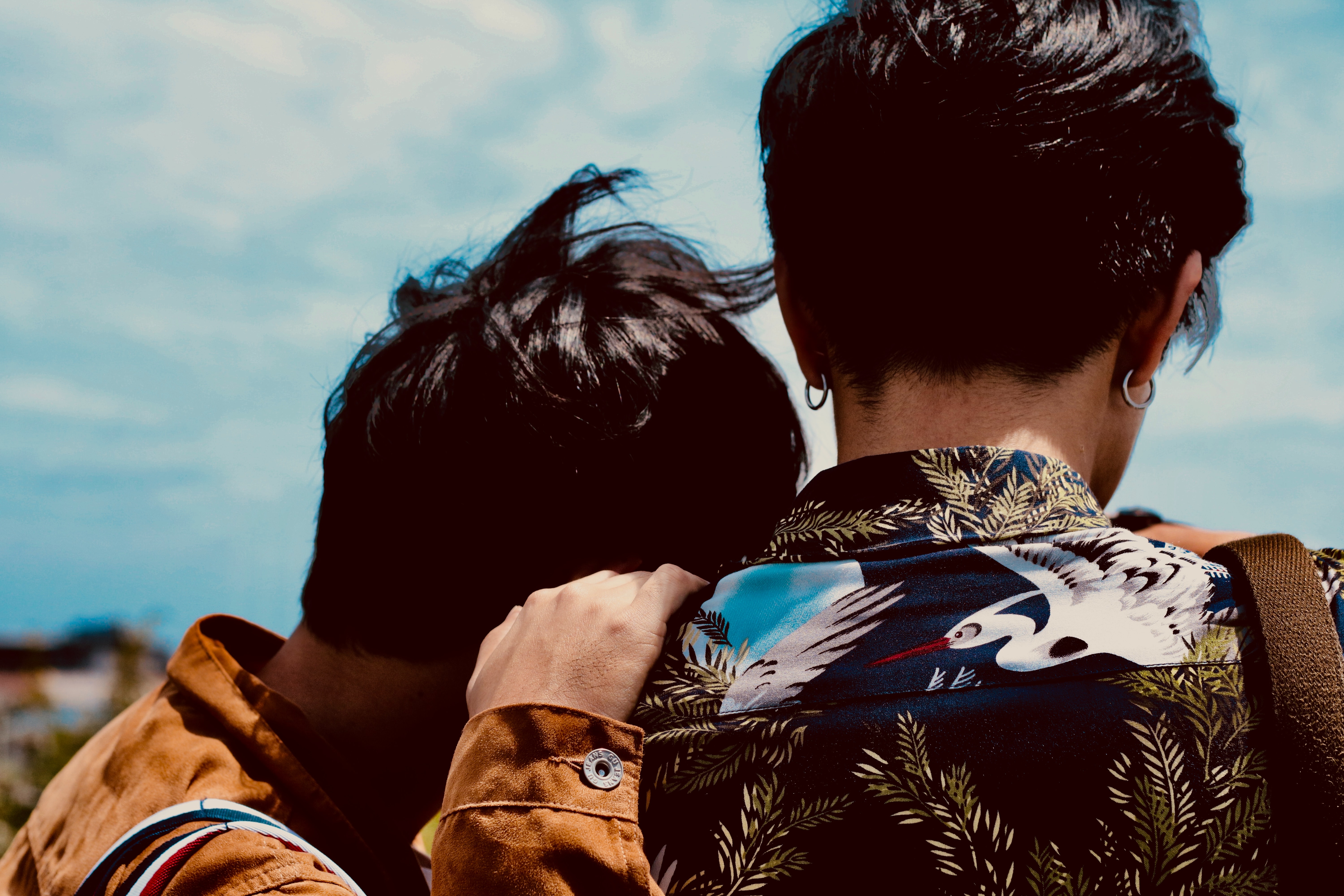
[Photo by Honey Fangs on Unsplash ] Note: This article involves a fictional narrator. Traveling to Korea with My Same-Sex Partner Written on Dec 18, 2020. Hi, I am planning to settle in Korea as a long-term resident with my partner and my child. This will be our first time in the country and there is mixed information on the internet about the level of tolerance we can expect for same-sex relationships and the LGBTQ community in general. My partner and I want to be fully prepared before our visit, so my questions relate to: visa regulations, recognition of our marriage license, health insurance, and problems we might face regarding taxes and loans. We are especially concerned for our child -- what will happen if our marriage is not recognized? We are also curious about the country’s attitude towards the LGBTQ community. Thanks. 1. Re: Hate Crime Hate crimes are not recognized as crimes under the Korean judicial system, and there is not much judicial precedent (Korean link) for such cases. No law can punish a misdemeanor based on hate or bias against social minorities. The lack of such legal recognition, however, does not mean that hate crime is nonexistent in Korea. It simply means that people who fall victim to hate crimes are not protected by the law. Korea is far from being a haven when it comes to hate crime. Hate crimes, defined as "crimes motivated by prejudice, also known as hate crimes or bias-motivated crimes, affecting the security of individuals," do happen. We just do not know how often or to what extent they occur. In 2011, there was a string of lynchings of gay couples in Jong-ro, an area in Seoul with a thriving LGBTQ community. In 2016, a gay man was assaulted (Korean link) by someone who jumped on him in the street while shouting homophobic insults. Many of these crimes are not investigated by the police, because the victims are afraid to come forward. Even if the perpetrators of hate crime cases are caught, they can only be punished for physical assault. This is because the judiciary of Korea does not have the same legal standards regarding hate crimes as other countries, and there is thus no additional punishment. 2. Re: F-3 and F-6 Visa The COVID-19 pandemic has upended the lives of many, especially of non-Koreans who are in same-sex relationships and thus not legally married in Korea. Many of these couples are forced to choose: either be separated without any clear prospect of return or leave Korea until things come back to normal. Many opt for short-term visitor visas, which allow them to stay in Korea for 90 consecutive days. To renew such visas, they then have to leave and re-enter the country once every three months. Others try to obtain a student visa by enrolling in schools or language programs. Another way, of course, is to find employment and apply for their own work-related visa. A couple from France, (Korean link) who wished to stay anonymous, had no choice but to leave Korea during the pandemic. When one of them was offered work in Korea, the couple decided to move to Korea together. As their civil union was not recognized, the partner that did not have a job in Korea had to enroll in a language program to apply for a student visa. Pandemic restrictions, however, shut down some of the Korean language programs without any further notice, while other classes were moved online, which led to problems with visa applications. As the government then also canceled most 90-day visa-waiver programs and banned nationals of almost all European countries from entering without a long-term visa, the couple felt like they had reached the end of the road. In 2018, Simon Hunter Williams petitioned the Korean government to recognize his marriage to his husband. The Korean Justice Department refused to grant the petition. They responded to Mr. Williams with a letter that said, "Whether a nation or a society accepts same-sex marriage requires a careful and comprehensive consideration of many factors," including the "interpretation of constitutional values," "infringement on the religious freedom of the general public" and "national consensus". 3. Re: Health Care Kim Yeong-min could not believe his eyes when the National Health Insurance Service (NHIS) sent him a notification that his husband and partner of seven years, Soh Seong-wook, was registered as his dependent (Korean link). Eight months later, the joy turned into fury when the NHIS revoked his partner's dependent status (Korean link) with no explanation. The couple is now pursuing legal action with the help of Gagoonet (가구넷), the Korean Network for Partnership and Marriage Rights of LGBT people. In Korea, one can register as a dependent of their spouse and be exempted from the National Health Insurance contributions when one is unemployed, earns below a certain wage, and when the spouse is of the opposite gender and an insured employee. Same-sex couples are thus expected to pay higher insurance fees for medical treatment, because the NHIS does not recognize same-sex unions and does not allow such couples to register as spouse and dependent. Same-sex couples also face obstacles in receiving proper treatment, as they are not allowed to sign patient-agreement forms for their partners. In case of a medical emergency, non-Koreans may have to reach out to their family members abroad, even when their partner is by their side. 4. Re: Custody A family of three that consists of same-sex parents and a child would be seen as three strangers under Korean law*. Children of same-sex couples face the same discrimination their parents face: they are ineligible for the dependent family visa because they are not family according to the country’s law. *Note: This appears to be the case when the child is adopted by a same-sex couple, not biologically related to neither one of his adoptive parents, according to KOMMON’s research. KOMMON reached out to the Embassies of France, Germany, and the Netherlands, the Korea Immigration Service, and the Visa and Residence Division of the Ministry of Justice to ask if at least one of the adoptive, same-sex parents can be acknowledged as the child’s guardian, but they all refused to comment. 5. Re: Economic Challenges Married couples, especially newlyweds just starting a family, receive various subsidies from the government. For younger Koreans who belong to the LGBTQ community, this is the point where they feel like they are not part of the Korean society. "I think about all the benefits my heterosexual friends will have, for example, buying a house at a much cheaper price; I won't receive any of that," says one source who wished to stay anonymous tells KOMMON. Newlyweds, for example, can open a "housing subscription savings account," which puts them first in line for government-subsidized housings. Same-sex couples are excluded from such support programs. What is worse for same-sex couples is the inheritance system in Korea. Legally, only next-of-kin are eligible for one’s inheritance without a will. Even with a will specifying the deceased's wish to leave their asset to their partner, the next-of-kin can take the case to court for 50% of the inheritance. Korea does not even recognize common-law marriage, or de facto marriage (사실혼), or any other types of civil unions of same-sex couples, even if they have lived together for years and merged all their assets. For same-sex couples, attaining and keeping the legal right to their partner’s inheritance can therefore be a long battle. 6. Re: Job Security In 2014 (Korean link), Lee was left on the street, homeless, after his boss' son came to his home and exposed his sexual orientation to his family. Earlier that day, his boss had fired him, threatening to out him, saying that "Your mother should know about this, too." 14% of lesbians, gays, and bisexuals and 20% of transgender people report that they have lost a job due to their sexual orientation or gender identity, 2014 statistics reveal (Korean link). While transnational corporations such as Lush and Google have shown public support for the LGBTQ community, at most Korean workplaces, LGBTQ employees are unprotected from prejudice-based harassment or firing, because neither the labor law nor the criminal law recognizes such mistreatment.
LGBTQ Community in Korean Society : A Brief Introduction
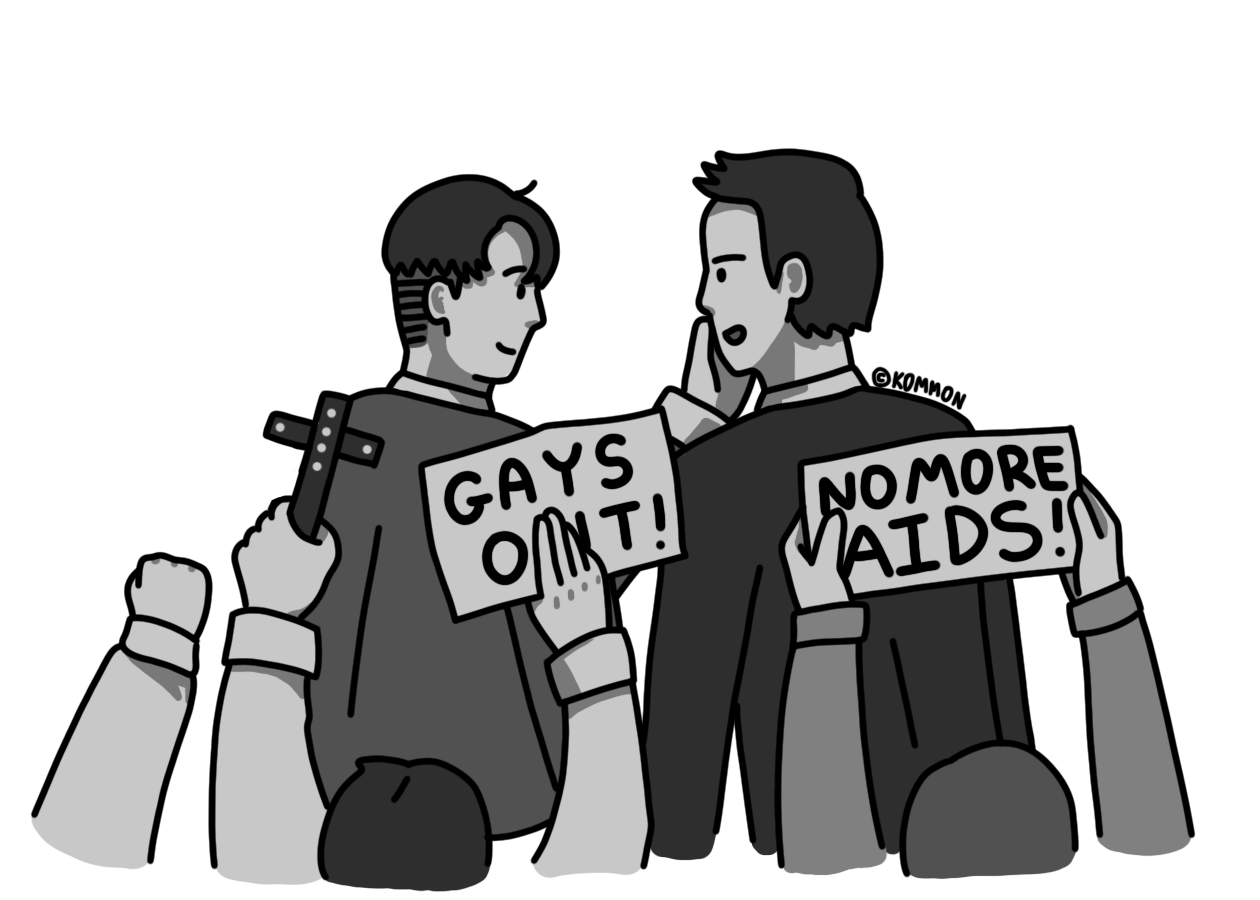
[Illustration by O.T.O] Homosexuality in Korean History The history of homosexuality in Korea (Korean link) was preserved by old oral traditions as well as by unofficial historical records from the past. Interestingly, these records show that homosexuality was not suppressed by law in the past. Let us look at some historical examples. 1) Silla Dynasty The first person to be considered "gay" in Korean history was Sadaham, who was a member of Hwarang, an educational organization that consisted of young people and teenagers training in martial arts during the Silla Dynasty. Only men with beautiful looks were chosen, and part of their job was to dress up. Sadaham was famous among them, and the 삼국사기 (The Chronicles of the Three States) states that he died of crying for seven days after his friend Mu-rang had passed away. Some historians interpret that as Sadaham dying from the grief of losing his lover rather than a mere friend. 2) Goryeo Dynasty In 고려사 (Goryeo History), it is recorded that King Gongmin recruited and established a troop of "beautiful man" and had sexual relations with them. 3) Joseon Dynasty A record from King Sejong's reign says that Crown Princess Bong "sometimes carried a maidservant on her back in the middle of the courtyard". Bong was later deposed, but some say that the princess was ousted for committing adultery rather than for being a lesbian. Homophobia in Korea 1) Confucianism and "Normal" Family Ideology The original texts of Confucianism do not mention homosexuality. However, later scholars added their interpretations, stating that "Homosexuality can be understood as the destruction of the Confucian family order (Korean link), and it could therefore be opposed by traditional Confucianists." Confucianism stresses how important the family is for the whole society as well as for individuals. The Confucian family order premises one father (head of the household), one mother, and children who are loyal and have filial piety (효). Many Confucian interpretations stress that a family that does not fit into this "normal" schema is out of order and needs to be fixed. Therefore, various family types including same-sex couples are considered somewhat "abnormal" since this view of Confucian familism is still prevalent in Korean society. 2) Christianity In the late Joseon Dynasty, Catholicism sprung with the introduction of Western studies in the 17th century. The history of Christianity in Korea started with the entry of missionaries and the establishment of Catholic dioceses in the late 18th century. In the early days, Christianity was persecuted within the country, as its doctrines clashed with the Neo-Confucianism of the Joseon Dynasty. However, the number of believers gradually increased, especially after Joseon opened its borders for trade with Western countries in the late 19th century. Soon after, individual freedom of religion was officially recognized. Christians of different denominations now represent the largest religious group in Korea. One of the characteristics of Korean Christianity (Korean link) is its history of anti-gay platform. The core identity of Korea's Protestantism was based on anti-communism. However, a new identity was needed to unite the congregation again after the collapse of the Russian communist regime in 1991. Some argue that the new identity of Korean Protestantism is based on homophobia. Social Movement to Legalize Same-sex Marriage In 2016, film director Kim Jo Kwang-soo and Kim Seung-hwan, CEO of Rainbow Factory, held their wedding ceremony. The couple was the first to hold a high-profile gay wedding in Korea. The event included performances and a public petition to legalize same-sex marriage. They filed a lawsuit against Korea’s legal system, arguing that it is unfair not to accept the marriage declarations of same-sex couples. However, the court turned down their appeal (Korean link). In 2017, a public petition was filed with the Blue House requesting the legalization of same-sex marriage, and about 28,000 people endorsed it. Comparison with Other Countries
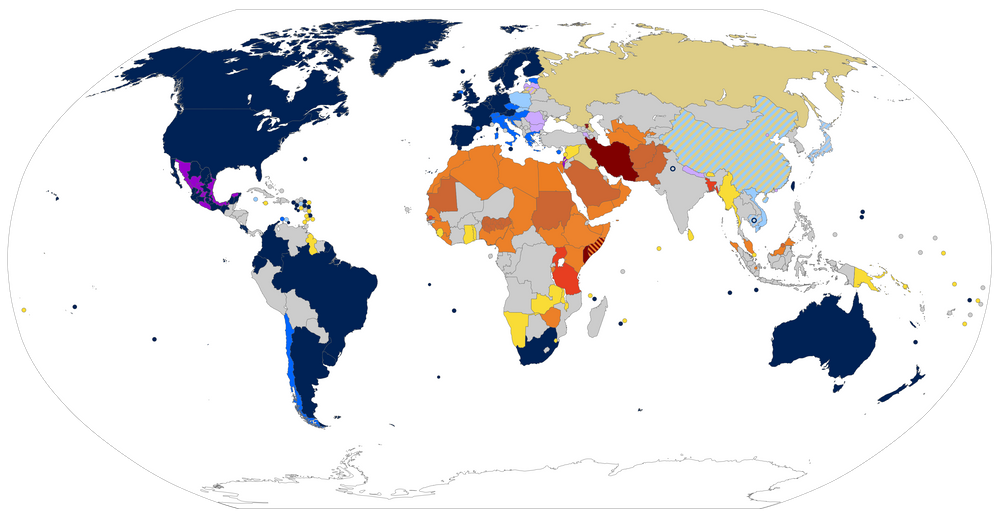
[Photo by namuwiki] According to a survey by the Organization for Economic Cooperation and Development (OECD) in 2019, Korea scored 2.8 points on "embracement of homosexuality," the lowest among the 36 countries surveyed. However, according to another survey (Korean link), there are reasons to be optimistic, as the younger generation are gradually showing more accepting and understanding attitudes towards homosexuality. An increasing number of people in Korea are starting to realize that social exclusion of the LGBTQ community is a form of discrimination. Some lawmakers have proposed an anti-discrimination law to the National Assembly to prevent such discrimination. To find out more about anti-discrimination laws in Korea, read our last week's newsletter here.
Today's Vocabulary 1. 유부- [Yu bu-] Meaning: "유부-" is a prefix for married women and men. Married women are called "유부녀" and married men are called "유부남". Usage: "체육 선생님 정말 멋있지 않아? 완전 내 이상형임." "야 꿈깨. 유부남이셔." "Isn't the PE teacher really cute? He's totally my type." "Hey, wake up. He's married." 2. 스드메 [Seu deu me] Meaning: It's an acronym for "스튜디오 (studio), 드레스 (dress), and 메이크업 (make-up)". Studio: Searching for good wedding photography companies Dress: Looking for the best wedding dress Make-up: Searching for good makeup shops for brides The word refers to the core process of wedding preparation. In Korea, marriage should include these three big challenges. It's a sort of tradition, as some would say. However, with the soaring cost of marriage, more and more couples prefer to have simple wedding ceremonies and skip some of their 스드메. Usage: "나 이제 남자친구랑 결혼 준비 하려고." "축하해! 스드메부터 알아봐야겠네!" "I'm getting ready to marry my boyfriend." "Congratulations! You're gonna have to find out about 스드메 first!" This Week's Recommendations Drama Prison Playbook (2017, tvN) This is a black comedy drama about people in prison. Many different characters in this drama made the plot entertaining and touching, and the show became very popular in Korea. Among those characters, many people loved Yoo Han-yang, nicknamed "Haerong", the most. He is a character serving a prison term for drug use and handling. Haerong has a poor way of speaking and acts in a mean way. However, he shows some unexpected charm showing off his prestigious academic background (Seoul National University College of Pharmacy) and his serious, smart looks from time to time. Haerong and his boyfriend's narration, in particular, melted many viewers’ hearts. Aren't you curious about their story? Watch the drama here!
💌 From the Editors' Desk Last Friday, we issued a newsletter titled "No-OO Zones: What do Kids, Dogs, and Foreigners have in common?" The original headline of the piece was attempting to connect seemingly unrelated topics but was interpreted by some as making problematic comparisons. Going forward, we will more carefully assess headlines before publication. Thank you to everyone for providing useful feedback! :)
Hello! This is the editor-in-chief Susu🌾. What did you do last Christmas? And how will you spend your Christmas this year? It will be very different, I know, but there are numerous ways of having fun at home. Share your memory, plans, and feedback below! KOMMON TEAM 수수🌾 Sans🌻 바코🌊 오티오😈 쟈🍉 기린🌴 쏘🐥 기니👑 프레드🍰 부엉🦉 타코🌮 Sunny🌞
|