#Superstitions #Numbers For dark mode users,
Hello, reader! Today, we are covering: Cultural Insight: Is 4 the number of death? Korean superstitions you need to know Slang: Jae-Soo Up Da (재수 없다) This Week's Recommendations Whispering Corridors (1998) Don't forget to leave your feedback below!
Is 4 the number of death? Korean superstitions you need to know
Writer: Haram Lee Editor: Regine Armann, Aleya Sharif Editor-in-Chief: Fred McNulty Researcher: Yul Jun, Heejin Ahn
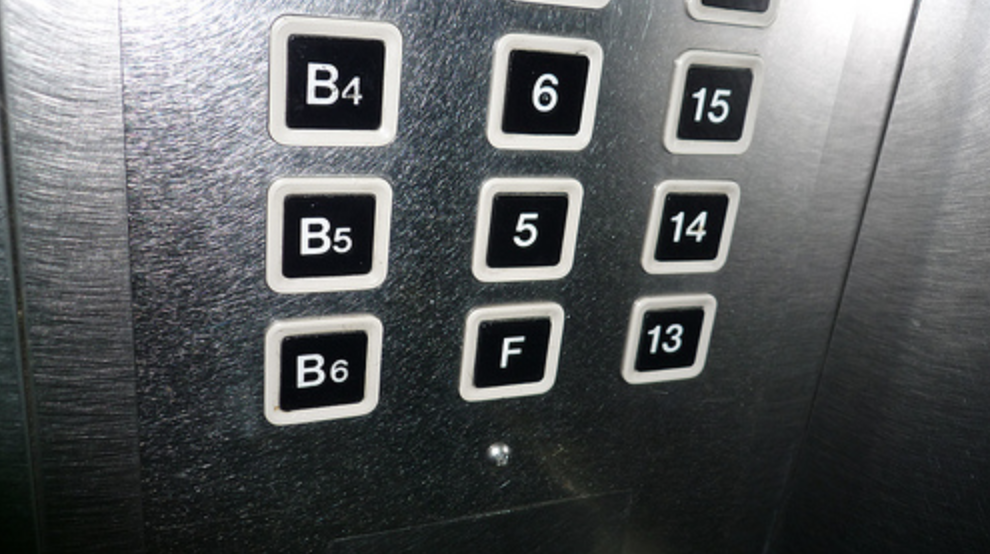
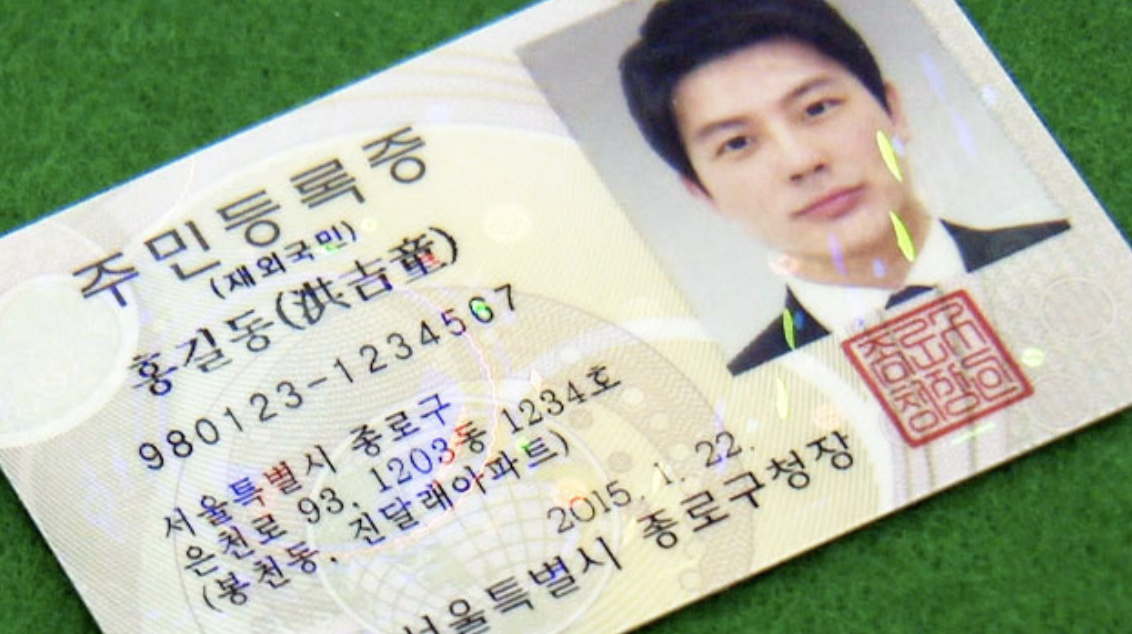
One day in Seoul, Bani went to the hospital to visit her friend, who had been admitted to Room 404. As she got into the elevator, she noticed that the fourth floor was missing and that the corresponding button was instead marked with the letter “F.” In South Korea, buildings such as hospitals and residential apartments do not have the 4th floor; it is most commonly replaced with the letter “F” (from the English word “four”) in order to avoid using the number itself. This is due to the fact that the number 4 in the Korean language is associated with the word “death” as it is pronounced exactly like the traditional Chinese word 死 (사, sa) for death. Because of this negative connotation, many Koreans avoid using the number 4 whenever possible. In 2012, a newborn girl in Sejong City was given her social security number (주민등록번호), which, however, ended in 4444. This enraged her parents so much that they requested for it to be changed. This incident occurred after the social security designation policy was changed after the establishment of Sejong City in 2012. The last digits of Korean social security numbers are assigned according to gender (3 for men, 4 for women), region code, order of registration, and an additional verification code. By coincidence, all of this girl’s last digits happened to be 4, which led to confusion and frustration among her family. After being made aware of this issue, the Ministry of the Interior and Safety changed Sejong City’s region code to 96 to prevent further unintended mishaps.
Sample of Korean ID with social security number inscribed on it Source: [전국]해외 영주권자도 주민등록증 받는다 | YTNHow and why Koreans avoid the number 4 Throughout East Asia (Korea, China, and Japan), the number 4 implies bad luck as it is pronounced exactly as the Chinese character for “death” (死) in all three languages. The pronunciation, in Korean, sounds like “사 (sah)”, in Chinese “쓰 (sseu)”, and in Japanese “시 (si)”. In Korea, public places usually replace the number 4 with other words or numbers. For example, at Incheon International Airport, there are no gates numbered 4, 44, and 244. Additionally, the 63 Building (63 빌딩), a popular Korean landmark in Seoul, has the fourth floor marked as “4” while the 44th floor has the number 45. So what happened to the actual 45th floor? It is marked as the 46th, as the number 44 is simply skipped. So you might wonder if the 63 Building actually has 63 floors in total since it omits one floor? Yes, it does! It has exactly 63 floors including 3 underground floors and 60 ground floors. There are many horror stories floating around that revolve around the number 4 as well. From the early 2000s to 2018, if you dialed the number 010-4444-4444 on your phone, you could listen to various accounts of horror stories. A recorded voice narrated horror stories that were enhanced by sound effects. In 2019, the number was switched to 1644-0077, and the old number now belongs to a designated-driver-for-hire-service (대리운전). If you want to hear the horror stories now, simply dial 1644-0077, then press 1. You’ll be able to listen to a series of horror stories in Korean, at no extra charge. Another superstition is that if you see the clock and it shows the time “4:44”, that means someone is gossiping about you.
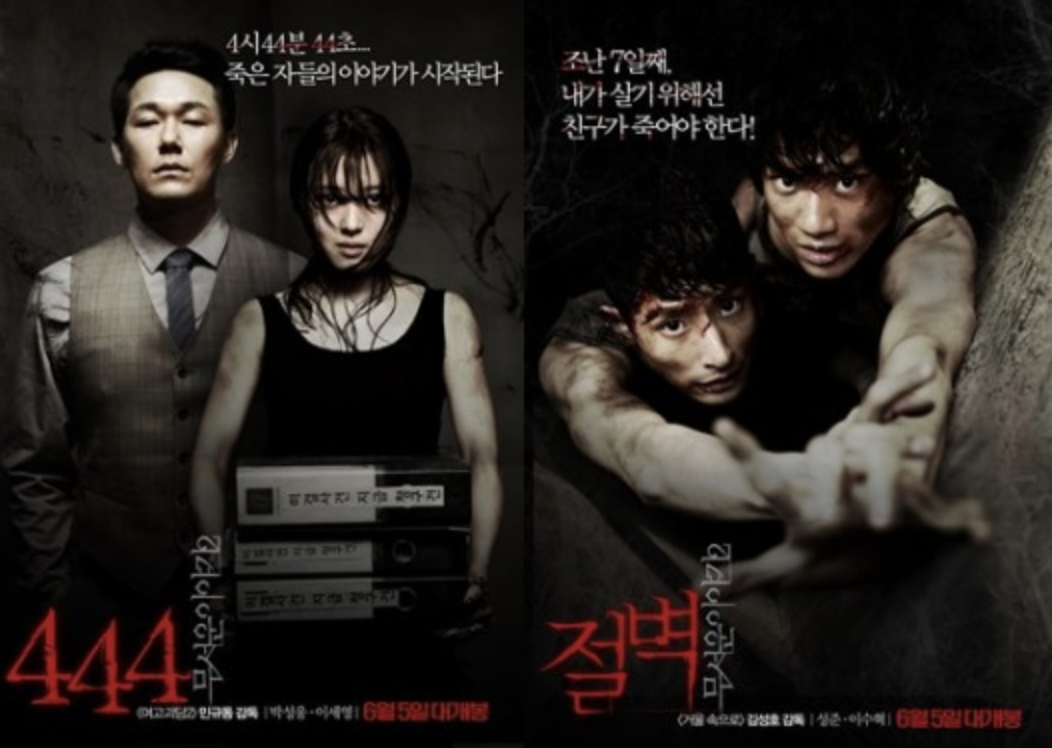
The poster used the number “4” as a way of promoting the film since it conveys a sense of horror and death. Source: https://www.fnnews.com/news/201305201437033565A short horror story about the 4:44 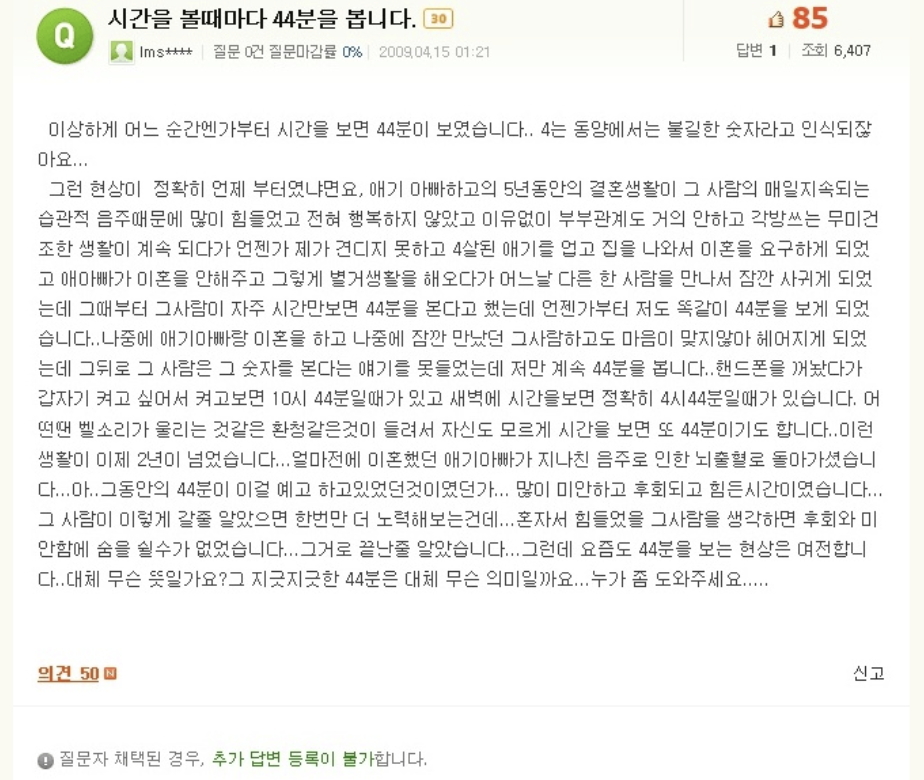 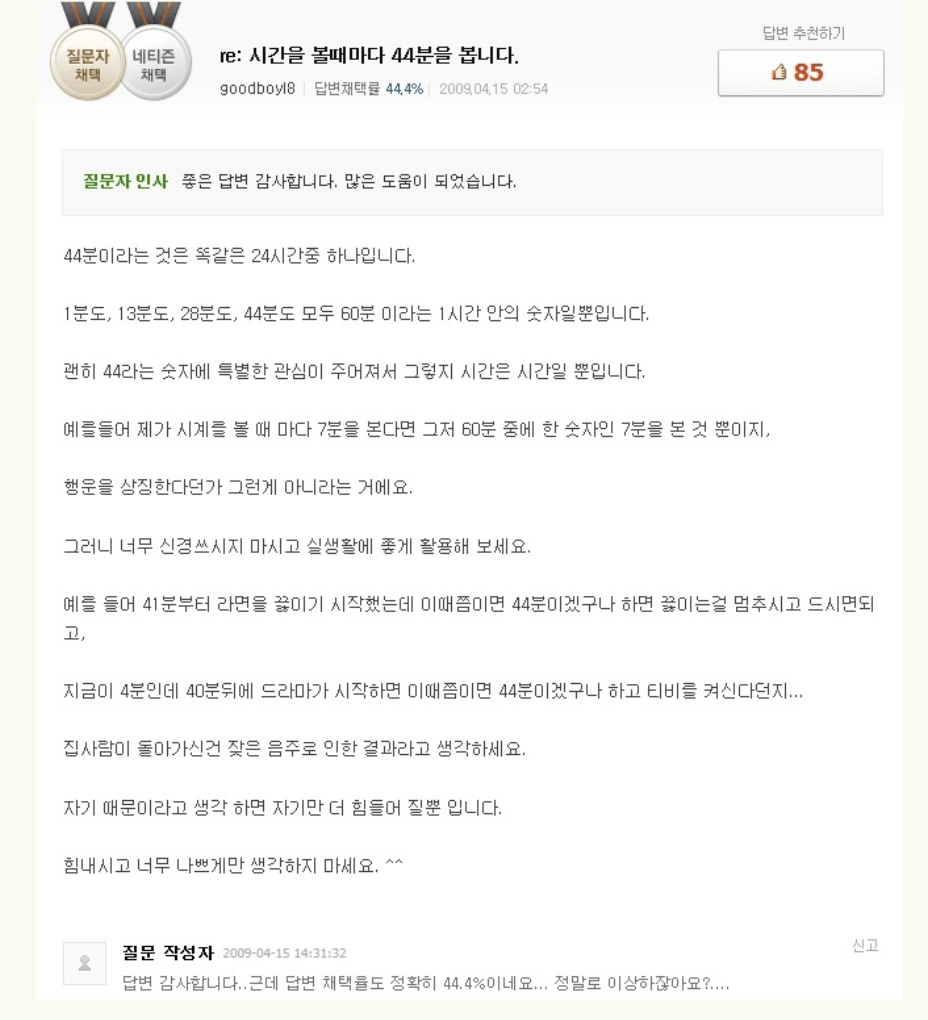 In 2009, on Naver - the main web portal of South Korea - someone posted on the Q&A forum stating that they kept seeing the time 4:44 whenever they looked at the clock. Another person replied saying it was just a coincidence and reassured the original poster that it was nothing to be worried about. However, what really spooked the readers was the approval rate of the user’s response: 44.4%. Other superstitions about numbers 1) 9 → the ninth (아홉수): A belief that whenever a person’s age ends in the number 9, e.g., 9, 19, or 29, that person is out of luck. In fact, when the date for an important event, such as a wedding, contains the number 9, some people postpone the event to a later date. The reason why people are cautious about the number 9 is that there always comes a change with this number, from teens to twenties, twenties to thirties, etc. The number 9, therefore, implies an impending change that can bring a significant difference in one’s life. 2) 3: According to ancient Korean philosophy, the number 3 has a connection to the three basic elements of the universe: sky, land, and man. Thus, it symbolizes wholesomeness, which gives the number a positive connotation. Just like the phrase “third times a charm” in Western culture, there are sayings in Korean such that even if you fail miserably, there are three chances to bounce back. 3) 7: Mainly due to Western influence, the number 7 is considered a lucky number. Also, in an East Asian traditional fairy tale, July 7th signifies a day where a heaven-matched couple, Kyunwoo (견우) and Jiknyo (직녀), meet romantically up in the sky, which is referred to as Chilseok (칠석). Other Korean superstitions 1) College Scholastic Ability Test (Korean SAT) Sharing sticky rice cakes with students who are taking the exam is seen as a symbol of good luck since the rice cakes are supposed to make the test takers “stick” through the exam. Seaweed soup, on the other hand, a traditional Korean food, is not favored by test-takers during the exam period, as its slippery texture symbolizes the “sliding” off the path that leads to a passing grade. Also, on the day of the exam, test takers should not wash their hair, so that they don’t forget everything they have studied the night before. 2) No cutting nails during the night There is an old story that says if you cut your nails during the night, a rat shows up to eat them and the rat turns into a clone of yourself. 3) No writing names in red Writing names, one’s own and those of others, in red has a connection with bad luck. According to ancient Chinese history, Emperor Chin always wrote his name in red and threatened that anyone else who wrote their name in red would be killed for treason. This superstition has been passed down in Korean society, and writing a name in red is still considered bad luck, and even an insult. This rule is sometimes introduced in elementary school already. 4) No whistling at night There is a story that If you whistle at night, a snake or ghost will show up. This is derived from someone calling out for someone else at night discreetly. 5) No shoes for a present, if you are a couple There is an old belief that if you give your lover shoes as a gift, they might use them to run away from you. However, this belief has changed over time and it has now become common for couples to give each other shoes as gifts. For example, when a girlfriend waits throughout her boyfriend’s military service period, which is currently 18 months, her boyfriend will give her shoes wrapped with flowers to express his gratitude. This is commonly referred to as “kkotshin (꽃신)”, literally meaning “flower shoes”, and it also symbolizes that the girl will be “walking down the flowery path” (꽃길만 걷자) after suffering a lot while her boyfriend was in the military, as they were not able to see each other for a long time. 5) Walking the Deoksu Palace Stonewall path will result in a breakup People say that if you walk by the Deoksu Palace Stonewall path, you will end up breaking up with someone you love. The story is derived from people walking to the family court, which was at the end of the path until 1955, for filing a divorce. This has also coined the phrase “walking by the Deoksu Palace Stonewall path” as an indication of a breakup. 6) You get unlucky when you step on a door threshold Doors imply the sharing of feelings, and the space beyond the threshold indicates the beginning of another space. Thus, stepping on the threshold symbolizes the collision of contrasting feelings that come from the spaces on both sides of the door, which is considered bad luck. In this context, some Koreans also believe that they should not place mirrors directly in front of the door as that would deflect all the good luck and lead to an accumulation of bad luck instead.
Slang Jae-Soo Up Da (재수 없다) The term is used to express frustration when experiencing unluckiness. It is also used to express frustrations about something bad that exists around. Example: A: 오늘 정말 재수 없는 날이야. 시계 볼 때 마다 4:44분이야. A: Today is a day that really sucks. The clock points to 4:44 whenever I look at it. B: 그거 그냥 미신이야. B: That is just a superstition A: 아, 하나 틀려서 안타깝게도 100점을 못 받았어… 난 실패자야 A: OMG, I got one wrong and I missed 100%. I’m a failure. B: 너 정말 재수없다…😒 B: You're such a dork. This Week's Recommendations Whispering Corridors (1998) Whispering Corridors is Korea's representative horror movie series set in a girls' high school. The first series was released in 1998, and the sixth version is scheduled for release in late June 2021. The first series is the most popular one. The story is set in a girls' high school, where a teacher has committed suicide, leaving behind an ambiguous message. Since then, a series of mysterious incidents have occurred at the school. The main message of the movie is that bullying has an effect on all people within the school environment. The movie not only succeeds at creating a convincing atmosphere of fear, but it also sheds light on important social issues, such as fierce competition between students, school violence, teacher discrimination, and sexual harassment of students.
|