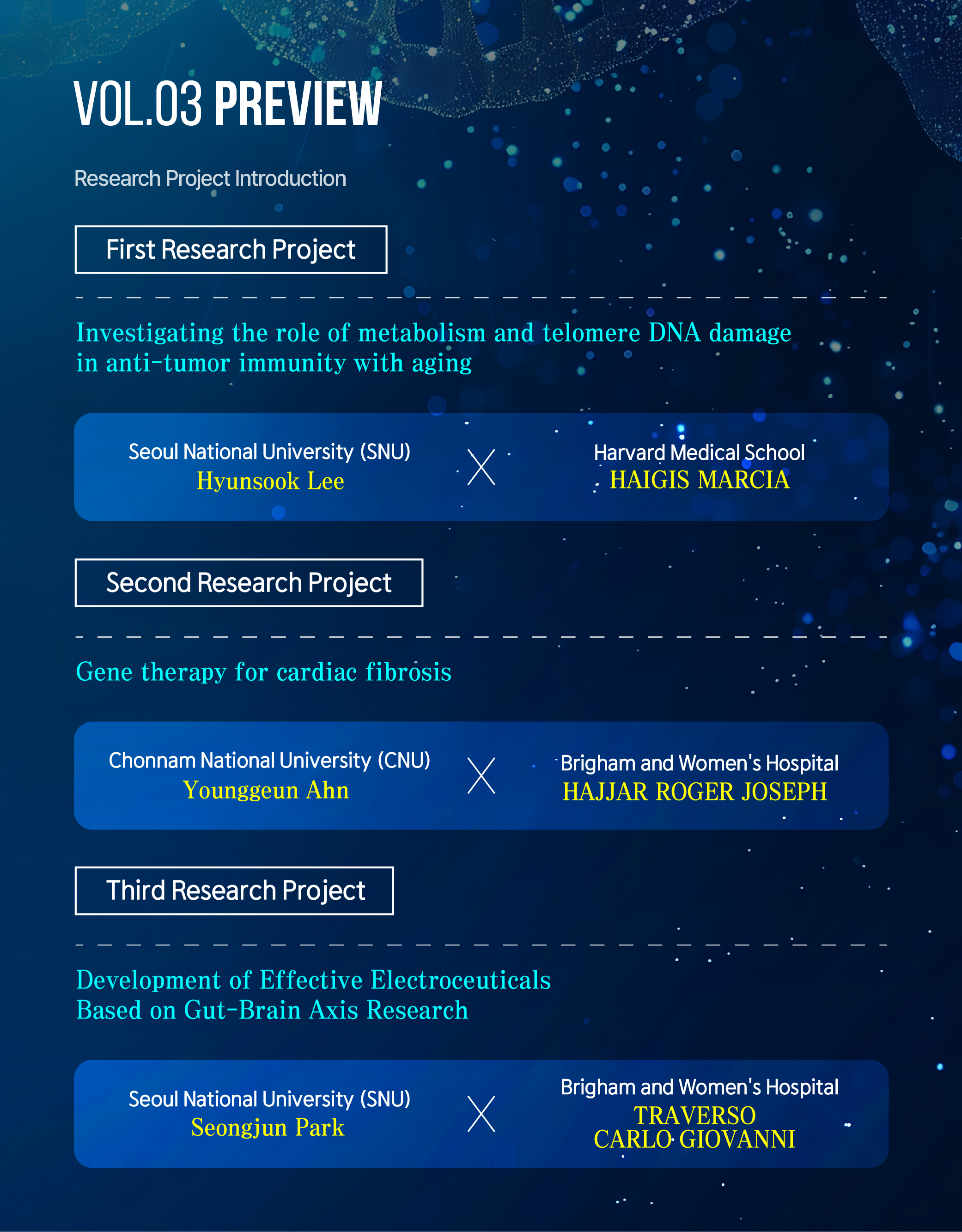
KUCRF Newsletter Vol. 03 📌 Please introduce yourself.
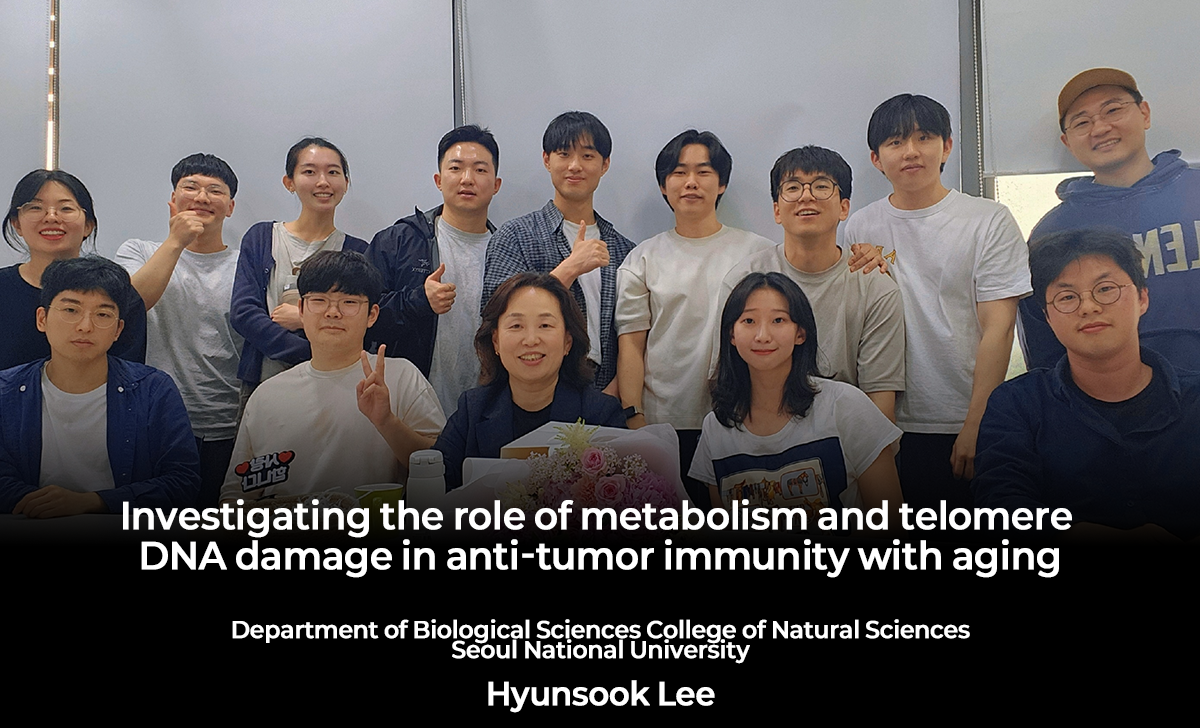
I am Professor Hyunsook Lee from the Department of Biological Sciences at the College of Natural Sciences, Seoul National University. I study how normal cells age and how they become cancerous.
📌 Please explain your ongoing research project.
For a very long time, I have been researching the molecular mechanisms by which normal cells become cancer cells. Gradually, I began studying telomeres, a specific type of DNA at the ends of chromosomes, and this naturally led to a connection with cancer.
In fact, cancer is also a disease of aging, but upon reflection, aging and cancer are not just parallel phenomena; they can be seen as 'two faces' that are closely interconnected at the molecular level in our lives.
Through telomere research, I realized that beyond molecular mechanisms, the biggest physiological problem for cancer patients is that immune cells fail to function properly and cannot eliminate cancer. Therefore, I began investigating how declines in anti-cancer immunity and metabolic function are linked to telomeres, and how aging and cancer progress from the molecular and cellular levels to the human body.
I am conducting this research in collaboration with Dr. Marcia Haigis (Ph.D.) from Harvard University, an expert in metabolism who has elucidated the fundamental mechanisms of anti-cancer immunity. Additionally, I am working as part of a team with Professor Se-Hoon Lee from Samsung Hospital and Sungkyunkwan University School of Medicine, and Professor Semin Lee from UNIST (Ulsan National Institute of Science and Technology), both with rich clinical experience.
📌 What is the goal you aim to achieve with this research?
The foundation of immune checkpoint inhibitors began with Professor Arlene Sharpe's discovery, which targeted a single immune checkpoint. We hypothesized that as aging progresses, more immune checkpoints would emerge, and we proposed a new method for discovering molecular markers that encompass molecular mechanisms, metabolic abnormalities, and anti-cancer immune responses.
Therefore, the ultimate goal of this research project is to discover new immune checkpoints linked to aging and metabolic dysfunction, and to reveal how telomeres are involved. Although three years is a very short period, if we continue the research afterward, we expect it will ultimately provide a foundational strategy for developing new immune checkpoint inhibitors and anti-cancer drugs.
📌 What are the expected effects or social impacts of this research?
I believe the expected effects can be divided into three stages.
First, the most direct impact I feel is on the students. Among the smartest students in the world, Seoul National University students cannot be overlooked, and they are incredibly excited and enthusiastic just knowing about our collaboration. They want to participate in this research and are mapping out their ambitions and futures—this is something I witness every day, and it is the greatest joy as a professor.
Second, through online and offline meetings during the research, we learn how labs in the U.S. communicate and how we communicate. This is also very beneficial culturally. We hold regular Zoom meetings, and when Professor Arlene or Dr. Marcia Haigis visit Korea or when I go to the U.S. for conferences, we always meet to discuss and align on the research direction.
Third, one day, we will undoubtedly discover new immune checkpoints and cancer targets as originally planned, leading to practical new drug development or at least diagnostics, and targets applicable to various non-cancer diseases caused by aging. Ultimately, I believe this is important research that helps society enter a healthy society more quickly.
Additionally, I am utilizing AI from the Bio-AI Research Center at Seoul National University. If AI deep learning or predictive technologies are integrated, treatments like immune checkpoint therapy and targeted therapy, which previously required high-level information or significant money, could contribute to becoming treatments manageable under national health insurance. That is my dream, and it is the greatest reward for me.
📌 What are the achievements of this research?
Mitochondria are the energy factories of cells, and while it has been revealed through various studies that they are linked to metabolic abnormalities, Dr. Marcia Haigis is one of the researchers who has greatly advanced this field. Although we suspected a connection because telomere dysfunction is a marker of aging, there was no clear evidence. However, through collaboration and ongoing research, we have discovered that evidence. Even though we anticipated the results, seeing them actually emerge was the most surprising thing.
Currently, we are conducting experiments using laboratory mice, and as aging progresses, various abnormal RNAs are emerging from telomere dysfunction, and mitochondria are also failing to function properly—this finding is incredibly exciting.
Personally, I dream of continuing to make great discoveries, constantly asking good questions, maintaining curiosity, and producing good results. I believe the synergy and the wave this creates moving forward will be tremendous. Then, in 10 years, won't new collaborations emerge that surpass my expectations and hopes? I think that is even more important. |
|
|
📌 Please introduce yourself and your research.
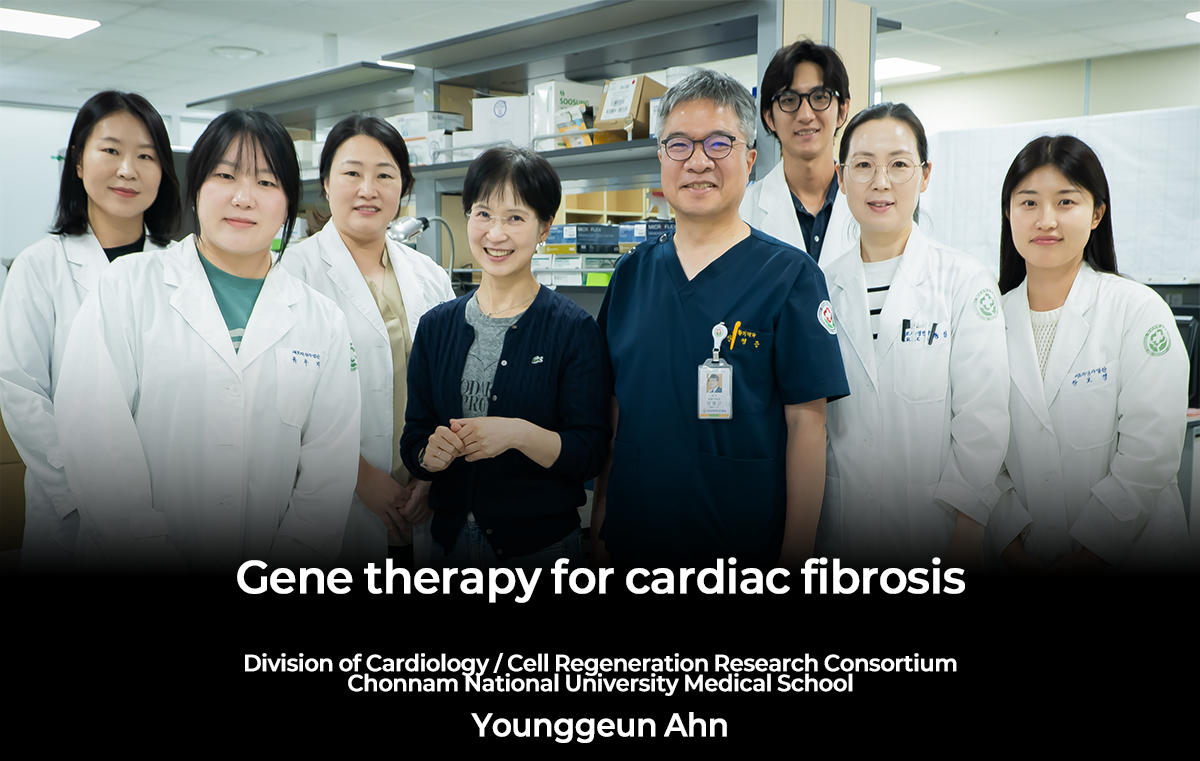
I am Younggeun Ahn, a cardiologist in the Division of Cardiology at Chonnam National University Medical School. I also lead the Cell Regeneration Research Consortium at Chonnam National University. I primarily treat patients with cardiovascular diseases.
In acute conditions such as myocardial infarction, where the coronary arteries are suddenly occluded, rapid reperfusion of the blocked vessel is critically important in the acute phase. However, even when acute treatment is successful, it is essential to consider how to protect and restore the injured vessels and myocardium in the longer term.
In particular, when cardiac fibrosis progresses after myocardial infarction, the heart muscle becomes stiff and cardiac function deteriorates, which can eventually lead to heart failure. Our research team is working to develop therapeutic strategies that can suppress or reverse this cardiac fibrosis.
Cardiovascular disease—especially acute myocardial infarction—is a condition in which the coronary artery suddenly becomes occluded, causing necrosis of the heart muscle. Because necrotic myocardium is naturally replaced by fibrotic tissue, the development of cardiac fibrosis is, in effect, almost unavoidable. This fibrosis can be regarded as a key intermediate stage that ultimately leads to end-stage heart failure.
If we are able to develop a therapeutic agent that can modulate this fibrosis, we may be able to restore the damaged heart to a near-normal state or, at the very least, prevent progression to end-stage heart failure and maintain patients in a milder, more stable heart failure state.
Our research team is therefore working to develop RNA-based therapeutics capable of controlling cardiac fibrosis.
📌 What are the expected outcomes and social impacts of this research?
If we can fundamentally block cardiac fibrosis, or reverse established fibrosis back to a state resembling healthy myocardial tissue, we expect to dramatically reduce the prevalence of heart failure and its related complications.
Once cardiac fibrosis progresses and heart failure worsens, patients often face a lifelong cycle of repeated hospital admissions and discharges and continuous treatment. Therefore, if we can restore fibrosis to a more normal state or effectively slow its progression, we can not only reduce the overall incidence of heart failure, but also substantially lessen the national burden of medical and healthcare costs.
In addition, because cardiac fibrosis is one of the major mechanisms linking myocardial infarction to heart failure, reducing fibrosis may significantly decrease the overall number of heart failure patients and also mitigate the severity of the disease. Ultimately, we expect that such therapeutic strategies will contribute to a remarkable improvement in patients’ quality of life.
📌 What are the achievements and ultimate goal of this research?
Our research focuses on developing novel RNA-based therapeutics. While publishing papers is not our sole objective, we have so far published approximately five papers, and we are preparing around three additional manuscripts, with several already submitted. Based on these research outcomes, we are steadily building the foundation for the development of RNA therapeutics.
With the awarding of the 2024 Nobel Prize in Physiology or Medicine, the importance of RNA-based research has drawn even more attention. Moving beyond conventional protein-based therapies that have traditionally been the mainstream, RNA-based therapeutics that target the fundamental regulatory mechanisms of disease are now being highlighted as a highly promising approach.
Through this strategy, our ultimate goal is to develop a new class of RNA therapeutics capable of fundamentally modulating cardiac fibrosis—one of the key pathological mechanisms underlying cardiovascular disease, the leading cause of death worldwide.
To achieve this, we are maintaining close collaborative relationships with research teams in the United States and continuing active joint research and academic discussions. In fields such as RNA analytics and next-generation drug development, Korea has not yet fully reached the very top global tier, which is why we consider international collaboration and joint research essential for securing core technologies. We believe these partnerships will serve as an important stepping stone for our work to advance to the next level.
Furthermore, we do not expect therapies that modulate cardiac fibrosis to be limited solely to heart disease. Because fibrosis is a common pathological process in various organs—including the kidneys—this RNA-based therapeutic strategy is expected to be broadly applicable not only to cardiac disease, but also to fibrotic diseases in the kidneys and other organs. |
|
|
📌 Please introduce yourself and your research.
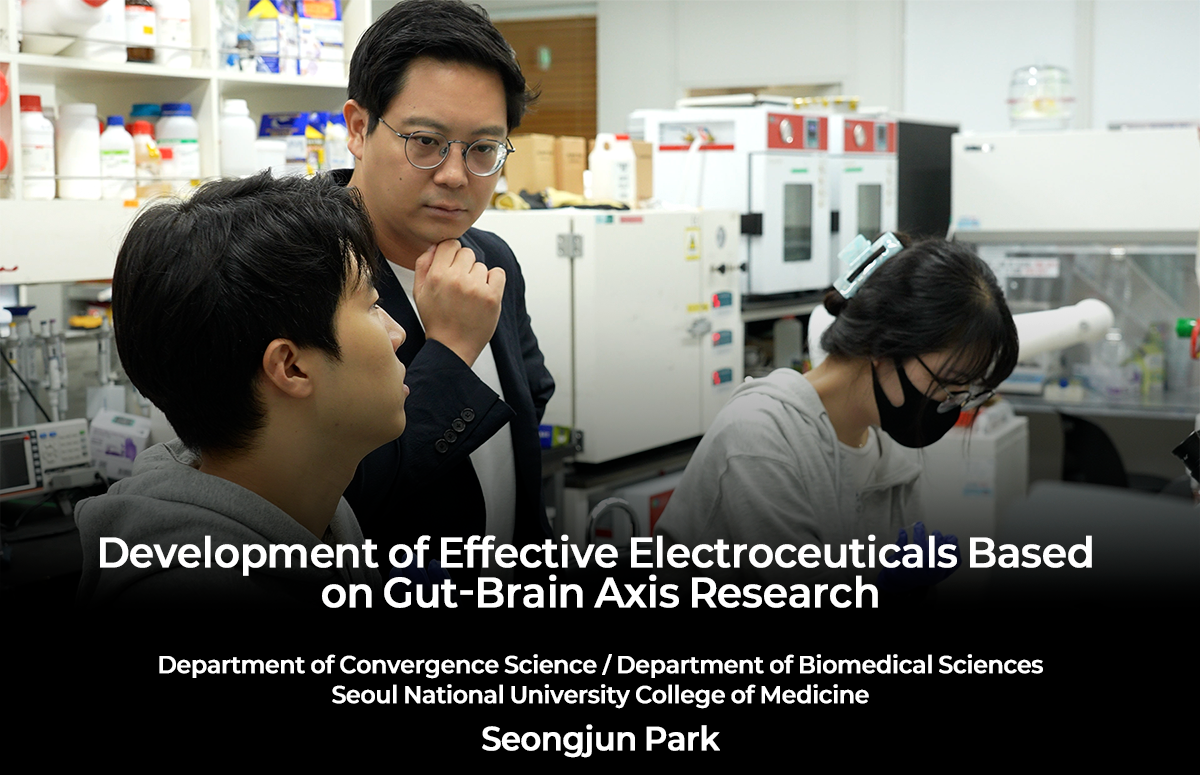
I am Seongjun Park, affiliated with the Department of Convergence Science at Seoul National University and the Department of Biomedical Sciences at Seoul National University College of Medicine.
Our current project is the "Development of Gut-Brain Axis-Based Electroceuticals." Recent studies have repeatedly demonstrated that the gut and brain interact extensively, significantly influencing health. In this context, we believe it is critically important to elucidate the mechanisms underlying the correlations between brain diseases such as Parkinson's and Alzheimer's, and gut diseases such as Crohn's disease and inflammatory bowel diseases, and to develop therapeutic approaches targeting these mechanisms. We are working on developing novel forms of electroceuticals that leverage the gut-brain axis.
The motivation for initiating this research stems from the fact that most people have long viewed the gut and brain as completely distinct types of organs. However, recent studies have revealed that this is not the case, leading us to consider whether novel biomedical phenomena could be harnessed to treat human diseases. In the early stages, there were few individuals capable of developing new medical devices through interdisciplinary fusion research spanning science and engineering. We proposed this project because we believed it would enable us to pursue such endeavors.
📌 What are the expected outcomes and social impacts of this research?
First, since the mechanisms of gut and brain diseases are not yet fully understood—making treatment difficult—we anticipate significant scientific progress in elucidating these mechanisms. Developing a new form of medical technology that treats diseases by directly stimulating the body using scientific and medical knowledge will have tremendous social and economic value.
Typically, disease treatment involves drugs or injections, but our approach involves implanting extremely small miniature devices inside the body to stimulate nerves, creating an entirely new paradigm for therapy.
Electroceutical development incorporates a significant engineering component and is closely tied to the medical device market. Medical devices must go beyond domestic use in Korea to obtain FDA approval and expand into the global market. Given the rapid growth of the global biomedical device market, we expect to secure substantial competitiveness in this space.
Additionally, in a landscape where opportunities and environments for leading translational research bridging science and engineering are scarce, this project represents a highly meaningful opportunity for us.
Even considering just Parkinson's or Alzheimer's, there are countless suffering patients, and gut diseases affect many people as well. The development of new technologies to treat these conditions will have enormous medical and social welfare significance. Moreover, creating a new market in the biomedical medical device sector will carry substantial national-level importance.
📌 What are the achievements and ultimate goal of this research?
Our lab has long been developing devices capable of safely targeting the brain and nervous system. Our goal now is to use these to build an integrated system that overcomes both brain and gut diseases. While such research is not entirely unprecedented, to systematically question and explore the relationship between the gut and brain, we need more than devices targeting individual organs—we require an environment that can record, stimulate, and provide feedback on signals from the brain, vagus nerve, enteric nerves, and other areas in real time.
To this end, we are fabricating and interconnecting these components, then conducting research to optimize electronic parameters and waveforms from an integrated perspective. We are also working to maximize the efficacy of electroceuticals by leveraging AI and similar technologies.
The Korea-US Collaborative Research Project aims to pioneer entirely new fields in life sciences, medicine, and biomedical engineering that no one else is pursuing and to lead them on a global scale. In line with this mission, our goal is to secure world-first technology in the engineering applications of the gut-brain axis and electroceuticals. Successfully advancing this to a form that patients can actually use is our ultimate objective.
Our research unit is a unique fusion of natural sciences, medicine, and engineering. While such interdisciplinary research faces numerous constraints and challenges, we believe that overcoming them defines truly innovative research. In particular, the life sciences field offers infinite potential for elucidating previously unknown mechanisms and translating them into medical applications. |
|
|
You can check out more details about each research project
in the introduction videos uploaded
on the "KUCRF" YouTube channel!
(Subscribe and turn on notifications to watch them first! 😁) |
|
|
January 2026
KUCRF NEWSLETTER Vol.02
|
|
|
October 2025
KUCRF NEWSLETTER Vol.01
|
|
|
If you subscribe,
you will be the first to receive a variety of updates
from KUCRF Office every quarter.
|
|
|
Korea US Collaborative Research Fund(KUCRF)101, Daehak-ro, Jongno-gu, Seoul 03080, Republic of Korea(Yeongeon-dong 28, Seoul)Unsubscribe |
|
|
|
|