Kwangdong Pharmaceutical’s Cosmetics KOSPI ▲4,153.09 │ KOSDAQ ▲927.79│ KRW/USD▲1,466.92 |
|
|
As of 3:30 p.m. on the previous trading day |
|
|
Hello, subscribers! The newsletter will take a short break on Thursday, December 11.
We will be back next Tuesday with more informative and interesting updates! |
|
|
✴ Korea Growth Investment Corporation╎Committed $17 million to the Technology Innovation Fund No. 6, creating a $34 million sub-fund and selecting the SV Investment consortium as the GP. This decision concentrates capital on companies pursuing technology cooperation with universities and research institutes, pressuring the sub-fund to be formed by next July.
✴ Korea Venture Investment Corporation╎Korea Venture Investment is holding consecutive IR and one-on-one consulting programs for Lycon enterprises and top-tier innovation companies, strengthening investment connections for regional and innovative startups. These activities expand on-site matching with about twenty VCs and increase the likelihood of actual investment, enhancing its role in supporting regional company growth.
✴ Curious Partners╎The firm made a structured investment of $205 million in Ido and supported RCPS repayment, improving financial stability and the possibility of an IPO exit. It secured downside protection through EBITDA and net-debt conditions and option structures, and is pursuing an IRR target of 13 percent.
✴ STIC Ventures╎The firm aims to form an AI fund of at least $54.9 million and has secured more than $48 million in LOC, raising its target size. It is attracting additional LPs with an AI-focused strategy and plans to complete fund formation within the first quarter.
✴ IMM Investment╎Through its COPA fund, the sale of the China division of Chindata, in which it invested, has been completed, securing an exit of about $4 billion. Its strategy of identifying high-growth global data-center assets early has borne fruit and is accelerating additional opportunities in overseas infrastructure.
✴ Glenwood Private Equity╎The firm acquired LG Chem’s water treatment business for $960 million and is investing an additional $137 million to support NanoH2O facility expansion, building a global value-up structure. It is collaborating with Mubadala and GIC to enter the Middle East and Africa for RO-membrane expansion, accelerating growth as an independent business.
✴ Madup╎The company is pursuing a KOSDAQ listing and has raised a cumulative $23.6 million, recently turning profitable and raising FI exit expectations. Listing proceeds will be used for AI advancement and global expansion, strengthening its growth outlook.
✴ NH Venture Investment╎The firm relocated its office to Teheran-ro, seeking to improve operational efficiency and strengthen its connection to the VC ecosystem. This move aligns with CEO Hyunjin Kim’s second-term strategy and provides momentum for fund formation and AUM expansion.
✴ Align Partners╎Align Partners has raised its tender offer price for Aplus Asset from $5.49 to $6.17 and expanded the total offer to $28.05 million, seeking to secure up to a 24.9 percent stake. As the share price has risen above the previous offer price, the likelihood of failure has increased, and the market is watching Chairman Kwak Geun-ho’s response and the potential changes in the governance structure.
|
|
|
CJ Bibigo Ramyun Breaks Into Major US Retailers |
|
|
⭑ One year after Southeast Asia debut, Europe and U.S. push
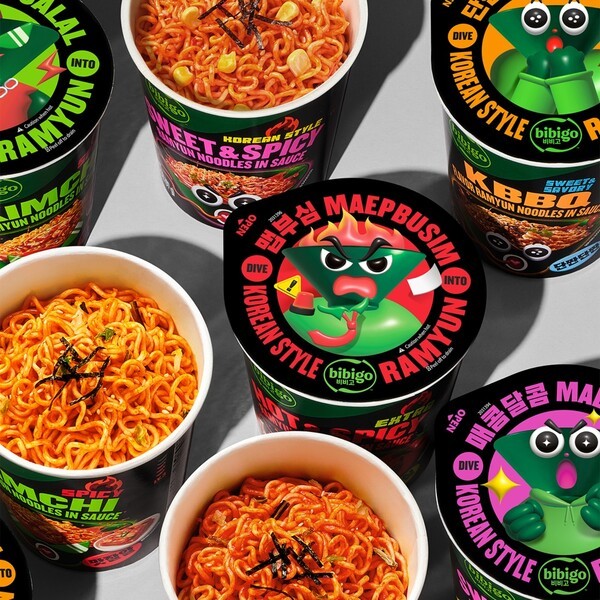
CJ CheilJedang launched Bibigo stir-fried ramen in Southeast Asia, including Thailand and Malaysia, in 2024, and within one year has expanded distribution channels to Europe and the United States.
From the second half of 2025, the company will change Bibigo ramen into a cup-noodle format and distribute it to Korean mart chains in the United Kingdom, attempting to enter the European market. In the United States, since last month, Bibigo ramen cup-noodle products have been sold at Kroger’s online and offline stores and on the Bibigo USA official mall. Since Kroger is classified as a mainstream major retailer along with Walmart and Costco, it means K-ramen has reached the stage of entering mainstream distribution networks.
⭑ Welcome back the name: "Ramyun"
CJ CheilJedang had not sold broth ramen overseas and had intentionally avoided using the term ramyun in product names, and had used ramen only for a few Japan-style concept products.
However, starting in 2024, as it expanded its portfolio, the company introduced the name ramyun when launching new stir-fried noodles in bag format in Thailand and Malaysia. With the boom of K-food, the word ramyun has come to be used as a generic term for Korean instant noodles, and the company judged it to be a more intuitive name for consumers than Korean-style stir-fried noodles.
The company opened a dedicated Bibigo ramen website, posted related videos on social media, presented Southeast Asia limited-edition products with its global ambassador, K-pop group Seventeen, and held several roadshows from August to November.
⭑ Thailand OEM production, global expansion via SFC and Schwan’s
Bibigo ramen is produced through an OEM system in Thailand, first launched in Southeast Asia, and the same product is being exported to Europe and the United States. In the United States, SFC Global Supply Chain, a subsidiary of CJ CheilJedang, manages distribution, using the extensive U.S. distribution network built through Schwan’s, another CJ CheilJedang subsidiary.
At Kroger stores, Bibigo ramen is sold under the Asian Noodle category rather than the Pantry category where Shin Ramyun and Buldak Bokkeum Myeon are placed. CJ CheilJedang aims to target the global shelf-stable noodle market in Western regions where interest in Asian food is increasing, by selling Bibigo ramen in Southeast Asia, Europe, and the United States.
|
|
|
The overseas expansion speed of Bibigo ramen is quite noticeable. After first confirming product competitiveness in Southeast Asia, it moved directly to core markets in Europe and the United States, which is an aggressive strategy different from the cautious stance CJ CheilJedang has maintained in its noodle business. A particularly important point to remember is that CJ had long avoided selling broth ramen overseas and had rarely used the term ramyun in product names.
Another important point is the structure that separates production and distribution. By using Thailand OEM, the company reduces cost and risk, and by using overseas networks such as SFC Global Supply Chain and Schwan’s, it is rapidly expanding distribution channels. If this method is effective, it also shows potential for expansion into other shelf-stable noodle product lines beyond Bibigo ramen.
However, it is still placed in the Asian Noodle section at Kroger, so it is difficult to view it as full mainstream entry at this stage. Ultimately, the key is whether American consumers can accept Bibigo ramen not as a special Asian food but as a ramen brand chosen in everyday consumption. Although the popularity of K-food will help, basic factors such as taste, price, and positioning also need to be fully in place. |
|
|
Kwangdong Pharmaceutical’s Cosmetics Struggle After Dasique |
|
|
⭑ Expanded its cosmetics presence through the Dasique acquisition, but…
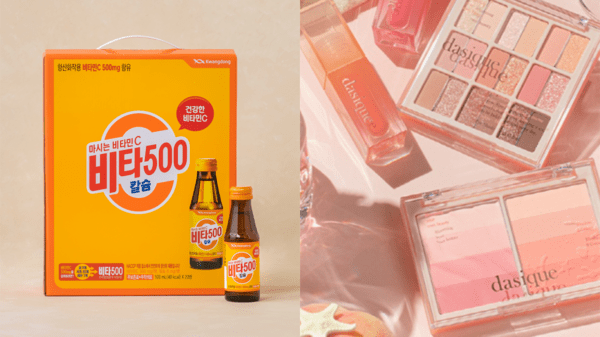
Kwangdong Pharmaceutical has been actively expanding into businesses beyond pharmaceuticals. In 2023, its venture capital subsidiary KD Invest acquired a 75 percent stake in the color cosmetics brand Dasique for $20.4 million, drawing strong market attention. Dasique, a shadow palette brand favored by consumers in their twenties and thirties, increased its operating profit from $1.8 million in 2023 to about $3.4 million last year.
However, the market remains skeptical about what synergies have emerged after the acquisition, with many saying that “a clear expansion story has not yet appeared.”
⭑ New Businesses Aimed at Faster Results than Pharmaceuticals
Kwangdong’s push into cosmetics has a clear rationale. Pharmaceuticals and biotech require long investment periods with uncertain outcomes, while the dermacosmetics and medical beauty market is growing at an annual rate of 9 percent and is valued at $70 billion, allowing for faster revenue expansion.
Beverages also represent a large portion of the company’s portfolio. Products such as Vita 500 and Corn Silk Tea generated about $67.9 million last year, while Samdasoo distribution revenue reached $217.2 million, accounting for 33 percent of the total. This year, the Samdasoo business scale is expected to expand from $67.9 million to $271.7 million, creating further room for profitability improvement.
⭑ Ownership Structure and Conservative Corporate Culture as Variables
Expansion into new businesses is also intertwined with shifts in ownership influence. Chairman Choi Sung Won holds a 6.59 percent stake, a smaller share than second largest shareholder Fidelity at 9.99 percent. Even when including related party stakes, the total reaches only 18.37 percent, prompting ongoing speculation that subsidiaries may be used to strengthen governance control. What the market finds more concerning, however, is execution capability.
In the case of Samdasoo, critics point to a lack of aggressive export oriented marketing, saying the company remains passive. Some also note that its conservative organizational culture makes it difficult to push forward bold advertising proposals.
Ultimately, how decisively Kwangdong moves beyond Dasique will determine the pace of growth in its new businesses.
|
|
|
💊Pharma and Technology╎Why Aimed Bio’s Market Cap Jumped by $2 billion in Two Day
It hit consecutive upper limits after listing and surpassed a market cap of $2.06 billion. Its full-cycle ADC technology, collaboration with global pharma companies, and a pipeline entering Phase 1 trials immediately lifted investor expectations. Technology transfer agreements with Samsung Biologics and Biohaven, along with differentiated linker and payload stability, also strengthened confidence. With competitive research teams and stable governance, the market is quickly reflecting its growth potential. |
|
|
💄Brand Reorganization╎Every Transformation Has a Background
Estée Lauder is considering selling Dr. Jart, acquired in 2019, due to deteriorating performance. Expected sales of $500 million remained around $150 million, largely affected by prolonged weakness in China and Asian duty-free markets. Too Faced and Smashbox have also become potential sale candidates, signaling a full-scale portfolio adjustment at the group level. Amid growing impairment losses, the strategy of selection and concentration appears to be strengthening. |
|
|
🏦Big Investors Enter╎Financial Institutions Move Toward Productive Finance
With the launch of Woori Financial Group’s first productive-finance fund, financial groups and securities firms are rapidly shifting toward investments centered on strategic industries. Deal lineups are being reorganized around semiconductors, AI, biotech, and secondary batteries, while co-investment discussions and pre-IPO reviews are spreading. PEF managers also view financial groups as new LPs and are expanding connections through strategic-industry funds. Combined with changes in policy-type LP allocation, assessments suggest the funding structure of the financial sector will shift significantly over the next one to two years. |
|
|
🌐Google Joins ╎Semiconductor Industry Watches AI Chip Expansion
Google announced it will equip its in-house AI accelerator with HBM3E, raising sales expectations for SK Hynix and Samsung Electronics. As big tech companies follow Nvidia into the market, analysts see a higher likelihood of continued bottlenecks in HBM demand. With Google’s strategy to reduce GPU dependence through TPU expansion becoming clear, both HBM3E and HBM4 are expected to drive the market simultaneously. |
|
|
📱Power Struggle╎Samsung and Huawei Face Off in Tri-Fold Race
Samsung Electronics released its first tri-fold model with an initial volume of 20,000 units, entering full competition in the three-panel foldable market that had been effectively dominated by Huawei. Even as the cost burden of high-priced OLED panels and memory components has risen sharply, the company set the selling price at about $2,058, showing a strategy to find balance between consumer accessibility and profitability. With added scarcity to maximize market response, the move is expected to exert a notable impact on the global foldable-device landscape. |
|
|
💸Financial Pressure╎RaonPeople Raises Capital to Cover Urgent Liquidity
RaonPeople has decided on a capital increase of $17.5 million, exceeding half of its market capitalization, to repay short-term borrowings. Operating cash flow has deteriorated to –$25.8 million, and the structure in which financial burdens are passed on to shareholders continues.The issuance of new shares will increase the total number of shares by up to 137%, raising concerns over dilution, and the company is conducting a 0.4-share bonus issuance to prevent shareholder outflow. Whether the largest shareholder participates in the capital increase has become a key factor for investor sentiment, making upcoming subscription trends an important turning point.
|
|
|
Musinsa, how far are you expanding? |
|
|
⭑ Why did Musinsa speed up this much to win Seongsu Station?
Musinsa won Seongsu Station this year for $225,900 (₩329,292,929). People are curious why there is talk that Musinsa Town will be completed with Seongsu-dong as its base. Just walking through Seongsu-dong, you see Musinsa here and Musinsa there. Musinsa Standard, Daelim Warehouse, Empty Seongsu, Sodam Store, Space Seongsu 3, Beauty Space, and more show Musinsa’s presence on buildings throughout the area. Some even say that the map of Seongsu-dong is being redrawn at this point.
So naturally, these questions follow. Why is Musinsa focusing on Seongsu so intensively? Is this connected to its IPO preparation? How does this link structurally to overseas expansion?
⭑ The strategy to turn Seongsu-dong into a brand city
The structure is simple. The station naming rights at Seongsu Station, the expansion of offline and mixed-use spaces in Seongsu-dong, and the megastore plan all connect in a single flow: establishing a brand hub → strengthening domestic influence → building a global reference.
Branding an entire district creates the effect of securing the gateway of a city, and it also shows overseas investors that this brand has the symbolic power to reshape an area.
From a business logic perspective, it becomes clearer. Offline spaces are not simple stores, but high-return assets that combine dwell time, brand experience, and sales. Controlling a key location produces an effect stronger than advertising, and it makes consumers walk directly into the brand. This becomes evidence in global expansion as well. A company that built a brand city in Korea gains a powerful story when entering global markets.
⭑ Musinsa accelerating ahead of its IPO, now in the stage of proving itself
Musinsa’s IPO lead underwriter is Citi Global Markets, and the co-underwriters are JP Morgan, Korea Investment & Securities, and KB Securities. Although a corporate value of $6.86 billion (₩10 trillion) is mentioned, analysts say closing the gap with the market’s view of $5.49 billion (₩8 trillion) is their task. This makes moves like Japan pop-ups, global store expansion, and establishing a China subsidiary more important as proof of real growth, and space expansion fits within this strategy.
With some predicting an IPO as early as the second half of next year, the changes happening in Seongsu now are not just spatial expansion. They show that Musinsa has secured its domestic base and is now ready to expand globally.
In one line, Musinsa is turning Seongsu-dong into a stage that proves its future strategy.
|
|
|
Meaning of Line of Credit? |
|
|
✴ LOC
(Line of Credit)
A financial institution guarantees in contract form the maximum level of a loan limit that a company or a fund can draw at any time. The important point is that money does not actually enter the account, and it means securing a confirmed credit supply capacity that can be withdrawn immediately within that range when needed. Therefore, in the financial sector, an LOC is classified not as a simple loan but as a type of credit contract that promises liquidity provision.
If a company or a fund has an LOC, financing does not become blocked even if market conditions suddenly worsen, so they can plan investment schedules or purchase and acquisition sizes in a stable way. In particular, private equity funds or venture funds do not receive all investment commitments at once, so they often use the LOC to execute capital first and then recover funds from LPs later. Thanks to this structure, an LOC is explained as a “buffer that absorbs liquidity shocks” and a “bridge that keeps capital execution from being interrupted.”
In the end, an LOC is not merely a maximum amount that can be borrowed, but it has greater meaning in that a financial institution recognizes the creditworthiness of a specific company or fund and promises to take responsibility for future capital flows. |
|
|
Send us any suggestions you’d like to share while reading Bitter’s newsletter! |
|
|
Advertising, inquiries : viter@thevistapartners.com / Published by Newstop. Unsubscribe |
|
|
|
|