For dark mode users,
Hello, readers! Today, we are covering: Index Zoom In The Face of the Korean Press Today's Vocabulary Jjirasi (찌라시) This Week's Recommendations Argon (아르곤, 2017) Don't forget to leave your feedback below!
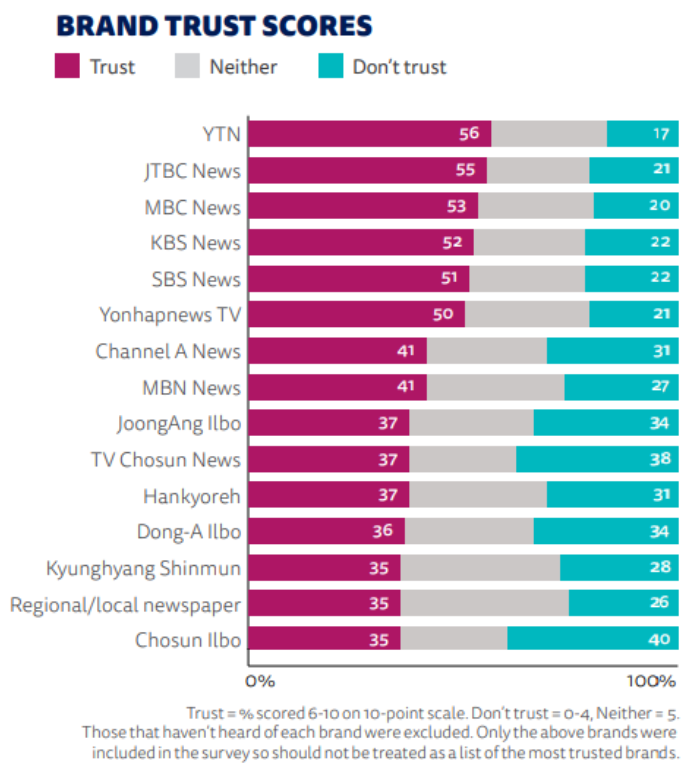
The Face of the Korean Press Writer: Haram Lee, Daeho Park Editor: Aleya Sharif Senior Editor: Regine Armann Editor-in-Chief: Fred McNulty Researcher: Yul Jun Intro Recently, a popular Korean actor, Sunho Kim, whose name was unidentified at the time, was embroiled in a scandal concerning his personal life and relationship. The skirmish started when a user on Nate Pann (네이트판), a website similar to Reddit, uploaded a post accusing him of forcing his ex-girlfriend into an abortion and treating her badly in other ways on October 17. It reached more than a million views and quickly gained the media’s attention. Many agencies started to reproduce the story without a secondary check or confirmation. This probably sounds like any other celebrity scandal. However, the issue that this case brought to light is how news agencies use and further spread information without properly verifying it. This is not the first time something like this has happened. Forced by strong competition, news outlets often publish unverified information for the sake of attention and viewer counts, which are directly related to profits. The “Reality” of the Korean Press 1) Click baiting: Sensational Titles In order to make people click on their news articles, news agencies employ eye-catching titles whenever possible. With unclear yet sensational words and expressions, such as “shocking,” “controversy,” and “for real?”, these titles often misconvey the truth and lead to the spread of false information. Also, when there are any notable events involving public figures, such as politicians, celebrities, or athletes, news agencies quickly spread it out to the public. Sometimes, they use eye-catching letters or words to grab audiences’ attention. 2) Copying and Pasting Another problem is the media outlets’ widespread habit of simply copying and pasting unverified information from online communities and making it sound as if it is the truth. Without checking the facts, the media have spread false information on many accounts, often resulting in confusion and unwarranted controversy. We earlier reported on the case of Son Jung-min, a college student who went missing and was then found dead at the Han River. A lot of fake news and speculations regarding his cause of death and the involvement of the friend he was hanging out with the night before were spread by the media and caused widespread confusion within society and led to even Son’s father not knowing whom to trust anymore. You can read the previous KOMMON article here. 3) Stirring up Conflicts by Upscaling Opinions Media outlets also often attempt to make someone’s personal opinion sound as if it was the voice of the majority. News agencies that provide their articles for giant search engines such as Naver and Daum often pick up random opinions or slang for publicity. For example, allegedly misandric keywords like “idaenam” (이대남), which is an online slang term that describes men in their 20s in a condescending manner, could have been censored out upon news publication, but the media keeps on publicizing them, which makes the social conflicts even worse. There are other events, opinions, and keywords that do not represent the voice of the majority. However, the problem lies when the media make it sound like it is legitimate, even though online communities posts are far from being legitimate and require a series of verifications, some reporters make it sound real and propagate misunderstandings even more. Side Effects 1) The Rise of Unverified Third-Party Press Outlets As the trust in mainstream media is diminishing, third party media including YouTube news channels such as “Backlash of Entertainment” (연예 뒷통령) or “A Touch of a God” (신의 한 수) have emerged as popular sources for people in search of information. News websites like “Insight” (인사이트), which are known for not being very accurate in their reporting, are also gaining popularity. 2) The Least Trusted Organization in Korea: News Agencies In 2020, it came to light that South Korea’s least trusted organizations are the country’s news agencies. According to the Reuters Institute for the Study of Journalism (RISJ), news agencies in South Korea have been selected in surveys as the least trusted public organizations since 2016. In 2020, only 21% of the Korean respondents answered that they trusted the news. On June 23rd, the RISJ issued their Digital News Report for the year 2020. According to that study, which reported on the trust people in a variety of countries have in their press outlets, Korea ranked 38th out of 46 countries. Trust in the press was highest in Finland, and the United States came last. Also, when it comes to trust in specific news agencies within Korea, YTN turned out to be the most trusted, while Chosun Ilbo was the least trusted.
Why Is the Korean Media Acting Like This? 1) Viewership Competition In 2005, there were 286 internet news agencies in Korea, but in 2020, the number jumped to 9,896, which is 35 times as much. These news agencies all try to get ads sponsored on their page by using sensational keywords to catch the readers’ attention. Additionally, a huge shift in trends has been observed over the years. Before the contemporary commercialization of the internet, many news agencies depended on newspapers. However, since access to the internet is now almost universal, the readership of newspapers has dropped significantly, forcing existing news agencies to compete even more and get as many views as possible for their online articles. Filled with a need for competition and speedy reports, many journalism experts agree that (Korean link) the current journalism ecosystem is a harsh environment for news agencies to produce quality news reports. Many also point out that structural improvements must be made to provide healthy and stable conditions for news agencies to focus on reporting with no pressure to constantly compete. 2) Heavy Dependence on internet Portals News publication has gone from paper to digital. Most Koreans access two big internet portals on a daily basis ‒ Naver and Daum. Offering much more functions and features compared to Google, which solely focuses on providing search results, Naver and Daum offer various kinds of features: news, shopping, webtoons, blogs, and Q&A forums, to name just a few. Because of this, many companies strive to make an appearance on Naver or Daum for the sake of their profits, and news agencies are no exception. Their profit is directly connected to the number of news articles that appear on those portals. A myriad of news is published every day, and only a few are read by a proficient number of readers. News agencies therefore try to get their articles to the top of the list, because most people click on whatever comes up first. Thus, news agencies constantly compete for speed when delivering news and prioritize getting something out quickly over the accuracy of the information they publicize. 3) Absence of Media Literacy education In a world full of fake news and false information, there has been a widespread call for implementing media literacy as part of school education. According to the Kyunghyang Shinmun, starting from 2025, an educational curriculum covering the facilitation of understanding and using media in a proper way is likely to be implemented as part of the 2022 Curriculum Enhancement (Korean link) in Korea. Also known as “Media Literacy Class”, the government is planning to implement it for elementary, middle, and high school curriculums. This decision was made as a response to the rising concerns towards uncensored digital media that is full of misinformation. The Government’s Response As a response to the issues of fake news, the government has attempted to make revisions to the Press Mediation Law (언론중재법), by setting new standards for the press regarding what and how they can and cannot report. You can read up on the details regarding this law in our past KOMMON article on fake news. The Press Meditation Law aims for settling disputes between press agencies and those who feel violated and dishonored by the reports that are made. When a press agency proves to have violated anyone’s rights or property in any way, the press agency must financially compensate the victim with up to 5 times as much as the amount of proposed intellectual or reputational property damage. However, since it is unclear how to measure the exact amount of “damage” that is done by a media company and since there are no exact guidelines as to what is and is not a violation, opponents of the bill claim that its only purpose is to threaten and punish press agencies. Therefore, this law was met with both domestic and international opposition claiming that the proposed law violates principles of democracy and the freedom of the press. As a result, compromises are currently being discussed. The strongest international condemnation (Korean link) came from a United Nations’ human rights expert who expressed her view that the press mediation law has a high possibility of violating the freedom of the press. Outro The news media is full of unconfirmed reports and misleading information. While readers need to be “media literate” so that they can spot fake news and misleading media practices, it is also crucial for news agencies to adhere to press guidelines to reduce the spread of false reports.
Today's Vocabulary Jjirasi (찌라시) Jjirasi is originally a Japanese word (チラシ(散らし)) that means tabloids or flyers. However, in Korea, it is used to describe untrustworthy news reports just for getting attention. Example: A: 너 그거 봤어? 연예인 A랑 B가 사귄대! B: 너 어디서 찌라시 본 거 아니야? A: Hey have you seen this? A celebrity is dating this person! B: Didn’t you just come across some jjirasi (찌라시)? This Week's Recommendations
Argon (아르곤, 2017) Available on Netflix The series follows the story of Kim Baek-jin, a news anchor and leader of an investigative news program called Argon. After the collapse of a commercial building, in which many people were killed, an employee was accused of knowing about the building's structural issues without reporting about it. The Argon team is then presented with the task of revealing the truth behind this catastrophe. Meanwhile, Baek-jin takes a contract reporter, Lee Yeon-hwa, under his wing and trains her diligently as she struggles to be acknowledged and accepted by her colleagues. Will the team overcome the many hurdles thrown their way and reveal the truth? "I'm sure Baek-jin is qualified... His strong point is reporting collapse accidents. What's more, we need tough guys like him on the ground. Nice guys will only scavenge the trash from cops and come back in tears." - Choi Geun-hwa, Argon
💚 Support us! 💚
|