#No Kids Zone #Living as minorities in Korea #Korean Slang
Hello, reader. We have been dividing the newsletter into two parts, but some of our readers were confused as to what each section was designed for. So we are here to clarify: Trending News - Basic facts on things that are going on in Korea right now Zoom In - In-depth background knowledge for readers who want to know more. Please leave your opinion on our layout at the end of the newsletter! *Correction from Tuesday's newsletter: This Tuesday, we covered the story of a new law banning anti-North Korea leaflets from being sent across the DMZ. We said that the Democratic Party of Korea "passed" the bill but this was misleading. The standing committee passed the bill, but it has not passed the National Assembly yet. While the bill is expected to pass, we should have been more clear. We apologize for making a mistake and will make sure to fact-check more thoroughly.
Index Trending News: Korea’s "No-OO Zones" Zoom In: Living as a socially disadvantaged member of society in Korea
Korea's "No-OO Zones"
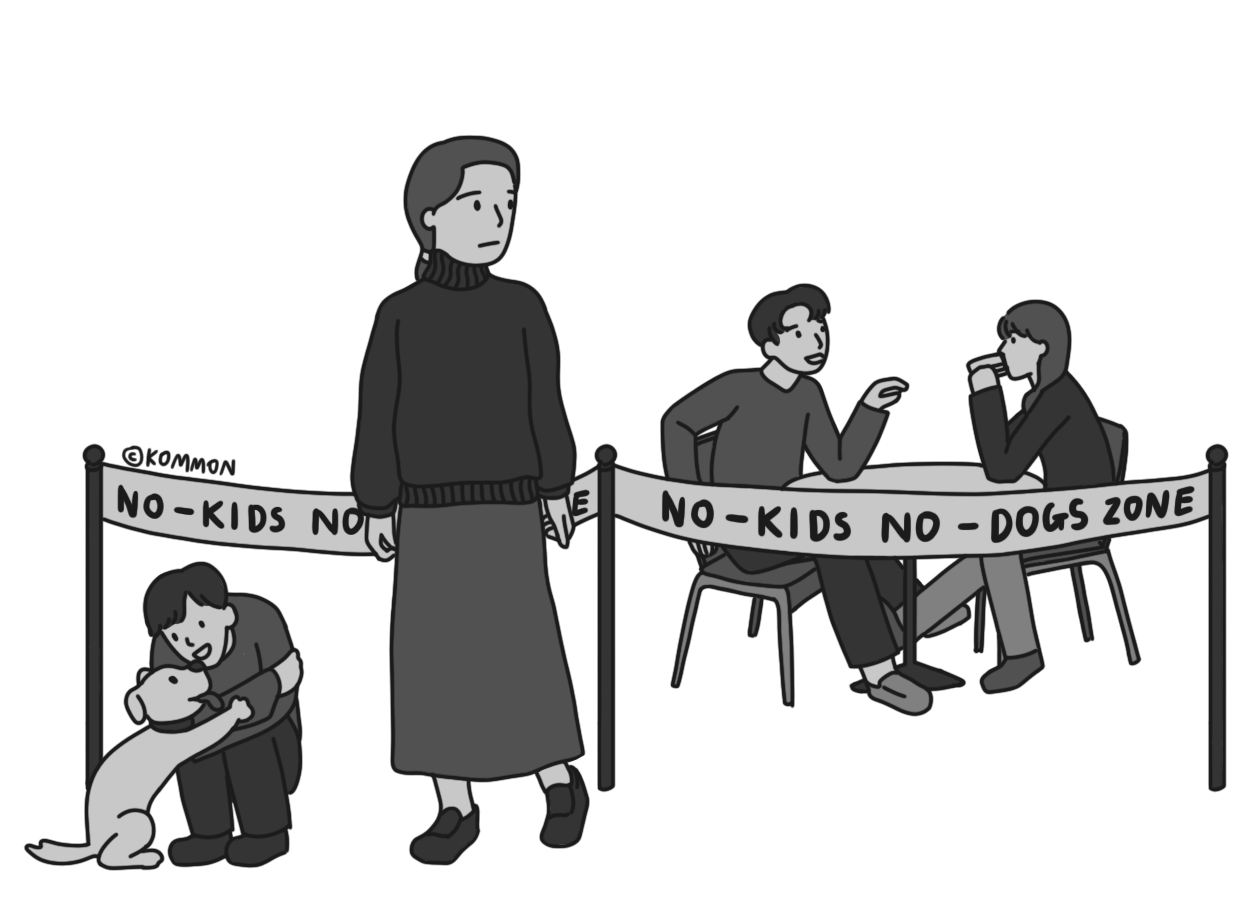
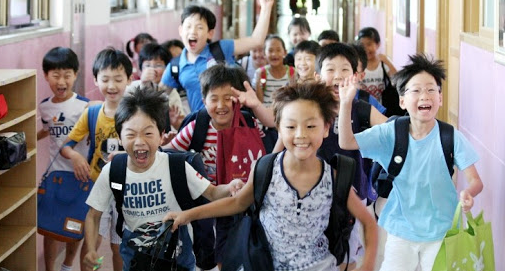
[Photo by Yonhap] The No-OO Zones (노OO존) refer to designated areas that ban certain people or animals from entering. For instance, some restaurants designate themselves as "No Kids Zones", meaning that kids are not allowed to dine at the restaurant. Some shopping malls designate themselves as "No Dogs Zones", meaning that dogs are not allowed to enter.
No-OO Zones have become a hot topic in Korea recently, following an incident where an employee at a Lotte Mart denied entry to a puppy walker and his assistance puppy. Many people said that the Lotte Mart’s actions were unjustified and threatened a boycott.
Should We Support "No-OO Zones"? 🙆♂️Arguments For such zones: 1. Owners Do Not Want to Be Held Accountable When Accidents Happen The most common No-OO Zones in Korea are No Kids Zones and No Dogs Zones. Proponents of No-OO Zones argue that they are not only necessary for businesses to operate without interference but also needed because there is no law that holds parents accountable for the actions of their child or pet owners for the actions of their pets.
In 2012, a child burned himself after wandering around in a restaurant. The restaurant owner and staff had to pay compensation of ₩49 million (Korean link) to the parents, which led to public outrage. Why should the owner be held accountable, they asked, when it should be the parents' responsibility to keep the children safe? Even if restaurant owners do their best to prevent accidents, kids are, by nature, unpredictable. Moreover, it is difficult for restaurant owners to force parents to control their kids. This is because, as of now, restaurant owners can only file a civil lawsuit against parents who are negligent of their children in restaurants, but there are no laws that force caretakers to control their children's behavior. Likewise, accidents caused by pet dogs have been increasing. In the years 2017 to 2019, at least 100 dog-related accidents have occurred in Korea. Last September, a dog bit and severely injured a child. Unfortunately, while laws regarding pet dogs have been proposed, they will only be implemented next year, and the fines are insignificant. The new laws are unlikely to lead to much deterrence. 2. Consideration for other guests No Kids Zones are also necessary for restaurants, because children often bother other customers. The most common complaints include disturbances caused by kids at restaurants and caretakers changing their kids' diapers at cafés. Even when pet dogs are tame, No Dog Zones are necessary because they could still make other visitors uncomfortable. For instance, many beaches ban dogs from entering because some owners fail to clean up after their pets. There are also many businesses that ban dogs because some customers may be allergic to dog hair. 🙅♀️Arguments Against Such Zones: 1. They Exclude Minorities Some No-OO Zones lead to unintended consequences. For instance, some restaurants or stores ban guide dogs from entering. While such measures may seem necessary to protect customers who are afraid of dogs, they violate the blind people's basic rights to get the assistance they need or to go shopping or enjoy social interaction. Not only that, guide dogs are quite safe because they undergo rigorous training.
Furthermore, No Kids Zones prevent both children and their parents from enjoying basic services. "맘충," [mom-chung] a derogatory term used for women whose children disrupt the quiet of a scene, shows how quick people are to judge caretakers of young children, especially when they are women. On November 24, 2017, the National Human Rights Commission of Korea ruled No Kids Zone policies in restaurants discriminatory, on the grounds that while it makes sense for restaurants to ban customers who have caused problems in the past, it is unfair and discriminatory to make generalizations and ban all children. 2. They Are Discriminatory The No-OO Zones are discriminatory against certain groups of people and deny them basic services. No Kids Zones A 2016 survey (Korean link) showed that 54.7% of Koreans support the growing number of no kids zones whereas 36.2% oppose them. The debate on No Kids Zones was triggered by a series of public incidents. First, in an incident on February 20th 2012, a kid pushed people who had hot soup on their trays, causing some to severely burn themselves. The parents of the kid blamed (Korean link) the injured rather than apologizing. There has also been a case where a mother was filmed changing the diaper (Korean link) of her son on a café tray. Google Maps now indicates whether a business has adopted a No Kids Zone policy, which informs parents and caretakers about businesses that ban children under a certain age. However, some businesses have refused to be listed on Google Maps, claiming defamation. No Dogs Zones It is understandable that public and private spaces ban pet dogs from entering. This, however, extends to their treatment of guide dogs, whose owners have legal rights to enter into almost any and all spaces with their guide dogs. Unlike companion pets, guide dogs have the right to enter any public or private space and the owner of the property cannot refuse them without specifying reasons that are stated in the law. If the owner refuses guide dogs from entering, they can be fined up to ₩3 million. (Korean link) Many, however, are unaware of this legislation; this lack of awareness subjects guide dogs and their owners to discrimination. Cases of Discrimination 👉Case 1: According to BBC Korea (Korean link), there were cases where service dogs were not allowed in the congressional buildings and meetings, and representatives with disabilities had to be supported by fellow lawmakers instead. For instance, in 2004, the very first blind legislator, 정화원, and his guide dog were denied access into the building because the National Assembly found the presence of an animal in the assembly hall to be scandalous. The same happened in the 19th congressional assembly when lawmaker 최동익 could not bring his dog in. In 2020, the congressional law changed and the incoming lawmaker 김예지 and her assistance dog 조이 gained the legal right to enter the congressional building, for the very first time in Korean history.
👉Case 2: On November 20th 2020, a puppy walker and his assistance puppy were kicked out of a Lotte Mart (Korean link). A puppy walker is a person who trains dogs to assist people who are blind or deaf. The video quickly went viral and the store received backlash. Lotte Mart posted a formal apology to their Instagram page and made a public statement that this mistake will not happen again.
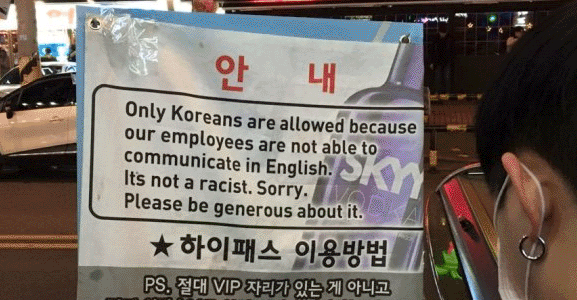
In most developed countries, a business that denies service on the basis of race risks landing in court. However, this is not the case in Korea, because the country lacks legal prohibitions on racial discrimination by private businesses. There have been multiple incidents where non-Koreans were denied entry into businesses. For instance, in 2016, a bar called Green Light denied entry to Megan Stuckey, a 24-year-old US citizen living in South Korea. The bar had a sign saying "Only Koreans are allowed because our employees cannot communicate in English." However, Stuckey was denied entry even though she knew how to speak Korean. In June 2015, a sauna in Busan refused entry to those who "clearly look like foreigners". A staff member from the sauna said that they are okay letting Asians in, but that they do not allow "those very big and tall people, who clearly look like foreigners". Various private businesses have been reported to have denied entry to non-Korean customers.
[Photo by The Korea Herald] Multiculturalism in South Korea "Korean-only businesses" are only examples of the racist and xenophobic reality non-Koreans have to face. As of now, Korea has never passed anti-discrimination legislation, despite its racial diversity. The xenophobia is partly based on the pride many Koreans feel for their "pure" ancestral bloodlines. Even though Koreans have never been a truly "pure" race, ideas of Korean blood purity were propagated during the period of Japanese colonialism to strengthen national unity.
Living as Part of a Social Minority in Korea
[Illustration by O.T.O] Who Are Marginalized? 1. Mom-worms? (맘충) Misogynistic tendencies are widespread in Korean society. Children usually go everywhere with their caregivers, not alone, and those caregivers are usually young women. Hatred toward women with children has increased lately. The newly created expression, "맘충," represents this phenomenon quite well. 맘충, one of the most commonly used derogatory terms in Korea, is a compound word of "mom" and "chung (蟲)," which means worm. The internet coined the term to shame mothers who neglect their children and others in public. However, the term gradually morphed into a hateful general expression targeting mothers. The combination of the words mom and worm may seem really bad, but the term is nevertheless common in Korean society. When a child's mother does anything that goes against what people consider to be generally accepted "social manners", she is cursed, just for being a mom (Korean link), with the word 맘충. 2. The Disabled In Korea, the disabled often have to fight for basic rights. 🚌 In Public Transport A typical example is the challenges they face in public transportation (Korean link). Compared to other countries, Korea provides far fewer low-floor buses, tow-body, stairs-free buses that allow passengers with physical weaknesses, such as the elderly, the disabled, and passengers with strollers, to comfortably board. The only reason for this is the cost, as low-floor buses are twice as expensive as regular buses. This is because Korea does not have the necessary technology to produce low axles on its own and thus has to import parts from Germany or the U.S. In the U.S., Europe, and Russia, most city buses are low-floored. Japan is also increasing the ratio of low-floor buses in operation by adopting the mandatory introduction of low-floor buses. In contrast, as of 2018, only 25 percent (Korean link) of all buses in Korea are low-floor buses. 🏢 In Everyday Life According to a 2018 survey on convenience facilities for the disabled, about 80 percent of buildings are equipped with facilities for the disabled. However, many failed to install accessibility features such as thresholds, access roads, accessible toilets, braille sidewalk blocks, and voice signboards. Considering that the majority of mandatory facilities are installed in public institutions and large buildings, the status of most facilities used by disabled people in their daily lives must be even worse. 💼 In the Job Market Korea's job market has a long history of treating disabled people unfairly. For example, according to a 2015 survey on employment discrimination against the disabled, an employee was notified of his dismissal on the first day of work, just because of a slight disability in his left hand. In some cases, a local government in charge of the health center excluded an employee from a promotion citing disability, even though the worker was supposed to be promoted to head of that health center. 3. Non-Koreans According to a survey by the National Human Rights Commission of Korea, 70 percent of non-Koreans living in Korea said they have suffered discrimination based on their race, religion, and places of origin. In one example, a total stranger took off a woman's hijab (Korean link) and shouted loudly, "The refugees are here!" (난민 왔어!) In 2014, a man from Eritrea, who was recognized as a refugee in Korea, tried to smuggle himself into China after experiencing severe racism and discrimination (Korean link) in employment in Korea. The No-OO Zones described above all have a commonality: their existence comes at the expense of marginalized peoples. No Kids Zones result in increased hardships faced by women, who already shoulder a disproportionate share of childcare. No Dogs Zones result in more difficulties for people with visual impairments. The so-called "No Foreigners Zones'' may make some Koreans feel more comfortable, but come at the expense of turning non-Koreans into second class residents. These No-OO Zones we have discussed thus far are explicitly stated. But the No-OO Zones are implicitly created by social conventions. Anti-Discrimination Law To counteract discrimination such as the cases described above, some lawmakers have continuously tried to introduce anti-discrimination laws. However, the anti-discrimination bill has repeatedly failed to get through parliament, largely due to opposition from the evangelicals who oppose the inclusion of LGBTQ people in the legislation.
Over time, however, the notion that diversity should be respected and discrimination should be banned has spread to Korean society. According to a recent poll, nine out of 10 Koreans (Korean link) said they were in favor of introducing anti-discrimination laws. The anti-discrimination law was re-proposed by the Justice Party (Korean link) in June, but it remains to be seen whether it will be passed this time. Anti-discrimination laws explicitly prohibit discrimination on the basis of language, gender identity, race, disability, sexual orientation, religion, and regions of origin, and help reduce discrimination. Regional discrimination, introduced by our newsletter last week, is also prohibited under this law. If the law is passed, perpetrators of discrimination will be fined up to ₩30 million, and the victims of cases of high social importance will receive subsidy by the state.
Today's Vocabulary
1. 초딩 [cho-ding] Meaning: Short for "초등학생," meaning elementary school students. Sometimes it is used to belittle minors or adults who act childish. Usage: (불쑥 나타나며) "짜잔! 놀랐지!" "뭐하는 거야. 초딩이냐?" (Popping up) "Ta-da! Surprise!" "What are you doing? Are you a kid?" 2. 댕댕이 [daeng-daeng-i] What sound do dogs make in your native language? In Korean, the onomatopoeia for a dog’s bark is "멍멍". "멍멍이," a word derived from "멍멍" has been a way to call dogs in a loving manner for a long time. A popular Korean website started to call dogs as 댕댕이 as slang because ㅁ and ㅓ letters in 멍멍이 could also look like ㄷ and ㅐ. Such wordplays are common in Korea. The English equivalent of this would be calling a dog "clog'' because the letter c and l put together looks like a d. As Korean society becomes increasingly pet-friendly, the term grew out of its internet-origins and made its way into the popular vernacular. Usage: "와 저 댕댕이봐. 너무 귀엽다 그치." "Wow, look at that puppy. It's so cute, right?" "우리 집 댕댕이 진짜 귀엽다." "My dog is so cute. This Week's Recommendation Kim Ji-Young: Born 1982 A movie that is based on a feminist novel of the same name written by Cho Nam-joo. It describes what it is like to live in Korean society as a daughter, wife, mother, and woman. In the movie, you can find a scene in which a mother becomes an object of hatred for no reason, being called 맘충. 👉Netflix
Let's call it a day! We tried to provide both basic information and explain the social context surrounding it. How do you like it? KOMMON TEAM 수수🌾 Sans🌻 바코🌊 오티오😈 쟈🍉 기린🌴 쏘😺 기니👑 프레드🍰 부엉🦉 타코🌮
|