#misogyny #misandry #backlash For dark mode users,
Hello, reader! Today, we are covering: Cultural Insight: Men’s rights activists see “misandry” in advertising campaigns This Week's Recommendations: Socialphobia (소셜포비아, 2014) Don't forget to leave your feedback below!
Misandry and Misogyny in South Korea
Writer: Haram Lee Editor: Aleya Sharif Editor-in-Chief: Fred McNulty Researcher: Heejin Ahn
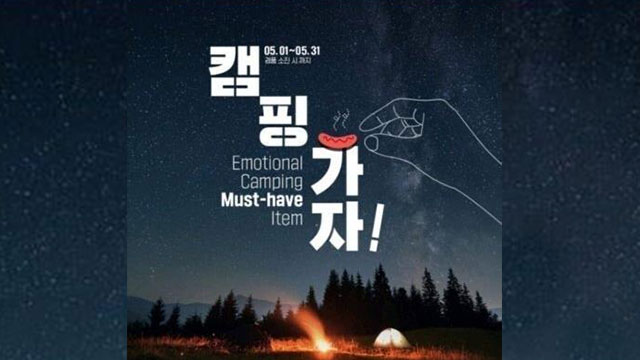
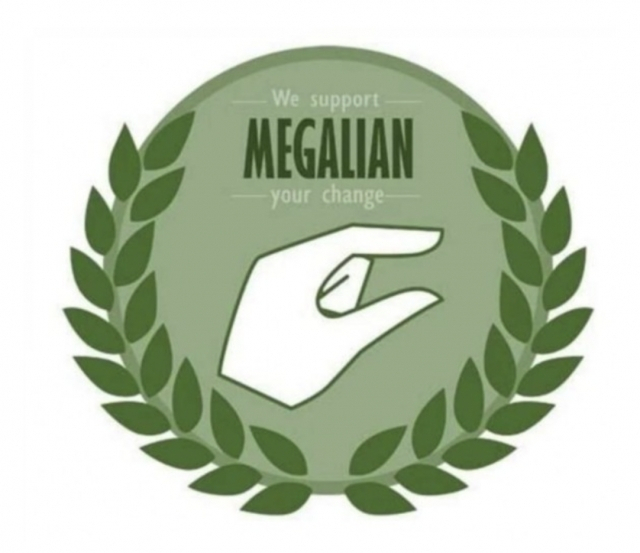
Harmless advertising campaigns, or misandrist attacks? A recent advertisement by GS25, one of South Korea’s biggest convenience store chains, has faced accusations of being anti-male. The problem was the image of a hand picking up a grilled sausage. What’s so bad about that? So-called “men’s rights advocate” accused the depiction of a hand of resembling the gesture of a now-defunct radical feminist community, known as Megalia (메갈리아) that faced accusations of misandry (남혐). The gesture, which involves the index finger and thumb nearly touching one another, was used by Megalia users to “mirror” the objectifying and insulting comments made about women by mocking men’s perceived penis size. According to The Korea Times, other internet users believe that the text on the poster, “can be read as ‘megal’ in Korean if the last letters are read backward.” As a result, GS25 ended up deleting the advertisement and making a public apology, but this did not stop calls to boycott the convenience store. GS25 has not been the only company that was accused of such an offense. Musinsa (무신사), a popular online clothing store, was also accused of employing a commercial that incorporated the “controversial” hand gesture. A webcomic called Romance 101 (바른연애길잡이) has also been accused of misandry, for featuring a character named Hanam (하남), the name of which some critics claim have condescending connotations towards men. Others have pushed back against the idea that big corporations and popular webcomics are allegedly trying to sneak anti-male symbols into their advertisements. Although the so-called “Megalia gesture” has garnered controversy, in most contexts the gesture is benign. It is so common that the Unicode Consortium–the nonprofit that regulates digital text standards–approved the “pinching hand” to be added as an emoji (🤏) in 2019. Feminists in Korea have long disputed claims of widespread misandry, pointing out that gender-based violence, sexual assault, gender ratios of people in positions of power, and pay disparities all negatively affect women.
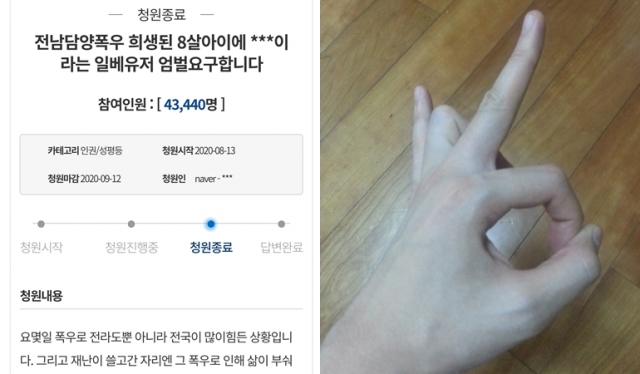
This hand gesture refers to Korean men’s penis size. It primarily targets to disparage men. Similar Controversies in the Past This is not the first time that male internet users accused some advertising campaigns of misandry. Happy Point (해피포인트), a rewards program membership for popular franchise brands like Paris Baguette, Baskin Robbins, and Dunkin’, aired a commercial in 2009 featuring actress Lee Min-jung. In the commercial, she congratulates a man about to begin his mandatory military service by buying him a cake. Some argued that the advertisement appeared to make fun of men being conscripted. However, there was no boycott movement or requests for an apology against the company then. Another similar incident occurred in a Choco Pie (초코파이) advertisement in 2014, in which actress Kim Yu-jeong described that the best occasion to eat a choco pie is in the army. While the premise of the comment is that choco pie is a popular snack in the military, some men were offended by the comment. But this also was not spread into a nationwide controversy. Dark Side of the Internet What made the male internet users be offended by the recent adverts that allegedly contain misandrist content, then? One is the advent of social media. Social media has created a large pool for people to freely share and express their opinions – even problematic, extreme ones. The now-defunct Megalia (메갈리아) and the far-right Ilbe (일간베스트) are often cited as examples of toxic internet culture. While Megalia or its spiritual successor, WOMAD (워마드), only represent a small number of women–let alone self-identified feminists–online communities with right-wing, male-centric bases have vowed to take them on. Members of Ilbe have even created their own offensive gesture (as seen below), which resembles “ㅇ” and “ㅂ,” the first two letters Ilbe (일베). They have also coined terms, such as ottokae ottokae (오또케오또케) to berate women who work in physically demanding positions, such as being a police officer or a firefighter. “Ottokae ottokae” is an adulterated version of the Korean word “ottoke” (어떻게), which means “how?” The implication is that women in these professions are simply unable to handle the responsibilities of certain jobs.
Source: http://news.kmib.co.kr/article/view.asp?arcid=0015009477 While conventional wisdom holds that young people are more socially progressive than their elders, the recent Korean bi-elections throw a monkey wrench in that idea. In those elections, which focused on selecting new mayors in Seoul and Busan, over 72% of young men voted for conservative candidates. This was even higher than male voters aged 60 and up, who are typically a reliable source of conservative support. In 2019, data scientist Cheon Gwan-yul and journalist Jeong Han-wool published Men in 20s (20대 남자). The analysis within the book found that young men were beginning to lean conservative not out of approval for right-wing economic policies or out of an adoration for Korean conservative politicians, but out of abhorrence for feminism. This means that although it may be fun to laugh at accusations that GS25 or BBQ Chicken (Korean link) are disseminating anti-male subliminal messages in their advertisements, the harsh truth is that these silly conspiracy theories are reflective of entrenched opposition to gender equality that has increasingly more political power.
This Week's Recommendations Socialphobia (소셜포비아, 2014) The story focuses on showing the dark side of the Internet community. It starts when an internet user named ID "Lena" writes disparaging comments about a soldier's suicide. In response, male internet users gather in groups to reveal Lena's identity. Upon a visit to her house, they find that Lena had hanged herself. Rather than rescuing Lena, those who found her are in a hurry to erase their malicious comments, which are revealed in real time through live broadcasting. People now corner and blame the male internet users, Ji-woong and Young-min, for malicious comments about Lena. This movie gives you a chance to review the negative effects of the internet community. Check it out on Watcha!
|