Samjin Eomuk, From Refugees’ “Makeshift Meal” to K-Food KOSPI ▲4,911.31 │ KOSDAQ ▲968.36│ KRW/USD▼1,473.58 |
|
|
As of 3:30 p.m. on the previous trading day |
|
|
✴ Korea Development Bank╎Korea Development Bank has launched a capital commitment program for the indirect investment segment of the National Growth Fund and has begun the process to select four GPs to manage the 2026 fiscal master fund. As it expands investment in advanced strategic industries through policy-, technology-, and public-participation master funds, market restructuring is accelerating around large asset managers with AUM exceeding about $686 million (₩1 trillion).
✴ Korea Venture Capital Association╎The Korea Venture Capital Association held the UVICK venture investment competition for graduate students in 2026, allowing participants to conduct company analysis and mock investments like real investment professionals. The winning team will represent Korea at the VCIC finals in the United States in April, receiving full support for prize money and participation costs, helping expand the domestic venture investment talent pool.
✴ IMM Private Equity╎IMM Private Equity formed a blind fund of about $1.37 billion (₩2 trillion) and strengthened its holding company support system to build a fast and precise investment platform. Based on this, it is pursuing both buyout and growth investments even in a high-interest-rate environment, positioning itself beyond a financial investor as a “solution provider.”
✴ Taeyang Metal Industry╎During the second-generation management succession process, the company’s share price fell sharply before and after a stake gift, with market capitalization declining by about 60% from its peak within a year. Combined with large-scale loans to subsidiaries and the absence of shareholder return policies, governance and shareholder value concerns are resurfacing over whether the stock decline may have favored the succession process.
✴ E&F Private Equity╎E&F Private Equity recently achieved an exit by selling portfolio company Koentec to a Hong Kong-based private capital firm, securing justification to move forward with raising its third blind fund. As its reputation recovers after a period of weak exits, LP sentiment toward commitments is gradually improving.
✴ IMBiologics Corp.╎The company passed the KOSDAQ preliminary listing review just three months after its pre-IPO round, entering the IPO track only five years after its establishment. By moving directly into the listing process immediately after the investment, the exit timing for early financial investors such as Atinum Investment and KB Investment has been brought forward, increasing expectations for improved short-term IRRs.
|
|
|
A Fusion Startup Holding the “Golden Key”, Visiting Agencore |
|
|
⭑ The only company in Korea with full-stack tritium licensing
There is one company in Korea that can handle nuclear fusion fuel from start to finish.
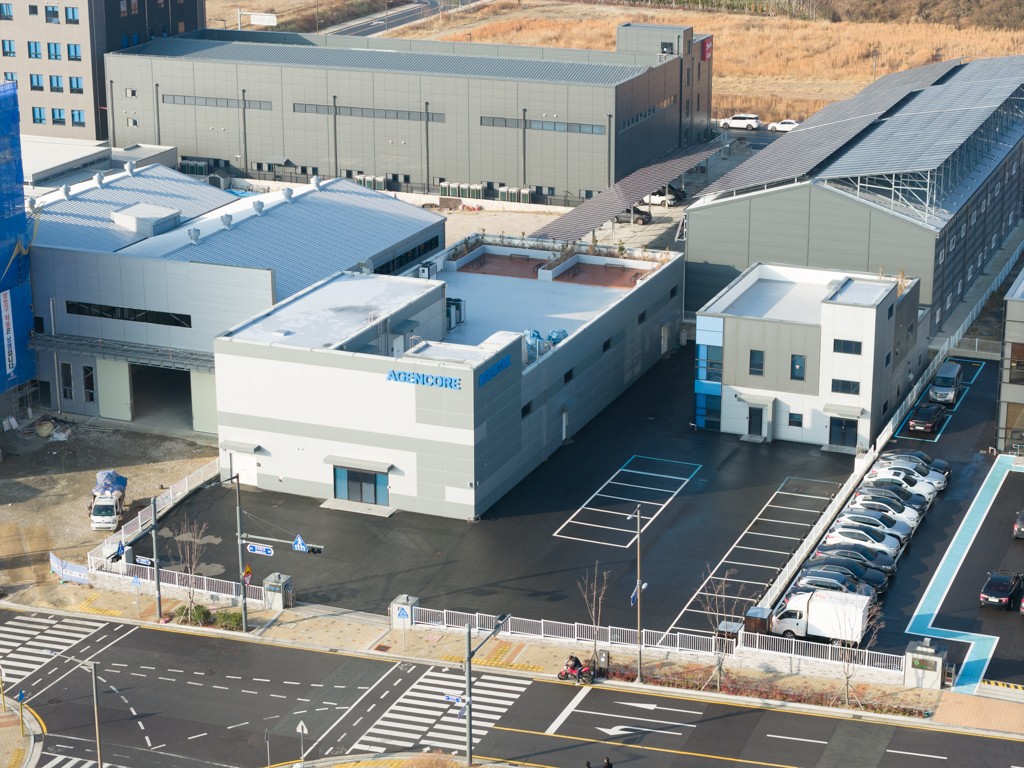
Agencore is a nuclear fusion startup headquartered in Gijang County, Busan. The company has signed a technology transfer agreement with Korea Hydro and Nuclear Power and has secured all required licenses covering the entire process of tritium recovery, transportation, storage, purification, and sales. The industry refers to this as a “full-stack tritium licensing” structure, and Agencore is currently the only company in Korea that meets this condition.
⭑ Tritium, a rare resource produced only at the Wolsong plant
Tritium is an essential fuel material for nuclear fusion reactions. However, the amount that exists naturally on Earth is extremely limited, and most tritium is produced through neutron reactions inside nuclear fission reactors. Not all nuclear power plants produce tritium.
Large-scale tritium generation occurs only at heavy-water reactors such as the Wolsong Nuclear Power Plant. More than 80 percent of nuclear power plants worldwide use light-water reactor systems, which makes the supply of tritium structurally limited. As a result, tritium is known to trade at more than $20,575 per gram (₩30 million per gram, converted at ₩1,458 = $1).
As of the end of 2023, the Wolsong site held approximately 5.7 kilograms of accumulated tritium inventory, accounting for more than 10 percent of global commercial supply.
⭑ Expanding commercialization into storage, transport, and applications
Agencore has localized storage and transport containers that use depleted uranium to store tritium in solid form. These containers are designed to meet the storage and supply system standards of ITER and are used for long-term stable storage and transport of tritium.
The company has also localized GTLS components, which are self-luminous tritium light sources. These components were previously fully imported from the United States and Switzerland. GTLS converts energy generated during beta decay, as tritium transforms into helium-3, into light, enabling illumination for more than 10 years without external power. This allows use in military equipment such as night-vision devices for self-propelled artillery and rifle sights.
At its headquarters, the company has built seven types of testing equipment covering heat, shock, temperature, pressure, vibration, drop, and immersion tests. Its compact sights have passed firing tests of 24,800 rounds. In addition, at its Suwon division, the company is also pursuing a MILES training system business that combines lasers, sensors, and wireless communications in a hybrid configuration.
|
|
|
When energy issues are discussed these days, carbon neutrality and AI-driven power demand are always mentioned. Electricity consumption needs to increase, but there is growing recognition that existing methods alone have limits.
As a result, nuclear fusion is again being called a “dream energy.” Among its components, tritium matters because whether this fuel can be secured in a stable manner is seen as a key factor in making the technology practical. The frequent use of the term “golden key” comes from this context.
Against this backdrop, the relationship between Korea Hydro and Nuclear Power and Agencore is often cited as a case in which the public and private sectors divide roles according to their strengths. One side manages the resource, while the other handles licensing and commercialization.
There are also assessments that Agencore’s technological assets in the tritium field are difficult to replace, and that the localization of GTLS is meaningful in reducing import dependence for defense equipment. The reason the Busan Tech Startup Investment Agency and investors point to growth potential is that, in industries with high regulatory barriers, companies that secure an early position tend to retain their advantage for a long time. |
|
|
Samjin Eomuk, From Refugees’ “Makeshift Meal” to K-Food |
|
|
⭑ Samjin Eomuk, From Refugee Food to K-Food
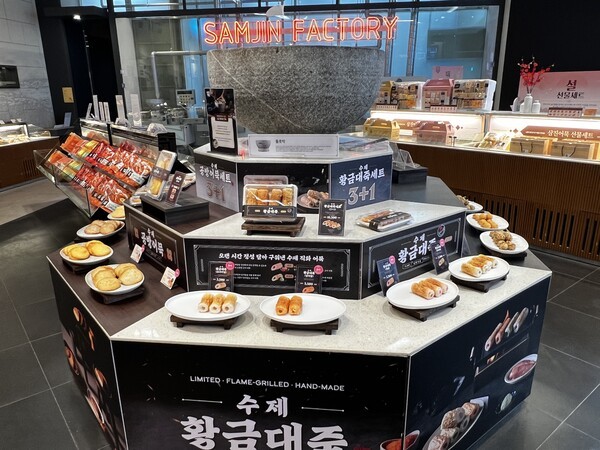
Now called a premium snack, Samjin Eomuk began in a time of desperation.
In 1953, right after the Korean War, Yeongdo in Busan was crowded with refugees from across the country, and even securing one meal a day was difficult.
At that time, the late founder Park Jae-deok opened a small fish cake processing shop in Yeongdo Market.
His experience learning fish cake manufacturing techniques after being taken to Japan during the Japanese colonial period became the starting point. Fish cake was cheap and filling, and for refugees it was literally a food for survival.
⭑ Fish Cake Going Global as K-Food
From its early days, Samjin Eomuk had relatively clear operating standards. Park placed the highest priority on ingredient selection and maintained the principle that food meant for people should never be made with deceptive ingredients.
In the period right after the war, securing production volume was often considered more important than cost control. Increasing the proportion of flour or using leftover ingredients was common. Park chose a different approach, personally checking the condition of the fish used as the core ingredient.
Fish preparation and mixing were largely done by hand, and cooking processes such as steaming, frying, and grilling were operated separately depending on use. The structure focused on maintaining consistent quality rather than efficiency. While this did not speed up production, it helped reduce differences in taste and texture between products.
This approach became a distinguishing factor for Samjin Eomuk in Yeongdo Market and the Busan area. It came to be recognized as a fish cake producer that prioritized consistent quality over mass production, forming the foundation for growth based on trust from partners and consumers.
Ultimately, the principle of using good ingredients became embedded in Samjin Eomuk’s production methods and operating philosophy, later forming the basis of brand trust. This standard has been maintained through corporatization and generational transitions and remains a key part of the brand’s identity.
⭑ From Refugee Food to a Global Snack
Recently, K-food exports have expanded beyond kimchi and instant noodles to include regional and street foods. In this process, fish cake is being reviewed as a new export item. Its simple preparation and protein-based processed food characteristics make it relatively easy to adapt for overseas markets as a snack or ready-to-cook product. In fact, consumption of fish cake as a snack or convenience food is increasing, especially in Asian markets.
Samjin Eomuk began in local markets in Busan and entered overseas distribution channels through product premiumization and brand restructuring. The ingredient control standards and manufacturing methods maintained since its early days are also used as the basis for explaining quality in export markets.
As fish cake, once consumed as refugee food, is restructured into a processed food product, it is now distributed overseas as a snack category. Samjin Eomuk’s case can be seen as an example of how a regional food can expand into the global market through manufacturing standards and brand development.
|
|
|
🫨Shaky Cash Flow╎Daejin Advanced Materials Under Pressure
The company’s recent cash flow looks unstable. Less than a year after listing, it issued convertible bonds, borrowed funds, and carried out a third-party allocation capital increase. The concern is that, amid weak performance, the funds raised may be used to repay existing CBs rather than for new investment or growth. If the structure appears to rely on new financing to cover old obligations rather than earnings-based repayment, shareholders have little choice but to worry about dilution and financial stability. |
|
|
🤼♂️A Rivalry Neither Can Back Away From╎Daewoo E&C vs Lotte E&C
The two companies are set to face off again over the Seongsu District 4 redevelopment. It is their first clash in nearly three years since Hannam District 2, and the stakes appear higher. With recent performance weak at both firms, this project is seen as a decisive test of whether either can engineer a turnaround in prime Seoul locations, with implications for annual redevelopment results and market standing. |
|
|
💸Issuing Again?╎Meritz Financial Group’s Perpetual Bonds
Meritz Financial Group has issued perpetual bonds again. The deal starts at $61.7 million (₩90 billion) and could be expanded to $137.2 million (₩200 billion) if demand is strong. With its double leverage ratio higher than the industry average, the company needed instruments recognized as capital. While helpful in managing ratios, the market reaction includes skepticism over another issuance within just four months.
|
|
|
💰That Money Is Not Yours╎Shinsegae Property’s Strong Warning
Tensions have risen over the sale of Centerfield. Shinsegae Property publicly challenged Igis Asset Management’s push to proceed with the sale, arguing it violates investor protection principles. As a key investor holding about 50%, it signaled potential GP replacement and legal action, marking a phase of directly questioning the asset manager’s responsibility rather than a simple difference of opinion. |
|
|
💥StoryTriggered by FADU╎Trouble for the Tech-Special Listing Track
Companies listed under the technology-special track are now under real scrutiny. Financial authorities found that 94% failed to meet performance commitments over the past three years. Cases like FADU have shaken confidence in the system, while the Korea Exchange is tightening market cap and revenue requirements. The era of relying on technical explanations alone is over, and a restructuring phase driven by hard numbers is beginning. |
|
|
🧑🏻🦲Finally a hair loss treatment?╎Hair loss drug JW0061 secures U.S. patent
JW Pharmaceutical has completed U.S. composition-of-matter patent registration for its hair loss treatment candidate JW0061, securing exclusivity through 2039. With a first-in-class mechanism that directly targets the GFRA1 receptor, it is seen as a technology differentiation strategy in the global hair loss treatment market. In preclinical studies, the drug demonstrated superior hair follicle formation and growth efficacy compared with standard treatments, providing justification for entering clinical trials. |
|
|
A $105.6 Billion Chinese Cosmetics Market, Reopening? |
|
|
President Lee Jae-myung held a summit with President Xi Jinping on January 5 and presented a Korean beauty device to Peng Liyuan. With K-beauty used as a state gift during the first state visit in nine years, industry expectations are rising.
As of 2024, China’s cosmetics market is valued at about $105.6 billion (₩154 trillion), the world’s second largest. After K-beauty lost momentum following restrictions, the market share of local Chinese brands rose from 55.7% in 2024 to 67% in 2025.
Brand Demand Recovery and Rising Manufacturing Orders
Two changes are appearing in the Chinese market. Amorepacific’s overseas sales in the third quarter of 2025 grew 3% year on year, with a return to profitability in Greater China. In October 2025 on Tmall, Jung Saem Mool, Sulwhasoo, and Laneige posted growth of 300%, 300%, and 100%, confirming a recovery in premium K-beauty demand.
At the same time, manufacturing orders for C-beauty are increasing. CNC International’s Shanghai unit secured 84% of its annual target in the first quarter of 2025, and second-quarter sales hit a record high.
CNC International Expands China and Korea Plants
CNC International is responding to recovering Chinese demand. The Shanghai plant achieved a 100% on-time delivery rate through R&D investment and capacity expansion, while advancing packaging automation and cost reductions. In Korea, the company plans to build a new plant in Cheongju in 2026, six times larger than the existing facility, expanding annual capacity from 450 million units to more than 1.45 billion units.
However, some in the industry remain cautious, citing uncertainty in the Chinese market and questions over the broader recovery of K-culture.
|
|
|
Easy to enter, but not easy to exit fund? |
|
|
✴ Fiscal Master Fund
The official term is a closed-end collective investment scheme. It accepts capital only during a fixed subscription period at the outset, and once that period ends, the fund is closed. New investors cannot join later, and existing investors are, in principle, not allowed to withdraw their capital mid-term. In limited cases, such as off-market stake transfers or special contractual arrangements, exits may be possible, but these are highly restricted.
In contrast, ordinary funds allow subscriptions and redemptions at any time. A fiscal master fund locks in capital for a fixed period once investors commit.
Why is it structured this way?
This is not for inconvenience, but out of necessity.
For example, suppose a real estate fund raises about $6.9 million (₩10 billion) to purchase a building. If, a year later, some investors suddenly ask to withdraw their money for personal reasons, the fund would have to return capital even though the building has not been sold. This could force a rushed sale at a low price or disrupt the original plan to operate the property and collect rental income.
The same applies to infrastructure projects. Building roads or power plants takes several years. If investors try to exit midway through construction, funding gaps can arise, potentially halting the project.
The fiscal master fund structure is essentially an agreement from the start that the committed capital will stay in place for the entire project period. While investors give up liquidity, the trade-off is stable project execution and, ultimately, a more reliable return. Locking in capital is necessary for both sides to benefit. |
|
|
Send us any suggestions you’d like to share while reading Bitter’s newsletter! |
|
|
Advertising, inquiries : viter@thevistapartners.com / Published by Newstop. Unsubscribe |
|
|
|
|