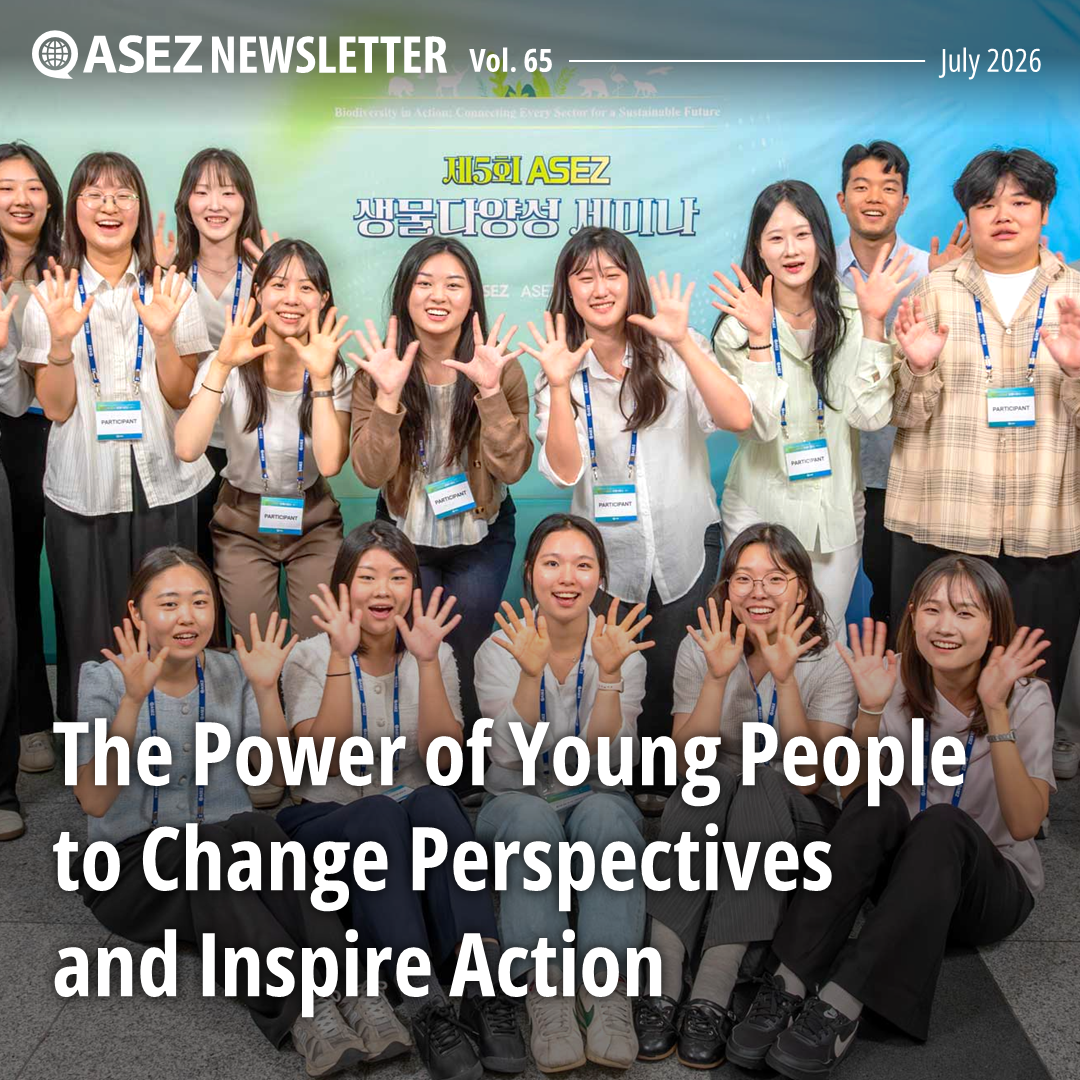
“Environmental action is deeply rewarding because it is not about seeking personal benefit, but about working for the well-being of everything around us. In the end, it benefits us as well. I learned a great deal from ASEZ and was deeply inspired by its messages, ‘When young people take action, the planet changes’ and ‘Small changes can change the world.’ I will continue to support ASEZ and its efforts.”
- Yoo Yeon-chul, Secretary-General of the UN Global Compact Network Korea
|
|
|
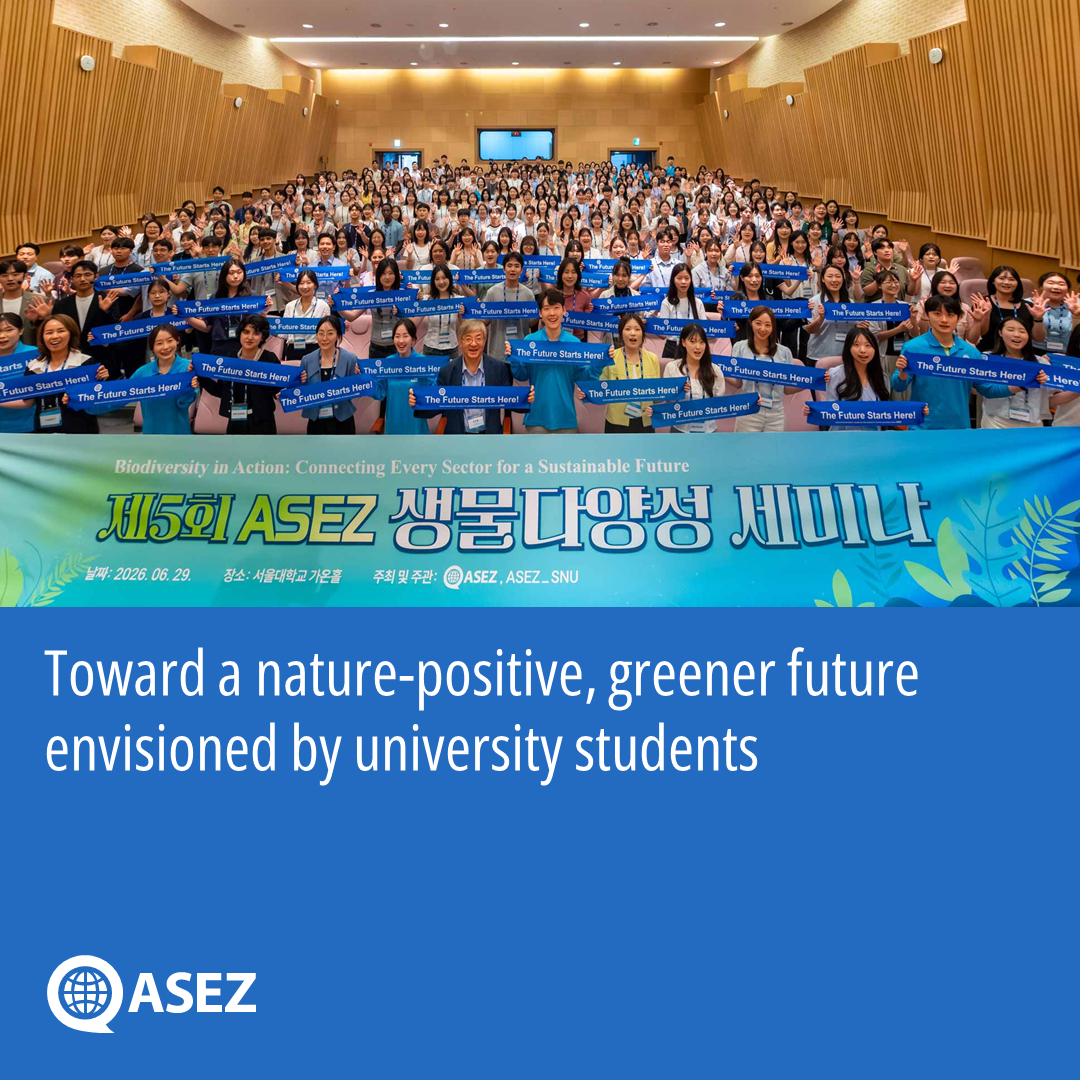
Fifth Biodiversity Seminar Held at Seoul National University: University Students Advancing a Nature-Positive Future
|
|
|
On June 29, ASEZ held the Fifth ASEZ Biodiversity Seminar at Gaon Hall, Seoul National University. Marking its fifth year, the seminar brought together approximately 300 professors and university students from institutions including Seoul National University, Korea University, Jeonbuk National University, the University of Utah Asia Campus, and the City University of New York, as well as representatives of international organizations. Participants explored the role university students can play in biodiversity conservation and discussed practical ways to take action. The ASEZ Biodiversity Seminar has served as a platform for connecting the international community’s environmental agenda with action at universities and in local communities. It has also examined ways for young people to become active participants in ecosystem conservation. This year’s seminar sought to deepen understanding of the biodiversity crisis and review international and national efforts to restore nature, while focusing on how university students can translate these goals into action on their campuses and in their communities. |
|
|
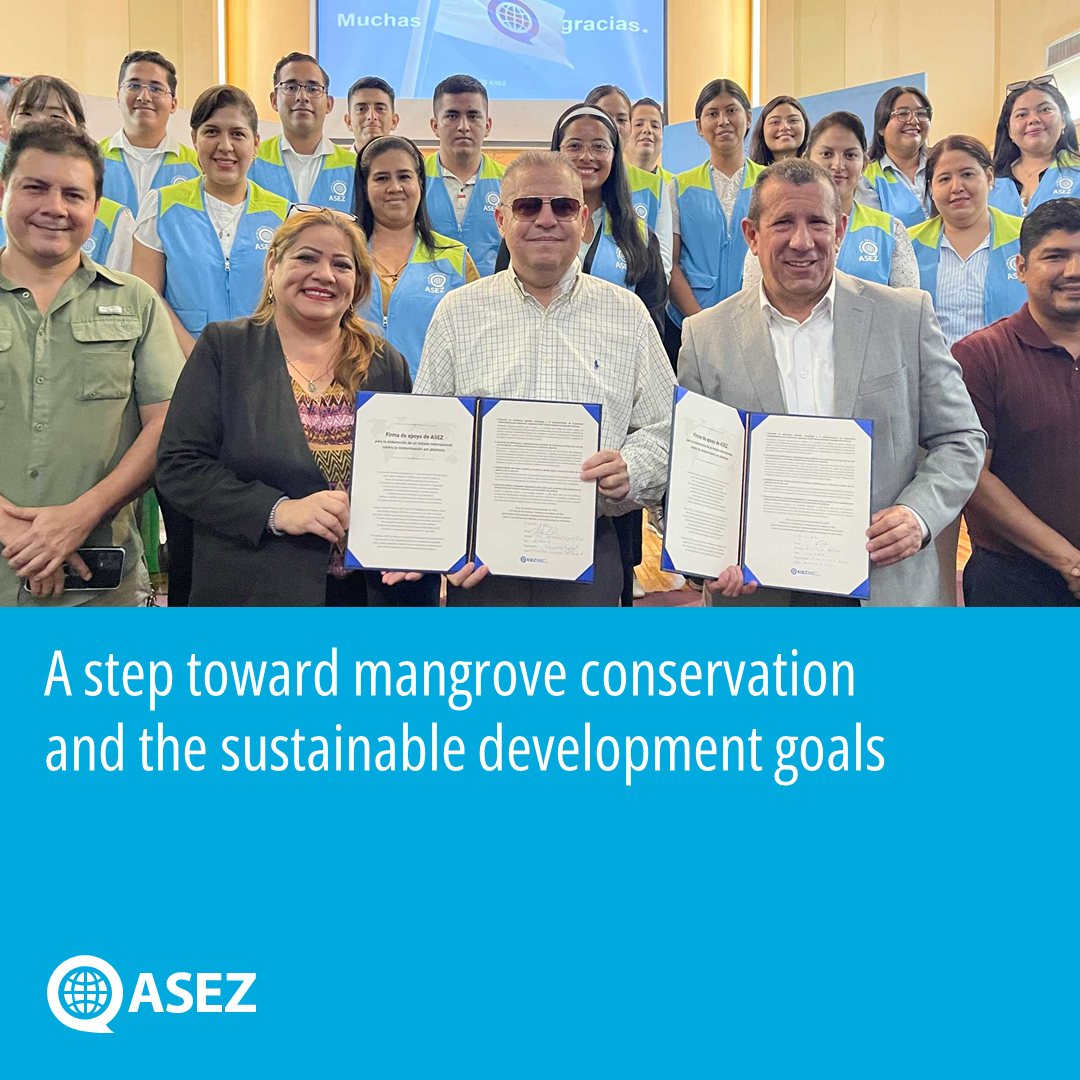
From Seminar to Action: ASEZ and the University of Guayaquil Clean Up the Estero Salado Waterway
|
|
|
On June 22, ASEZ held an environmental seminar at the University of Guayaquil in Guayaquil, Guayas Province, Ecuador, as part of its Blue Carbon Initiative campaign. The seminar was organized to introduce ASEZ’s various international social contribution activities, raise awareness of the value of blue carbon ecosystems and the importance of conserving them, and provide members of the university community with an opportunity to participate in efforts to achieve the Sustainable Development Goals (SDGs). Guayaquil is located at the estuary where the Guayas River meets the Pacific Ocean. The city has an extensive network of brackish waterways known as the Estero Salado. The area provides a suitable natural environment for mangrove forests, and the Estero Salado plays an important role in maintaining the local ecosystem and water quality.
|
|
|
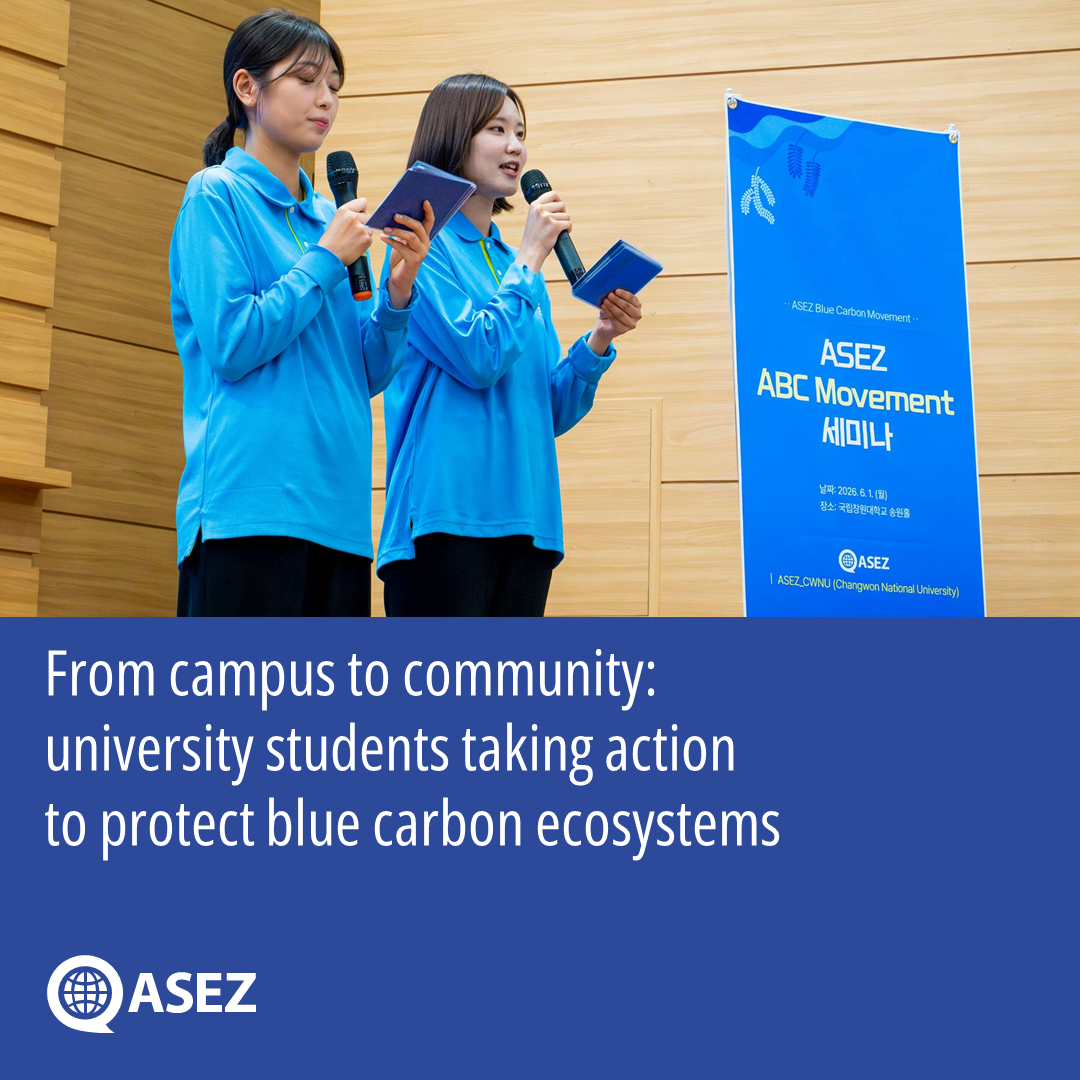
ASEZ ABC Movement Seminar in Uichang, Changwon: Taking the First Step Toward Blue Carbon Conservation
|
|
|
On June 1, ASEZ held the “ASEZ ABC Movement Seminar” at Songwon Hall of Changwon National University, located in Uichang District, Changwon Special City. The event was organized to help university students—the leaders of future generations—understand the climate crisis and the importance of blue carbon ecosystems, and to encourage them to participate in efforts toward carbon neutrality and ecosystem restoration. ABC Movement stands for “ASEZ Blue Carbon Movement,” an environmental initiative led by ASEZ to raise awareness of the value of blue carbon—carbon absorbed and stored by marine and coastal ecosystems—and to protect these vital ecosystems. The movement aims to connect everyday action with carbon neutrality and ecosystem restoration by encouraging university students to reduce plastic pollution on campuses and in local communities and to take part in blue carbon conservation activities.
|
|
|
Biodiversity and Nature Positive |
|
|
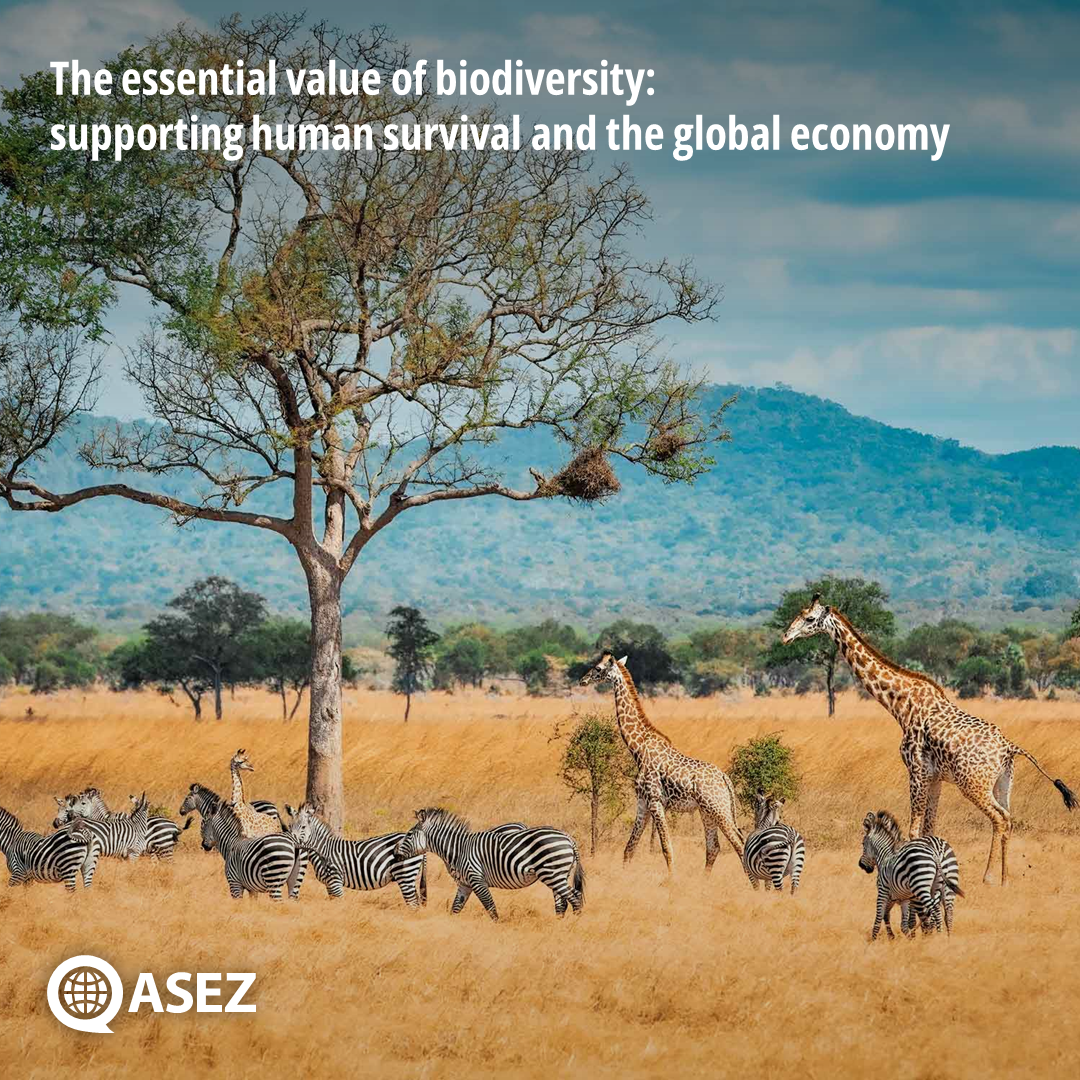
We often think of humanity as the master of nature. We believe that we are capable of building cities, developing natural resources, and managing ecosystems according to our needs. In reality, however, human survival itself depends on the benefits provided by the vast system of nature’s ecosystems. This is why numerous ecologists regard biodiversity as an essential element directly linked to human survival. According to an analysis by PwC, a global accounting and consulting firm, 55 percent of global GDP—equivalent to approximately USD 58 trillion—is moderately or highly dependent on nature. Protecting biodiversity, therefore, is not simply a matter of preserving plants and animals. It is a crucial factor that affects the entire global economy. When biodiversity is destabilized, everything built upon it is inevitably destabilized as well. |
|
|
This mail is sent to our special supporters.
asez@asez.org50, Sunae-ro, Bundang-gu, Seongnam-si, Gyeonggi-do, Rep. of Korea
|
|
|
|