Preparatory Issue 5 January 2022 Almost a month has passed, I hope you have spent January planning and generating energy for the coming year. The International Strategy Center is also spending January reviewing last year, and contemplating and discussing plans to make this one even better. The pandemic is not over; the climate crisis rages on; and capitalism continues inflicting suffering to countless around the world. When standing in front of a seemingly insurmountable wall, from whence do we draw our energy for 2022? These days, from morning to evening, the news reports misfortunes and infuriating news. From where does change start? The answer lies within and around us. Although not often reported on the news, there are those in Korea and around the world relentlessly fighting climate crises, inequality, discrimination, and injustice. They wage long-term struggles: winning, gathering energy for new struggles, and continuing. In Korea, LG Twin Tower cleaning workers began a full-scale strike in Dec. 2020 against mass layoffs and won after a 136-day fight. The workers continued struggling despite the company's inducements of money and gifts to leave the union as well as accusations and threats through corporate law firms. In New Delhi, India, hundreds of thousands of farmers and agricultural workers protested for a year against Prime Minister Modi's government's privatization of the agricultural sector and abolition of government protection measures in the name of efficiency. From Shanghai to Tbilisi, from Mexico City to Taiwan, workers continued fighting against the exploitation of the pandemic-deepened "gig economy" and for the right to form trade unions. 80,000 delivery workers protested in Taiwan against their companies intransparent new salary calculations. In Georgia's capital, Tbilisi, despite being denied collective action as private individual businesses, delivery workers collectively turned off their apps in protest. As such, in Korea and around the world, people continued marching forward in their struggles. It is from struggles like these that we find the energy to vigorously start 2022: we aren’t fighting alone, and history is written by all those of us that fight seemingly unbeatable capitalist titans and do so relentlessly until we achieve victory. The struggle to win for our peoples around the world continues even now. This year, the ISC is planning to engage in more activities to discover, research, and share the world's progressive experiments, movements, policies, and theories that can inspire us to move forward. We will also continue to spread news of Korea's struggles and victories throughout the world. The potential for victory resides inside each of us. So, we continue creating spaces to build power together. Let’s make more wins in 2022!
Charting the Future of Korean Social Housing: Insights from the Dutch Example
Hong Seunghyun (Economic Policy Team)
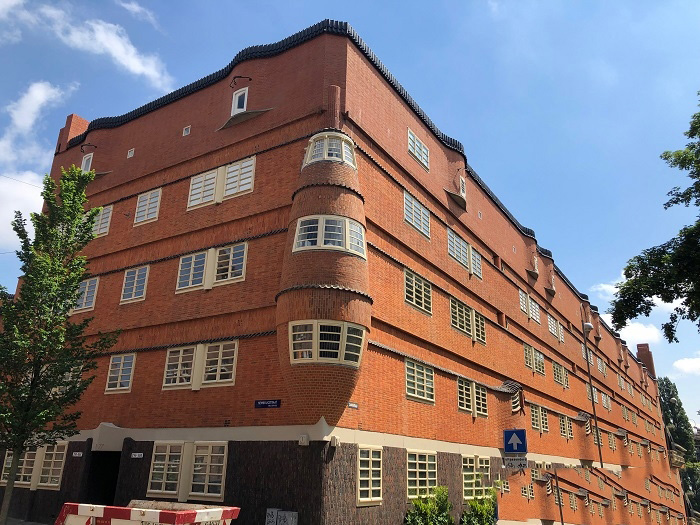
Dutch social housing (Source: Bizwatch) Let us examine social housing in Korea. The Korean Social Housing Association was founded in 2015, and has supplied 4,389 (3,316 in Seoul, 883 in Gyeonggi-province) housing units in the Seoul metropolitan area as well as the Jeollabuk-do province, and the city of Busan. With cooperatives, schools, small and medium enterprises and non-profit organizations participating, the Association provides social housing appropriate to Korea’s conditions (revitalizing empty homes, collective housing etc.). However, still in its nascent stage, it is financially dependent on local government funding, thus leading to a very low supply. The current data casts doubt over the future sustainability of the Association, and a new direction of improvement must be sought. How Dutch Social Housing Reached Such a High Distribution The Netherlands’ social housing started in the 19th century to solve the housing crisis of urban workers. Through the World Wars, the urban housing shortage worsened, and the government supported the establishment of cooperatives to provide workers with social housing. However, unlike Korean public housing, which is limited to low-income households, Dutch social housing was universal, available to everyone. In addition, the Netherlands’ social housing is operated not by the government but by housing associations (80% non-profit, 20% for-profit). Currently, the Netherlands has 2.25 million units of social housing. And in its capital, Amsterdam, nine housing associations under the Amsterdam Federation of Housing Associations own and operate 190,000 housing units.
Meanwhile, in mid-2021, twenty-six research institutes from around the world began to meet and discuss the production of a draft programme to address the current crisis. Under the leadership of the Bolivarian Alliance for the Peoples of Our America – Peoples’ Trade Treaty (ALBA-TCP), our meetings produced a document called A Plan to Save the Planet. That plan is published in this dossier. It is intended for discussion and debate. One of the key points of differentiation between A Plan to Save the Planet and the various documents for ‘inclusive capitalism’ is that we do not believe that capitalism is a system that can benefit humankind – no matter the rebranding – and we do not believe that the dilemma facing us can be chalked up to a ‘coronavirus crisis’. Instead, we argue that we are facing a crisis of capitalism in general, a crisis that can only be overcome by a change in course towards a system designed around the needs of the working class and the peasantry and the requirements of a sustainable natural world. The bulk of this dossier will lay out our orientation, principles, and horizon. This introduction examines the arguments for ‘inclusive capitalism’ and reveals how – at the end of the day – they obsessively seek to distract attention from the failures of capitalism and blame China for all of capitalism’s ills.
[ January Progressive Forum] Will Neoliberalism's Birthplace be its Grave?
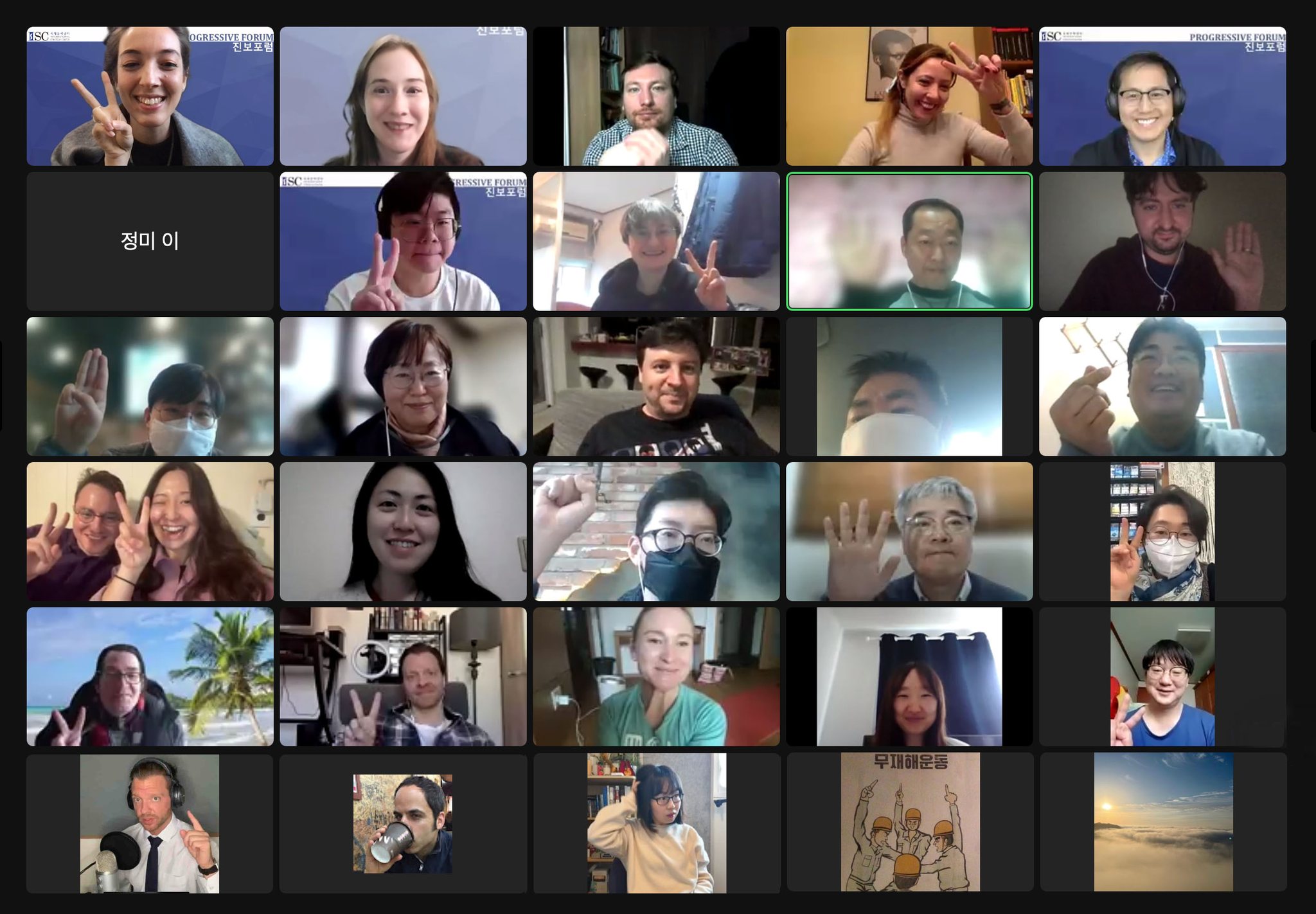
From 2011 to 2013, Chile was rocked by student protests demanding greater access to education. In 2019, protests against corruption, privatization, and social inequality prompted a referendum in which 78% of voters approved rewriting the Pinochet era Constitution. In Dec. 2021, former student leader Gabriel Boric, who on the campaign trail announced that "if Chile was the cradel of neoliberalism, it will also be its grave," was elected president with 56% of the vote. We are Honored to have on our Jan. Progressive Forum journalist and organizer Taroa Zúñiga Silva & Deputy Vice-President of the Constituent Assembly Bárabara Sepúlveda Hales (prerecorded) talk about #BoricPresidenteDeChile and the need to move with the people.
Web Site : www.goisc.org E-mail : iscenter2015@gmail.com 2F, 2 Dosin-ro 47-gil, Yeongdeungpo-gu, Seoul International Strategy Center Unsubscribe     |