Climatus College U-SAVERS Asks Citizens to Set Priorities for Climate Adaptation Policy |
|
|
Climate adaptation begins with the experiences of people who feel local climate risks most directly. Heat waves, flooding, transportation, housing, and changes in marine ecosystems affect every city differently, making it essential to understand which policies residents consider most urgent.
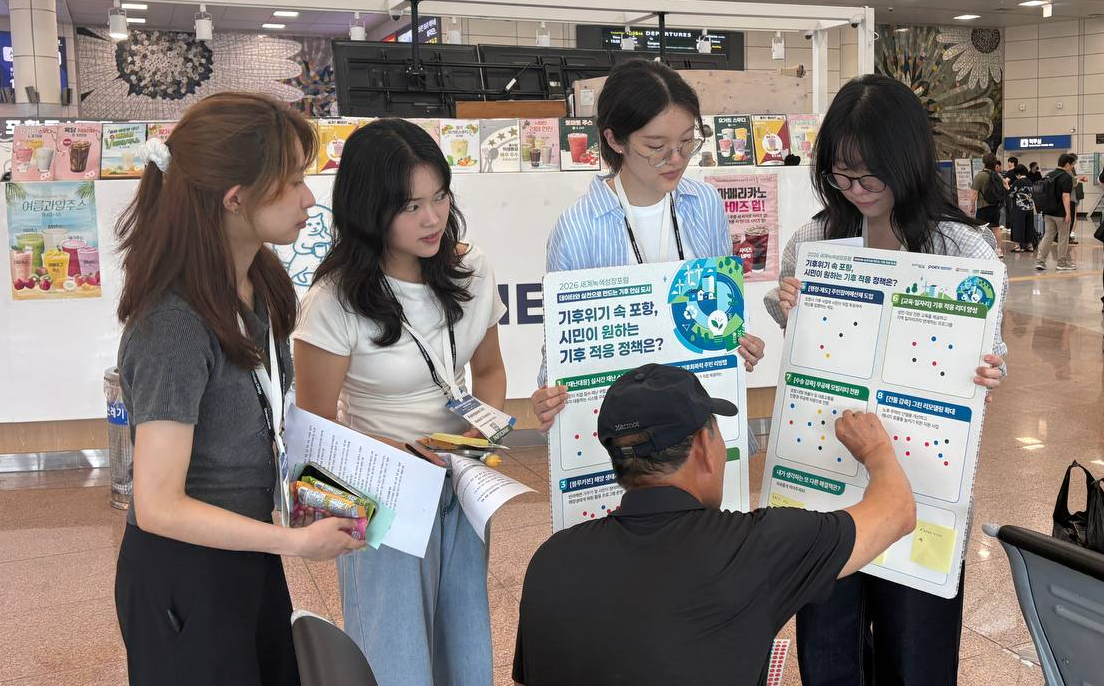
At WGGF 2026 in Pohang, the 19th cohort of U-SAVERS, the Climate Change Center’s university student climate action group, conducted an on-site poll titled “Climate Adaptation Policies Citizens Want.” At Pohang Station and the forum venue, the students introduced eight policy options in accessible language—including disaster response, marine ecosystem restoration, climate adaptation education and jobs, and zero-emission transportation—and listened to citizens explain which measures Pohang needs most and why.
A total of 198 people participated. Blue carbon and marine ecosystem restoration received the most votes, followed by climate adaptation leadership training, real-time smart disaster mapping, and the transition to zero-emission mobility. The results showed that citizens view climate adaptation not simply as preparation for disasters, but as a broader agenda that must shape the future of Pohang’s ocean, jobs, transportation system, and industries.
The findings were presented the following day during the Climate Change Center’s session, “Data and Action for a Climate-Safe City,” and used to inform discussions on the priorities and policy direction of Pohang’s climate adaptation safety net. The initiative was particularly meaningful because citizens directly identified the policies they needed, while young climate advocates brought those voices into a public policy forum. Explore how U-SAVERS 19 worked with local residents to identify practical climate solutions rooted in lived experience. |
|
|
Policy Field RE:VIEW Turning National Climate Adaptation Strategy into Local Action |
|
|
Climate adaptation is no longer a secondary response to climate change. As extreme heat, flooding, sea-level rise, and growing risks to cities and industries intensify, adaptation has become essential to public safety and long-term resilience.
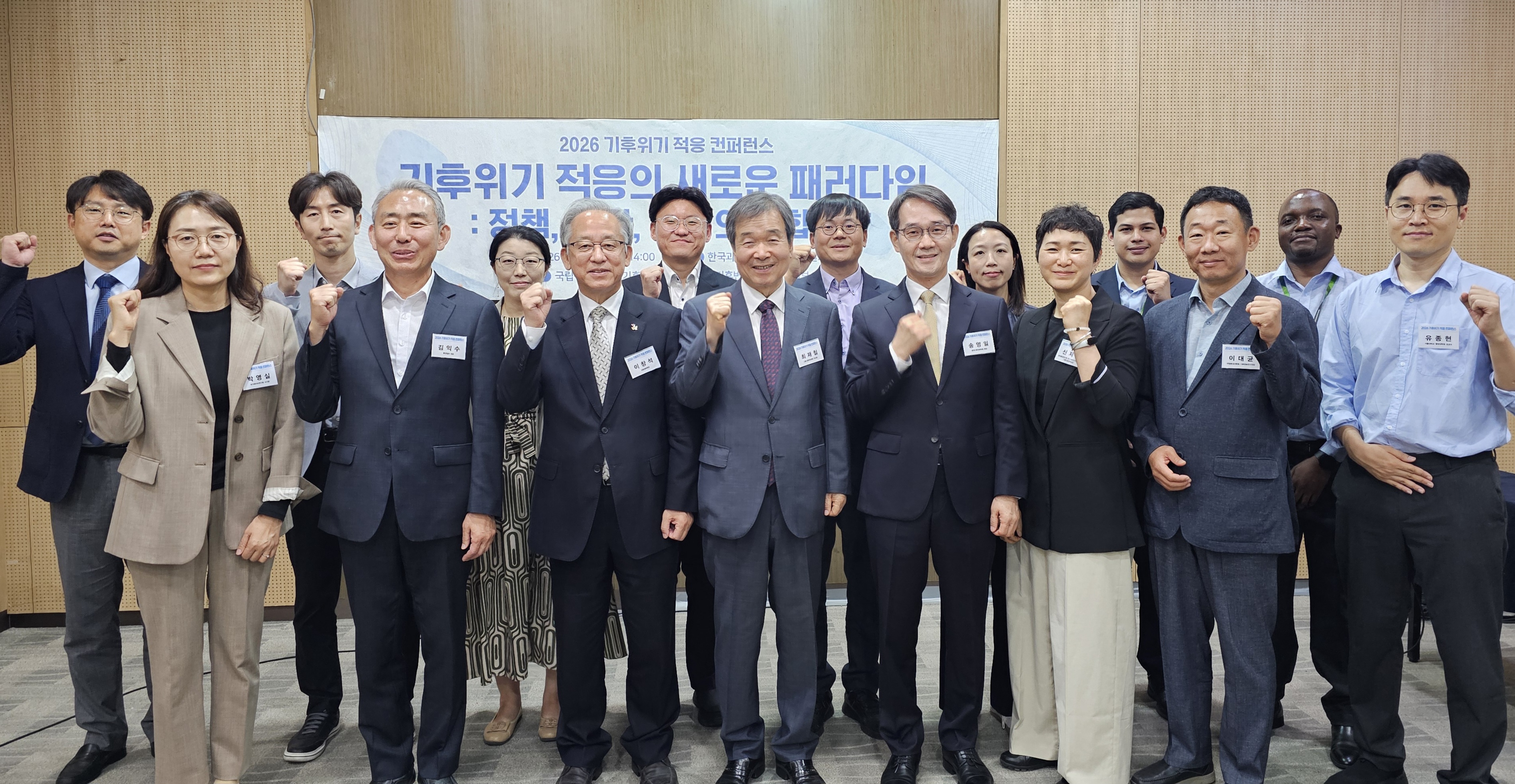
To advance this agenda, Climate Change Center convened the 2026 Climate Adaptation Conference in June and organized the session “Building Climate-Resilient Cities through Data and Action” at the World Green Growth Forum 2026 in Pohang, Korea’s leading steel industry city, in July.
The discussions highlighted one central message: national laws, standards, data, and financing must connect with local knowledge, technology, citizen participation, and industry cooperation.
Climate Change Center will continue bridging national policy and local action to develop practical, locally tailored adaptation models and strengthen Korea’s climate resilience.
|
|
|
Carbon Market Brief As the Blue Carbon Market Expands, Credit Value Will Depend on Verification Capacity |
|
|
Blue carbon is gaining attention in the voluntary carbon market, or VCM, as a trusted source of high-quality carbon credits. Coastal ecosystem restoration projects, including mangrove restoration, are valued not only for carbon sequestration but also for delivering broader benefits such as biodiversity conservation, coastal protection, and support for local communities. Some market analysts expect the blue carbon market to maintain steady growth through 2035.
The market, however, is no longer assessing projects on the basis of emissions reductions alone. Verra's methodologies are increasingly used to verify co-benefits such as biodiversity, while the Core Carbon Principles, or CCPs, set by the Integrity Council for the Voluntary Carbon Market, or ICVCM, are raising the bar for transparency across the market. As both standards grow more rigorous, demand is rising for high-quality credits that can objectively demonstrate benefits beyond carbon. At the same time, the supply of projects capable of meeting these standards remains limited, increasing the competitive advantage of well-validated projects.
This shift is also making robust measurement, reporting, and verification, or MRV, increasingly important. Because blue carbon ecosystems are highly influenced by tidal patterns, sediment movement, and other natural conditions, projects must be able to continuously measure and verify both carbon outcomes and ecological change in order to build market confidence. Going forward, the ability to demonstrate results transparently through satellite monitoring and digital MRV systems is likely to become a decisive factor in determining both the competitiveness of blue carbon projects and the value of the credits they generate.
|
|
|
🍀Be part of our journey!
Even a small gesture can help create a healthier planet.
Donation Account : Woori Bank 1005-901-949649
Account Holder : Climate Change Center
|
|
|
Climate Change Center
T. 02-766-4351 | E. info@climatechangecenter.kr
Address : No. 306, Bldg 1, 22, Teheran-ro 7-gil, Gangnam-gu, Seoul, Korea, 06130
|
|
|
|
|