Climatus College U-SAVERS Joins the Youth Climate Impact Alliance, Highlighting the Importance of Youth Collaboration and Collective Action |
|
|
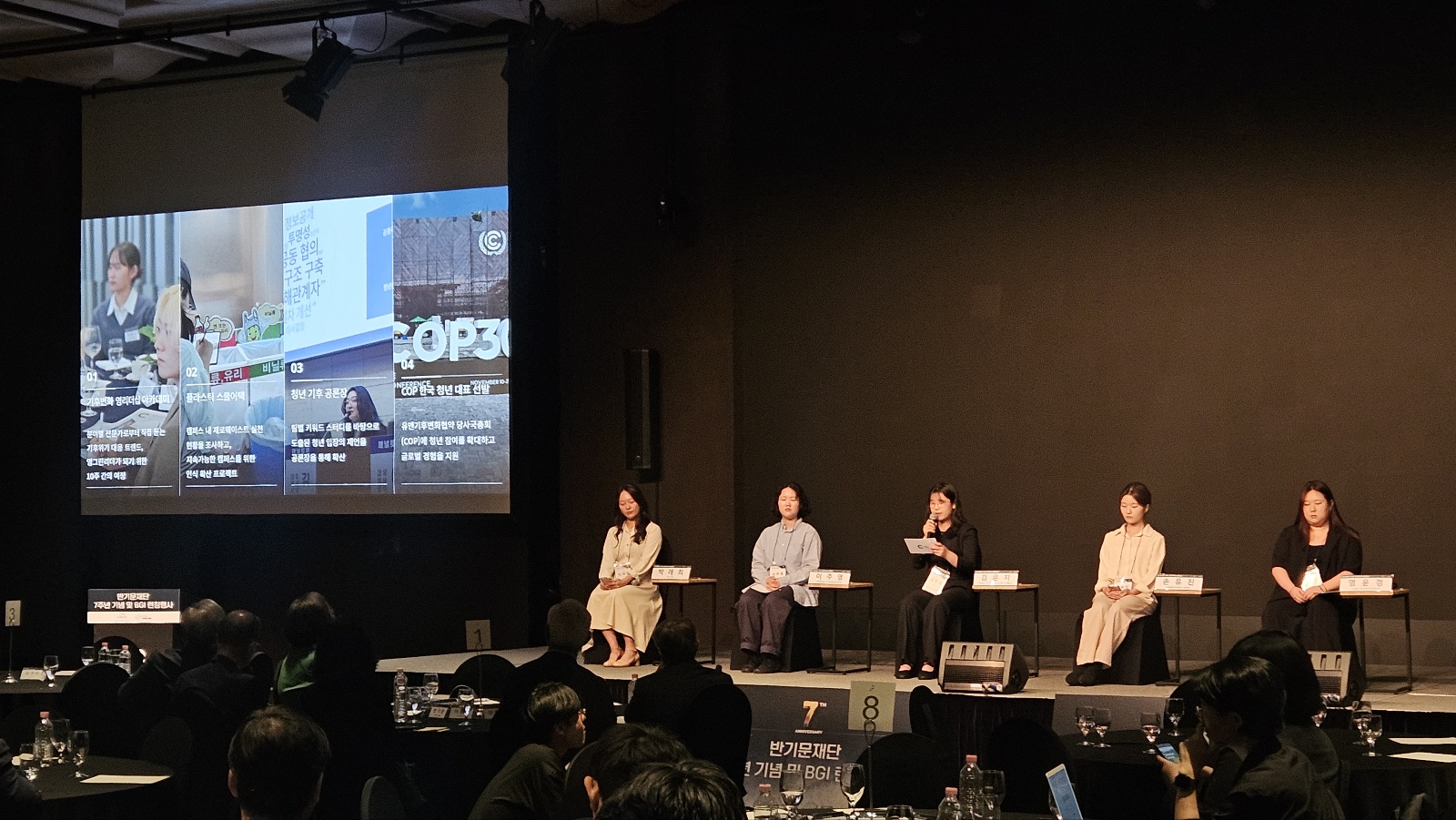
On May 7, U-SAVERS, the university student climate action group operated by the Climate Change Center, took part in the “Youth Climate Impact Alliance” session, where young leaders and organizations came together to discuss the value of collaboration and collective engagement in addressing the climate crisis. The session was held as part of the launch event for the Ban Ki-moon Global Impact (BGI) platform, organized in celebration of the Ban Ki-moon Foundation’s 7th anniversary. Designed as a space for dialogue, the program explored how youth-driven climate initiatives can connect with policy, international cooperation, and broader social action. The gathering also underscored the growing role of youth voices in shaping public discourse and building practical networks for collective impact.
During the session, U-SAVERS introduced its experiences engaging young people in climate issues through learning programs, campaigns, and everyday action-based initiatives. Emphasizing the importance of exploring climate challenges firsthand and translating awareness into action, the group shared how youth participation can evolve into meaningful, long-term engagement. Members also delivered a vision statement reading, “We lead the transition of the future,” highlighting the role of young generations in an era shaped by AI, energy transition, and rapid social change.
The session brought together a range of youth climate organizations, including GEYK, GYCC, and Our Future. Discussions focused on how the BGI platform can help connect youth groups, institutions, businesses, and the international community, while expanding opportunities for collaboration among young climate leaders. Through platforms such as Climatus College and U-SAVERS, the Climate Change Center will continue working to broaden pathways for youth engagement and strengthen networks that support collective climate action. |
|
|
Policy Field RE:VIEW Korea’s 12th Electricity Plan: Progress and Remaining Challenges |
|
|
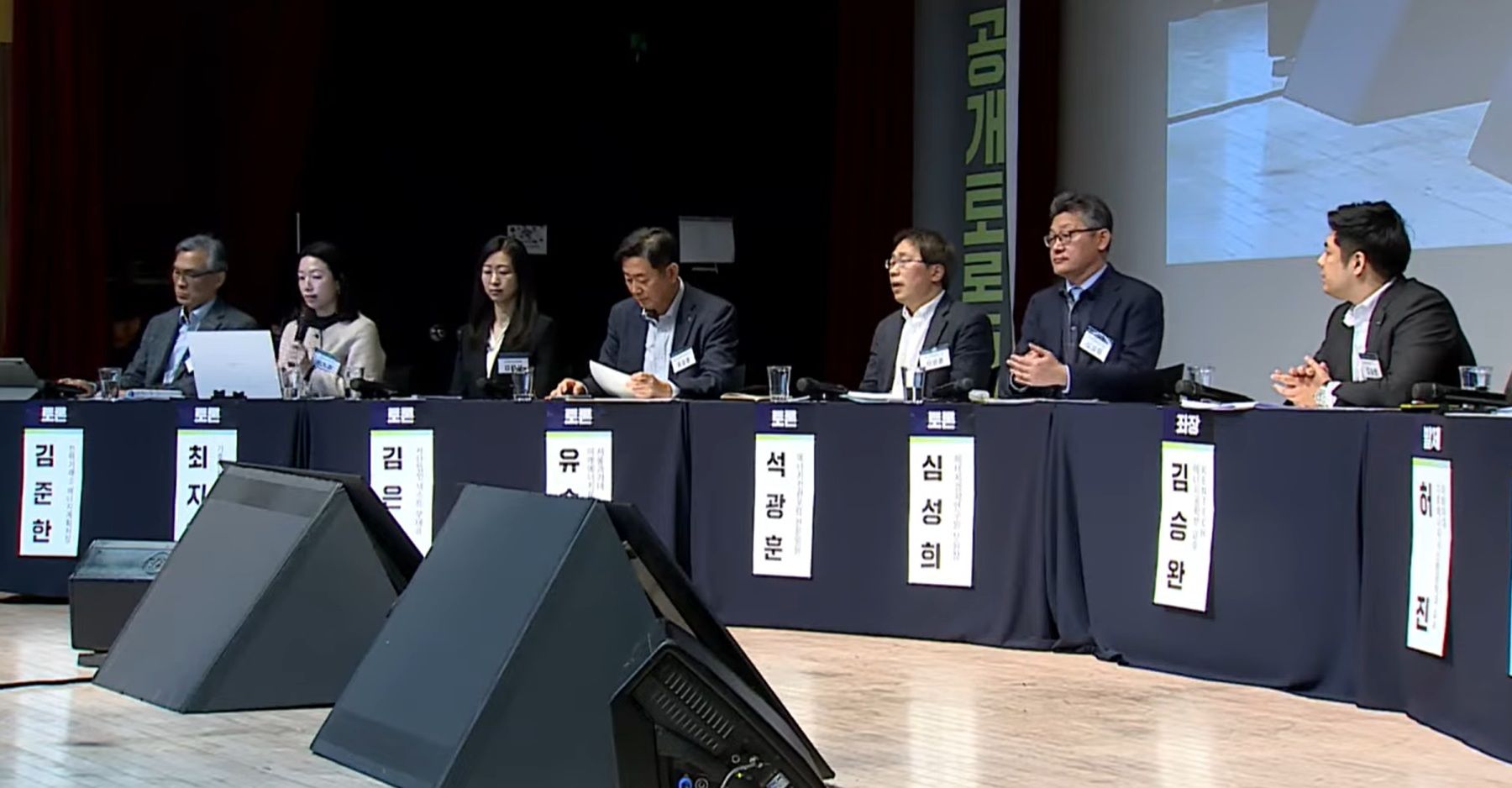
At the public forum on electricity demand projections for Korea’s 12th Basic Plan for Electricity Supply and Demand, held on April 22, the Climate Change Center shared its perspectives on future electricity demand forecasts and the broader direction of national power planning.
The Basic Plan serves as the government’s master plan for forecasting future electricity demand and determining how electricity will be generated, supplied, and managed. Beyond decisions on new power plants and transmission infrastructure, the plan has far-reaching implications for industrial competitiveness, carbon neutrality, electricity pricing, and energy security.
One notable advancement in the 12th Plan is its effort to enhance demand forecasting models in response to rising electricity demand driven by AI, semiconductors, data centers, and electric vehicles. The introduction of baseline and high-demand scenarios, along with detailed 8,760-hour load pattern analysis, represents a meaningful step forward in improving forecasting accuracy. The decision to open the planning process to public discussion at an early stage was also a positive development.
At the same time, the Climate Change Center emphasized that the plan should account not only for the possibility of rising electricity demand, but also for scenarios in which demand growth slows due to improved energy efficiency, the expansion of distributed energy systems, or delayed investment. Electricity planning is not simply about expanding supply capacity—it is fundamentally about managing uncertainty and risk.
The Center also stressed the need for broader social discussions around who should bear the costs associated with large-scale increases in electricity demand, including investments in transmission networks and grid infrastructure. Without sufficient social consensus, these costs may ultimately translate into higher electricity rates and increased public financial burdens.
Looking ahead, Korea’s electricity planning framework must evolve beyond a narrowly supply-focused approach to become a broader social strategy that incorporates industrial transition, decarbonization, cost allocation, and public acceptance. The Climate Change Center will continue fostering expert dialogue and public engagement to ensure that discussions around electricity and energy transition become a shared societal agenda. |
|
|
Policy Field RE:VIEW Garden Cities as Climate Adaptation Infrastructure: Rethinking Urban Resilience |
|
|
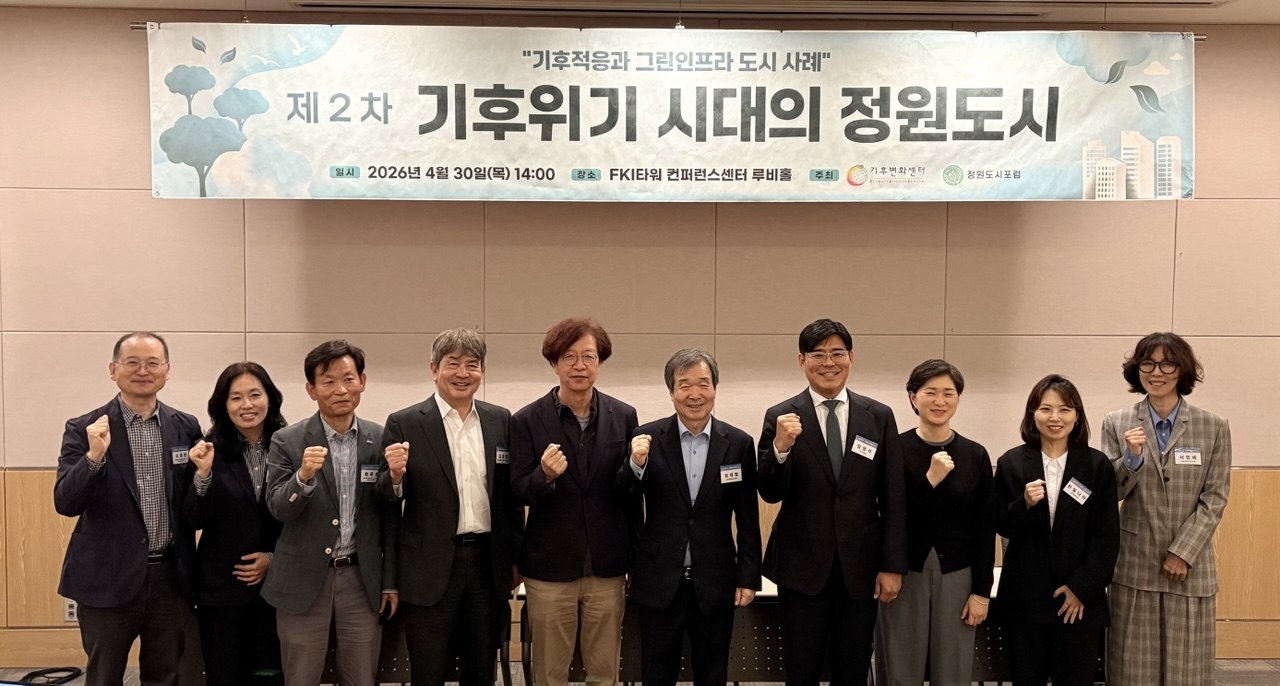
As extreme heat, heavy rainfall, urban heat islands, and flooding risks become part of everyday urban life, cities are increasingly being challenged to transition into more climate-adaptive systems. In response, the Climate Change Center and the Garden City Forum co-hosted the “2nd Seminar on Garden Cities in the Era of Climate Crisis,” highlighting a new perspective that views gardens, urban green spaces, and waterfront areas as critical climate adaptation infrastructure through Nature-based Solutions (NbS).
The seminar introduced global climate adaptation strategies, including Berlin’s urban climate resilience policies and Singapore’s “City in Nature” approach, alongside discussions on Korea’s climate adaptation policies and future-ready urban models. Key topics included green infrastructure strategies designed to reduce urban heat, improve water circulation, and restore ecological connectivity, as well as domestic case studies integrating renewable energy, urban forests, and smart infrastructure into climate-responsive city planning.
Speakers also emphasized that climate adaptation is not solely an environmental issue, but a structural urban agenda closely connected to city planning, energy systems, disaster response, and quality of life. Discussions highlighted the growing importance of climate adaptation models embedded in everyday urban spaces, including urban forests, gardens, native plant-based green space strategies, mini forests within residential areas, and the creative use of underutilized urban spaces.
The seminar ultimately reinforced the idea that urban green spaces should no longer be viewed merely as landscape elements, but as essential climate infrastructure that strengthens urban resilience and supports cities’ long-term adaptability. |
|
|
Green Leadership Connecting Energy, Industry, and Cities: Lessons on Carbon Neutrality Transition from Shenzhen |
|
|
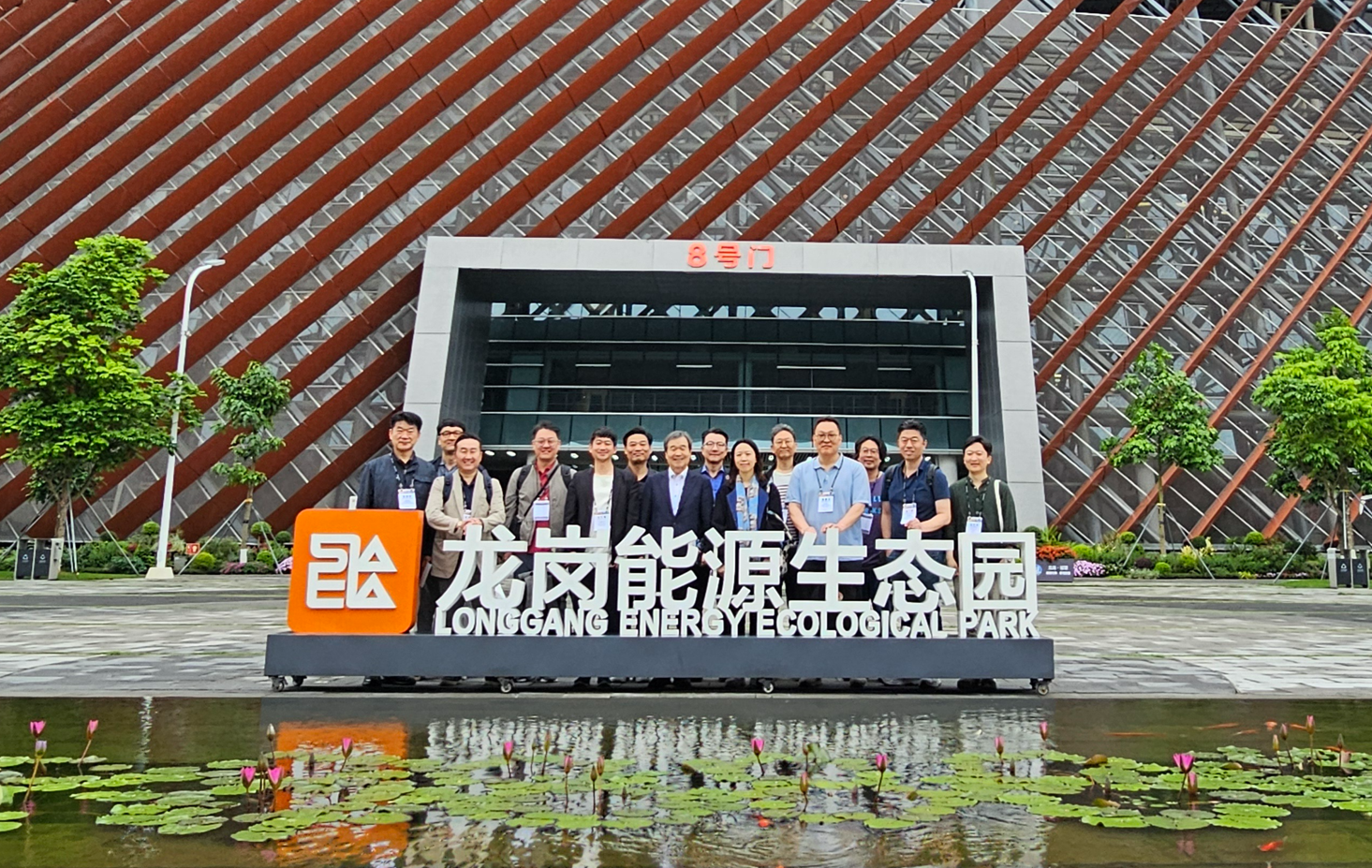
Launched this April as a 10-week executive program, the 25th Climate Change Leadership Academy visited Shenzhen, China, from April 23–25 for an overseas study tour exploring how carbon neutrality and green transition strategies are being translated into real-world urban systems and industrial ecosystems.
During the visit, participants toured the Shenzhen Municipal Bureau of Ecology and Environment and the Futian Carbon Neutrality Pilot Zone to examine the city’s carbon neutrality strategies, public building energy systems, and solar-based infrastructure. One of the key takeaways was how administrative spaces are evolving beyond conventional government functions into platforms for managing energy transition and carbon data, demonstrating how urban carbon neutrality is increasingly connected not only to policy, but also to spatial planning and operational systems.
At the Longgang Energy Ecological Park, the group explored a case in which a waste treatment facility had been transformed into integrated infrastructure combining resource circulation, energy generation, and urban landscape design. Participants also visited the BYD Museum, where they observed the rapid growth of eco-friendly industrial ecosystems driven by advancements in batteries, semiconductors, and electric vehicle technologies. The visit offered a firsthand look at how global climate action is being reshaped through technological innovation and industrial competitiveness.
The Shenzhen study tour ultimately highlighted that effective climate action emerges when urban operations, energy systems, circular resource infrastructure, and industrial ecosystems are designed to work together as an interconnected structure. Through continued global case-based learning opportunities, the Climate Change Leadership Academy aims to further expand experiences that enable future climate leaders to connect policy, industry, technology, and real-world implementation from a multidimensional perspective. |
|
|
Carbon Market Brief Introduction of an AI-Based Energy Efficiency Credit Methodology: Potential for Expansion into the Paris Agreement Article 6 Market |
|
|
AI-based energy efficiency technologies are rapidly becoming part of the carbon market ecosystem. Japanese climate tech startup Linkhola recently introduced a methodology that converts energy savings from AI-powered HVAC (heating, ventilation, and air conditioning) systems into carbon credits, highlighting the growing potential of digital and software-based emissions reduction projects.
The case signals an important shift in the carbon market, which has traditionally centered on renewable energy and nature-based solutions, toward a broader focus that includes energy efficiency and AI- and data-driven mitigation approaches. A key feature of the methodology is its application of a digital Measurement, Reporting, and Verification (dMRV) system, which uses real-time data to quantify and verify emissions reductions. This approach helps address long-standing challenges in energy efficiency projects, particularly around establishing baselines and demonstrating additionality.
The development also suggests that digitally enabled mitigation projects could play a larger role in international carbon markets under Article 6 of the Paris Agreement, including the ITMO framework. As cooling demand continues to rise rapidly across developing economies, AI-based energy efficiency projects are increasingly being viewed as a potential new model for international mitigation activities. At the same time, the growing emphasis on “high-quality credits” in Article 6 markets is drawing greater attention to dMRV systems as critical infrastructure for ensuring transparency, credibility, and data integrity in emissions reduction accounting.
|
|
|
The upcoming June 3 local elections are becoming far more than a routine regional election — they represent a critical turning point in how Korea responds to the climate and environmental crisis and shapes the future of regional sustainability.
In a recent column for Global Eco News, Choi Jai-chul, Chairman of the Climate Change Center, noted that as climate change, pollution, and biodiversity loss become increasingly interconnected and expand into broader economic and social challenges, the role of local governments is becoming more important than ever.
He added that national goals such as carbon neutrality by 2050 and Korea’s Nationally Determined Contributions (NDCs) can only deliver meaningful results when translated into region-specific implementation plans that reflect the distinct conditions and potential of each area. He also stressed that expanding renewable energy, building distributed smart grids, strengthening climate disaster preparedness, and advancing resource circulation systems are all areas where local governments — which are best positioned to understand regional characteristics and vulnerabilities — must play a central role.
Choi further argued that climate action is no longer confined to the environmental sector alone, but has become a structural challenge closely tied to industrial competitiveness, energy systems, local economies, and public safety. In this context, he emphasized that expertise and a strong understanding of sustainability will become increasingly essential for local leadership. 👉The full column is available at the link below. |
|
|
🍀Be part of our journey!
Even a small gesture can help create a healthier planet.
Donation Account : Woori Bank 1005-901-949649
Account Holder : Climate Change Center
|
|
|
Climate Change Center
T. 02-766-4351 | E. info@climatechangecenter.kr
Address : No. 306, Bldg 1, 22, Teheran-ro 7-gil, Gangnam-gu, Seoul, Korea, 06130
|
|
|
|
|