On Oct. 15, a worker in her 20s working at the SPL plant, an SPC affiliate in Pyeongtaek, died after being caught in a machine, which was mixing sauce for sandwiches. Contrary to work regulations that mandated the machine be covered when operated, the company kept it open to speed up production and achieve their production targets. Not only had a fail-safe switch not been installed to save $300, the safety principle of working in pairs had not been observed when the accident took place.
More shocking than the fact that the accident could have been prevented was the company's response. When the Ministry of Employment and Labor banned the use of those machines, the company simply covered the machine that had killed the worker and forced her co-workers to continue manually on site. After such reality was exposed by the media and the Ministry of Employment and Labor ordered the suspension of work, management responded by dispatching the co-workers to keep working in another factory. These actions prioritizing production over the mental and physical well-being of those who had just lost a co-worker cast doubt on the sincerity of SPC Group Chairman Huh Young-in's apology six days later. Worse, but two days after the apology, a worker in his 40s had part of his finger sliced off at another SPC Group affiliate.
The Severe Accident Punishment Act, which went into effect on Jan. 27, was enacted and implemented to force companies to strengthen and establish safety and health measures and management to prevent workplace accidents. During its eight months after coming into effect, 156 cases have been filed. However, 85% of them are still pending under investigation and none have resulted in the criminal punishment of management. Investigations that simply drag on without any punishment of those responsible effectively nullifies the law.
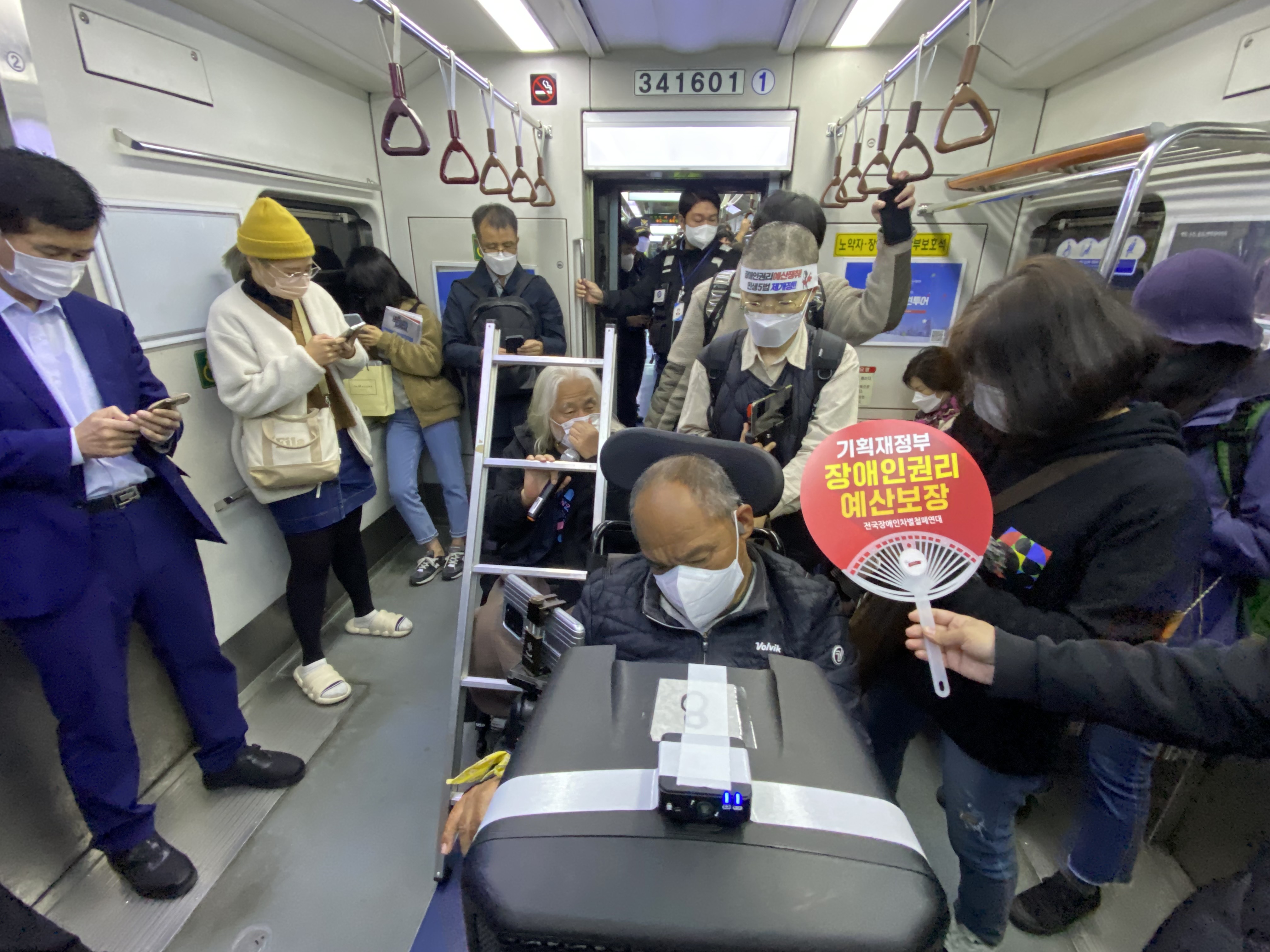
Even at this time, the workers’ struggle does not stop. The KCTU began a sit-in in front of the National Assembly demanding: "Irregular workers are not allowed to form a union to conduct collective bargaining and are not fully guaranteed the right of collective action. The National Assembly should amend the union law to guarantee basic labor rights to irregular workers” . Workers are fighting to improve poor working conditions including the "right to work without dying,". But the workers' struggle is being treated as illegal by the current Yoon Suk-yeol government. Kim Hyung-soo from the Metal Workers' Union, who went on strike for 51 days against Daewoo Shipbuilding & Marine Engineering, was fined 47 million dollars in damages. A subcontracted worker like Kim would need to work 1,489 years to raise such money. The total amount of damages claimed by the company against workers for the past 30 years is 3.16 billion dollars.
It's time for more of us to come together and demand workers’ rights.
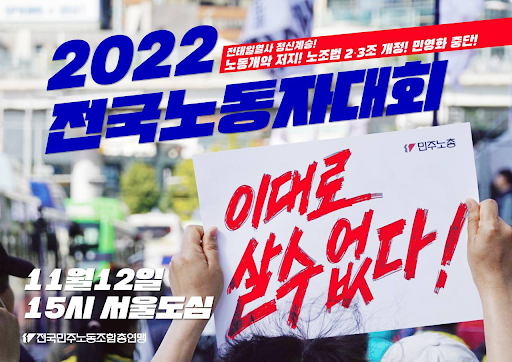
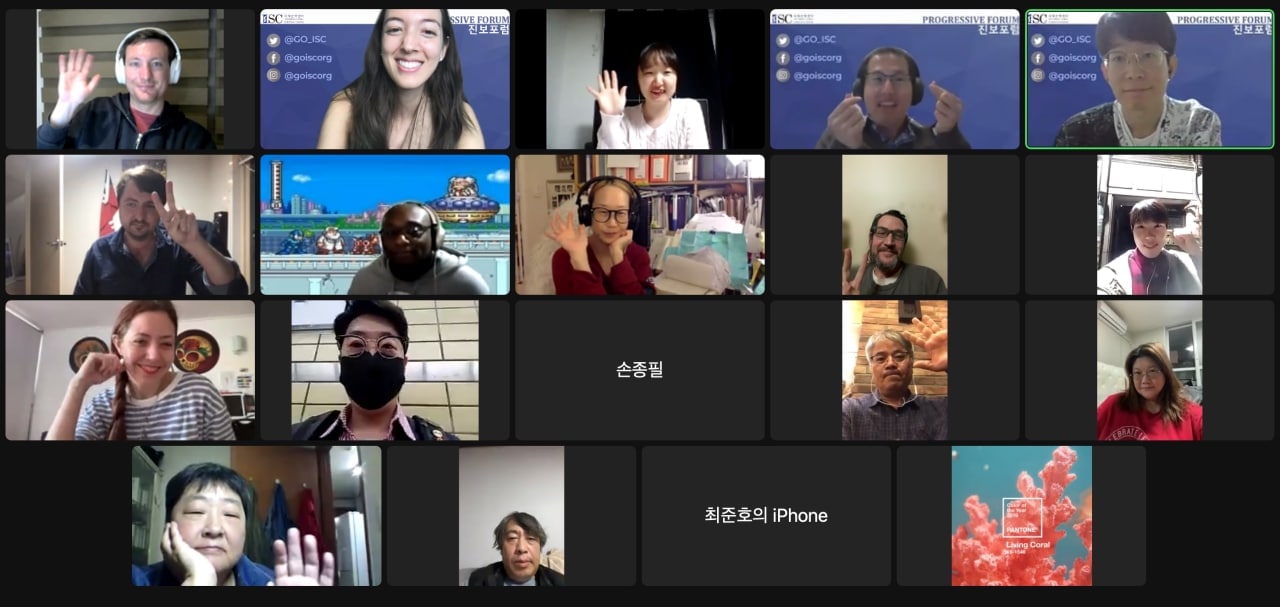
On Nov. 12, at 3 p.m. the International Strategy Center will join our voices by participating in the National Workers' Rally.
Come and join us as we shout: we won’t live like this anymore! |