VAC Spends 40% of Its Fund Already KOSPI ▲4,089.25 │ KOSDAQ ▲902.67 │ KRW/USD ▲1,462.30 |
|
|
Nasdaq ▼22,708.08 │ S&P500 ▼6,672.41 │ Dow Jones ▼46,590.24 |
|
|
As of 3:30 p.m. on the previous trading day |
|
|
✴ iM Investment Partners╎In 2019, it invested $0.69 million (₩1 billion) in Naraspace through a maritime fund, and it is targeting a seven to nine times return at listing. After recoveries from BEP and NK and with Vinsion’s growth added, it is evaluated as a rare strong-performance case among maritime funds
✴ JKL Credit╎In 2022, it injected $47.3 million (₩69 billion) into Dongshin Motech and DSEV, but recovery was disrupted as Dongshin Motech entered rehabilitation. The first credit deal is facing difficulties due to North American tariffs and weak demand.
✴ Tigris Investment╎In 2023, it invested $3.43 million (₩5 billion) in Dyne Energen RCPS, and with preliminary listing approval, it entered the recovery phase within one year. Since the FI portion is small, selling pressure after listing is low, increasing expectations for a stable exit.
✴ Korea Post╎In 2024, it committed $68.6 million (₩100 billion) to seven VCs to foster the AI value chain. It strengthened the leadership of the AI strategic fund by selecting GPs in large and mid-sized groups.
✴ VAC╎In 2024, it allocated $41.2 million (₩60 billion) to Zigbang BW and the same amount to a dormitory-operation company, using 40% of its first $205.7 million (₩300 billion) fund.
✴ Curiosys╎In 2024, it listed at an offering price of $15.09 (₩22,000), and its share price surged enough for FIs to expect a seven-times multiple return. It closed up 300% on the listing day as expectations based on global contracts were reflected early.
✴ APFS╎In 2025, it committed $8.23 million (₩12 billion) to the smart-farming sector to form a sub-fund of at least $13.72 million (₩20 billion), and it plans to select one GP investing over 80% in ICT·AI-based agricultural technologies. LF Invest, August Venture, and Songhyun Invest are competing.
✴ Tetos╎In 2025, it raised $2.74 million (₩4 billion) through a shareholder-allocated rights issue at par value to secure emergency funds. With IPO delays, corporate value dropped significantly, increasing the recovery burden for VCs.
|
|
|
SK hynix: “$9B Inventory” Is Not a Problem |
|
|
⭑ Orders First, Supply Later
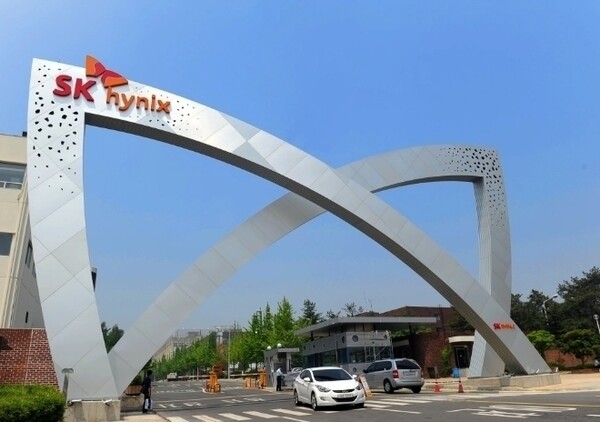
SK Hynix is benefiting significantly from the advance order and later supply structure centered on HBM. Close coordination with major customers, including Nvidia, has enabled flexible control of production and shipments, and this has rapidly reduced inventory burdens.
At the end of the third quarter, inventories stood at $9.03 billion (₩13.1564 trillion), a level nearly unchanged from the end of last year. Although the headline figure appears stable, finished goods inventories have been falling quickly in the second half. Finished goods that were in the $1.37 billion (₩2 trillion) range in the first half declined to about $1.17 billion (₩1.7 trillion) by the end of the third quarter.
The global DRAM inventory turnover period also dropped to 3.3 weeks, the lowest on record, indicating that memory is being consumed rapidly in the market.
⭑ HBM as the Driving Force
Supported by strong HBM competitiveness, SK Hynix’s cash flow has improved significantly. Cash generated from operating activities exceeded $20.58 billion (₩30 trillion) at the end of the third quarter, and the company moved into a net cash position as cash holdings surpassed total debt.
This shift reflects not only rising demand but also the characteristics of the AI market, where performance matters. As memory is installed in AI accelerators rather than consumer electronics, a structure has taken root in which development directions are aligned with customers in advance, and this has helped maintain high selling prices. As a result, the company has been able to sustain large investment costs.
Although SK Hynix incurs higher costs by outsourcing part of its processes to TSMC, unlike competitors that produce base dies internally, it has managed this through investment capacity. Investment spending reached $11.66 billion (₩17 trillion) through the third quarter, focused on expanding HBM-oriented capacity such as the M15X and the Yongin cluster.
⭑ Are There Remaining Variables?
With AI infrastructure investment rising, memory inventories at datacenter customers have been decreasing quickly, which is positive. However, SK Hynix notes that overall production growth is limited because capacity is concentrated on HBM. This means short-term volatility has not fully disappeared even as market conditions have improved.
The company has historically kept investment within 30 percent of annual revenue, yet financial burdens could rise in the short term if future mergers and acquisitions increase spending.
Financial institutions see benefits in the broader shift to an order-based industry structure, stating that it can reduce the depth of downcycles. However, they also view delays in delivery schedules at customer request as potential risks. Group-level large-scale investments are also cited as variables that could increase financial pressure.
(Reference: USD equivalent, KRW/USD ≈ 1,458. Applied as ₩1,458 = $1.00 for convenience.)
|
|
|
VAC Uses 40% of Its Approximately $211M Fund Even Before Final Closing |
|
|
VAC was established by VIG Partners in 2021 to expand its credit investment platform. The team is led by CEO Han Young Hwan, a former Goldman Sachs banker who had previously worked with the firm during the Bogo Fund period, giving him a natural grasp of how the organization operates.
The team quickly stabilized as Executive Director Yoo Sung Ryeol, who oversaw real estate at Hanwha Investment and Securities, and Managing Director Hwang Hong Kyun, who handled credit at Goldman Sachs, joined VAC. Despite being an early-stage team, it is regarded as well-balanced.
⭑ First Fund Nearly Half Deployed Before Final Close
VAC’s first credit blind fund has not yet completed its final closing, but more than forty percent of the total capital has already been deployed. The fund is scheduled to be finalized at approximately $211.2 million (₩300 billion) by the end of next month, with Korea Asset Management Corporation serving as the anchor limited partner. Several institutions, including the Korea Scientists and Engineers Mutual Aid Association, are also participating.
Fundraising began last year, and VAC executed its first closing in March at approximately $161.8 million (₩230 billion). Instead of waiting for the final close, VAC immediately began deploying capital, believing this could accelerate exit timing.
⭑ 40% Deployment Through Zikbang BW
The first investment was a bond-with-warrant issuance by Zikbang in May, valued at approximately $42.2 million (₩60 billion). The structure allows priority repayment if Zikbang secures capital through an IPO or equity financing, reducing downside risk. A subsequent investment was made in a lease-type dormitory operator under similar terms, with these two deals accounting for about forty percent of the fund’s total deployment.
VAC is reviewing additional opportunities. Industry participants expect one or two more transactions to proceed in the first half of next year. If executed, the deployment ratio is expected to exceed sixty percent, which would meet the internal requirement to establish the next fund.
In general, blind funds may launch successor vehicles once deployment surpasses sixty percent. Considering VAC’s current pace, the market believes preparations for a second fund could begin as early as the second half of next year. Expectations that major fund houses may scale back fundraising efforts next year could create a favorable window for VAC.
VAC was formed in 2021 under the leadership of former Goldman Sachs banker Han Young Hwan. Since then, experienced professionals such as Yoo Sung Ryeol and Hwang Hong Kyun have joined as core members, helping the team settle naturally.
(Reference: USD equivalent, KRW/USD ≈ 1,458. Applied as ₩1,458 = $1.00 for convenience.)
|
|
|
VAC has been moving quickly despite this being its first fund. Consecutive investments in structures that secure strong downside protection, such as the Zikbang bond with warrants and the dormitory operator deal, clearly demonstrate how seriously the team approaches risk management. The investment pace is fast, but the structures they select prioritize stability.
If only a few more deals are completed in the first half of next year, the deployment ratio will exceed sixty percent, which would naturally provide the basis to launch a second fund. With major houses expected to take a quieter approach to fundraising next year, the environment appears favorable for VAC to continue building momentum.
This first fund in particular will serve as the vehicle that imprints the VAC name on the market for the first time. Early performance directly affects long-term brand credibility, which makes the current combination of rapid deployment and stability-focused structuring strategically meaningful for the team. The next few years will likely determine what kind of firm VAC becomes, and this inaugural fund may end up serving as a critical reference point in that process. |
|
|
💼 Business Shift╎LG Electronics Moves Toward Future-Centered Profit Model
LG Electronics posted a 35.9% year-to-date rise in operating profit, driven by growing B2B sales in autonomous driving and AI datacenter areas led by the VS and ES divisions. The company is pushing toward a 40 percent B2B mix, using IPO funds to expand global ties in HVAC, automotive components, and robotics. It is also extending into European heat pumps and India’s HVAC infrastructure, supporting its transition into a smart life solutions company.
|
|
|
🚗 Hydrogen Agreement╎Hyundai Motor Group to Build a Green Hydrogen Port in Pyeongtaek
Hyundai Motor, Kia, and Hyundai Glovis are partnering with Pyeongtaek City and the port authority to create a full hydrogen ecosystem, including fuel cell generators, production and supply systems, and hydrogen-powered equipment. Public–private cooperation is accelerating the transition to Korea’s first hydrogen-based port model. |
|
|
💄 All Cosmetics Go Through Me╎Silicon Two Drives Europe and North America Expansion
Silicon Two generated 36% of sales from Europe in the first three quarters, distributing indie beauty brands to 175 countries and expanding into Boots and Ulta. It is emerging as a key player connecting supply and demand in Europe’s fragmented market and North America’s offline channels. |
|
|
🦅 Hanwha Rising╎Hanwha Life Lifts Net Profit Through Subsidiary Growth
Hanwha Life recorded 768.9 billion won in net profit, up 5.8 percent, supported by overseas subsidiary consolidation. Lower insurance profit was offset by stronger investment income and a protection-focused shift, with rising CSM and GA expansion strengthening long-term value. |
|
|
🍀 Buffett’s Last Lesson╎Success Comes From ‘Luck’
In his final shareholder letter at 95, Warren Buffett credits luck for success and stresses direction over speed. He highlights recognizing hidden risks and choosing verification as the foundation of six decades of steady returns. |
|
|
🔥 Political Clash╎Han Dong-hoon, Cho Kuk Dispute Rekindles Appeal Debate
Han Dong-hoon intensified criticism over prosecutors dropping the appeal in the Daejang-dong case, escalating tensions with Cho Kuk. Their confrontation is shaping a new political front tied to ruling-party leadership and internal power shifts. |
|
|
Could Korea Be Getting Its Own RHODE? |
|
|
Hailey Bieber — Hollywood’s trend engine behind smoothie crazes, glazed-lip phone cases and the clean-girl aesthetic — has turned everything she touches into a movement. And the person who co-built RHODE with her?
John Genovese.
Genovese is a veteran operator with deep experience investing in and scaling luxury and consumer brands across Europe and North America. He’s also currently a partner at One Luxury Group (OLG).
And now, a Korean company has brought him onboard.
CNC International, a major global ODM (original design manufacturer) in beauty, recently surpassed its domestic revenue with overseas sales, signaling accelerating growth. The company’s decision to bring Genovese in is widely viewed as a strategic move — a shift from being purely an ODM supplier to becoming a global brand-building and marketing powerhouse.
The move follows another headline earlier this year: Shinsegae Food committed $36M (approx. ₩50 billion) in investment last October.
With Genovese joining the roster, industry watchers are asking:
Could Korea be on the verge of launching its own RHODE-level global beauty brand?
|
|
|
CSM (Contractual Service Margin)
The amount of future profit that an insurer expects to earn by providing services to policyholders. It is released as profit over the contract period and serves as a key metric for long-term profitability and new-business value. |
|
|
GA (General Account)
A structure in which an insurer pools customer premiums into one asset pool and manages it. The account is used to prepare funds for claim payments through investments in stable assets such as bonds and loans, and it is closely tied to traditional guaranteed-rate insurance products. |
|
|
Send us any comments or suggestions you have while reading VITER’s newsletter! |
|
|
Contact : viter@thevistapartners.com / Published by NEWSTOP.수신거부 Unsubscribe |
|
|
|
|