A Company That Fills Spaces With Content KOSPI ▼4,090.59 │ KOSDAQ ▲938.83│ KRW/USD ▼1,473.20 |
|
|
As of 3:30 p.m. on the previous trading day |
|
|
✴ Hahn & Company╎Former Namyang Dairy chairman Hong Won-sik may face additional civil liability depending on the outcome of criminal trials for embezzlement and breach of trust, even after a damages ruling of $45.3 million in favor of Hahn & Co. The case is the first in which a court recognized a decline in corporate value caused by owner risk as an “active loss,” raising expectations that Hong’s final sale proceeds could be further reduced.
✴ Arcane╎AI short-form content studio Arcane secured seed funding from Spoon Labs, establishing an exclusive content supply arrangement for Spoon Labs’ short-drama platform “Vigloo.” The deal is seen as a strategy to secure an early value chain combining content and platform in the AI-driven short-form drama market.
✴ ICS╎The firm acquired $102.9 million worth of CBs and EBs issued by SNT Holdings, betting on an ultra-low interest, no-refixing structure. The move strengthened market confidence in the SNT Group’s defense and energy growth prospects, while raising expectations for holding company stability and expanded investment capacity.
✴ EGIS╎Following its KOSDAQ listing, short lock-up periods for financial investors opened near-term exit opportunities. High post-IPO free float and limited lock-up commitments increased stock volatility, while pre-IPO FIs are positioned to achieve meaningful exits within three years.
✴ JM Materials╎Backed by a $343,000 investment from POSCO Technology Investment, the company was selected for the TIPS program, opening access to up to $686,000 in non-dilutive R&D funding. As the first outcome of the Road to TIPS program, both technology validation and growth expectations have increased.
✴ H&Q Korea╎Consecutive exits from 11st and Hyundai Elevator this year demonstrated strong capital recovery capabilities. The performance has boosted institutional confidence, raising expectations for participation in next year’s National Pension Service commitments and increasing the likelihood of fully achieving target fundraising.
✴ T Investment╎Choi Jisoo was appointed as new CEO, with plans to establish a new accelerator entity next year, advancing both organizational restructuring and new business expansion. Leveraging its track record, including early discovery of EcoPro BM, the firm is strengthening leadership while reviewing multiple AC setup structures.
✴ KB Investment╎Invested a total of $8.9 million in Geninus between 2019 and 2020 and recovered about two-thirds of its stake after roughly seven years, cashing out $11.3 million to date. With the fund’s maturity approaching in January 2026, it has chosen a gradual exit strategy and is expected to generate total proceeds of around $14.4 million, though some note that the return is relatively modest given the long holding period.
✴ PLETDIS╎Naval engine control system (ECS) specialist PLETDIS has raised KRW 10 billion from domestic venture capital firms. Investors are betting on the growing strategic importance of ECS as AI adoption and eco-friendly propulsion systems accelerate in the global naval market. PLETDIS plans to use the funding to speed up localization of ECS technology and develop AI-based next-generation systems.
✴ Highlight Capital╎Advanced regenerative medicine company Plcoskin has secured an additional USD 2 million investment from Chinese VC Highlight Capital, bringing its Series C total to KRW 14.5 billion. The deal is a strategic bet on China regulatory approval and market entry, and marks Plcoskin’s first investment from a global venture capital firm.
|
|
|
Overseas Institutions Bet on LivsMed: Will the ₩1.3 Trillion Mega Deal Deliver? |
|
|
⭑ Overseas Institutions’ ‘Quality Bet’: Will LivsMed’s $0.93bn Deal Gain Traction?
LivsMed, a South Korean surgical robot and medical device company, has opened its public subscription to retail investors on Dec. 15–16. Despite the large deal size of approximately $0.93 billion (₩1.3 trillion), the company is drawing attention for securing what the market views as high-quality participation from overseas institutional investors during the bookbuilding process.
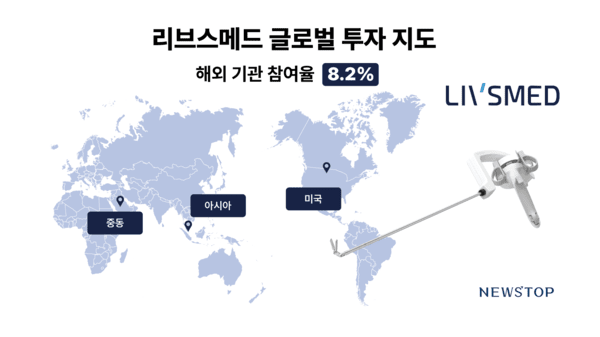
According to market data, overseas institutions from the U.S., the Middle East and Asia accounted for 8.2% of total shares in the demand forecast. While the headline figure may appear modest, the market is focusing less on the percentage itself and more on who those investors are.
A senior official from Samsung Securities’ investment banking division, the lead underwriter, said overseas investors are familiar with how Intuitive Surgical, the maker of the da Vinci system, built a dominant position in the global market. Institutions with deep sector expertise viewed LivsMed’s potential for global market penetration and revenue growth favorably, the official said. Given the overall deal size, the 8.2% overseas participation represents a meaningful absolute allocation, the source added.
⭑ ‘Da Vinci Learning Effect’: A Bet on a Global Challenger Story
LivsMed is positioning itself as a potential global challenger in the surgical device market, backed by capital raised from the IPO. The company highlights its full-spectrum portfolio, covering everything from handheld instruments to surgical robots across minimally invasive procedures, as a key competitive edge.
Its overseas expansion roadmap is relatively concrete. In the U.S., LivsMed plans rapid market entry through a contract with HealthTrust, a major group purchasing organization, targeting access to roughly 4,300 hospitals. In Japan, the company aims to secure stable revenue streams through national health insurance reimbursement listings.
Company officials said that most institutions met during overseas roadshows in Hong Kong and Singapore ultimately participated in the bookbuilding. Investors appear to have judged that LivsMed’s articulated joint technology and portfolio could serve as a viable challenger in a market long dominated by a single player, the company said. LivsMed plans to replicate its domestic success model in Japan and the U.S. to scale revenue more aggressively.
⭑ 17% Lock-Up, Ongoing Losses: A Tug-of-War Between Technology and Supply
Despite positive views on its technology, financial and supply-side risks remain. LivsMed will list on the KOSDAQ on Dec. 24 under Korea’s technology-track IPO system, but it continues to post operating losses due to sustained R&D spending and overseas subsidiary expansion. While management has outlined a path to profitability next year, some market participants say patience may be required before earnings visibility improves.
Supply concerns are also notable. With a total offering size of roughly $0.93 billion (₩1.3 trillion), the institutional lock-up ratio came in at 17.12%, or 13% by number of accounts, a relatively low level for a technology-track listing. This raises concerns over potential overhang, as a sizable volume of shares could become tradable shortly after listing.
Market participants expect LivsMed’s post-IPO share performance to reflect a tug-of-war between long-term growth potential and short-term supply pressure. While participation from reputable overseas institutions and pension funds is seen as a constructive long-term signal, retail investors are being advised to remain mindful of potential volatility in the early trading phase.
|
|
|
A Company That Fills Spaces With Content — Why Netflix Keeps Coming Back |
|
|
⭑ A Company That Fills Spaces With Content
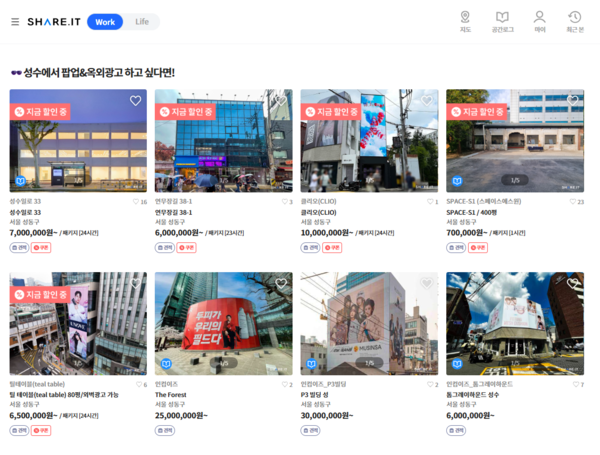
Shareit positions itself not simply as a space-rental platform, but as a company that reinterprets space itself. The idea is straightforward: the value of a space changes depending on who uses it, when it is used, and for what purpose. By “refilling the container” with different content across time slots, the asset value of a building can be maximized, the company says.
CEO Park Sang-jun describes Shareit as a “commercial version of Airbnb.” While Airbnb is largely focused on accommodation, Shareit serves customers with more than 100 different use cases. The company believes that combining years of mobile platform data with artificial intelligence makes this level of flexibility possible.
⭑ From L’Oréal to Pop-Ups: Discovering the Value of Space
Park spent more than a decade at global cosmetics group L’Oréal, working across sales, marketing and new business development. While planning pop-up stores in major commercial districts such as Starfield malls and Garosu-gil, he realized that breaking a single space into time-based units could generate significantly higher value.
That insight led him to launch a pilot service in 2016, renting out school gymnasiums under the name “School Sharing.” The business later evolved into Shareit after formal incorporation. Early skepticism around renting school facilities, followed by the COVID-19 pandemic, posed challenges, but demand for interviews, qualification exams and testing spaces surged instead.
One notable case involved providing a school gymnasium as a testbed for an AI startup that needed a large, column-free space with high ceilings. “That experience confirmed that the value of space can always be reinterpreted based on demand,” Park says.
|
|
|
⭑ 12,000 Spaces and Growing: Expansion Into B2B and Operations
Eight years after launch, Shareit now manages a portfolio of around 12,000 spaces nationwide and has surpassed 200,000 users. Roughly 15,000 rental inquiries come in each year, with about 4,000 turning into actual contracts, translating into a conversion rate of around 30%.
Gyms, once the core business, now account for less than 10% of revenue. The portfolio has diversified into pop-up stores, banquet halls, studios and performance spaces, with pop-ups emerging as the most profitable category. Revenue streams are split across brokerage fees, B2B concierge services, and property management under its private-brand operating model.
Major corporate clients using Shareit’s concierge services include Netflix, Nike, Uniqlo and SM Entertainment, typically through HR and general affairs teams organizing recurring events.
⭑ Toward an AI-Driven, Content-Led Space Platform
Shareit’s growth has been supported by continued investment from institutions such as Korea Development Bank and DSC Investment. Annual revenue rose from ₩1.9 billion (about $1.4 million) in 2021 to ₩11.7 billion (about $8.4 million) in 2024, with the company achieving profitability last year. For 2025, management expects revenue of roughly ₩15 billion (about $10.8 million) with expanding margins.
More recently, Shareit raised ₩8 billion (about $5.7 million) from Korea Development Bank, IBK Venture Investment and Woori Venture Partners. The company is targeting revenue of ₩84 billion (about $60.3 million) and an operating margin of 10% by 2027.
Looking ahead, Park says Shareit aims to become a content business rather than a traditional real estate platform. Starting next year, AI will handle initial consultations, with future upgrades focusing on recommending optimal spaces based on customer needs. “This isn’t about location-driven real estate,” he says. “It’s about creating traffic, activating spaces, and redefining their value through content.”
|
|
|
😱 Overhang Alert╎Cheonbo CB Conversions Accelerate, Company Steps In
As Cheonbo’s convertible bonds begin converting into shares, over 16% of total outstanding shares are set to be newly listed this month, heightening overhang concerns. The company plans to repurchase and retire KRW 60 billion of the KRW 200 billion CBs via call options to manage downside pressure, though additional conversions may continue into the first half of next year. |
|
|
🚗On-device AI╎In-vehicle AI cabin platform unveiled
LG Electronics unveiled the AI Cabin Platform, an on-device AI solution jointly developed with Qualcomm, at CES 2026, presenting its AIDV vision aimed at global automakers. The platform is built on Qualcomm’s Snapdragon Cockpit Elite and applied to high-performance computing units, enabling generative AI to operate directly inside the vehicle without cloud connectivity. By analyzing the surrounding environment and passenger conditions in real time to provide voice guidance and personalized content, LG Electronics appears to be strengthening its vehicle components business by moving beyond SDV toward the AIDV stage. |
|
|
🤖 AI advertising:╎An AI experiment reshaping commercials
SKAI Intelligence has signed a memorandum of understanding with KOBACO and EBS to advance a next-generation advertising model that links AI-based ad production with TV media placement. KOBACO will handle demand analysis in the advertising market and identify TV advertisers, while EBS will support production collaboration and media linkage for selected advertisers, combining the roles of public and educational channels. SKAI Intelligence plans to apply AI across the entire process, from filming and video generation to editing, to improve efficiency, lower barriers for small and mid-sized advertisers entering TV advertising, and expand real-world adoption of AI-driven ads. |
|
|
💸 Deal at Risk╎IGIS Asset Management Sale Stalls as NPS Pushes Back
The sale of IGIS Asset Management has effectively stalled amid disputes over changes to the sale process and a lawsuit filed by Heungkuk Life. Allegations that National Pension Service (NPS) mandate information was exposed during due diligence have prompted the NPS to consider GP replacement and capital withdrawal, significantly reducing the likelihood of a takeover by China’s Hillhouse.
|
|
|
🥤 Deal Break Warning╎Coca-Cola’s Costa Coffee Sale Wobbles
Coca-Cola’s proposed sale of Costa Coffee is facing last-minute turbulence over valuation differences, raising the risk of a collapse. While TDR Capital was named preferred bidder, talks have stalled over price and minority stake retention, with Coca-Cola expected to decide this week whether to halt the process entirely.
|
|
|
🔍️Glass Semiconductor╎A Key Technology for Expanding the Semiconductor Ecosystem
Samsung Electronics is accelerating technology development for the commercialization of glass semiconductor substrates in cooperation with Samsung Display and Samsung Electro-Mechanics. Each affiliate is responsible for different areas, with glass interposers and glass core substrates handled separately, forming a vertically integrated ecosystem from semiconductors to processes and packaging. If glass interposer commercialization becomes a reality, analysts say it could bring changes to the packaging competitiveness of TSMC, which has relied on silicon interposers. |
|
|
Could China and Japan Be Heading Toward a Military Conflict? |
|
|
Tensions between China and Japan have been escalating rapidly in recent days.
The starting point was remarks made by the Japanese prime minister regarding Taiwan.
Japan stated that instability in the Taiwan Strait could have a direct impact on its national security and trade, and that the Self-Defense Forces might need to intervene depending on the situation. Japan’s explicit reference to Taiwan in this context has been widely seen as highly unusual.
China reacted immediately
Beijing considers Taiwan to be part of China and therefore viewed Japan’s remarks as interference in its internal affairs. China demanded that Japan withdraw the comments and issue a formal apology.
Japan responded by saying it would refrain from further remarks, but would not change its existing position. Following this exchange, tensions between the two countries intensified.
China has since stepped up pressure on Japan, including the cancellation of a large number of flights to Japan. What has been described as a de facto restriction on Japan-bound travel has reportedly continued for more than two weeks.
Japan has also taken countermeasures
It is reviewing plans to deploy missile units to its westernmost islands, the closest Japanese territory to Taiwan, as part of efforts to strengthen its defense posture. Military tensions in the region have continued to rise, and the standoff is widely expected to persist for the time being.
The worsening China-Japan relationship could also have implications for South Korea.
China has shown reluctance to move forward with plans for a trilateral summit involving South Korea, China, and Japan, citing tensions with Tokyo. As regional military tensions increase, South Korea is likely to face greater sensitivity in its security environment.
As a result, uncertainty is growing over whether the trilateral summit, tentatively scheduled for January next year, will take place as planned.
|
|
|
✴ Refixing
Refixing is a mechanism that changes contract terms to favor investors when they are likely to incur losses.
If an investor puts money into a convertible bond (CB) or redeemable convertible preferred stock (RCPS) and the company’s share price collapses, what happens? Under the original terms, the investor would have to absorb the loss, but refixing is designed for this situation. When certain conditions occur, such as a share-price decline, refixing is a contract clause that readjusts the conversion price or conversion ratio to make it more favorable for the investor.
In simple terms, it resets the terms by saying, “The originally agreed price has become too expensive, so we will let you convert at a cheaper price.” For example, if an investor entered at $10 per share but the share price falls to $5 the conversion price can be lowered to around $5 so the investor can receive more shares.
Why is this clause used?
From the investor’s perspective, when investing in high-risk startups or growth companies, they want to reduce the downside risk of a share-price drop. From the company’s perspective, offering this kind of safety device can be necessary to attract investment.
The problem is the existing shareholders. If refixing is triggered, it has an effect similar to issuing new shares at a lower price, which dilutes existing shareholders’ stake value and puts them at a disadvantage.
Investors are protected, but existing shareholders take the hit. Recently, regulation has been tightened. Regulators have recognized this issue and, for listed companies, have required that if a refixing clause exists, the conversion price must also be adjusted upward when the share price rises. The intent is to make the adjustment fair in both directions rather than one-sided. Limits are also imposed on the adjustment range.
In the end, refixing is like insurance that prevents investor losses, but it can be a double-edged sword that harms existing shareholders. If you find this clause in an investment agreement, you should check carefully under what conditions it is triggered and how the adjustment is applied. |
|
|
Send us any suggestions you’d like to share while reading Bitter’s newsletter! |
|
|
Advertising, inquiries : viter@thevistapartners.com / Published by Newstop. Unsubscribe |
|
|
|
|