For dark mode users,
Hello, readers! Today, we are covering: Index Zoom In Catching Up with Food Delivery in Korea Today's Vocabulary 빨리빨리 (Bbali-Bbali) This Week's Recommendations Quick (퀵, 2011) Don't forget to leave your feedback below!
Catching Up with Food Delivery in Korea Writer: Haram Lee, Daeho Park Editor: Aleya Sharif Senior Editor: Regine Armann Editor-in-Chief: Fred McNulty Researcher: Yul Jun
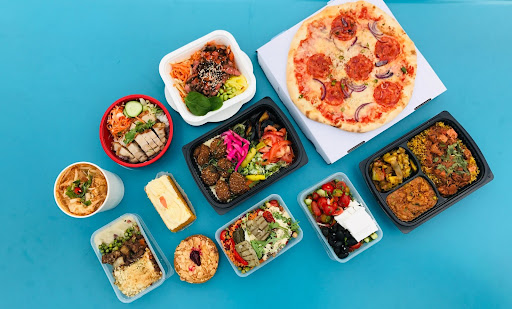
Source: Unsplash, Cristiano Pinto On October 20th, delivery workers from major IT platform companies such as Baemin, Coupang Eats, and Yogiyo scheduled a strike. During a conference held at the Korean Confederation of Trade Union’s office in Seoul on the 15th, the delivery service branch of the Korean Federation of Service Workers Union had announced that they will hold an “off day” on the 20th. The strike is largely focused on raising the basic pay delivery workers receive from delivery apps and on being guaranteed labor rights, especially in regards to safety. Consumer News Korea (Korean link) cited the union as saying, “Although the public is paying attention to delivery workers’ safety now, no crucial measurements have been laid out since the incident in which a delivery man died at Seolleung subway station in August this year. It’s time for the government to make a budget for establishing a delivery motorcycle deduction association.” What’s Happening? When you order food using delivery apps, delivery workers get a call just like a taxi driver. The more they deliver, the more money they earn. Drivers therefore have no choice but to compete for speed. On top of that, Baemin, the biggest delivery platform company in Korea, has released the Baemin Connect Service (배민 커넥트 서비스, BCS) in 2019, which allows a high number of people to easily join the delivery service worker pool. BCS is a delivery part-time job connection service that allows people to work as long as they want on a day-to-day basis, without a specified time slot or limit to how many delivery jobs they can carry out. It also offers flexible transportation options, and the user can carry out the assigned delivery job on a bike, by car, or simply on foot. BCS, which can be said to represent the final step of labor flexibility, has contributed to the total delivery application market in Korea to growth by more than 328% (Korean link) over the past two years. In addition, due to the explosive increase in delivery demand during the pandemic, most Korean cities are now overcrowded with motorcycles and electric scooters. Problems Over Competition for Speed Since the income of delivery workers heavily depends on the number of deliveries completed, they feel pressure to speed it up. According to (Korean link) Yoo Sang-yong, a Samsung Traffic Safety Research Institute expert, “there are many accidents that result from reckless driving and traffic law violations because delivery workers make a profit based on the number of deliveries they complete.” As a response to the surging number of traffic accidents caused by the reckless driving of delivery workers, the Seoul Metropolitan Police Agency has even deployed riot squads alongside traffic enforcement units, since the traffic enforcement officers themselves cannot handle the amount of traffic laws violations by delivery bikers. In the first two hours of the joint-unit deployment, 1,376 traffic violations (Korean link) were recorded. Illegal Modifications of Motorcycles
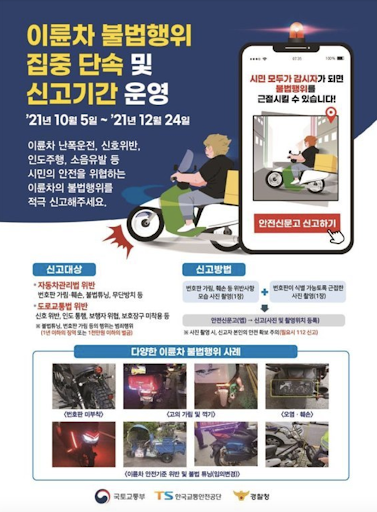
Source:'야간 소음↑'...서울시, 불법개조 오토바이 단속 The Korean National Police Agency, the Korea Transportation Safety Authority, and the Ministry of Land, Infrastructure and Transport have teamed up to promote the reporting of illegal modifications. Since food deliveries are mainly done on motorcycles, some motorcycle drivers have intentionally covered or altered their license plates so as to avoid being caught by law enforcement in case they get photographed by road surveillance cameras when violating traffic laws. Another form of illegal modification is replacing the lights. Some drivers replace the existing ones with brighter ones to get better visibility during the night. However, this can distract and blind other drivers. Government agencies consider this a serious matter and have been urging people to report any cases of illegal modifications. (See the picture above) Delivery Fee Problem What a driver receives for a delivery consists of the fee the customer is charged and the restaurant owner’s pay. Average delivery fees in Seoul range from ₩3,000 to ₩3,500 within a radius of 1.5 km. For longer distances, ₩500 are charged per 500 meters. Additionally, in adverse weather conditions such as in heavy rain or during heatwaves, or late at night, drivers charge ₩500 to ₩1,000 as an additional fee. Normally, each restaurant owner decides how much they take from customers while taking into consideration the food price, the distance, and the business situation. For instance, if the overall delivery fee for ordering chicken is ₩3,000, the chicken restaurant owner has to decide whether they will pass on ₩1,000 or ₩2,000 to the customer. Additionally, restaurant owners pay a platform fee to the application companies, maximally 15%, according to the contract they signed. Many restaurant owners have found it tough to compromise the moderate platform fee. Platform fees affect not only the restaurant owner's budget but also the customer’s wallet. If a customer orders chicken that costs ₩20,000, they are paying almost ₩6,000 for delivery alone. Under these conditions, delivery workers and restaurant owners have no choice but to compete. The Korea Herald cited an online community post by one restaurant owner that stated, “When it’s raining, I have to charge an extra delivery fee. I think to myself that it’d be even better to just send food in a taxi by itself.” He added “Customers don’t really mind the food price, but they are quite sensitive to delivery fees. So some restaurants put only combos on the menu or they adjust the minimum ordering price.” A union official said at the press conference at the Korean Confederation of Trade Union on October 20th, “We are someone’s father and mother too. I don’t want to risk my life like a ticking bomb every day when I go to work. I want to work safely. This is why we’re having an off day.” He said, “The Government has promised to establish a motorcycle deduction association from next year; however, they haven't put any reflection on a budget yet. We need a deduction association for easing the burden for insurance bills, safety driving education, and delivery education for workers.” He also emphasized that “Delivery workers are not being protected by the labor law. The Government must guarantee us labor rights.” According to the union, delivery companies such as Baemin and Coupang Eats have never raised their basic delivery fee so far. Baemin has had the same basic delivery fee since its foundation. As for Coupang Eats, they recently lowered their fee from ₩3,100 to ₩2,600 in March. Delivery app companies say it’s not easy to just accept the union’s demand for the establishment of the deduction association due to multiple interests involved. Furthermore, they are concerned that if they raise their basic fee, customers will not use their delivery applications anymore. Kim Bum-joon, CEO of Baemin, who recently attended the National Assembly’s Environmental & Labor Committee’s questioning on October 15th (Korean link), answered “I agree that platform companies have to pay more industrial accident insurance premiums for taking off the burden of delivery workers.” However, he reaffirmed the company's current position, saying “We can’t decide on the basic fee by ourselves. Customers and restaurant owners pay the delivery fee together. It’s not just in our hands.” Better Working Environment Alongside food delivery workers, parcel service workers have advocated for a better working environment. Strikes launched by delivery workers (Korean link) have become frequent events, because they started requesting better conditions and treatment, such as an increase in income, a safe work environment, and an end to disrespectful treatment of workers, which is known as Gapjil (갑질) in Korean and describes the condescending attitude that bosses and also customers often express towards people lower in the work hierarchy. In 2021 alone, delivery service workers already launched two strikes, one in June and one in October. While the strike in June was solely organized by parcel delivery workers, the one that is happening in October is a joint strike involving parcel delivery workers and food delivery workers. Similar to how food deliveries exploded, the COVID-19 pandemic has significantly increased the number of people shopping online, which resulted in a surge of parcels for delivery workers to hand over. This resulted in overwork and in some extreme cases, workers have even died on the job. The Hankook Ilbo published a report on these issues last year (English translation provided). Our newsletter explaining the past issues with regards to Coupang, a popular online shopping mall with express delivery service, can be found here.
Today's Vocabulary 빨리빨리 (Bbali-Bbali) Bbali-bbali is a Korean word that signifies the Korean culture of rushing things. The word, Bbali (빨리) itself translates into “quickly”, and repeating it highlights the speed with which Koreans like to get things done. A: 빨리빨리! 너 과제 곧 제출해야 하잖아. 당장 책상으로 가. B: 저 아직 2주 남았어요! A: Bbali-bbali! Your homework is due soon. Head to your table, now. B: I still have two weeks! This Week's Recommendations
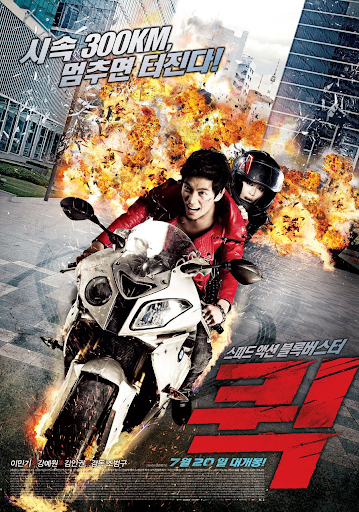
Quick (퀵, 2011) Available on Watcha (115 mins) The story follows Ki-su, a biker who ends up working as a messenger. While carrying out a delivery job one day, the building in which Ki-su was at ends up exploding moments after he leaves. Ki-su, however, is oblivious of the fact that the package he delivered had anything to do with this catastrophe. Ki-su then receives a job request to drive the lead vocalist of a girl group, Ah-rom, to a stadium for a concert she is late to. Coincidentally, Ah-rom is Ki-su’s ex-girlfriend from years ago. During the ride, he offers his helmet to Ah-rom, unaware of the fact that it has actually been rigged with an explosive device. Ki-su receives a call to deliver packages already stowed in his bike within a 30-minute time limit, and a warning that if he fails to deliver them on time, or if Ah-rom removes the helmet, it will explode. How will the story play out as both Ki-su and Ah-rom get hunted by the police for their alleged connection to the bombing?
💚 Support us! 💚
|