#PMDS+ #PerformanceManagement #HonestFeedback #Leadership
Hello ,
Here’s your PMDS+ Leadership & Performance Management Insight delivered through the <PLUS> Newsletter.
We’ll bring you short, engaging, and practical content every other month leading up to the year-end review 😊
This Month’s Highlights ✏️
▶ INSIGHT
Even Gen Z Can Swallow “Bitter but Healthy” Feedback
Exploring the value of candid feedback through YouTube’s DingDongDang University and the book Radical Candor.
▶ LEADERSHIP
*We Read It for You! — The Fearless Organization, by Amy Edmondson
Understanding psychological safety as the foundation of effective feedback.
▶ NOTICE
|
|
|
▶INSIGHT
Even Gen Z Can Swallow “Bitter but Healthy” Feedback
|
|
|
As we step into the second half of the year, , how are you managing performance so far?
Today, we’d like to highlight one of the core elements of performance management leadership: candid feedback.
“Please Give Me Some Tough Love”
How do you feel about receiving tough feedback, ?
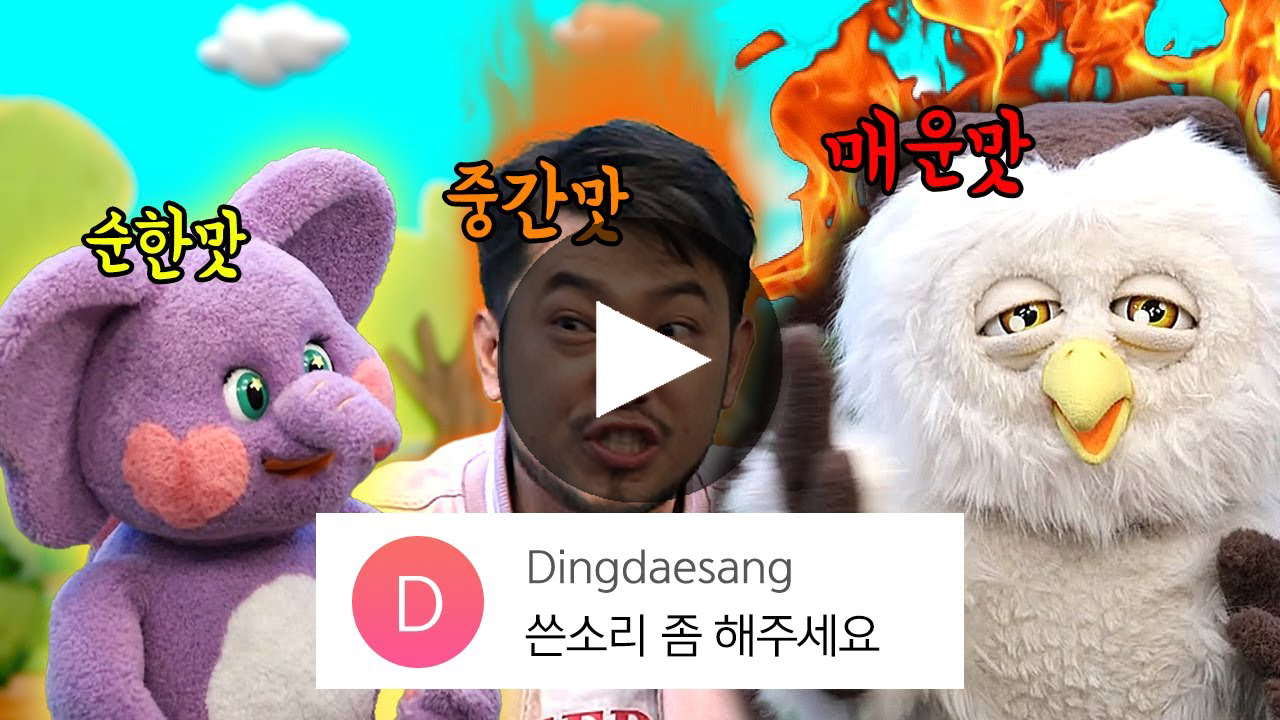
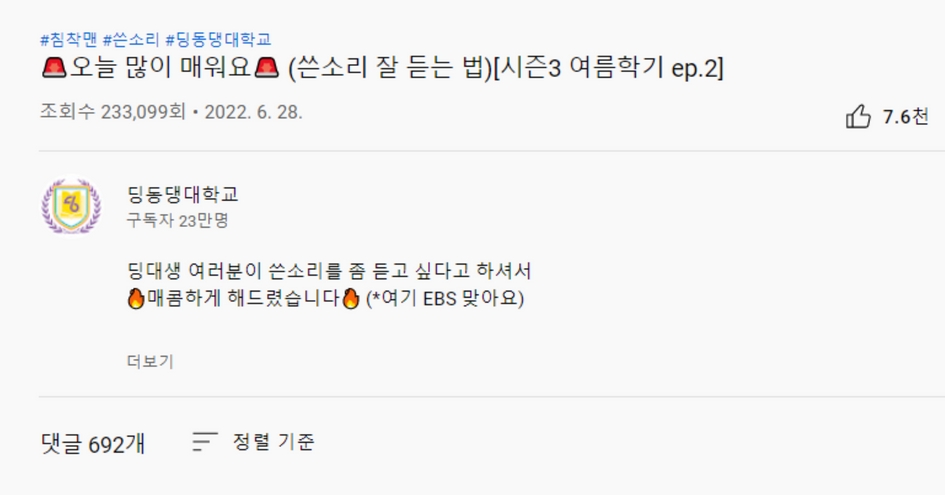
A recent trend among Gen Z is the EBS YouTube channel DingDongDang University, which features a segment called “Please Give Me Some Tough Love.” Subscribers, mostly born in the 1990s and 2000s, send in their personal concerns, and the hosts respond with honest—sometimes sharp—advice, delivered with a touch of humor.
Stories include confessions like wanting to stop wasting one’s paycheck, struggling with repeated diet failures, or trying to overcome picky eating habits. The show’s candid yet witty “tough love” responses quickly became popular.
Contrary to the stereotype that Gen Z resists criticism, this trend shows the opposite: living in an age of uncertainty, they value growth and self-development, and are often willing to seek out and embrace the necessary tough feedback that helps them improve.
(Video reference: 01:13 ~)
|
|
|
Meanwhile, the video makes a witty comparison: “Tough feedback is like a medicinal tonic, while shallow praise may look similar but is nothing more than rabbit droppings.”
This ties directly back to what we discussed in the last newsletter—the characteristics of good feedback.
*Good feedback refers to feedback that can truly drive a change in the other person’s behavior.
#The Secret of Silicon Valley Leadership
, what do you think is the key leadership competency that successful team leaders in Silicon Valley all share?
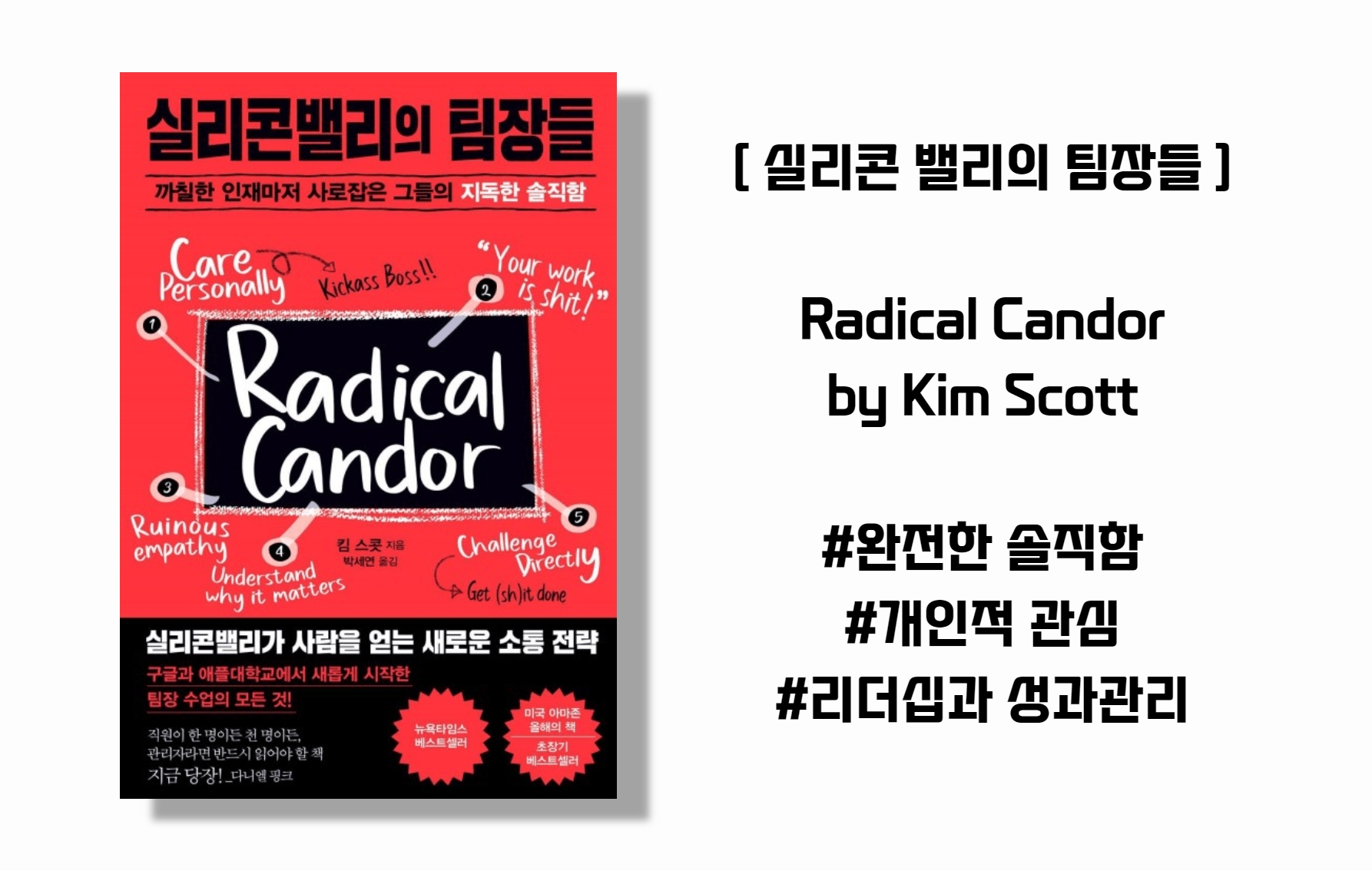
According to the management book Radical Candor (published in Korea as Managers in Silicon Valley), their defining strength lies in giving candid feedback—sometimes referred to as the necessary tough talk.
Author Kim Scott, who has led teams at Google and YouTube and worked with iconic Silicon Valley companies such as Dropbox and Twitter, emphasizes that a true leader is not someone who does everything alone but someone who drives performance by guiding their team. Through what she calls Radical Candor—complete and caring honesty— leaders can build ideal teams and manage performance effectively.
It’s this very candor, she argues, that makes Silicon Valley team leaders so compelling to top talent.
|
|
|
#What Exactly Is Radical Candor?
Not everyone challenges others head-on in everyday life. Most of us, through the process of socialization, learn to withhold parts of our true thoughts, avoid confrontation, or use small white lies to smooth things over.
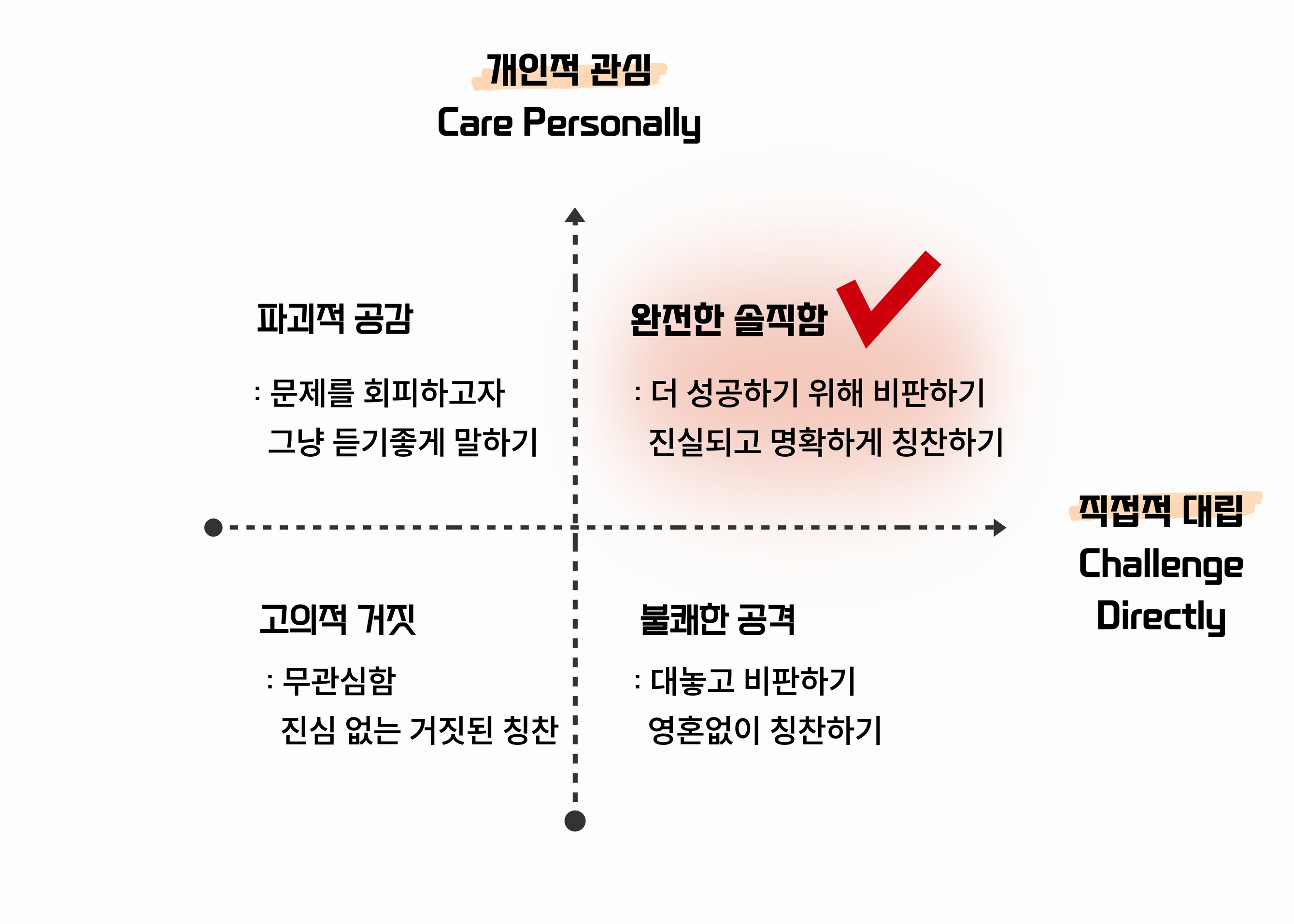
By contrast, Radical Candor means that leaders must be clear and direct in giving feedback. It requires the courage not to shy away from uncomfortable conversations, the willingness to offer even negative feedback, and the commitment to lifting team and individual performance through that honesty.
At the same time, Radical Candor calls for humility. That’s why the term candor—not simply honesty—is used: it reflects a type of openness that combines straightforwardness with the willingness to listen and respect others’ perspectives.
When practiced, Radical Candor builds trust. Employees begin to believe that
their leader truly cares, and they respond in ways such as:
-
Accepting both praise and criticism, and acting on it.
-
Offering candid opinions on what their leader does well—or poorly.
-
Taking ownership of their role within the team.
-
Focusing on achieving results.
But failing to practice Radical Candor can be devastating. Consider one of the worst-case episodes described in Radical Candor (p.9):
“I wanted to create a fun, stress-free workplace. To do that, I avoided giving clear and direct feedback—even to employees who were underperforming. Eventually, when the team fell apart and I had to fire one of them, he looked at me and said:
‘Why didn’t you tell me earlier? I thought everyone liked me.’
It was the worst moment of my life. He paid the price, but it was my failure. My greatest mistake was not speaking up when someone veered off track. And in the end, that mistake contributed to the company shutting down.”
|
|
|
#The Conditions for Feedback and Praise That Truly Resonate
We all know how important it is—but in real situations, giving tough feedback or even offering praise can feel surprisingly difficult.
Here’s a simple guide you can apply directly to your own feedback conversations!
|
|
|
Six Golden Rules for Effective Tough Feedback and Praise 🤙🤙
1. No Sudden Tough Shots
2. No Personal Labels
-
Avoid commenting on someone’s innate traits like intelligence, kindness, or character.
-
Instead, focus on situation, behavior, and impact.
-
❌ Bad example: “You’re a genius.” / “I’m proud of you!”
-
✅ Good example: “In this morning’s presentation (situation), your explanation of the diversification decision (behavior) was persuasive. It gave the team a fresh perspective (impact).”
3. No Hoarding Feedback
-
Give feedback as soon as possible. However, if either you or the employee is hungry, upset, or exhausted, it’s better to wait until both are in the right state of mind.
4. No Empty Criticism
5. No Dismissing Emotions
6. No Public Criticism
|
|
|
# Nevertheless
Facing problems head-on with tough feedback requires courage—not only from the one receiving it, but also from the one delivering it. Nevertheless, remember this: when feedback is both clear and caring, it can drive team performance, strengthen individual capability, and ultimately deepen relationships.
The YouTube channel DingDongDang University also introduces three elements of effective tough feedback. To increase acceptance from team members, consider the following approach:
-
Clearly recognize and praise what was done well.
-
Share feedback in a supportive setting (even better, over a meal or treat).
-
Offer specific suggestions on how to improve going forward.
As we enter the second half of the year and move toward year-end evaluations, let’s focus not on casual praise, but on timely, candid feedback that truly supports the growth of both individuals and the team.
Through PMDS+, we hope you and your team can continue building a performance culture where everyone grows together. We look forward to your engagement and support, .
|
|
|
👀 Summary for Busy Leaders
1. For both team and individual performance, Radical Candor (=effective tough feedback) is essential!
2. You can achieve Radical Candor by combining Care Personally with Challenge Directly.
3. Deliver tough feedback with genuine care for your people’s growth.
|
|
|
▶LEADERSHIP
We Read It for You! — The Fearless Organization
- Psychological safety as the foundation of effective feedback
※This article is based on the book The Fearless Organization. |
|
|
, let’s talk about psychological safety—a key factor that helps leaders put Radical Candor into practice.
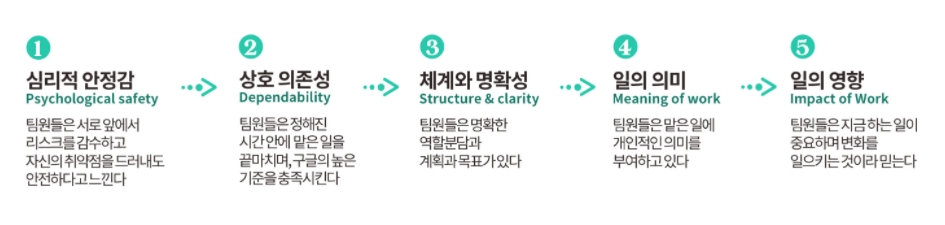
Back in 2012, Google launched a five-year statistical study called Project Aristotle to answer a critical question: “What makes certain teams within Google consistently high-performing?”
The results highlighted the following characteristics that distinguish high-performing teams:
|
|
|
In short, without psychological safety as the foundation, a high-performing organization simply cannot exist.
Psychological safety allows teams to overcome anxiety and creates an environment where employees understand the importance of their work and can communicate openly.
Only when psychological safety is in place can candid feedback—the “tough love” we discussed earlier—be received as fertile ground for both individual growth and effective performance management.
Recently, the importance of psychological safety was also highlighted on Channel CJ. Let’s reflect on it together through the underlined key statement below, and use it as a moment to assess the climate within your own team, .
|
|
|
✍️ Key Takeaways (Underline Moments)
-
What sinks an organization is not failure, but silence. And silence comes from a lack of psychological safety.
-
When psychological safety is present, team members are confident that raising concerns will not result in humiliation, dismissal, or punishment.
-
The final missing piece of the puzzle for building a strong team is psychological safety.
-
With a leader who shows humility and curiosity and is eager to learn, team members naturally feel safe and contribute more ideas.
-
Psychological safety is not the same as kindness or niceness. Nor does it mean comfort or ease. Rather, it is the condition in which—even if words are tough or feedback is bitter—productive conflict enables mutual understanding and learning.
-
Psychological safety emerges only when leaders and team members trust and respect each other, and share their thoughts candidly.
|
|
|
▶NOTICE
PMDS+ for Leaders
: PMDS+ Program Overview & Q&A Session |
|
|
#Curious About PMDS+ 360-Degree Feedback?
Every other month, we host an information & Q&A session for PMDS+ leaders who register in advance 👏
This time, the session will focus on 360-Degree Feedback, which will be rolled out this coming September. The discussion will be based on questions submitted beforehand, and the session will be run in a small-group format.
If you’d like to join, simply click the “Register” button below!
*Please remember to submit your questions in advance through the form.
[PMDS+ for Leaders]
-
Date & Time: Thursday, July 28, 4:00 PM (approx. 30 minutes)
-
Location: To be shared with participants (CJ CheilJedang Center / Online via Teams)
-
Content: Overview of PMDS+ 360-Degree Feedback + Q&A on pre-submitted questions
-
Capacity: Up to 5 participants
Registered participants will receive a follow-up confirmation email.
※ If you encounter any issues with the registration button, or if you’d like to send additional questions afterward, please feel free to contact the organizers directly:
|
|
|
#Continuous Performance Management Check ✅
We’re excited to recognize the Top 5 teams that most diligently provided feedback on the key activities submitted by their members! (👏👏)
To keep building a strong culture of continuous performance management, we look forward to your ongoing commitment and support as leaders.
|
|
|
❤️ Leader Feedback Ratio - TOP 5 ❤️
1️⃣ BIO Corporate Support Office (UTEL T/A TF)
2️⃣ BIO ANH Division (Business Planning)
3️⃣ BIO Engineering Solutions
4️⃣ BIO Americas – Piracicaba Plant
5️⃣ BIO ANH – Specialty CM
|
|
|
How Did You Enjoy Today’s PLUS Newsletter?
We’d love to hear your honest feedback!
|
|
|
CJ CheilJedang BIO Division, HR Planning Team
Copyright ©2022 CJ Cheiljedang BIO HR, All rights reserved. |
|
|
|
|