#Fine_Dust #미세먼지 For dark mode users,
Hello, reader! Today, we are covering: Zoom In Is Fine Dust in Korea So Bad These Days? Don't forget to leave your feedback below!
Is Fine Dust in Korea So Bad These Days? Writer: Yeon-woo Lee Senior Editor: Regine Armann Editor-in-Chief: Fred McNulty Researcher: Sunny Um, Yul Jeon Illustrator: Ah-young Kim
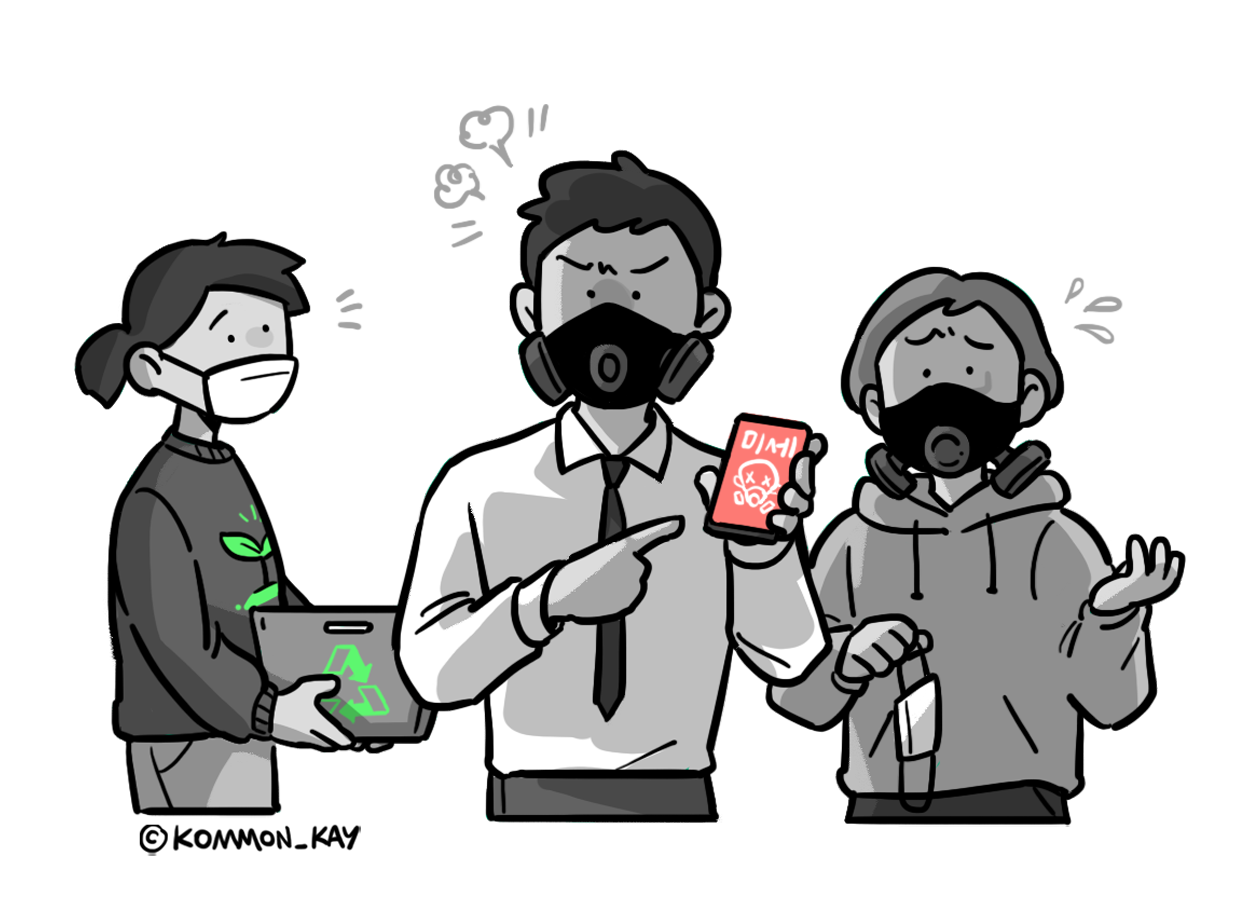
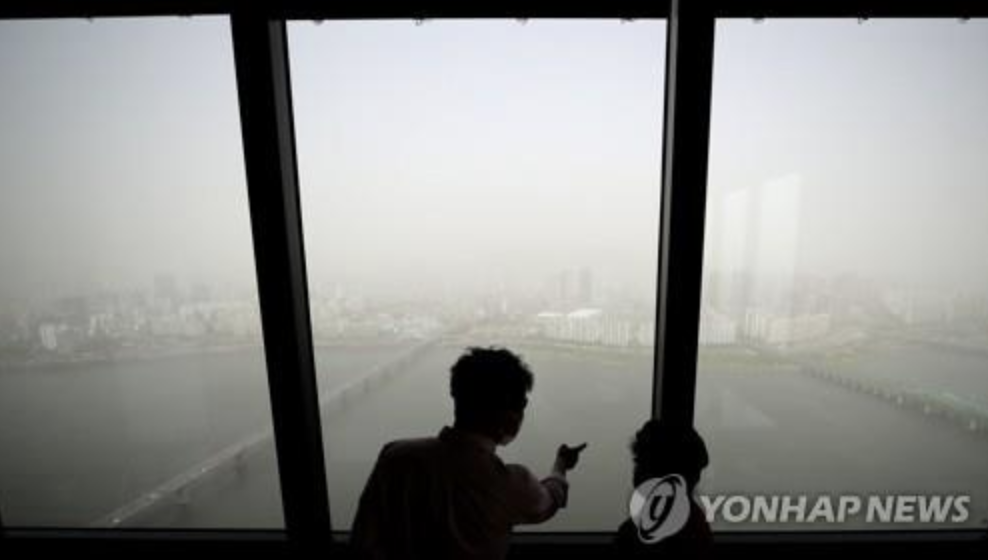
[Illustration by Ah-young Kim] Did anyone else do something special for Parents’ Day on May 8? I planned to go on a picnic with my parents. But when I woke up with anticipation, I saw that the entire sky was covered in a thick yellow haze. My mom told me on the phone, “It was not this bad in the old days. Why is the fine dust getting worse and worse?” On May 7 and 8, fine dust concentrations across Korea reached the Very Poor classification, out of the 4 forecast levels of fine dust: Good, Normal, Poor, and Very Poor. The media reported that a yellow dust storm that originated from the Gobi Desert in China prompted the issuing of an official fine dust warning. Some media outlets described the situation as “air-mageddon,” in an attempt to highlight the severity of the pollution. However, the fine dust in Korea is not a temporary issue. As Korea has always suffered from seasonal fine dust, the government has even declared fine dust a “social disaster.” According to the 2019 World Air Quality Report published by Greenpeace and AirVisual, Korea had the highest average fine dust levels of any Organization for Economic Cooperation and Development (OECD) country in 2019.
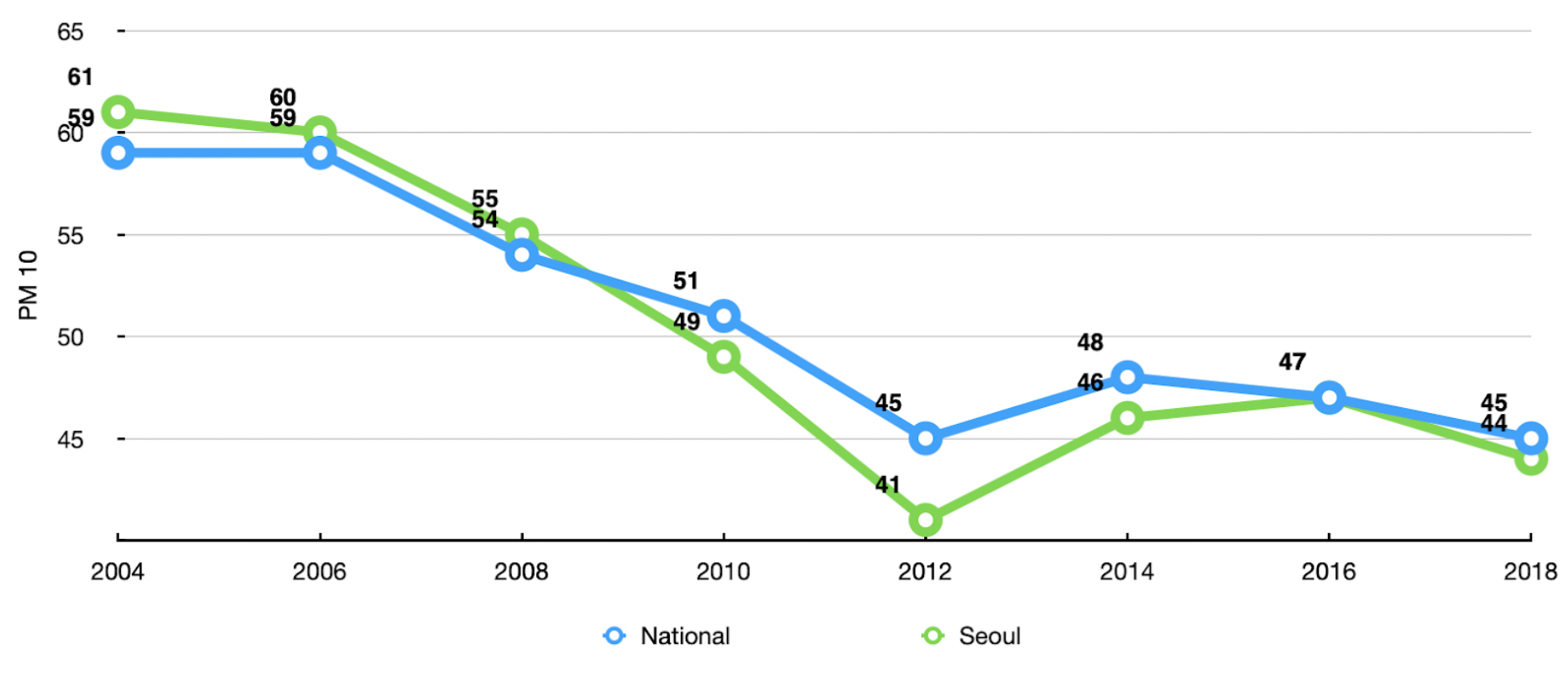
The sky over Seoul on May 7 (Source: Yonhap News) What Is Fine Dust? According to the Ministry of Environment of Korea, you can divide types of dust by the size of the particles in it. Fine dust consists of tiny particles with diameters of less than 10 microns, which are so tiny that they can only be seen through a microscope. The pollution created by fine dust can trigger a variety of respiratory illnesses as the fine dust can easily enter people’s respiratory systems. Has Fine Dust Been a Problem in Recent Years? You may be surprised to hear that the levels of fine dust concentration in Korea have decreased throughout the past 10 years. Take a look at the graph below. Starting from 59㎍/㎥ in 2004, the average fine dust concentration level has dropped to 45㎍/㎥ in 2018.
(Source: The Ministry of Environment of Korea) - Blue line: Average level of fine dust concentration across Korea - Green line: Average level of fine dust concentration in Seoul One reason for this decrease is that the average number of days of rain and of typhoons, which both remove fine dust from the air, have increased over the years. According to the National Institute of Environmental Research of Korea, the average number of days of rain is now 12 times higher than in 2006. Even though the levels of fine dust concentration have consistently decreased in recent years, the majority of people living in Korea think that dust levels have increased and are concerned about the effects the pollution might be having on their health. Still, the commonly held belief in Korea is that fine dust originates from China. However, fine dust can be generated by diesel cars, coal-powered plants, and even natural events such as wildfires. In 2016, a joint study by the National Institute of Environmental Research of Korea and NASA reported that China is responsible for 32% of Korea’s air pollution while domestic causes make up 52%. Why Does the Perception of People Differ from Reality? Effects of Media Reports If you want to get information about fine dust, where would you go? You would probably turn to the TV, radio, or news websites. Unfortunately, some Korean media tend to use dramatic words and like to put the responsibility on China. (Korean link) Some even use scientifically uncorroborated evidence or debatable measures to highlight the severity of fine dust. (Korean link) As media reports about fine dust became more frequent in recent years, people consider the issue more seriously and think that fine dust levels must be worse than ever before. Increased Attention to the Environment The state of the environment has been the center of discussion in Korea over the past few years. According to a research report by the Korea Environment Institute, Korean nationals’ interest in the environment has increased from 54.4% in 2017 to 74.2% in 2018. Interestingly, people interested in the environment responded that fine dust issues have to be solved with the utmost urgency. The ranking of environmental issues that need to be solved urgently is as follows: improvement of air quality (33.6%), response to climate change (14.3%), and increase of waste disposal (12%).
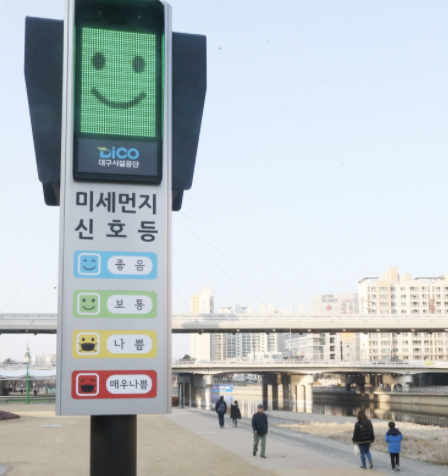
Fine dust traffic light (Source: Kyongbuk Ilbo) Easy Accessibility to Fine Dust Information Have you ever seen this fine dust traffic light while walking around Seoul? This traffic light-like device indicates the level of fine dust concentration on a specific day. Besides such fine dust traffic lights, there are many other ways to keep track of fine dust in daily life, such as in news articles, mobile apps, and direction boards along roads. According to a research report of the Korea Environment Institute, people who check fine dust levels more often are generally less satisfied with the air quality. This implies that easy accessibility to fine dust information leads people to think that the air quality is getting worse. The Government's Response Even though levels of fine dust concentration have decreased consistently, clean air efforts are still important as there is room for improvement. More efforts should be made to drastically reduce the amount of fine dust. In addition, there are plenty of other air pollutants such as NOx and ammonia whose concentrations are constantly increasing. The Korean Government carries forward its fine dust policies in 7 categories after President Moon’s inauguration in 2017. Here are some examples of each category.
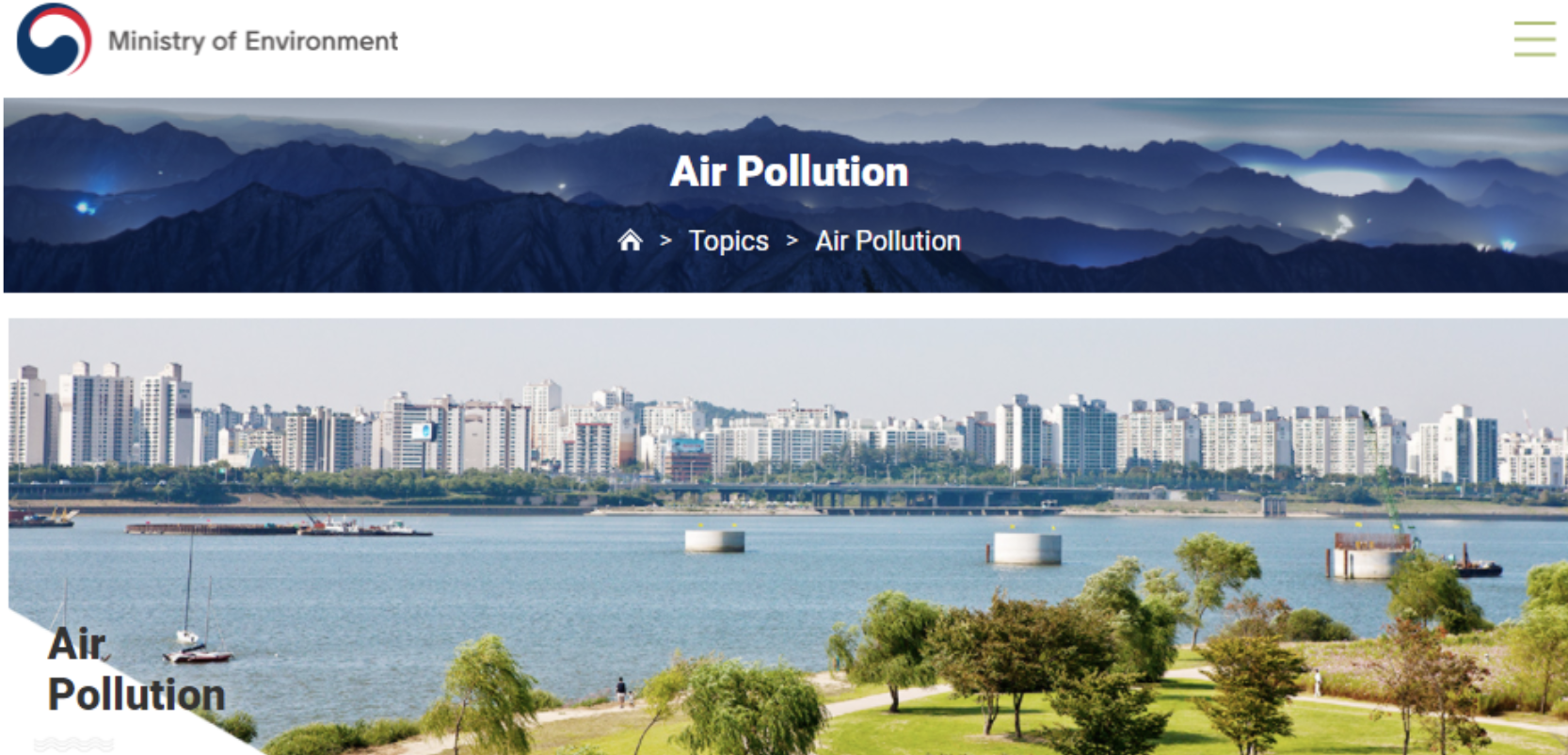
Please check out the website below if you want to know more about the Korean Government’s policies toward air pollution.
(Source: Ministry of Environment http://eng.me.go.kr/eng/web/index.do?menuId=464) How Should We Respond to the Fine Dust Problem? While fine dust may not be as severe as some people may think, it is still an issue that deserves attention. Solving the fine dust problem will be a difficult and time-consuming job. According to a previous administrator of the Korea Meteorological Administration, Ko Yun-hwa (Korean link), “Much effort is needed in our daily lives, such as eco-friendly consumption, which imposes a lesser burden on the environment, use of public transportation, less frequent eating out and shopping, etc. Hence, we should be aware that damage caused by fine dust not only affects individuals but every human being”.
💚 Support us! 💚
|