Woori Bank’s Last All-In Bet KOSPI ▲4,457.52 │ KOSDAQ ▲957.50│ KRW/USD▲1,444.10 |
|
|
As of 3:30 p.m. on the previous trading day |
|
|
✴ Gudo Investment Management╎With an investment strategy that captures shifts in search data and consumer behavior ahead of the market, assets under management have grown to $446 million (₩650 billion). Unlike traditional PEFs, the firm runs open-ended funds alongside long-short strategies, focusing on stable performance rather than rapid expansion.
✴ SM Culture Partners╎Selected as a GP in a Growth Finance-backed program, the firm is forming a $34 million (₩50 billion) content fund with the CVC arm of Japan’s Colopl group. The move marks a transition from reliance on proprietary capital to a full-scale fund business.
✴ SKS Private Equity╎After failing to close a blind fund, the fundraising deadline has been extended to March this year, making capital raising in the first quarter the biggest hurdle. Although the firm posted a 50% IRR from the exit of its Bloom Energy investment, the fund’s completion will depend on securing additional LP commitments.
✴ Korea Venture Capital Association╎Following President Lee Jae-myung’s New Year address reaffirming support for a startup-centered society and the venture ecosystem, the association issued an official welcome statement. It expects liquidity from policy finance and the National Growth Fund to flow into the venture and KOSDAQ markets and plans to continue proposing field-oriented policies.
✴ Q Capital Partners╎Entering the third year since acquiring Chorokbaem Media, the firm is shifting its management strategy from stabilization to IP-driven growth. With governance stability and risk management largely completed, attention is on whether content IP acquisition and utilization will translate into tangible value creation this year.
✴ Korea Venture Investment Corp╎Aiming to expand the venture investment market in 2026 and strengthen the Fund of Funds function, the organization has carried out a restructuring to realign its investment, management, and external cooperation functions. Changes include appointing a new head of investment and establishing fund management and LP platform teams to boost private capital inflows and enhance performance and risk management.
✴ Stonebridge Ventures╎As Nota and LivsMed have listed on KOSDAQ in succession, the firm is delivering ten-bagger-level exits. Large-scale realizations from funds backed by Growth Finance and KIF are becoming visible, helping secure re-ups for a new $137 million (₩200 billion) fund and reaffirm investor confidence.
✴ RecensMedical, Inc╎The company passed the KOSDAQ preliminary listing review, putting its IPO process on track, while exit expectations are rising among financial investors that have provided cumulative funding of $48.5 million (₩70 billion). Over the past decade, its enterprise value has grown more than tenfold from $7.3 million (₩10.5 billion) to $90.0 million (₩130 billion), although its loss-making structure remains a challenge after listing.
✴ Wonik Investment Partners╎The firm successfully raised a $252.8 million (₩365 billion) blind fund, its largest since inception, marking a first year of transition into a mid-sized private equity house. Alongside the fundraising success, strong realizations such as an IRR of 42 percent from the Dongbang Medical exit led to promotions occurring only within its PE division.
✴ Nautic Investment╎PowerCube Semi, a power semiconductor company, has entered preparations for a KOSDAQ IPO after passing a technology assessment and completing a $4.1 million (₩6 billion) pre-IPO round. Nautic has stayed with the company from the initial investment through the IPO phase, with its flagship portfolio seen as the first to gain clear exit visibility.
|
|
|
Homeplus Store Closures, a Shaking Hypermarket Sector |
|
|
⭑ Why Emart and Lotte Mart Are Smiling as Homeplus Shuts Stores
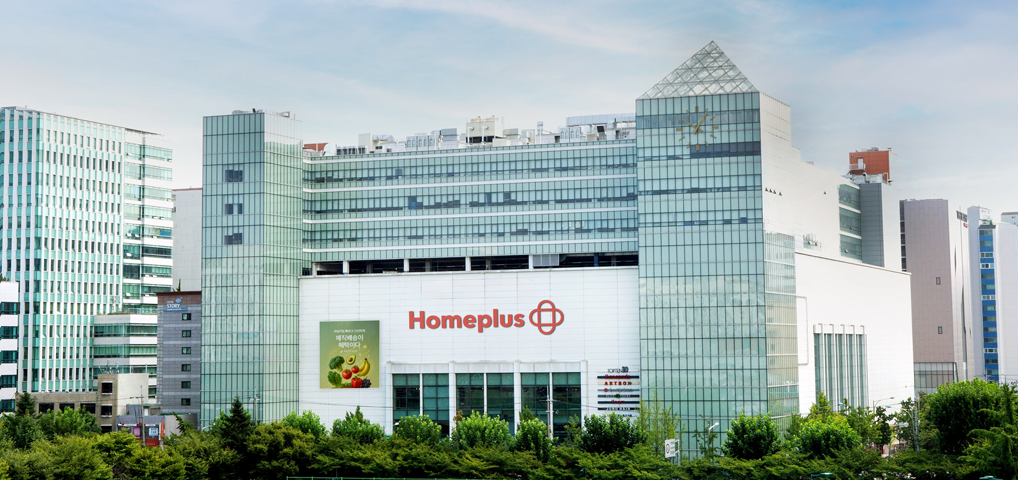
Homeplus has ultimately pulled out a large-scale restructuring card. After a failed attempt at a full sale, it decided to close 41 large-format stores over six years through 2031, about 30% of its 117 locations. In 2024, its hypermarket business posted sales of about $3.02 billion (₩4.3953 trillion), but EBITDA stood at -$136.6 million (₩199.1 billion), showing that its profit structure was already severely shaken. The calculation was that keeping loss-making stores would lead not to rehabilitation, but liquidation.
At the end of January alone, five stores, including Siheung, Incheon Gyeyang, Ansan Gojan, Cheonan Sinbang, and Dongchon, will close. Another five, such as Ulsan Nam-gu and Jeonju Wansan, remain under review after lease negotiations broke down. Cash flow deteriorated to the point where even tax payments were burdensome, disrupting product supply, and during that time a significant share of customers likely moved to nearby competitors.
⭑ Overlap-Driven Structure Makes Spillover Gains Inevitable
The core issue is location.
Before restructuring, 73 Homeplus hypermarkets overlapped in trade areas within a 2 to 3 kilometer radius of Emart or Lotte Mart. Of these, 12 have already closed or are set to close soon. When Homeplus exits a trade area, consumers naturally look for the nearest alternative, narrowing choices to Emart or Lotte Mart. If the Homeplus near home disappears, where else would shoppers go?
Industry sources say that as Homeplus even struggled to supply goods smoothly, customer outflow had already progressed significantly. Stores with overlapping trade areas were likely in worse condition, and as more of these locations close, spillover gains for competitors are expected to grow.
⭑ Emart Expands, Lotte Mart Focuses on Restructuring
Against this backdrop, Emart and Lotte Mart are taking different paths. Emart plans to open five new large-format stores, including Traders, this year and next. At the same time, it is renovating aging stores and pushing fresh food and deli categories, where online penetration is low. Its Eunpyeong store has expanded fresh food space fourfold and is set for a grand reopening in April.
Lotte Mart, meanwhile, is focusing on revamping existing stores rather than opening new ones. Across its 112 operating locations, it is raising the share of fresh food and deli to 70 to 80%, and in some stores allocating up to 90% of total space to these categories under its “Grand Grocery” model. As Homeplus leaves gaps behind, the picture of the two rivals filling the market void in their own ways is becoming clearer.
|
|
|
Woori Bank’s Samsung-Centered Strategy, a Last All-In Bet for Survival |
|
|
⭑ Riding an $60.8 billion payment market with Samsung Wallet alone
Woori Bank sees 2026 as effectively its final make-or-break year. As money moves accelerate out of banks and into securities and capital markets, it has concluded that surviving with conventional banking models is no longer feasible.
That is why it chose integration with Samsung Electronics.
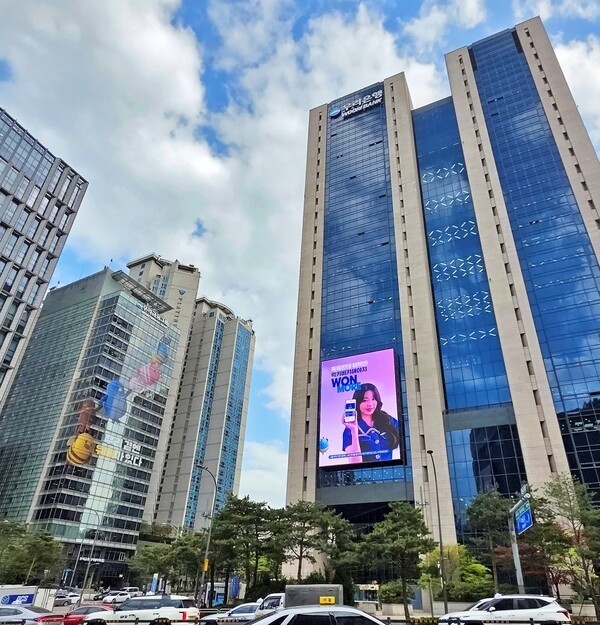
In September last year, Woori Bank became the sole operator of Samsung Wallet’s money and points linkage business. Samsung Wallet holds a 42% share of the offline digital wallet market, with annual payment volumes of $60.8 billion (₩88.6 trillion), making it the clear market leader. Because payments are made directly from bank accounts without physical cards, this structure gives banks one of the few remaining ways to anchor themselves in customers’ daily payment moments.
⭑Numbers prove the impact, a penetration strategy beyond a simple partnership
The results appeared immediately.
Leveraging its exclusive operator status, Woori Bank launched Samsung Wallet–only high-interest deposit and savings products, attracting one million subscribers within two months. In effect, it embedded its banking infrastructure into a platform handling average daily transactions of about $686 million (₩1 trillion).
This is not just about increasing customer numbers. It means Woori Bank has entered the financial home screen of young, digital-native customers. The calculation is straightforward, capture the full flow from “payment → deposits → investment” in one sequence.
⭑ After payments come people, then the future market
The strategic weight is even clearer in personnel moves. Jung Eui-cheol, a former Samsung Electronics executive who led Galaxy smartphone software competitiveness, joined Woori Bank as head of the Digital Sales Group at vice president level. Known for leading AI-based test automation and customer experience innovation, he is a direct fit for the Samsung Wallet initiative. At the same time, Woori Bank is preparing a standardized token securities (STO) platform together with Samsung Securities and SK Securities.
While stablecoin legislation remains a key hurdle, the strategy is to have everything in place so the bank can enter immediately once the market opens. Payments as the present touchpoint, people as execution power, and token securities as the future are all being tied to a single Samsung axis.
Ultimately, the strategy comes down to one question. Will an all-in commitment to Samsung as a single partner create differentiation, or become a concentration risk? One thing is clear. As money moves accelerate, Woori Bank has judged that there are no safe options left, and has placed all its chips on what it sees as the most certain card. The outcome of this bet should become clear after 2026.
|
|
|
🔍Current Situation╎SDC, LGD halt large-size OLED expansion
Samsung Display and LG Display are not proceeding with large-size OLED facility investments again this year. With TV-led demand yet to recover, they judge existing capacity sufficient. Instead, investment is being concentrated on higher-margin small and mid-size OLEDs, prioritizing cost reduction and cash preservation. Demand for large-size OLEDs for monitors has increased but remains limited to gaming, and the industry views large OLED lines as already oversupplied. |
|
|
📦Urban Logistics╎Korea’s speed
CJ Olive Young opened its 22nd urban micro-fulfillment center in Jongno, Seoul, strengthening same-day delivery under its “Today Dream” service. By jointly using offline stores and logistics hubs, it is expanding delivery within hours of order placement. With 22 MFCs and about 1,400 stores, Today Dream now covers roughly 70% of Korea’s administrative districts. Fast delivery is drawing core customers, with online MAU and the share of sales rising quickly. The company plans further MFC expansion outside the capital region this year, continuing its omni-channel strategy. |
|
|
🔦From shadows to spotlight ╎Financial capital enters crypto, Bithumb’s choice
Mirae Asset Group has acquired most of the equity in Korbit, accelerating a shift toward institution-led restructuring of the crypto exchange market. Following the Naver Financial–Dunamu (Upbit) alliance, more major financial groups are entering. In this environment, second-ranked Bithumb is maintaining an independent IPO stance, but delays in governance reform and regulatory uncertainty cloud the timeline. The industry sees Bithumb’s options narrowing between sticking with a listing and pursuing strategic alliances. |
|
|
😮💨IPO heavyweights╎Catching breath before the leap
The IPO market in early 2026 has started with SPACs and small-cap listings in January, testing fund flows. Caution is expected to prevail until large-cap debuts. Market attention is on K Bank and Essex Solutions, which are awaiting review outcomes. Brokers say that as a five-year upcycle begins, these heavyweights could help turn market sentiment. |
|
|
✅Is this true?╎Policy, Coupang, National Pension Service
Media fact checks found that many policies said to change in the new year were either incorrect or exaggerated. The core point is that school zone speed limits, drunk driving standards, and the college entrance exam system remain unchanged, and some education policies were cases of overinterpretation.
Coupang’s “self-investigation” was revealed to be an exaggerated claim, not a government order but a cooperation request from the National Intelligence Service. The official investigative body is a joint task force led by the Ministry of Science and ICT, and the government neither instructed an internal investigation nor received the results.
The National Pension Service(NPS) is expected to post its highest-ever performance with annual returns in the 20 percent range, but long-term risks are noted, including concerns over an AI bubble, geopolitical conflicts, and possible policy-driven use of funds. Improved returns may delay fund depletion, but structural instability remains.
|
|
|
🖥️Premium╎No issues with Apple foldable panel
Samsung Display is proceeding as scheduled with supplying OLED panels for Apple’s foldable iPhone, with initial volumes estimated at 7 million to 10 million units. The panel price is about $250 (₩364,500), higher than that of Galaxy foldable models, and features CoE technology in line with the ultra-slim trend. Amid quality limitations at China’s BOE, Samsung Display’s accumulated technology and stable demand base are seen as sustaining its dominance in the premium OLED segment.
|
|
|
Elon’s New Year: Mass production of Neuralink |
|
|
How far has Neuralink come?
Founded in 2016 by Elon Musk, Neuralink is developing brain-computer interface (BCI) technology that converts human brain signals into digital signals and connects them to external devices. The technology has not yet reached commercialization, and the company is in the process of verifying real-world functionality through human clinical trials.
As of September 2025, about 12 patients with severe paralysis have received the N1 implant and have used it for more than 15,000 cumulative hours. Clinical trials have expanded beyond the United States to Canada, the United Kingdom, and the UAE. More important than the numbers is the fact that testing has moved beyond a single-country effort to multinational clinical trials.
Why the N1 implant matters
The core of Neuralink’s technology is the N1 implant. It contains 1,024 electrodes mounted on 64 ultra-thin electrode threads and wirelessly transmits neural electrical signals to external devices. Another key feature is the use of a dedicated surgical robot that inserts the implant with greater precision than the human hand, reducing invasiveness. In clinical settings, quadriplegic patients have been shown controlling computer cursors and input devices using only their thoughts. While the functions remain limited, the connection from thought to signal to action itself is the key proof point.
Why expectations and controversy are rising together
The Blindsight project, which aims to restore vision, received Breakthrough Device designation from the FDA in 2024. In June 2025, Neuralink raised about $650 million in funding, valuing the company at around $9 billion. As technological expectations rise, controversies surrounding animal testing, long-term safety, and brain data security continue to follow.
As a result, Neuralink stands as both a leading-edge company and one that must undergo the most scrutiny.
|
|
|
What is a Special Purpose Acquisition Company? |
|
|
✴ SPAC | (Special Purpose Acquisition Company)
A Special Purpose Acquisition Company (SPAC) is a paper company established solely for the purpose of acquiring or merging with another company, without any actual business operations of its own. Because it raises capital before identifying a specific acquisition target, it is also referred to as a blank check company. The sole objective of a SPAC is to acquire or merge with a private company and take it public, allowing the target company to become publicly listed without going through the traditional IPO process.
A SPAC is typically formed by professional investors or management teams, known as sponsors, and is listed on a stock exchange to raise funds through a public offering. The raised capital is placed in a trust account, and the sponsor generally has 18 to 24 months to identify an acquisition target. Once a target is selected, the merger proceeds after shareholder approval, and upon completion, the target company is automatically listed. If no acquisition is completed within the specified period, the SPAC is liquidated and the funds are returned to investors.
For private companies, SPACs offer a faster and simpler route to going public compared with traditional IPOs. For investors, they provide downside protection through redemption rights that allow them to recover their investment if they oppose the merger. However, investors must accept uncertainty before the acquisition target is confirmed, and dilution can occur due to sponsor ownership during the merger process. After a surge in 2020 to 2021, SPAC activity has declined, with weaker post-merger performance at some companies and tighter regulations leading to more cautious approaches. |
|
|
Send us any suggestions you’d like to share while reading Bitter’s newsletter! |
|
|
Advertising, inquiries : viter@thevistapartners.com / Published by Newstop. Unsubscribe |
|
|
|
|