#K-pop #Cultural insight For dark mode users,
Hello, reader! Today, we are covering: Cultural Insight: To speak up or not to speak up - the K-pop market between mainstream and minority cultures Slang: Chong gong (총공) This Week's Recommendations Reply 1997 (응답하라 1997, 2012) Don't forget to leave your feedback below!
To speak up or not to speak up - the K-pop market between mainstream and minority cultures
Writer: Yeon Woo Lee Senior Editor: Regine Armann Editor-in-Chief: Fred McNulty Researcher: Sunny Um, Yul Jun Illustrator: Ah-young Kim
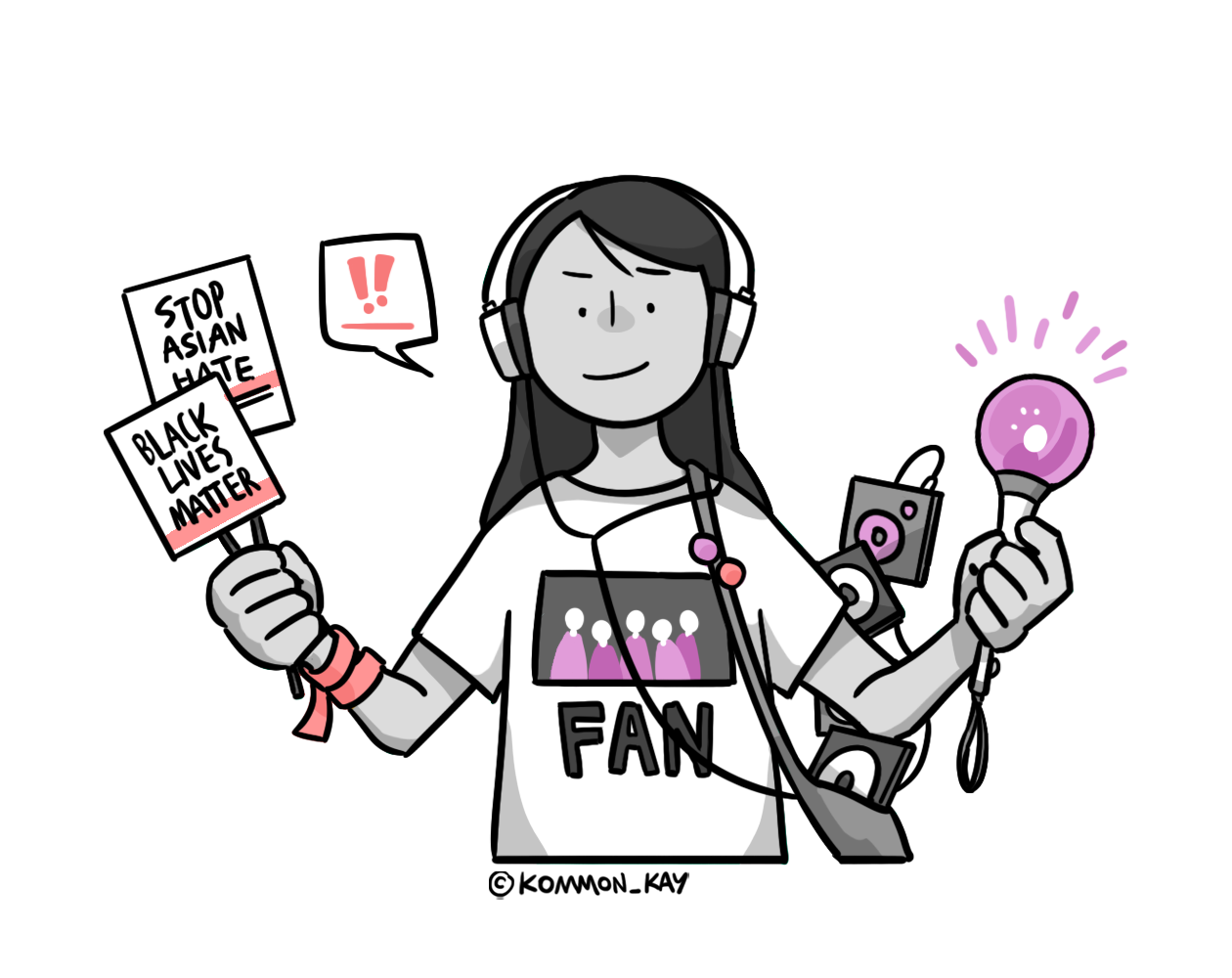
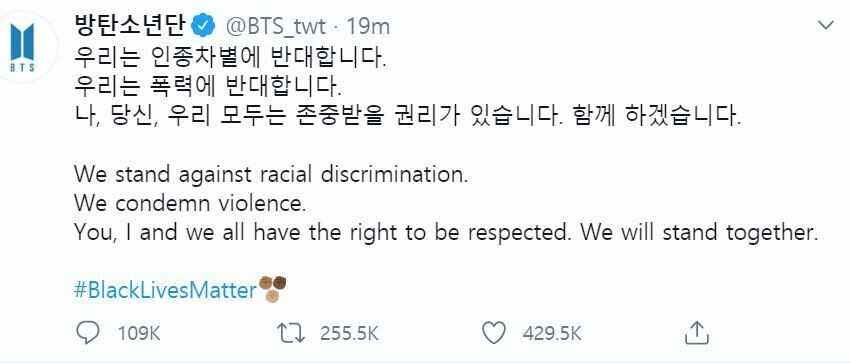
[Illustration by Ah-young Kim] The ARMY, the official fandom of BTS, is reinventing the concept of “socially engaged fandoms” that has existed throughout K-pop history. As BTS donated $1 million to support the Black Lives Matter campaign in 2020, the ARMY donated the same amount of money, demonstrating the power of fandoms that can lead to positive changes on a global scale. According to the official statement of Project OIAA (One In An ARMY), more than 38,000 fans worldwide have donated over $1.14 million to the campaign so far.
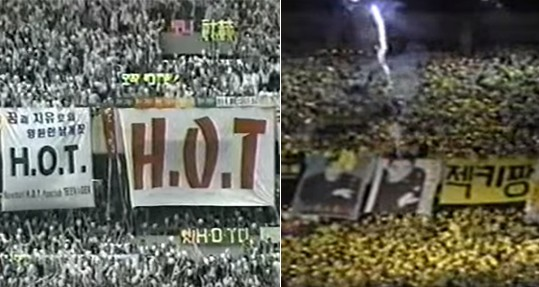
Source: The Hankyoreh As of late, global K-pop fandoms tend to focus on socio-political issues and actively participate in solving these issues with the celebrities they support or on behalf of these celebrities. However, in Korea, where K-pop has its roots, the K-pop market has had to stay neutral and keep silent about socio-political issues for a long time. Korean entertainment agencies have traditionally ordered their celebrities to keep silent about sensitive political issues. Agencies envision the K-pop market as a pristine area when it comes to politics, as celebrities could be attacked by various political sides, which could hurt sales. In Korea, celebrities have been considered as “public figures” who should take a cautious attitude when they express their political views. Controversies flare up when a celebrity openly supports a politician or political agendas such as refugees’ rights, LGBTQ equality, and feminism. Therefore, K-pop fandoms based in Korea have been communities that root for their preferred celebrities, not places to collectively express socio-political opinions. Why do global K-pop fandoms take a path that is different from fandoms based in Korea? History of Korean K-pop fandoms The word ”fan”, an abbreviation of either “fanatic” or “fancy,” refers to someone who admires and supports a person, group, or other entity. “Fandoms (Korean link)”, as a broader concept, are characterized by a collective of fans who share common interests. 1) The beginning of fandoms: the 1980s The very beginning of Korean fandoms was Yong-pil Cho (조용필)’s “Oppa Budae (오빠부대, meaning “older brother’s troop”)” in the 1980s. The term was coined to refer to a large group of young female fans following an attractive male celebrity, which was Yong-pil Cho at the time. There had been several groups of fans revolving around celebrities before Yong-pil Cho, but Oppa Budae was the first group of fans devoted to a specific person with great enthusiasm. 2) Fandoms in the 1990s In the 1990s, idol stars signed with big entertainment agencies such as H.O.T and Sechskies (젝스키스) appeared on the scene. Armed with good-looking members and sensational dance moves, H.O.T and Sechskies raised the scale of fandom support to an unprecedented level. The culture of supporting one’s own celebrity and expressing a sense of rivalry toward other celebrities’ fandoms originates from this phase. In 1997, the rivalry between two fandoms got so intense that police officers were ordered to stand nearby broadcasting companies as some fans used physical violence against members of rival fandoms (Korean link). This marks the moment when many in the Korean public first took a negative stance toward fandoms. The public started to consider fandoms problematic, because their typical members are young female students, who many believe should stay in school rather than following celebrities around. On the extreme end, some obsessive fans were even reported to have broken into celebrities’ houses and invaded their privacy. Based on the widespread coverage of a few very negative cases, fandoms were not respected as serious enterprises.
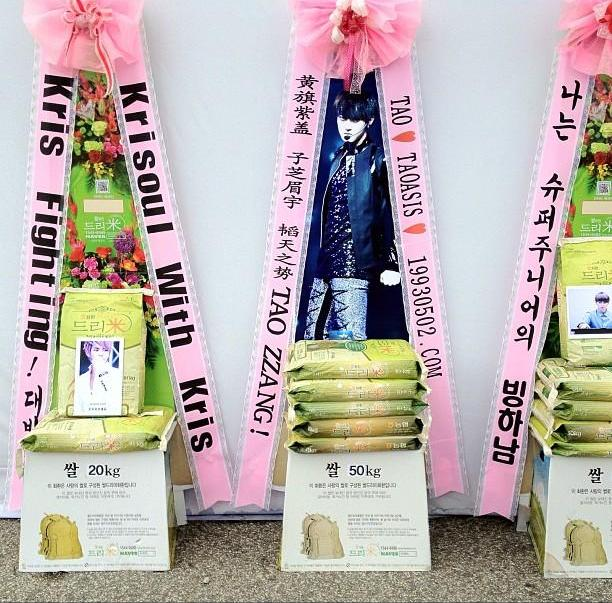
Source: Kookmin Ilbo 3) Fandoms in the 2000s As idol groups from the 1990s started to disband, the second generation of idol groups such as TVXQ (동방신기), Big Bang (빅뱅), and Super Junior (슈퍼주니어) made their debuts. Compared to the 1990s when fandoms limited their role to being loyal to their celebrity, fandoms in the 2000s took a more systemic approach to protecting their celebrity from the media and helping them maintain their position in the K-pop market. This includes fan protests in response to the press writing critical articles about a celebrity, and posting comments in online forums representing the celebrity’s side. 4) Fandoms in the 2010s The third generation of idol groups consists of groups that appeared in the 2010s and is mainly represented by BTS (방탄소년단), Winner (위너), and Wanna One (워너원). This was the era when fandoms “created” the idol groups they wanted to support, by voting in audition programs such as “Produce 101 (프로듀스 101)” and “WIN: Who Is Next”. During this period, fandoms evolved into proactive groups and became more vocal (Korean link) compared to when they had simply revolved around idol groups and entertainment agencies. Even though fandoms in Korea are generally considered only loyal to their own celebrities, there have been cases where they engaged in “social contribution” activities. For example, fandoms often send rice (so-called “fan rice”) when their celebrity is holding a concert, instead of the usual flower wreaths that can be considered a waste. Presenting this rice outside the venue and donating it to charity organizations in Korea after the concert in the name of the celebrity has become a part of fandom culture. Seo Taiji's fandom even designated a patch of land in Brazil's rainforest to the singer and raised money to plant trees there, to commemorate his 20th anniversary. Through such initiatives, fandoms started to spread a positive image of their celebrities and of the fans themselves; however, these actions are seen as demonstrations of affection towards specific people, not as expressions of collective socio-political opinions.
Why are global K-pop fandoms so different from fandoms based in Korea? 1) Different social significance of K-pop In Korea, K-pop is the mainstream in the music market and is promoted by major entertainment agencies. In order not to offend the general public, K-pop in Korea focuses on delivering “politically neutral” messages (relative to the Korean political spectrum), as do many other mainstream cultures. However, outside of Korea, K-pop has a different significance. Korea, as a non-English speaking country not located in the West, is perceived as an underdog when it comes to the global music industry. The success of K-pop therefore represents an anomaly of a minority culture becoming a popular music genre in the worldwide music industry. Even though K-pop singers like BTS sell enormous records, K-pop is still non-mainstream music. Some view it as a symbol of the counterculture (Korean link) against White mainstream Western culture. 2) Increased attention toward inequality Young people, representing the major consumers of K-pop culture, have heightened awareness of issues concerning race, culture, sexual orientation, and gender identity. According to Professor Hye-jin Lee from the University of Southern California, the reason for social engagement amongst these fans is that they care more about defeating inequality (Korean link) than about consuming K-pop. Therefore, non-Korean K-pop fandoms often feel more comfortable expressing their socio-political opinions through K-pop as a non-mainstream part of their respective cultures. The ironic situation of K-pop K-pop celebrities are put into a somewhat precarious situation where they are required to be non-political in Korea, their country of origin, but told to be more political outside of Korea. However, K-pop cannot be kept free from the socio-political context it exists within. Now is probably the moment to ponder over how the collective K-pop market should respond to current and increasing socio-political issues.
Slang Chong gong (총공) "Chong gong (총공)" is an abbreviation of "chong gonggyeok (총 공격)", meaning “full-scale attack”. 총공 is a strategy that fans can use to influence music charts, make hashtags go viral, or gain influence on social media. Music streaming chong gong is the most common example of such an attack as it has the most immediate impact on music charts. To help their celebrities maintain a high rank on the charts, fans use the following strategy: create and share a playlist that includes several other songs along with your celebrity’s song - because listening to that song only repeatedly gets less counts - and sign up for free trials of several apps, as only two-thirds of streaming from each paid account is reflected in the charts. Example: A: 야, 오늘 저녁에 EXO 스밍 총공 있는 거 잊지마. B: 아, 당연하지! 나 이미 멜론이랑 지니 다 깔아놨어. A: Hey, don’t forget the EXO streaming chong gong tonight. B: Of course! I’ve already downloaded Melon and Genie. This Week's Recommendations Reply 1997 (응답하라 1997, 2012) This is a tvN drama that depicts Korea in 1997, at the beginning of the current idol craze, when H.O.T and Sechskies were popular, and realistically describes the high school fandom culture at that time. Focusing on a high school student who is a big fan of Tony An of H.O.T, this drama tells the story of a fight between rival fans and that student’s first love story. If you want to experience the early Korean fandom culture as well as fashion in the late 90s – watch this. It is available on Netflix.
|