For dark mode users,
Hello, readers! Today, we are covering: Index Zoom In Death of Ex-South Korean Strongman Chun Doo-Hwan and Its Aftermath Today's Vocabulary Chime-Chun-News (땡전뉴스, Ttaeng-Chun News) This Week's Recommendations A Taxi Driver (택시운전사, 2017) Don't forget to leave your feedback below!
Death of Ex-South Korean Strongman Chun Doo-Hwan and Its Aftermath Writer: Haram Lee, Daeho Park Editor: Aleya Sharif Senior Editor: Regine Armann Editor-in-Chief: Fred McNulty Researcher: Yul Jun
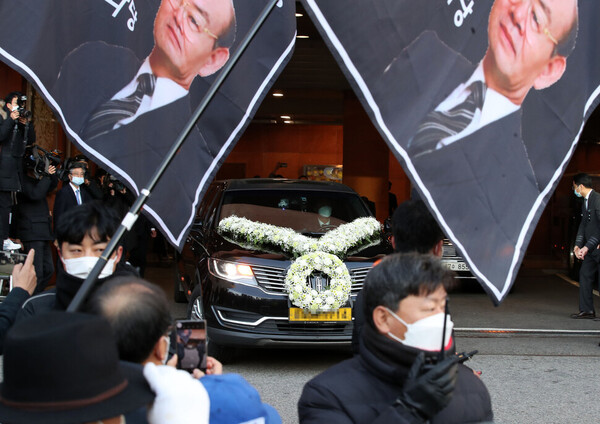
Source: https://www.hani.co.kr/arti/opinion/column/1021550.html Intro On November 23rd, former Korean president Chun Doo-hwan passed away. However, not everyone mourned his death. In fact, many even celebrated after the news spread, while most politicians and all presidential candidates refused to pay homage to the late president by visiting the funeral center. In this week's article, we will take a look at why he had such an unfavorable reputation by reviewing his presidency and his role in history. How Did Chun Doo-Hwan Seize Power in Korea? Chun entered the Korea Army Military Academy (육군사관학교) in 1951, and started his military career after his graduation in 1955. While he was working as an instructor at the Seoul National University Reserve Officers Training Corps (서울대학교 ROTC) in 1961, a coup d'état orchestrated by Park Chung-hee deposed then-President Rhee Syngman. This change in power, now known as the “May 16 Coup” (5.16 군사정변), led to mass protests and Chun was in charge of platoons deployed to suppress these movements in Seoul. This led to Chun gaining the trust of then-President Park Chung-hee, and he was promoted to the secretary at the Supreme Council for National Reconstruction (국가재건최고회의). In March 1979, Chun was appointed as commander of the Military Security Command (국군보안사령관) by then-President Park while he was still alive. After Park’s assassination by Korean Central Intelligence (중앙정보부) director Kim Jae-kyu, also known as the “October 26th Incident'', Chun took charge of the investigation, and the presidency was handed over to then-Prime Minister Choi Kyu-hah who served as interim president. On December 12th of the same year, Chun launched his own military coup and gained control of the government of Korea by forcibly driving out the president and prime minister and eliminating all the opposing military generals at the military headquarters. On May 17, 1980, also known as the “May 17th Internal Disturbance” (5.17 내란), Chun forcibly dissolved parliament, arrested advocates of democracy, and started persecuting his opponents. On the next day, when city-wide democratic demonstrations started in Gwangju, known as the “Gwangju Uprising” (5.18 광주 민주화 운동), Chun deployed a special airborne division to suppress the movement. This youtube video shows a summary of how Chun succeeded in his December 12th Coup (English subtitles provided). May 17th and May 18th: Coup and Gwangju Uprising May 17th In April 1980, student-led political movements and politicians were alarmed by Chun’s grasp at power and authority. On May 1st, the Seoul National University Student Body decided to launch a demonstration protesting against Chun’s military regime, which they saw as an impediment to democratization. The protests took place in order to urge Chun to resign and to present an agenda to lead the country to democratization. The National Assembly and the main government had planned to present such an agenda in mid-May. The newly formed military regime was concerned that if the temporary National Assembly (installed after the assassination of President Park) went into session, that would weaken the newly established dictatorship by fostering democratic structures and giving the people the power to choose their leader. The regime, therefore, decided to take action earlier than planned, by pushing its agenda to May 17. On May 17, at 9:30 am, Chun paid a personal visit to the interim president, Choi Kyu-hah, and ordered his subordinate, Lee Hak-bong, to prepare for arrests of students and protest leaders as emergency martial law would go into effect from midnight. At noon, the new military regime opened its Military Forces Commanders Symposium (전군주요지휘관회의) to make sure all military forces were in unison for the enactment of martial law. At 5 pm, Chun coerced the prime minister into accepting the dismissal of the National Assembly and the installation of an emergency government, which were to be fully controlled by Chun. At 9 pm, Chun’s troops took over the central government, and the National Assembly was held captive, with all outside communications cut off. Without any further negotiations, the emergency martial law went into effect nationwide at midnight. Aftermath 1) The Purge The Security Command illegally arrested major opponent political figures such as Kim Dae-jung, who would later become president, and Kim Jong-pil, alongside 26 others. 2) No Political Freedom With the expansion of martial law, the military regime activated the 10th “Martial Proposal” (계엄포고 제 10호), which banned political activities, shut schools down, enforced even harsher media censorship, and prohibited political movements. Everything was done without notifying the National Assembly and implemented by force, which was illegal. 5.18 Gwangju Uprising The Gwangju Uprising took place between May 18 and May 27, 1980. It involved mostly Gwangju residents, who demanded the establishment of a democratic government as soon as possible, the resignation of the new military forces, including security commander Chun Doo-hwan, and the abolition of martial law. Gwangju citizens also protested against constitutional destruction and the reversal of the democratization process caused by the May 17 emergency martial law expansion measures implemented by the new military forces. New military-deployed airlift units were trained to suppress these protesters, and continuous engagement between armed civic forces and martial law forces resulted in a number of casualties. The 10-day Gwangju Democratization Movement resulted (Korean link) in 166 deaths as well as 54 missing, 376 fatally injured, and 3,139 otherwise injured people. Jürgen Hintzpeter, a reporter for the German public broadcaster ARD, was the first who record the Gwangju Uprising and smuggled his material out of Korea so that the world could see the horrors that were happening. The Historical Significance of Cun Doo-Hwan’s Death Suspension of Trial To Find the Truth The “May 18 Memorial Foundation” (5.18 기념재단) launched two trials against Chun (Korean link): a defamation trial involving the deceased priest Jo Bi-oh and a damage compensation trial. Chun was also criticized for distorting history, including the May 18 Democratization Movement, through a memoir published in April 2017, which marked the 30th anniversary of the president's retirement. In his memoir, Chun described the late Father Jo Bi-oh, who testified that an army helicopter had shot defenseless protesters in the Gwangju Uprising, as a "shameless liar". Father Jo's bereaved family and the Organization sued Chun for defamation of the dead, and Chun was sentenced to eight months in prison and two years probation in the first trial in November last year. Earlier in September 2018, the Civil Court ruled that Chun’s book could not be printed, published, or distributed unless 69 questionable or offensive passages were deleted, and ruled that a total of ₩70 million should be paid in compensation to the May 18 Organization. Chun's legal team appealed both the criminal and civil lawsuits. The defamation appeal trial was scheduled to wrap up now, after more than a year, with a resolution initially expected on the 29th of November. The Never-Ending Trauma On the day that Chun Doo-hwan died, a victim of the massacre, named Lee Gwang-yeong, who had suffered throughout his life after being shot by martial law forces back then, committed suicide. He left a suicide note saying, "I'm letting go of everything about May 18." Since May 18, 1980, at least 46 victims have killed themselves (Korean link). In 1980, Lee, who was a monk at the time, visited a temple in Gwangju to help prepare the "Day of Buddha's Coming (부처님오신날)" event and got involved in the ensuing massacre. Lee personally witnessed the brutality of the offense and defense units deployed to suppress citizens. Lee then assisted in transferring citizens who died or were injured to hospitals on May 21st when shots were fired in front of the martial law military's provincial office. Later in the day, while passing near Wolsan-dong, Nam-gu, Gwangju, he was shot while assisting an injured student by a martial law force helicopter and was himself moved to a hospital. The bullet penetrated Lee's spine and he could never walk again. Lee founded a self-help group with 18 others who were also injured in the massacre. He attended the Gwangju hearing of the National Assembly in 1988 as a witness to testify to the atrocities of martial law forces. Lee also attended the trial against Chun where he was accused of defaming the late Father Jo, and testified about the helicopter shooting he witnessed during the third trial on May 13, 2019. The other May 18 victims said of Lee's sudden death: “We felt devastated.” Another May 18 victim, Kang Sang-won, said, "Lee has been struggling with increasing pain recently," adding, "the most important thing for him was the May 18 fact-finding and punishment of the person in charge." “Since May 18, at least 46 victims have killed themselves after suffering like Lee,” Kim Myung-hee, a sociology professor at Gyeongsang National University, said in a study entitled May 18 Genealogy of Suicide: Unhealed May (Korean link). Professor Kim explained that 25 people killed themselves in the 1980s, four in the 1990s, and 13 in the 2000s, with the highest suicide rate occurring 10 years after the May 18 Uprising. Kim also said that the frequency of suicides has increased again since the 2000s, with seven people committing suicide in 2004 alone. "We believe that the suicides occurring among the May 18 survivors constitute social structural suicide caused by state violence," Kim suggests, "more seriously, the pain experienced by these victims during their lives is passed on to the second generation and their bereaved families." Difficulty in Collecting Outstanding Fines According to Hankyoreh, Chun had not paid ₩95.6 billion (Korean link) out of the ₩220.5 billion the court had ordered him to pay. The amount collected so far is ₩124.9 billion, or only 57% of the total. This stems from 1997, when Chun was sentenced to life imprisonment and a final fine of ₩220.5 billion by the Supreme Court. Chun Doo-hwan and his family have exhibited unrepentant attitudes over the years, all while avoiding the full payment of their outstanding fines. After paying only ₩31.4 billion in fines in 2003, Chun drew public outrage by ostentatiously claiming,” The only remaining fee is ₩290,000." Until his death, he was frequently seen playing golf or dining at expensive restaurants, while simultaneously arguing he was not healthy enough to participate in his own court trials. Chun Jae-guk, his eldest son, submitted a voluntary payment plan for additional fines in 2013, saying, "We will actively cooperate with the order” regarding his house in Yeonhui-dong, Seoul." However, when the prosecution handed over the house in Yeonhui-dong to the public for sale, the family backtracked and launched repeated lawsuits to stop the sale. In addition, the Democratic Party of Korea has decided to revise the law so that it can continue to collect unpaid fines even after Chun Doo-hwan's death. Under the current law, if a party dies without paying outstanding fines, the money can no longer be collected from their estate. Former lawmaker Chun Jung-bae proposed an amendment to the Criminal Procedure Act in 2019, but it was automatically scrapped with the expiration of his term in the 20th National Assembly. Democratic Party (더불어민주당) lawmaker Yoo Ki-hong issued a similar bill last year, but the review has not progressed. In other words, the National Assembly has not seemed very interested in making these changes. Outro Despite everything, a segment of the Korean populace still holds Chun Doo-hwan in high regard. These individuals typically hold far-right views, and hold an “ends justify the means” attitude toward the extreme human rights violations in the Park Chung-hee and Chun Doo-hwan administrations. Some even believe conspiracy theories that claim North Korea was behind the protests in Gwangju. Former prime minister Roh Jae-bong participated in the memorial service for Roh Tae-woo, Chun’s successor, convicted in court for his involvement in the Gwangju Uprising, called the coups a "destined duty of the military elites (Korean link)" and the suppression of civilians “inevitable”. Lee Jun-seok, the current leader of the conservative People’s Power Party (국민의힘당), also paid his respect by sending flowers to mark the death of Chun. These views, however, are only held by a minority. Chun Doo-hwan may have died “unapologetic and unrepentant” according to a characterization by Hankyoreh, but he also died a deeply unpopular man. While one can only speculate whom history will look kindly upon, it is hard to believe that an increasingly democratic South Korea will remember Chun in a flattering light.
Today's Vocabulary Chime-Chun-News (땡전뉴스, Ttaeng-Chun News) During the Chun Doo-hwan administration, as soon as TV news began at 9 o'clock, the news anchor would, without pause, break into news almost exclusively about the President. No matter how important a social incident broke out, the first news was always intended to inform about Chun Doo-hwan's activities. This was the case not only for the main evening news but also the morning and afternoon news. The beginning of the newscast was always indicated by a particular chime, immediately followed by news about Chun. The news were therefore colloquially known as "Ttaeng-Chun News” (땡전뉴스) - “Ttaeng” being an onomatopoeia representing the sound of the distinctive news chime, and “Chun” indicating what news would immediately follow that sound. Below is a clip of Ttaeng-Chun News moments: This Week's Recommendations
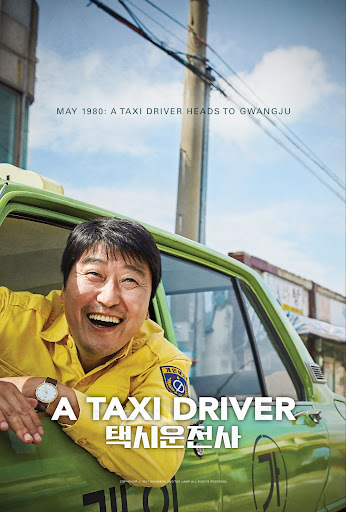
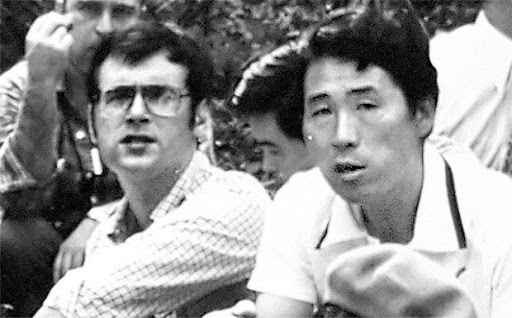
A Taxi Driver (택시운전사, 2017) Available on Netflix (137 mins) The movie focuses on the events that unfolded during the 1980 Gwangju Uprising. When a taxi driver named Kim Man-seob overhears one of the other drivers talking about a foreign passenger who is willing to pay a large sum for a trip, he rushes to steal that client from the driver. The client, a German journalist who disguised himself as a missionary in order to enter South Korea, plans on traveling to Gwangju from Seoul in order to document the civil unrest in the area. Although the roads leading to Gwangju are blocked and heavily guarded, the two manage to enter after lying about the journalist's identity, stating that he is a businessman, in order to get access to the city. The characters are loosely based on real-life people who met during that time: a taxi driver known by the alias Kim Sa-bok and the ARD journalist Jürgen Hinzpeter (as seen in the image below).
Source: https://www.donga.com/en/article/all/20181225/1589117/1
💚 Support us! 💚
|