#saju #사주 #관상 #fortune-telling For dark mode users,
Hello, reader! Today, we are covering: Index Zoom In Saju: Korean fortune telling
Today's Vocabulary Gwansang (관상) Don't forget to leave your feedback below!
Saju: Korean fortune telling Writer: Yeon Woo Lee Senior Editor: Regine Armann Editor-in-Chief: Fred McNulty Researcher: Sunny Um, Yul Jun Illustrator: Ah-young Kim
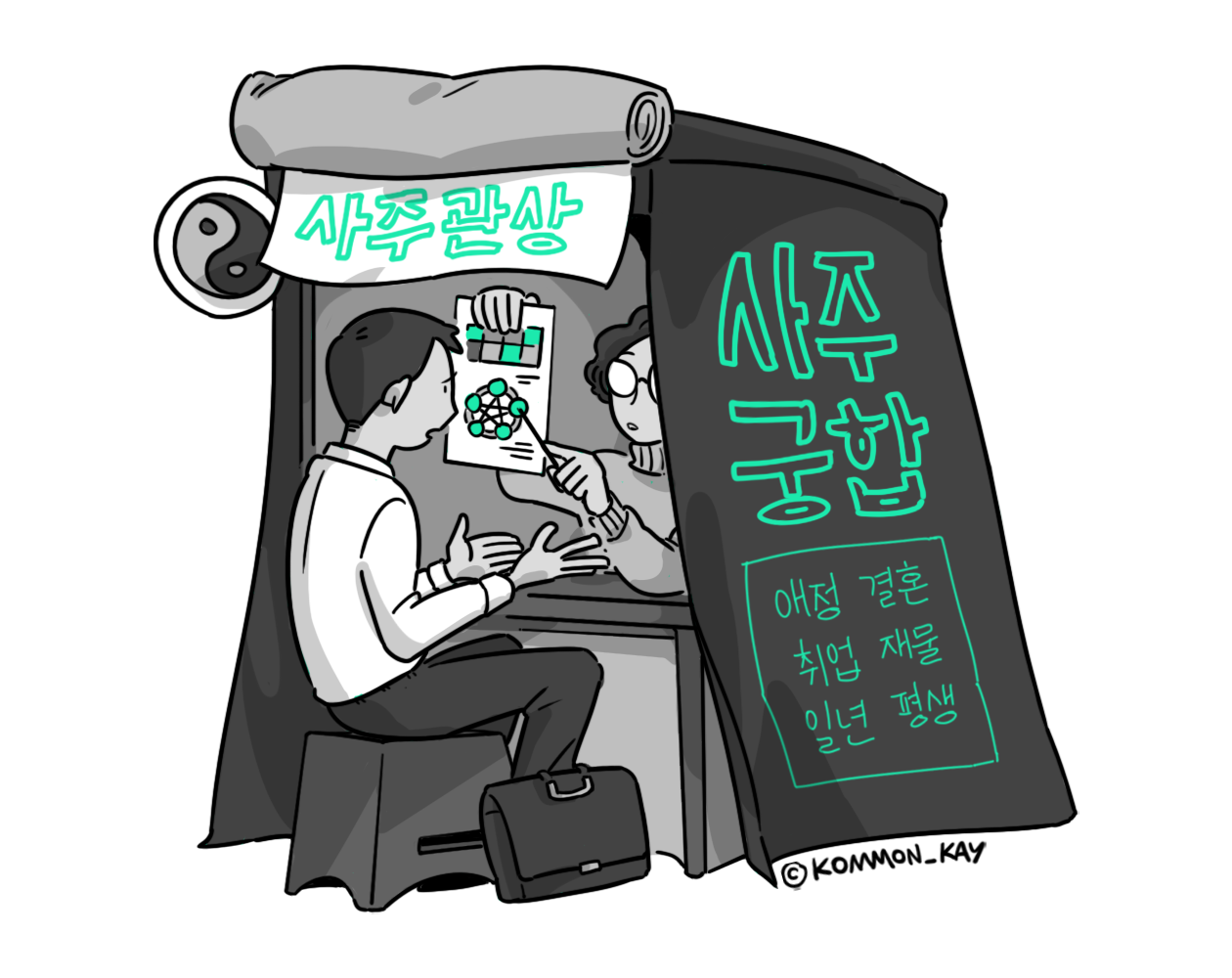
[Illustration by Ah-young Kim] Kim and Lee have been in a relationship for years. Before their marriage, Kim and Lee went to a saju (사주) reader, who predicts people’s futures and gives advice, to check their gunghap (궁합), which means “marital compatibility.” However, the saju reader said their gunghap is so bad that one of them might go bankrupt during the marriage. Kim is not sure whether to believe the saju reader or not, but their parents insisted on following the saju reader’s advice and breaking the engagement with Lee. Surprisingly, this is not an uncommon story in Korea. What is saju and where does it come from?
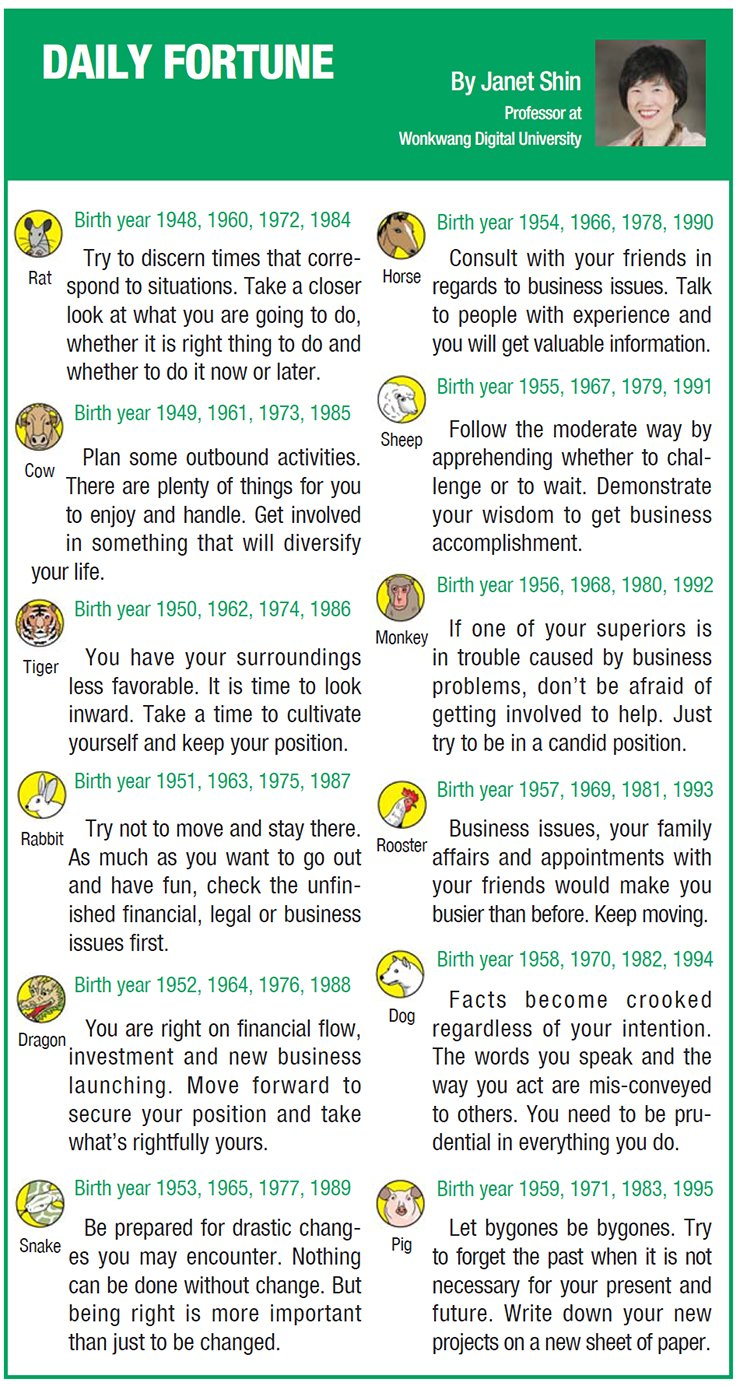
Source: The Korea Herald According to the Encyclopedia of Korean Culture (Korean link), saju refers to the four pillars of one’s life: birth year, month, date, and time. Each person has one’s own “cosmic energy” determined before their birth, and saju readers can decipher one’s nature, character, and fate based on this birth data. Saju readers then predict and even give advice about a person’s career, family, money, and relationships. Saju has originated from Myeong-ri hak (명리학), Chinese teaching that tried to academically predict one’s future. Due to the cultural exchange between Chinese and Korean intellectuals, saju was introduced in Korea (Korean link) during the Goryeo dynasty (918-1392). What does saju mean to Korean people? According to The Economist, there are over 300,000 professional saju readers in Korea, and the fortune-teller market has a size of 4 trillion won. The online saju business (Korean link) is growing especially fast. Saju apps “Jeomsin (점신)” and “Hellobot (헬로우봇)” were selected as the “Best Entertainment Apps of the year” by Google Play in 2018. Moreover, the media frequently features saju in their content, too. Most Korean newspapers run a “Daily Fortune” section based on birth year. It is not even considered strange to find shamans’ and saju readers’ interviews about the fortune of the nation (Korean link) or the president in mainstream newspapers.
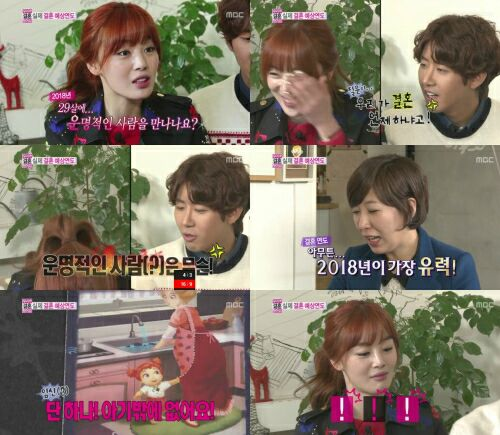
Source: The Korea Times Saju readers are also regular guests on variety shows about relationships and marriage, such as “We Got Married(우리 결혼했어요)” and “Same Bed, Different Dreams: You Are My Destiny(동상이몽: 너는 내 운명)”. In these shows, it is celebrities who can be seen going to saju readers and getting advice about their marital compatibility.
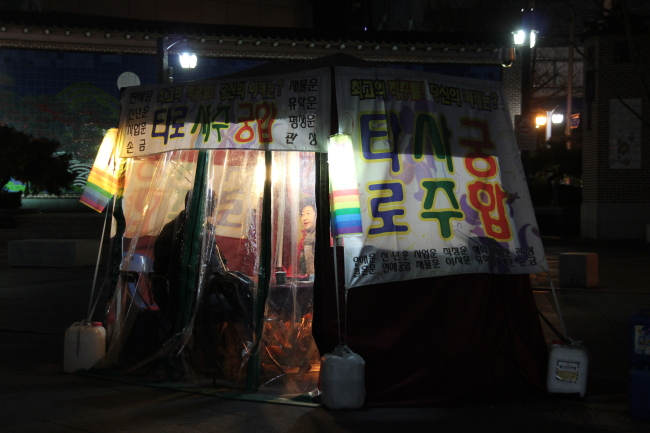
Many Koreans, regardless of their age, consider saju readings an easy way to consult someone about their life or difficulties they might be facing. Saju readings are not an exclusive culture of the older generation. Fortune telling has permeated Korea’s youth culture as a type of entertainment, and there are various social media channels covering and providing easy access to saju. As a result of that, 89.2% (Korean link) out of 1,608 respondents between the ages of 10 and 40 said they have experience with saju readings, according to the recruiting website Albachunkuk (알바천국). Since they are so popular, places, where one can pay for saju readings, are common in Korea. In Seoul, the Marronnier Park (마로니에 공원) in Hyehwa (혜화), the Hongdae Shopping Street (홍대 쇼핑 거리), and Tapgol Park (탑골공원) near Insadong (인사동) are full of saju cafes and booths. Some saju cafes have become so famous that they operate several franchises within the country. The pros and cons of saju Pros Saju is similar to a street sign you can refer to when you encounter a crossroad and need to make a decision. A saju reader can be a mentor and offer personal advice. Saju is a predictive reading, not an assurance, but rather guidelines and some warm encouragement about one’s vague future can offer comfort. Also, saju can help to achieve inner peace by focusing more on specific areas of improvement. This can be especially helpful to youths who are faced with an uncertain future and might feel lost or need some goals in their lives. According to people in the saju business, visitings from people in their 20s and 30s have increased over the last years.Cons However, it can also be dangerous to blindly trust a saju reading, and the professionalism of some saju readers can be doubted. Even though a qualification test for saju reading (Korean link) is provided by the Ministry of Culture of Korea, it only verifies whether applicants understand the basic theories of saju philosophy, and even people without a proper qualification can open a saju reading shop if they want to. What is even more dangerous is that the older generations tend to deeply believe and follow saju readings, unlike the younger generation who enjoy saju as some kind of “snack culture” (스낵컬쳐) or entertainment. Some parents even interfere with their child’s marriage or career based on a saju reader’s predictions, not considering the fact that there is a possibility of the reading being wrong. Moreover, some readers use saju as a way of “cheating” one’s fate. A lot of cases have been reported where saju readers asked for more money in exchange for improving one’s bad saju, such as creating a new name that matches with good saju or offering more detailed information regarding one’s predicted bad luck. Myeong-soo Lee, philosopher and columnist of the Korean online news website OhmyNews (오마이뉴스), once recounted in his column how he had been looking for the master of saju (Korean link) for a long time. Talking to famous saju readers from all over the country, he realized that readers who deliver bad prophecies and offer improvements for money have a 99% chance of being a fraud. Frequently asked questions about saju 1) Do people who are born in the same year and month, on the same day, and at the same time have the same saju? The answer is no. In modern life, many variables affect one’s life, such as one’s domestic environment, education, genes, and many more. Imagine two random people who are born in the same year and month, on the same day, and even at the same time. One is born into an affluent family while the other is born into a poor family. Even though these two people match on all four pillars of saju, their future will be very different. Saju is a reference to better understand one’s life (Korean link), not an ultimate prediction of the future. 2) Can non-Koreans also have their saju read? The saju of a non-Korean individual can be read based on the year, month, day, and time of their birth in the country where they were born. Some saju cafes even offer translation services for clients who do not speak Korean. However, time and climate are components that affect one’s saju. Therefore, the saju of a person who is born in the southern hemisphere might be hard to read, as the climate and weather in that location are opposite to the climate and weather of Korea, which is located in the northern hemisphere.
Today's Vocabulary Gwansang (관상)
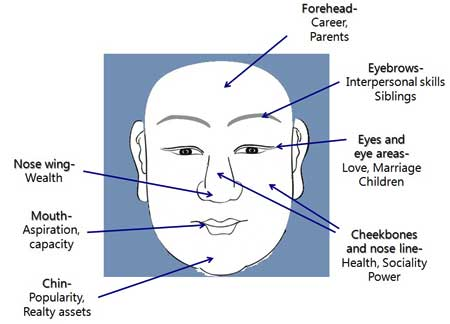
According to the Encyclopedia (Korean link) of Korean Culture, gwansang, meaning “face-reading”, is the concept of predicting a person’s personality or fate by analysing their facial features. Among Koreans, it is widely believed that the face is a record of one’s life and a guide to one’s fate. Gwansang has its roots in Chinese Taoism. But the way it predicts a person's future and fortune is similar to the role saju plays in modern life. Older generations commonly rely on gwansang to evaluate a person's character, while the younger generation pays less attention to these ideas. However, when a person misbehaves or commits a crime, one can often hear someone say “I knew it. They had bad gwansang.” Even though good gwansang is not the same as being good-looking, some features (Korean link) are generally considered to be bad gwansang, such as small nostrils, thin lips, a long jaw, etc. Some people even undergo “gwansang surgery”, a type of plastic surgery that changes your gwansang by removing your “bad” facial features. This is, however, not a generally accepted approach. Kyu-mun Jo, a professor of East Asian philosophy at Kyonggi University said, “Small changes are possible but plastic surgery isn’t a tool for changing gwansang.” Gwansang is in fact a combination of facial appearance, posture, facial expression, tone of voice, and many more factors. Gwansang is based on the idea that our face is a living form and never stops changing, depending on our lifestyle and mindset, which are the key factors determining our future. Example: A: 김씨가 길에서 남자를 때렸대! B: 말했잖아. 그 사람 관상이 안좋더라니. A: Mr. Kim hit a man on the road! B: I told you. He has bad gwansang.
💚 Support us! 💚
|