Kolon halt its Gimcheon PET chip line KOSPI ▼3,918.96 │ KOSDAQ ▼871.97│ KRW/USD▲1465.02 |
|
|
Nasdaq ▲22,564.23 │ S&P500 ▲6,642.16│ Dow Jones ▲46,138.77 |
|
|
As of 3:30 p.m. on the previous trading day |
|
|
✴ Green Optics╎In its 2025 KOSDAQ listing, the stock rose 42 percent from the IPO price, and the IPO size was about $22 million. Its integrated optical production structure is viewed as a key strength, and forecasts project performance of more than a two-fold multiple.
✴ Pavillika╎At the 2025 K-Unicorn Global Leaders Forum, it introduced its digital community platform “People” through an IR presentation, drawing strong interest from domestic and international investors. Expectations are rising for global expansion and stronger connectivity through “People Club.”
✴ JC Partners╎In Goodrich’s 2025 platform-type GA transition strategy, it brought in Daily Partners as a co-GP, shifting toward growth based on operational capability. Through dividing financial and operational GP functions, it is starting cash-flow transition and data-driven value-up initiatives.
✴ Korea Growth Finance╎For the 2025 IBK Innovation Growth Fund III program, sixteen managers with AUM below $343 million applied for a $19.5 million commitment, producing a competition ratio of about 3:1. Six final managers will be selected, each targeting sub-funds of $13.7 million to $61.7 million.
✴ Aedro╎In its 2025 Series B round, it raised $6.86 million, which will support global EV aerotech expansion and AI-based AOX development. With 90 percent of revenue from overseas, both technology and market momentum are increasing.
✴ Align Partners╎It launched a tender offer to acquire up to 24.9 percent of A+Asset, clearly signaling an activist intention. It aims to improve governance and capital efficiency and expects discussions with management.
✴ Hana Ventures╎Starting in 2025, it will commit $68.6 million annually for four years, totaling $274.4 million for its second private mother fund through full matching capital. It plans to support sub-fund formation focused on ABCDEF strategic industries.
✴ Taekwang╎Taekwang Group, together with TPG, is pursuing the acquisition of K-Shipbuilding for up to $343 million, aiming to add manufacturing and defense assets as a new growth pillar. The move is seen as a turning point in its shift away from petrochemicals.
✴ Praxis Capital╎From 2021 to 2025, it invested $274.4 million in Beyond Music, and including BW redemption, up to $384.7 million can be recovered. The company expanded its K-POP IP portfolio, but continued net losses mean a successful sale depends on profitability improvement.
✴ Centroid Investment Partners╎It acquired Concert Golf in 2022 for $343 million and is now selling it for about $1.37 billion, achieving a two-times return and an IRR in the high-20 percent range. Structural value-up based on golf value-chain investment is reflected in the sale price.
✴ IMM Investment╎In 2024, it secured a fund of $103.0 million after winning commitments from the Innovation Growth Fund, Saemaul Geumgo, and KIF, and it plans to expand the fund to $137.2 million by March next year. With the new fund, its venture AUM will increase to $1.23 billion.
✴ EQT Partners╎In 2024, it acquired a 35 percent stake in Douzone Bizon at $82.3 per share, and this led to simultaneous concerns from regulators, shareholders, and customers. After the acquisition, demand for data, security, and governance validation increased.
|
|
|
Hyprnote’s local AI strategy |
|
|
⭑ Reason for Choosing Global Expansion
Co-CEO Jung Jiheon of Hyprnote said he recognized in Silicon Valley that AI meeting-minutes services could not be used in sensitive industries, which made him feel the need for local AI and led him to prepare a startup in the United States. He said he wanted to create an alternative that could be used in industries such as finance, law, and consulting where data leakage is a concern.
Hyprnote is a work-focused AI note service that records meeting audio in real time and provides keyword-based summaries. Its main feature is that all inference happens locally on the device, so audio and text data never leave the company’s internal network.
⭑ Product Design Focused on Security and Flexibility
Hyprnote operates offline based on its self-developed sLM and allows company-specific customization. If needed, it can also connect to large language models such as GPT through Ollama.
The company first raised investment from U.S. VCs including YC and Crew Capital, then secured potential client companies as investors, receiving a total investment of about $2.06 million.
The service is currently available only on macOS, and the company aims to support all desktop OS by releasing Windows and Linux versions next year. It stated that it is also considering mobile, wearable, and eventually its own hardware.
⭑ Expansion Plan and Market Strategy
Hyprnote said it will enter the Korean market in a Top-down manner based on responses from the global market. It is prioritizing contact with major client groups such as consulting and investment banking, judging that enterprise-level adoption is important.
Jung said he is in regular contact with McKinsey and BCG, and expressed the view that differentiation from competing services will become clear when enterprises begin adopting AI services.
|
|
|
In this interview, CEO Jung Jiheon expresses his personal beliefs about the attitude required of a founder and the philosophy behind products in a relatively direct way. His remarks such as “a founder with a strong ego will find it hard to succeed” and “only products with a clear philosophy can break out” clearly show the standards he considers important.
This perspective also appears in his market approach. The strategy of first developing the business in the global market and then expanding into Korea in a Top-down manner can be read as a choice based on the flow he experienced in Silicon Valley and his personal judgment rather than on objective indicators.
His comments that Hyprnote is a service that “helps people do what they already do, but better” and that when the time comes for companies to adopt AI, “the real winners will emerge,” also reflect the value he sees in the service and his assessment of the market. The interview blends detailed technical explanations with the founder’s own viewpoints and expectations. |
|
|
Why did Kolon halt its Gimcheon PET chip line? |
|
|
⭑ Why did the PET chip line have to stop?
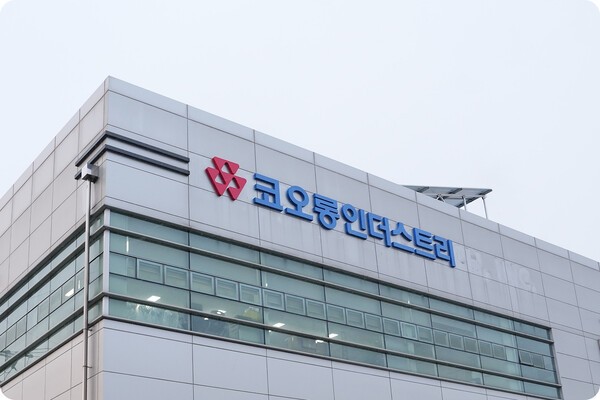
Kolon Industries recently halted part of Line 1 at its Gimcheon plant. The PET chips produced here are sent to its Vietnamese subsidiary in Binh Duong, where they are used as raw materials for tire cord. The issue is that the PET chip market itself has weakened. Demand in textiles and film has been sluggish, while supply continues to increase, which has further compressed margins.
You might think lower raw material prices would improve conditions, but the reality is a bit different. The price of MEG, a key raw material, fell from $549 per ton in January to $518 in September. However, the market interprets this as a signal that demand is cooling as well.
⭑ China’s overwhelming production capacity
The core factor behind the current downturn is China. Large-scale new capacity additions have pushed PET chip production beyond demand growth, and the low pricing has shaken the global market.
With crude oil and naphtha prices falling, recycled PET has also lost ground in price competitiveness. As a result, reports say that many recycled PET plants in Europe, the United States, and China have closed or temporarily suspended operations.
⭑ Just catching their breath…
Even so, the overall impact on Kolon Industries’ earnings is likely to be limited. The company has a broad industrial materials portfolio and a high proportion of high value-added products.
In fact, industrial materials sales reached $1.23 billion through the third quarter of this year, while total sales stood at $2.52 billion. This situation appears to be more about an industry-wide supply glut rather than a problem specific to PET chips. Some say demand for recycled PET could recover in the long term thanks to environmental policies, but there are still many short-term profitability challenges.
Market sentiment suggests that several variables remain in play, and observers believe the PET chip market needs more time to stabilize.
|
|
|
✈️ K-Defense Industry╎KAI strengthens its presence at the Dubai Airshow
KAI participated in the Dubai Airshow and unveiled the KF-21, FA-50, Surion, LAH, as well as drones and satellites, showing the full range of K-defense capabilities and its future business lineup at once. As the UAE emerges as a strategic partner, expectations for technology cooperation and exports are growing, and interest is clearly rising with KF-21 demonstrations and site visits. |
|
|
🍪 Hidden Name Hunt╎Kancho hits record-breaking sales
Lotte Wellfood’s Find My Name event has sold more than 3 million units, achieving over three times its previous performance. The initial stock sold out in just two weeks, and even after increasing the production line from two days to six days, it was still hard to keep up with demand. As the participant base expands to people in their 20s and 30s, attention is now on whether Season 2 will expand the list of names. |
|
|
🚘 Vehicle Displays╎OLED expansion struggles amid LCD dominance
Samsung Display and LG Display are trying to expand their supply of automotive OLED panels, but this year’s shipments remain around 1.5 million units, not even 5 percent of the total. Automotive panels require strict standards for brightness, durability, and warranty, and OLED costs are three to four times higher than LCD, slowing adoption among automakers. |
|
|
💰 Productive Finance╎Despite the banks’ calls, controversy continues
While banks generated nearly $ 27.2 Billion in interest income this year, trust has been shaken by bonus-related disputes, a series of financial accidents, and issues with misselling Hong Kong ELS products. Accidents at overseas branches highlight a major accountability gap, and repeated internal control failures remain a burden. As some say that “productive and inclusive finance,” aligned with government policy, is just for show, the focus is shifting from scale competition to where and how banks actually invest. |
|
|
🪙 Trusted Aromatica╎Expanding globally through vertical integration
Aromatica is internalizing production based on its Osan smart factory, building a high-efficiency and high-quality system. With Cosmos certification and ESG facilities, it is increasing global credibility. It is also securing cost efficiency and product stability through its own microbiology lab and recycling system. The funds secured through the IPO are being used for global marketing, logistics infrastructure, and the expansion of overseas experiential hubs. |
|
|
🗳️ One person, one vote reform╎Party sentiment clashes, reform drive vs internal concerns
Party leader Jeong Cheong-rae declared a new era of party member sovereignty as he pushed to revise the party charter and rules around 100 percent voting by dues-paying members and a one person, one vote system. The move aims to dismantle the delegate-centered structure and greatly expand member participation, but concerns about dominance by hardline members and debates over procedural legitimacy are intensifying internal tensions. |
|
|
A single “click” of AI finishes everything. |
|
|
A Series of Incidents at Three Universities
These days, when it comes to assignments or exams, using AI can finish things quickly. But recently, allegations of AI cheating emerged one after another at Yonsei University, Korea University, and Seoul National University, causing major disruption across the schools.
Yonsei University held an exam for an online liberal arts course and reportedly had almost no monitoring system. As a result, there were suspicions that several students submitted AI-generated answers.
Korea University detected cheating through a KakaoTalk open chat room in an online lecture with 1,400 students, and the exam was completely invalidated.
At Seoul National University, signs of AI use continued to appear in a statistics lab exam, leading to voluntary self-reports and eventually a retest.
At this point, you might wonder:
“So what exactly should be allowed in exams in the AI era?"
The real issue is not AI itself but the lack of standards.
The core problem is not whether students use AI, but that there are no clear standards. AI detection technology is still inaccurate, and online exams inherently have weak oversight, which naturally creates blind spots. Each school also has different rules, making it difficult for students to know what is allowed and what is not.
Why does this matter?
If exams lose credibility, trust in graduates’ abilities can collapse as well. What is needed now is not a simple call like “ban AI,” but the establishment of clear and convincing standards.
Universities are currently trying to create these guidelines, but there is still no nationwide standard. Since AI has become a basic tool, universities are facing a new kind of assignment.
In one sentence
The bigger problem is not AI, but the fact that clear standards do not exist yet.
|
|
|
Meaning of Top-down in management? |
|
|
✴ Top-down
In management, the Top-down approach is an operating method in which top executives or leaders set goals and strategies first, then deliver them to the entire organization for execution. Once a decision is made at the top, it is passed downward and the organization moves accordingly.
This approach has the advantage of unifying direction and enabling fast decision-making. However, it also has the limitation that on-site opinions may not be fully reflected, so many organizations nowadays combine it with a Bottom-up approach when needed. |
|
|
Send us any suggestions you’d like to share while reading Bitter’s newsletter! |
|
|
Advertising, inquiries : viter@thevistapartners.com / Published by Newstop. Unsubscribe |
|
|
|
|