#real estate #irregular workers in Korea #vocabulary For dark mode users,
Hello, reader! Today, we are covering: Index Zoom In Sorry, Merge … what? Today's Vocabulary 다단계 (Da-Dan-Gye), Multi-Level-Marketing This Week's Recommendations Master (마스터, 2016) Don't forget to leave your feedback below!
Sorry, Merge … what? Writer: Haram Lee Editor: Aleya Sharif Editor-in-Chief: Fred McNulty Researcher: Heejin Ahn Illustrator: Sunny Um
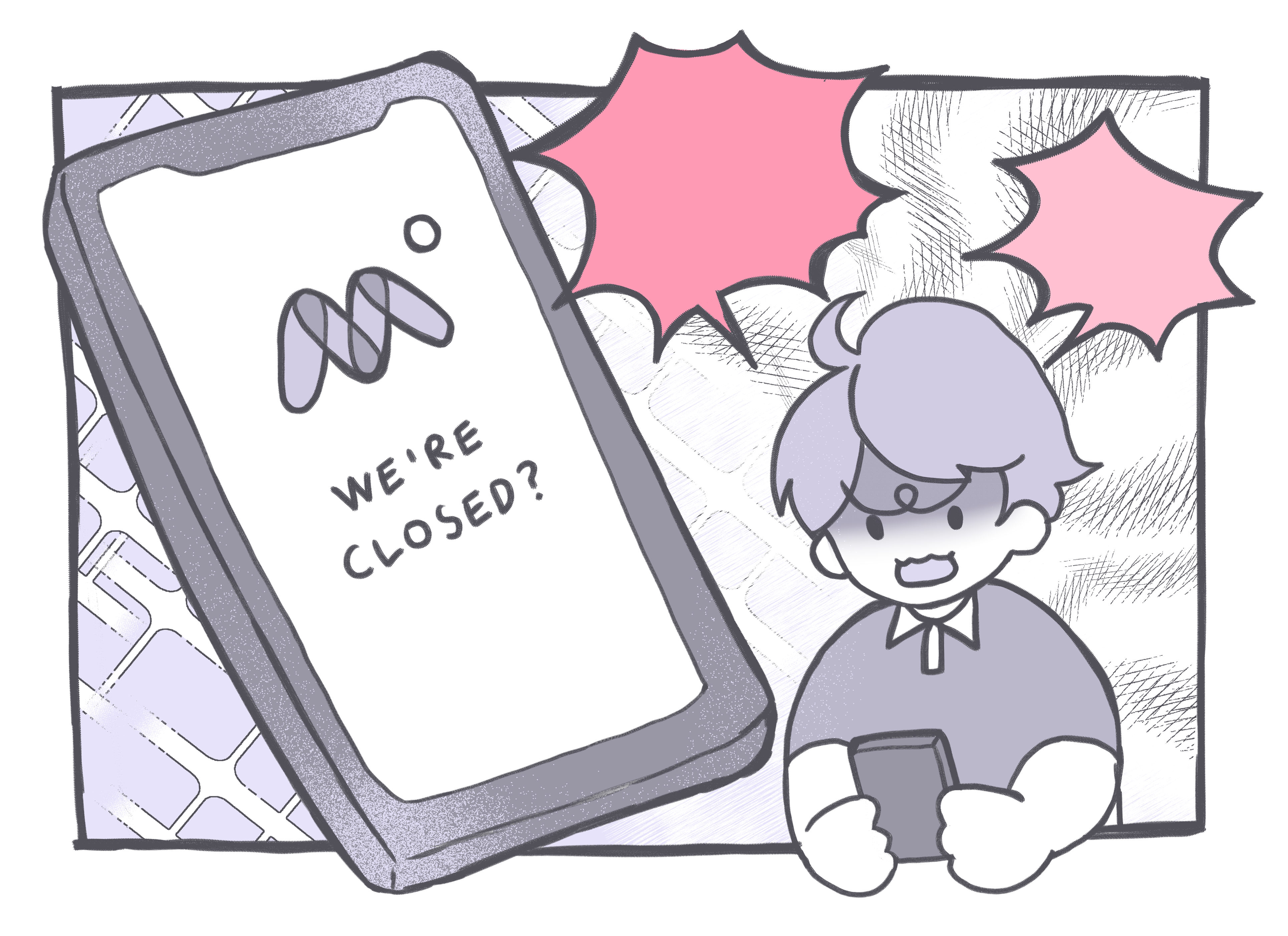
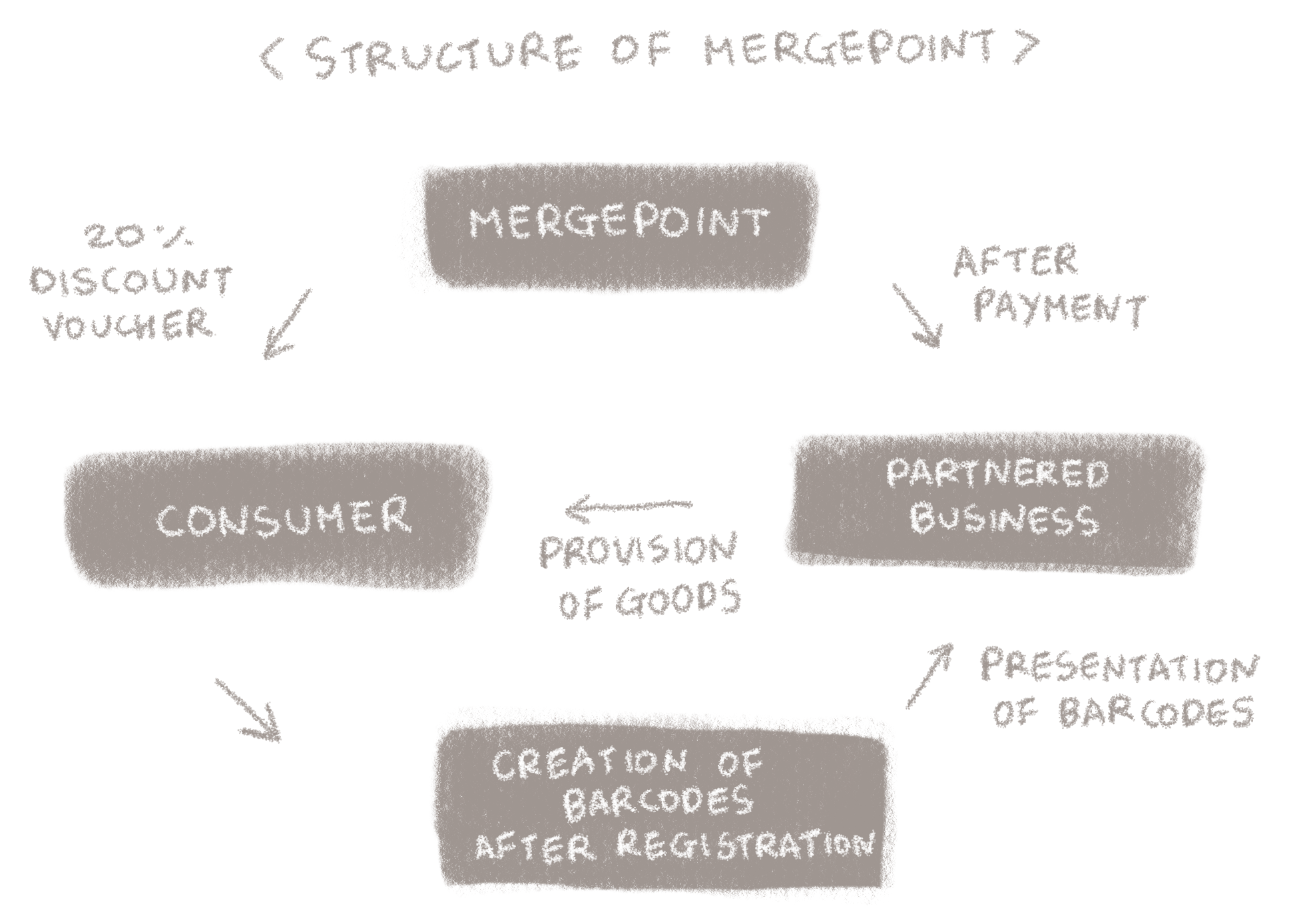
[Illustration by Sunny Um] On the night of August 11, a Korean company that deals in digital coupons, called Mergepoint (머지포인트), brought its website to a halt and announced drastic changes to their service policies - suddenly limiting their coupon benefits to certain food outlets only - which led to rumors that the company had gone bankrupt. Worried customers immediately started visiting businesses Mergepoint had partnered with to get their points back. Users on some online communities shared locations of stores where reward points could still be used, and some people uploaded pictures showing they made payments ranging from ₩700,000 to ₩800,000. This made others ask how the business owners would be able to get their money refunded. The buyers gave responses such as, “I’m claiming what I’ve been rewarded with. Why would that matter after all?” The public’s reaction was negative, criticizing such behavior as the ultimate definition of selfishness. But what exactly is Mergepoint and why are they causing such an upheaval among buyers? What is Mergepoint? Background Mergepoint, created by a company called Mergeplus (머지플러스) in 2016, was initially a food voucher app before switching to selling mobile coupons in 2019, which resulted in a jump in sales from ₩40 million to ₩350 million by 2020. Mergepoint gained popularity amongst customers for selling Mergemoney (머지머니), coupons that offer 20% discounts at 60,000 stores from 200 partner brands including large grocery stores, local retail stores, convenience stores, cafés, and restaurants. Once a user purchases a gift coupon worth ₩100,000 for ₩80,000, they can then purchase items worth ₩100,000 at the partner stores by redeeming the coupon with a barcode provided via an app. In 2018 alone, Mergepoint had gained 1 million users with the yearly average amount of transactions being ₩300-₩400 million won. How do they earn profit?
[Diagram by Sunny Um] Nothing is known regarding Mergepoint’s profit structure, which makes it look even more suspicious. Gift coupon companies earn their profits with breakage income resulting from the extra amount of points that are not used by the consumers before the expiration date (a Mergepoint voucher is valid for five years). If a user does not use the points before they expire, the points return to Mergepoint as profit. However, as most people use all their reward points, Mergepoint has hardly been able to make a profit, despite the fact that it has only been slightly more than a year since the company was founded. This implies that the current profit structure is not sustainable. However, Mergepoint stated that they were practicing “offensive investments,” which includes taking the risk of running a deficit while becoming an industry leader in the future -- just as Coupang, the leading company of logistics in Korea, initially suffered from a deficit yet managed to lead innovation in the logistics industry. So, just like people juggle their credit card debt with different cards, if there is a deficit, the company prints new coupons to cover the deficits. This raised suspicions that the company might in fact be engaging in a form of multi-level financial fraud (see our explanation at the end of the article). According to Lee Sung-hoon (Korean link), a professor at the Graduate School of Business at Sejong University, “Making a purchase with points is part of finance. But if this does not build trust, it turns into nothing but pieces of ripped papers and will eventually result in severe damage.” Why was Mergepoint suddenly brought to a halt? On August 11, Mergeplus announced that the company will stop selling Mergemoney and reduce the number of authorized stores that are part of the scheme. They further stated, “We will adhere to the government’s guidelines stating that Mergeplus services represent prepaid electronic payments, and will start offering our services only at legitimate restaurants. We will resolve issues regarding electronic financial registration processes and will provide more extensive services from the fourth quarter.” For those customers who want reimbursements, Mergepoint notified that the company would return up to 90% of the remaining amount that was originally purchased. The reason behind this sudden announcement is that the company did not register as an electronic financial service at the Financial Services Commission, which it should have done as it issues mobile gift coupons that can be used at more than two different businesses. The Commission has therefore requested appropriate measures be taken to resolve this issue as it was highlighted during the process of acquiring investments. The other prominent issue is a matter of trust, as Mergepoint has been operating for two years without registration. Should the company go bankrupt, there is no way for customers to receive a refund for the remaining points they still have. With the compensation being unclear, the Financial Services Commission is facing criticism, as it has not taken any measures regarding Mergepoint for two years. Misuse of Remaining Mergepoints? Initial reaction of buyers On August 13th, hundreds of frustrated customers congregated at the Mergepoint headquarters, with more than 800,000 people at risk of losing their money after the closure of the company. According to current electronic finance transactions laws, the maximum amount of money that can be spent to charge prepaid products online is ₩2 million. But there were no such limits on Mergepoints, as the company was not officially registered. As a result, there are many customers who purchased points worth up to ₩10 million. How consumers reacted Concerning their points vanishing, people looked for places that were still unaware of the issues regarding Mergepoints and panic-purchased goods to use up their remaining points. Moreover, they shared the names and locations of the businesses that still accepted the points on popular online communities. Such posts were shared in an online community called Women’s Generation and the information quickly spread out causing even more financial deficit to the restaurant owners as they were paid with the no longer valid electronic currency. Many customers acted as nothing mattered as long as they personally did not suffer any damage by spending their remaining points. They did not seem to see anything wrong with this, as they claim they are simply spending what they bought in the form of coupons, disregarding the damage that it may cause to the businesses that still reimburse them. Media outlets in Korea reported that such reactions constitute an act of “tossing a bomb” to shop owners and restaurants. Financial News (Korean link) pointed out that “consumers are tossing the bomb over to innocent business owners” and included quotes of business owners who complained about consumers’ selfish acts. Curious Stories Y (Korean link), a show that covers current affairs or social issues, also announced on their website that they’re looking for shop or restaurant owners who suffered losses from the “Mergepoint Bomb Tossing”. However, some lawyers hold a different view. “It is hard to consider the act of spending one’s purchased points a crime,” Kim Hyun-gui, a lawyer, was quoted as saying by LawTalk News (Korean link). He added: “It is beyond the question of consumers’ (those with Mergepoints) rights whether the involved businesses can later get the points refunded. It is legally hard to say that the act of a customer spending their Mergepoints results in a business owners’ damage.” Some customers want to bring the company to court to make it pay for soon-to-disappear points. On August 12, more than 10,000 people signed a public petition with the Blue House (Korean link), asking the government to step in and reimburse their payment made in the app. Damage to business owners Met with a sudden influx of customers, business owners were initially overjoyed. Foods sold out quickly, mostly as to-go orders. It did not take long until they realized that something was going wrong. For example (Korean link), one grill restaurant sold food worth more than ₩19 million during lunchtime alone. Fortunately, ₩16 million out of the ₩19 million of payments done with obsolete reward points could be canceled, and the owners got their money back in the afternoon of the same day. The businesses usually get their points reimbursed as cash on the 10th of the following month. But even this is now unclear, because of the current situation. The key aspect is whether guarantee insurance was taken out and will eventually step in. On this matter, Seoul Guarantee Insurance, the domestic market leader in the credit insurance industry, mentioned, “Mergepoint participated in some partnership contracts but accords differ according to brands and partner companies.” Sharing unaware businesses: legally problematic? Kang Seung-goo, a lawyer from Right-Law Law Firm, said during an interview with Lawtalk News (Korean link) that “It is unlikely that people will be held legally responsible for using the remaining points at partner businesses after services were stopped, but the following can be problematic: sharing information about businesses that are unaware of the situation regarding Mergepoints, unnecessarily bulk-buying products, and making preliminary purchases with the remaining points.” Kang further mentioned, “The fact that some customers took advantage of the business owners unaware of the situation constitutes a matter of intentionality. It is thus possible to be legally held responsible if a Mergepoint customer ‘benefitted’ by minimizing their own damage in such a way.” Lee Pil-woo, another lawyer, also interviewed in the same article, “This is about more than just spending points - sharing information and encouraging others to make purchases can be problematic. The reasons are: (1) Many other people ended up visiting a certain place, (2) they were encouraged to spend points there, and (3) this multiplied the damage done to the business owners.” Comments left on online portals saying “Not sure about this place, hurry up and use” will increase a user’s chance to be legally held responsible. Lee pointed out that “Such cases constitute illegal acts of intentionality and negligence. Though they might not result in criminal punishment, civil punishment is likely for the damages done to the business owners.” He further commented, “It is highly questionable if using the gift coupons knowing that this will cause damage is an appropriate form of practicing one’s consumer rights.” Restoring Mergepoint is a possibility Kwon Nam-hee, a chairman of Mergepoint, stated, “It is possible -- once ‘Mergepay’ (another coupon scheme run by Mergepoint) is released, we were planning to acquire usability to create a profit model and prepare for investments. The report of the Financial Supervisory Service (금융감독원) has been publicized before this happened, but once the procedures are taken care of, restoration of the company is possible.” As Mergepoint repays their points on the 10th of every month, there would not be much of an issue once the partner businesses have been appropriately compensated for their points.
Today's Vocabulary 다단계 (Da-Dan-Gye), Multi-Level-Marketing Multi-level-marketing (MLM), network, or pyramid marketing is a controversial distribution model where independent representatives are responsible for the sale of a company’s products or services. The sale representatives’ earnings are derived from their own sales as well as commissions, based on a pyramid-shaped or binary compensation system. MLM strategies are not illegal per se, but many are based on illegal pyramid schemes. Example: A: 나 10년 만에 동창이 연락을 했다! B: 야, 그거 너한테 옥장판 팔려는 다단계 수작 아니야? Example: A: A friend from the same school contacted me for the first time in 10 years! B: Hey, isn’t that a Multi-Level-Marketing strategy of selling a jade mat to you? This Week's Recommendations Master (마스터, 2016) The story follows Chairman Jin from One Network, who was found cheating thousands of members with his brilliant assistant, General Park. A chief of crime officer, Kim Jae Myung tracks him and discovers that One Network is actually involved in a huge fraud case. The storyline intensifies as Kim Jae Myung plans to narrow the siege network while Chairman Jin escapes pressure from the police. Available to watch on Watcha.
💚 Support us! 💚
|