#real estate #irregular workers in Korea #vocabulary For dark mode users,
Hello, reader, this week we are covering: Index Trending News “Gender Conflicts” in Korea Zoom In Where Does “Gender Conflict” in Korea Come from Today's Vocabulary This Week's Recommendations Movie Sunny (써니) +) Do you want to support KOMMON? Check out the link at the end of the newsletter🙌
“Gender Conflicts” in Korea
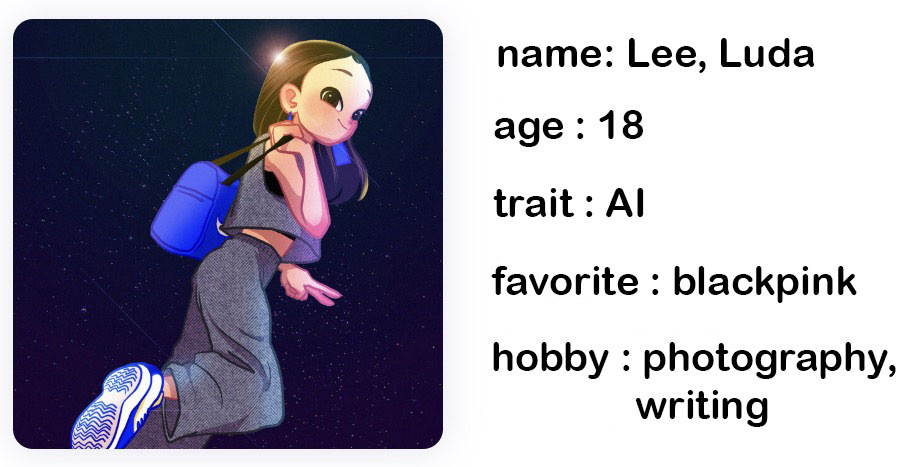
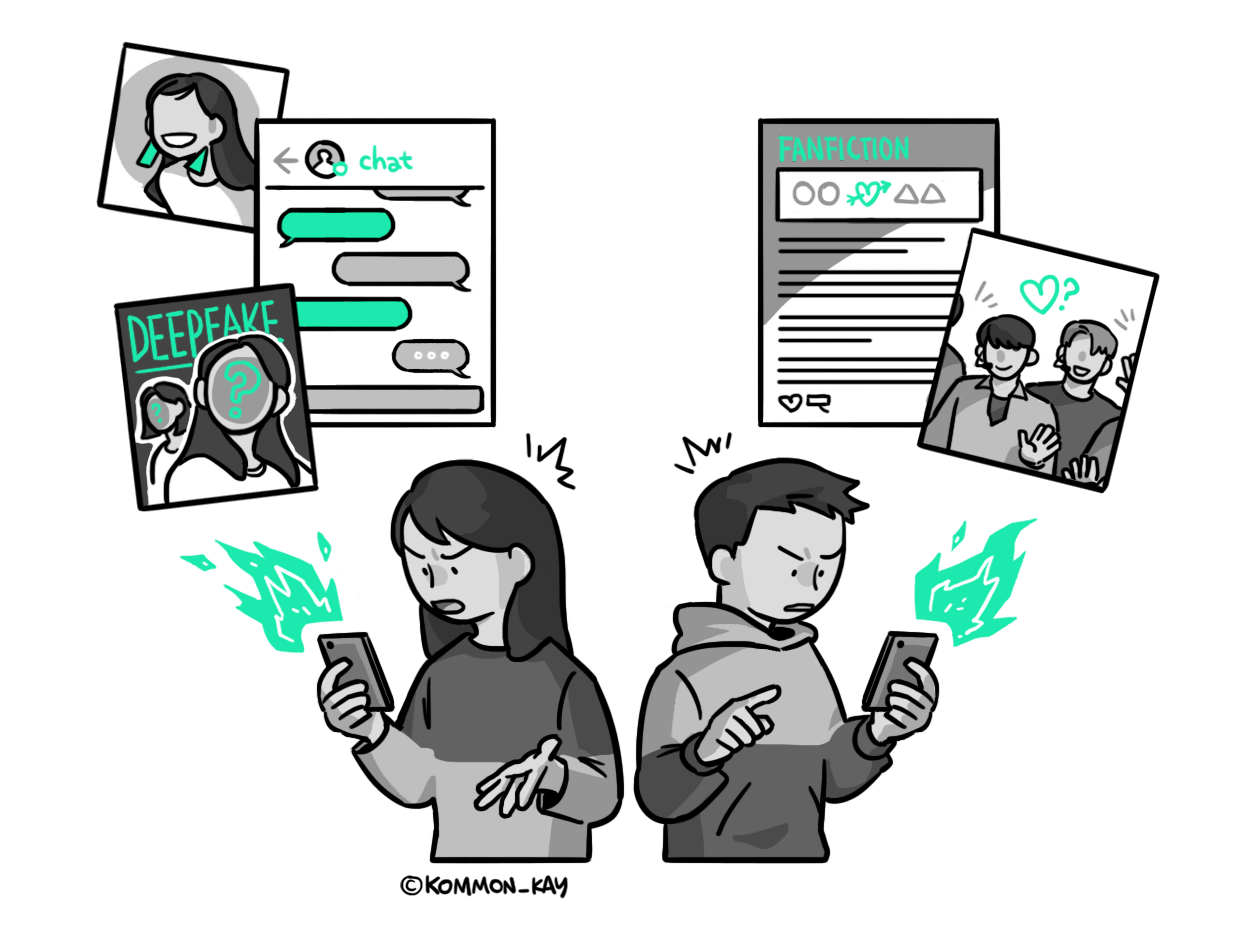
[Photo by Scatter Lab] Talk of the Town: Lee Luda the Chatbot In the twilight of the dismal year of 2020, an online profile of a girl disturbed Korea. Her name is Lee Luda (이루다) and she is an open-domain conversation artificial intelligence (AI) chatbot, accessible through Facebook Messenger and direct messages on Instagram. The service, provided by the Seoul-based information technology startup Scatter Lab (Korean link), allows users to chat with a virtual female character, Luda, who comes with a detailed profile including her gender, date of birth, hobby, personality, and so on -- just like a real person. The service was officially launched in December 2020 but is now temporarily suspended until further notice due to the controversy that ensued. First, some of the users’ personal information was leaked. The messages that users exchange with Luda are saved as base data for the AI’s deep learning processes, according to BBC Korea (Korean link). Some messages that Luda had saved included the addresses, bank account details, and names of real people. Scatter Lab made a statement that their usage of data has been within the boundaries of their privacy policy agreements. However, the company added that it is possible that unfiltered personal information was leaked to Luda. Scatter Lab is currently investigating if the chatbot violated the company’s privacy policy agreements in any way. Second, due to a problem with Luda’s filtering system, Luda saved the offensive language of some of her users, that included discriminatory expressions targeting minorities as well as expletives, in its database without any filters. Luda, therefore, ended up using such offensive language herself during conversations. The biggest, most controversial problem emerged from some users “training” Luda to become a “sex slave”. These users taught Luda inappropriate sexual expressions to elicit particular reactions from the virtual character. In some online forums, posts with titles like “How to make Luda your sex slave”, a guideline on how to teach the AI chatbot to respond with sexual remarks, went viral. On January 12, Scatter Lab shut down Luda without further notice. Sexualization of Women, Powered by Technology The Luda sex slave controversy described above sparked another controversy on how the sexualization of women has become even worse with the development of technology in Korea. One example is deepfake technology and how it is used. Deepfakes, also powered by artificial intelligence, are fake synthetic media in which a person in “an existing image or video is replaced with someone else’s likeness.” The technology has been advanced to the level where one may find it nearly impossible to say whether a deepfake is real. One of the problems with this technology is that it can be used to recreate porn -- actor’s faces in porn videos are now often replaced with other people, female celebrities, or any girls that producers know, for example, and then distributed online. On January 13, a public petition asking for legislation to penalize deepfake porn as sexual abuse and protect female celebrities was filed with the Blue House. Currently, there are no legal measures that directly target or even mention AI or deepfake porn in Korea. However, creators and distributors can be charged with the distribution of porn or the production of obscene material, according to Korean law. (Korean link) Real Person Slash: Sexualization of Celebrities? The problems surrounding Luda and deepfake porn have raised concern and questions against not only producers and consumers of deepfake porn, but also the deep-rooted misogyny and sexual objectivization of women in Korea. As a counter-argument, some petitioners have suggested that women also objectify celebrities by creating “Real Person Slash (RPS)”. RPS refers to Real Person Fiction, a genre of celebrity fanfiction, produced and consumed on platforms with a big female usership including k-pop idol fandoms. Stories that describe intercourse between more than two men take up the majority of these works of fiction. A public petition regarding the issue of RPS has been filed with the Blue House, demanding people who produce and consume such works of fiction to be charged with the distribution of porn and defamation. The petition also said that the sexualization of underage celebrities and the inappropriate distortion of their sexual preferences are worrisome. However, proponents of RPS have refuted this claim, saying that fan-made fiction is a popular way of increasing a celebrity’s fanbase. In addition, there is a movement among fans to make RPS fiction less sexual and prevent in-fiction celebrities from accessing the works. The fans say they also try to stop the circulation of RPS fiction online, which has so far been justified, as a “shady subculture (음지 문화)” of the fandom. Proponents also say that RPS takes place in fictional settings, is often irrelevant to actual celebrities, and that providers and consumers know that they’re fake. On the other hand, deepfake porn capitalizes on the point that pornograpohic displays of in-video celebrities look real. Some add that deepfake porn is more focused on “dominating” in-video celebrities, while RPS fiction is based on the adoration (Korean link) of said celebrities. Some proponents also say that the attack on RPS fiction is just a counterattack from the providers and consumers of deepfake porn who try to divert the public’s attention away from their industry’s problems. “Gender Conflict” Some describe the tension between the deepfake porn and the RPS fiction consumers as a gender conflict. However, it is not. It rather looks as if deepfake porn consumers are bringing up an entirely different issue, RPS fiction, to counterattack criticism from women. In Korea, the social discourse between the “male” and “female” parts of society often seems to play out like this. As the sequence of the deepfake versus RPS controversy shows, when feminists bring up a problem, “men’s rights” groups commonly refute the legitimacy of the problematization with a similar case where women are the cause of the problem. For example, when the expression yeohyeom (여혐, an abbreviation for misogyny, or “여성혐오”) started to circulate on the internet, the counter term namhyeom (남혐, an abbreviation for hatred against men, or “남성혐오”) also emerged. The jargon yeohyeom was first introduced to highlight prevalent misogyny within the Korean society, exemplified by the wide usage of discriminative words, such as doenjangnyeo (Korean link) (a combination of the word 된장, Korean fermented bean paste, and 녀, a suffix for “girl”). In contrast, namhyeom is used to criticize unfair social responsibilities and pressure levied only on men. Also, whenever the problem of gender discrimination in Korea comes up, some immediately refer to the problem of conscription and ask why women are exempted from it.
Where Does “Gender Conflict” in Korea Come from
[Illustration by 케이] Feminism in Korea Feminism is not a new concept in Korea. Korean feminists have, for example, long opposed the family registry system, a system where only a male member can be considered as the head of the family. Fortunately, this movement was supported by all genders. These days, “gender conflicts” often happen in online forums rather than offline, with men in their 20s representing the main opponents of feminist ideas. Below is a summary of current key events that illustrate major flashpoints between feminists and men’s rights groups. 1. Foundation of Megalia (August 2015) When the Middle East respiratory syndrome (MERS) outbreak took place, two women who were suspected to have been in contact with confirmed cases of the disease refused to quarantine. As the news regarding these women spread, users of DC Inside, an online forum, uploaded misogynistic posts. Some other users who opposed these misogynistic posts created their own online community called “Megalia”. The name Megalia is a portmanteau of "MERS Gallery,” one of the boards in DC Inside, and Egalia's Daughters, a feminist novel written by Gerd Brantenberg. Megalia was later used as a popular platform to discuss issues related to feminism and gender conflicts, until it shut down in 2017. 2. Gangnam Station Murder Case In May 2016, a man murdered a woman in the public toilet of a noraebang (노래방) near Gangnam Station. The murderer did not know the victim and claimed that he wanted to kill women. Many men argued that this was not a gender-based hate crime, but a murder committed by a psychopath. Many women argued otherwise, insisting that this was definitely femicide motivated by gender-based hatred. 3. Hidden Camera at Hongik University In May 2018, a female model took a photo of a male nude model without permission during an art class at Hongik University, and uploaded it on a radical feminist website called WOMAD. A police investigation took place immediately and the female model was arrested and charged within a week. Around the same time, there was another incident where a woman was reported as the victim of a spy camera incident. This incident, however, received very little media attention and was investigated poorly by the police. Many people were outraged at the two drastically different responses, and argued that cases involving female victims were not being taken seriously enough. This event triggered protests at Hyehwa Station. 4. Protests at Hyehwa Station On May 19th 2018, protests took place at Hyehwa station to raise awareness on spy camera crimes against women and to criticize the consumption of spycam footage of women as porn. However, some of the Hyehwa Station protesters were criticized by the public for ruling out some people’s participation and using derogatory terms against men.
For instance, protesters made statements that suggested that only “biological females” should be allowed to participate in the demonstration and chanted “Moon Jae-In jaegihae (재기해).” Jaegihae is a derogatory term telling men to commit suicide. As such, the Hyehwa protests led to divided opinions among participants, which splintered the movement and caused some opposition from men. Characteristics of the “Gender Conflict” in Korea
🤨 It’s Not Just a Conflict -- It’s Hatred According to comments and posts on online forums, many Koreans, especially men, seem to believe that feminism is a movement that solely benefits women, rather than a movement that guarantees women basic rights that men already have. Moreover, many downplay the discrimination against women and frame feminism as reverse-discrimination against men. Comments posted by those people are rarely logical criticisms of feminism; the vast majority are hateful comments towards women.
💻 Strong Online Presence The Hyehwa protest represents one of the few offline protests held by feminists. Many feminists share their causes on online forums or YouTube. DC Inside and FM are male-dominated online communities where gender conflict takes place. There are also many YouTubers who try to appeal to anti-feminists by posting misogynist content. 👥 Strong Involvement of Men in their 20s According to a survey published in SisaIn, a Korean print magazine, 58.6% of men in their 20s are strongly opposed to feminism, and anti-feminism sentiments are stronger among men in their 20s and 30s than in any other age group. The same survey, when asking men from various age groups about their opinions on different aspects of feminism by responding on a scale from -12 to +12, with -12 meaning feeling strongly against and +12 strongly in favor of feminism, yielded an anti-feminism index of -6.3 for men in their 20s and one of -5.2 for men in their 30s. These numbers are in stark contrast to those for men in their 50s and 60s, who had an anti-feminism index of -0.3 and -0.4, respectively. Why Is the “Gender Conflict” So Severe in Korea? 💣 A Conflict Between Two Interest Groups? Many people in Korean society see rights as a zero-sum game. For example, some people believe that any advancement in women’s rights will come at the cost of male rights. This sentiment is exacerbated by the fact that many men in their 20s are facing difficulties finding job opportunities. Some men believe that if women are empowered, they will take their jobs away. As seen around the globe in many growing right-wing movements, economic anxieties are strongly contributing to the radicalization of young men.
😤 The Belief That Men Are Facing Reverse Discrimination Some men in their 20s also believe that women are given many social privileges, and that men are discriminated against more than women these days. This is partly due to the fact that all men are conscripted to the military for 18 months whereas women are not. Therefore, those who oppose feminism as a social movement believe that women are given a head start over men in the job market. However, critics of this argument contend that women have faced structural disadvantages in the past, and that the feminist movement is there to balance the uneven playing field. 👀 Negative Perception of Feminism The term “feminism” has a negative connotation because some interpret the prefix “fem” as an indication that the feminist movement promotes only the rights of women. As mentioned earlier, at the Hyehwa Station protests and in feminist online communities, activists have repeatedly made inflammatory comments.
In response, many users from male-dominant online communities, such as FM, uploaded posts that criticized the protests. The comments and the posts in these online communities show that many men opposed the derogatory actions of the Hyehwa Station protesters.
Today's Vocabulary <Keybae (키배)>: Keyboard Battle Keybae, short for keyboard battle, refers to arguments among users on the internet. These arguments emotionally exhaust the involved users but can be a source of entertainment for bystanders. In some cases, users who argue online meet in real life to fight. This is called hyeonpi (현피). Usage: A: 인터넷에서 뭘 그렇게 열심히 하고 있는거야? B: 내가 댓글 단 것에 어떤 사람이 와서 시비걸었어. 지금 너무 화나서 나도 뭐라 하고있는 중이야. A: 야 그러지마. 키배 해봤자 쓸모없잖아. 그냥 무시해. A: What are you so fired up about on the internet? B: Someone started an argument about my comment on a post. I am furious, so I’m arguing back. A: Hey, don’t. No point in doing keybae. Just ignore that person.This Week's Recommendations Set in the 1980s, this is a movie about the friendship between seven highschool girls. The movie starts with a scene where Nami, one of the girls who is now an adult, looks for her friends. She reminisces about her past, thinking about the good memories she made with her friends. This movie is noteworthy in that all the main characters are female. The movie also accurately portrays the dress codes of the 1980s, when students were not required to wear school uniforms. It gained popularity among the older generation because of some scenes that bring back shared memories, such as a scene that parodied the movie La Boum.
Help us continue our journey by clicking on the donate button below. Thank you always for your support 💌 *Due to technical reasons, credit cards issued in Korea and Korean Paypal account cannot be used for transaction* KOMMON TEAM 수수🌾 Sans🌻 바코🌊 오티오😈 쟈🍉 기린🌴 쏘🐥 기니👑 프레드🍰 부엉🦉 타코🌮 Sunny🌞 호야🐻 가가🍒 케이☕ 코코🐦 Gumball🍬
|