For dark mode users,
Hello, reader! Today, we are covering: Cultural Insight: Why are Koreans so enthusiastic about the MBTI?
Slang: 과몰입 (gwa-mol-ib) 하다 This Week's Recommendations My Boyfriend Is Type-B (B형 남자친구, 2005) Don't forget to leave your feedback below!
Why are Koreans so enthusiastic about the MBTI? Writer: Yeon Woo Lee Senior Editor: Regine Armann Editor-in-Chief: Fred McNulty Researcher: Yul Jun, Sunny Um Illustrator: Ah-young Kim
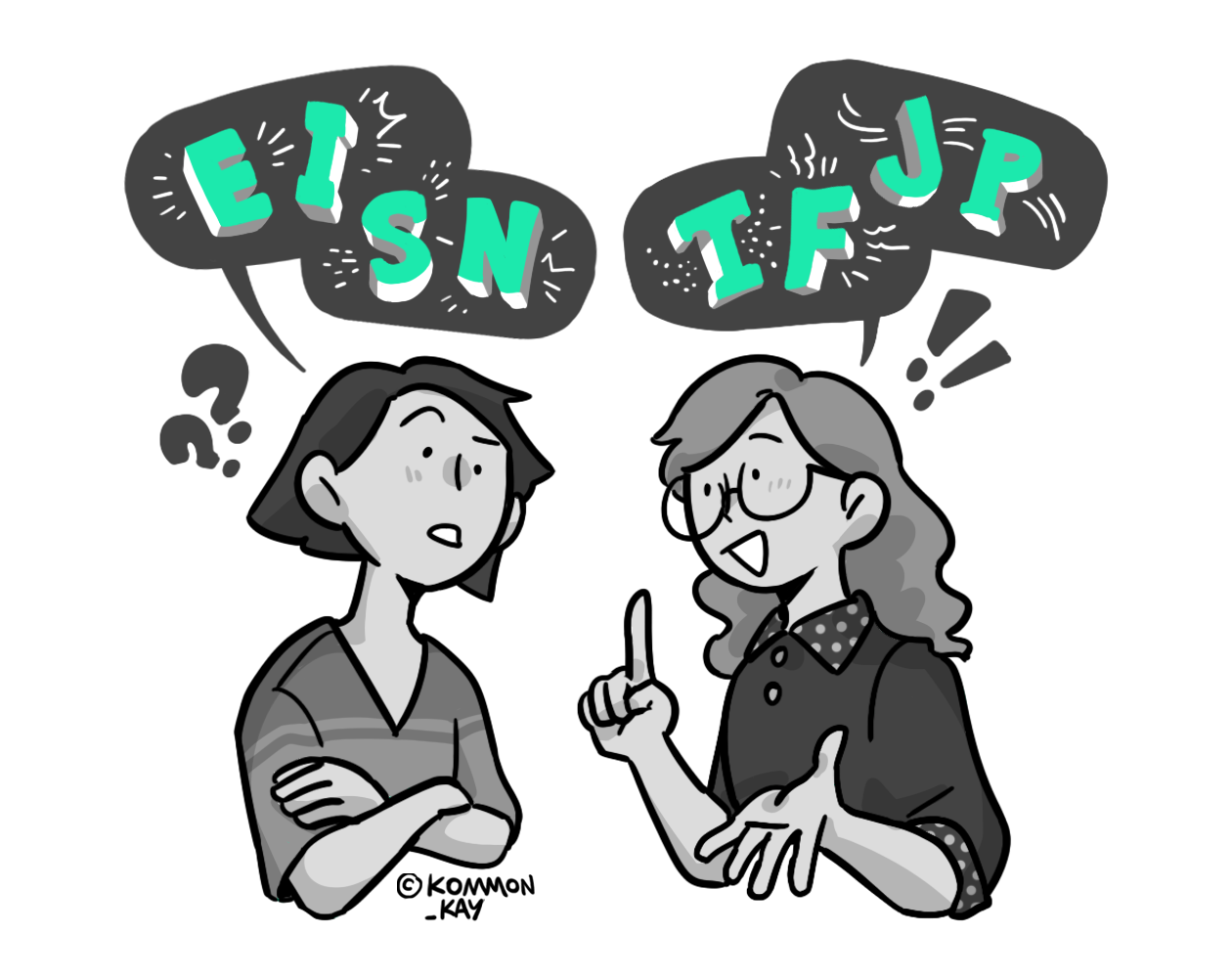
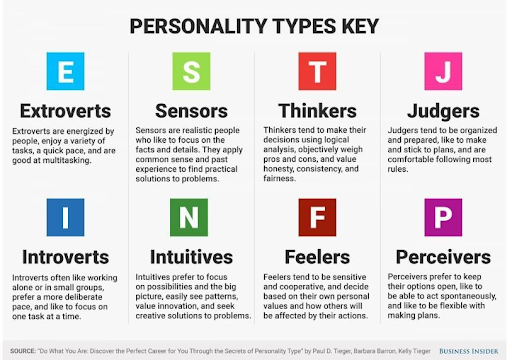
[Illustration by Ah-young Kim] Min-ji recently entered a new company and was asked to introduce herself. After she told her new colleagues about her personality and the things she likes, one of them asked her what MBTI type she is. She was bewildered and told them that she hasn’t done the MBTI test yet. Kim left this experience feeling that she is behind on a trend. The Myers–Briggs Type Indicator, known as the MBTI, was developed by Katharine Cook Briggs and Isabel Briggs Myers in the United States to help women find suitable jobs during World War II. By answering an introspective self-report questionnaire indicating different psychological preferences, the test allegedly reveals how respondents perceive the world and make decisions. The test is based on sixteen personality types in total.
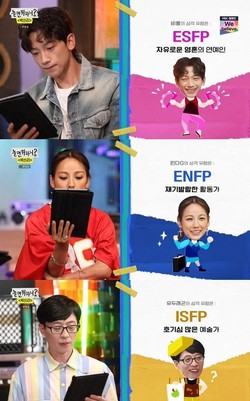
From lunar zodiac signs to blood types, many people in Korea have long been fascinated with categorizing and predicting people’s personalities. However, as categorizations such as blood types are now widely believed to be pseudo-science, the MBTI, which appears at first to be based on a scientific approach, has gained sudden interest (Korean link). Some even view the tests' sudden popularity as a side-effect of “quarantine boredom”. As people have been staying home for long periods of time, many started sharing the results of their tests on social media and compared how similar or different they are. More than 31,000 people are now following an Instagram page that shares MBTI memes in Korean. Moreover, the MBTI has even been introduced on TV shows. The MBC variety show “Hangout with Yoo (놀면 뭐하니)” for example, showed celebrities doing the MBTI test as well as their results.
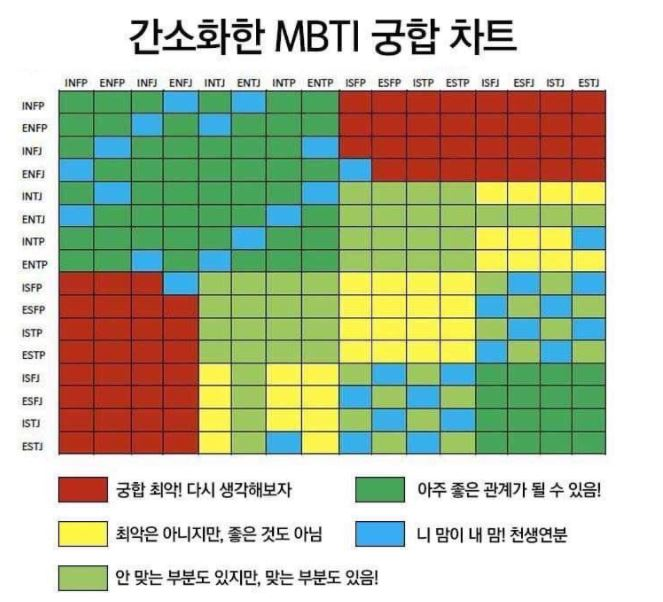
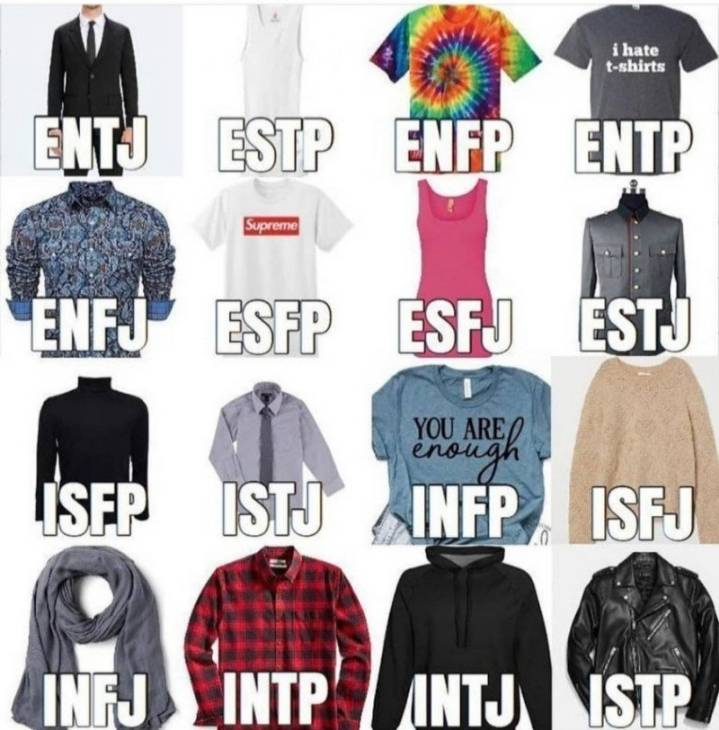
Why are many people in Korea so deeply immersed in the MBTI? 1) Feel a sense of belonging within the same MBTI groups Youth are more open to sharing things about themselves and empathize with others during online activities. By understanding each other based on the MBTI, they share their experiences and create a sense of belonging (Korean link) within the same MBTI groups. 2) A great ice-breaker The MBTI can be used as a tool to introduce one’s personality easily and to avoid acting rude to strangers. For example, a person who doesn’t feel comfortable in big groups of people can attempt to avoid misunderstandings by revealing that their MBTI type is “I” (Introvert). The most significant difference between personality categorizations of the past and the new MBTI trend is that the MBTI is not restricted to being a personality test. It tends to be used as a way to get along with others by being aware of one’s character type and personality features. The MBTI trend is more about connecting with others (Korean link), rather than just finding out who they are. 3) A tool to express oneself freely People nowadays do not hesitate to expose their lives and tastes on social media and many engage in “self-branding” by disclosing images and videos and expressing themselves freely online. The MBTI is a useful tool to take the first step in self-branding, as it allows respondents to analyze and understand themselves thoroughly. Some utilize the MBTI more directly, by including their MBTI types in their Instagram bio. 4) Chance to focus on one’s intrinsic value When taking the MBTI test, people are asked questions about themselves to find out who they are and what they find comfortable. Reflecting on oneself can also lead to a better understanding of one’s relationship with other people. Before the MBTI became so popular, many Koreans found it easier to categorize strangers on the basis of obvious external factors, such as their occupation or appearance, rather than asking them personal questions about themselves. Now that it has become a common topic of conversation, people feel comfortable using it to quickly learn (Korean link) a lot about someone's personal characteristics. MBTI contents that you may find interesting 1) MBTI chemistry
2) Memes based on MBTI characteristics
Common criticism of the MBTI 1) Unscientific The test, developed in the 1940s, was based on the untested theories of Carl Jung and is now thoroughly disregarded by the psychological community. Even Jung himself had pointed out that the personality types he created represented rough tendencies, rather than strict classifications. Jung developed his theories before psychology became an empirical science, and they were based on observations, not the result of controlled experiments. 2) Prevalence of online informal test The informal MBTI questionnaires that people take online are different from the official MBTI test. The formal MBTI test costs money to take and consists of about 100 questions, whereas the informal test is free and consists of about 50 questions. Ideally, the test should always be followed by a consultation with a professional who can accurately assess the results. Therefore, online MBTI test results have lower accuracy and credibility than a formal test. 3) People’s excessive immersion in the MBTI Being obsessed with the MBTI types can lead to the creation of stereotypes about one’s own personality and those of others. Rather than considering the MBTI as a tool to understand oneself, some people really define themselves using their MBTI type. This can lead to inappropriate attitudes that justify one’s wrong actions. Meanwhile, the conflict between type “T” (Thinking) and “F” (Feeling) has become an issue in Korea. The main difference between T and F is how they perceive and judge certain situations. T types tend to think in a logical and analytical way, whereas F types tend to think in a situational and empirical way. As the MBTI becomes more and more popular in Korea, many people with a T type experience being blamed (Korean link) for “lacking a sense of sympathy” by F types whenever they don’t agree with what they say.
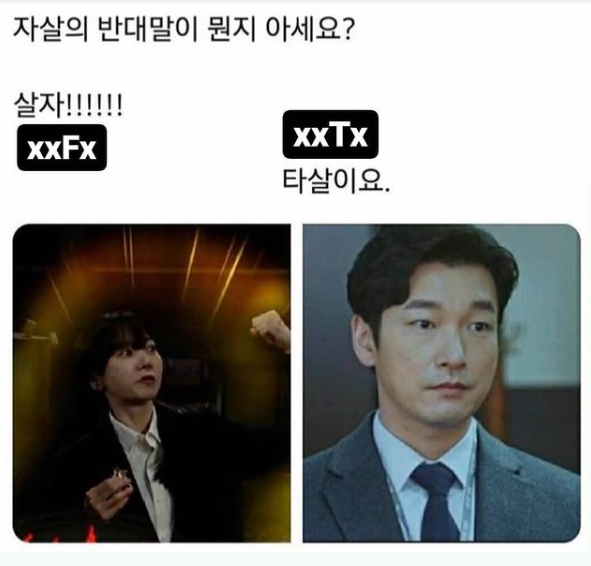
Do you know what is opposite word of “Ja-sal” (자살, Suicide)? xxFx: Sal-ja! (살자, Let’s live!) xxTx: Ta-sal. (타살, Homicide) One should bear in mind that the MBTI represents a crude, but perhaps fun, way to analyze personalities, and not a scientific analysis of who is superior or inferior to whom. It should go without saying that the 16 types of the MBTI cannot entirely represent each and every individual on earth. The important thing when it comes to relationships is to understand each other, not to classify each other according to personality types.
Other popular “personality” tests in Korea With the popularity of the MBTI, Korean companies have started using the MBTI as well as other “personality” tests for marketing. This is done in various fields such as fashion, beauty, tourism, and advertising. Below are some example tests you can try out in Korean. 😺What type of cat are you? 🎈Finding your own aura 📖Which literary characters are similar to you? 😎Which nickname best describes you?
Slang 과몰입 (gwa-mol-ib) 하다 This verb describes a situation when one gets overly immersed in certain themes, contents, and characteristics, etc. People who are completely immersed in a certain drama and movie or the results of the MBTI test can be described with this verb. Example: A: 오늘 왜 이렇게 배가 아프지? B: 병원을 가. A: 왜 그렇게 쌀쌀 맞게 말해?😵 너 혹시 MBTI T유형이야? B: 어휴, 이 과몰입... 🙄 A: Why does my stomach hurt so much today? B: Go and see the doctor. A: Why so unfriendly?😵 Are you a T-type person? B: You are so overly immersed in the MBTI.🙄 This Week's Recommendations My Boyfriend Is Type-B (B형 남자친구, 2005) Before the MBTI trend, classifying people’s personalities according to their blood types was popular in Korea. For example, a person with type A is allegedly timid and a person with type B is selfish and unique. My Boyfriend Is Type-B is based on such stereotypes. Ha-mi, a college student who believes in fateful love, is a timid type A. She falls in love at first sight with Young Bin, whom she accidentally encounters on the street. However, he is a man with blood type B, which is considered the worst type to date. These two very different people begin to love and truly understand each other regardless of blood type. You can watch it on Youtube.
|